For over two decades, Rockstar Games’ Grand Theft Auto (GTA) franchise served as the primary antagonist for moral guardians across the political spectrum. From the late 1990s to the early 2010s, the series was synonymous with suburban anxiety; parents, politicians, and activists decried the franchise for exposing impressionable youth to a simulated underworld of gratuitous violence, sexual promiscuity, and unrepentant criminality.
Yet, as the cultural landscape has shifted, so too has the nature of the outrage directed at the studio. As the industry approaches the highly anticipated November 19 release of Grand Theft Auto VI, the target of these grievances has migrated. No longer is the primary concern the moral corruption of children; instead, a vocal, hyper-partisan segment of the gaming community has pivoted toward a reactionary crusade against what they perceive as the "woke" infiltration of the medium.
A Chronology of Conflict: From "Video Nasty" to "Woke Agenda"
To understand the current hostility surrounding GTA VI, one must look at the evolution of the "Gamergate" era, which began in 2014. This period marked a turning point where a subset of male gamers began to view the increasing presence of women and LGBTQ+ developers in the industry as an existential threat to their hobby.
- 2014: The Gamergate Catalyst: The harassment campaigns of 2014 set a precedent for organized, internet-based backlash against inclusive design choices.
- 2022: The Remastered Controversy: When Rockstar Games released the remastered version of Grand Theft Auto V, the studio made the decision to remove certain gags and non-playable character dialogue that had been criticized as transphobic. This led to a wave of protest from a segment of the fanbase, framing the removal as a concession to "cancel culture."
- 2023: The Trailer Backlash: Following the release of the first official trailer for GTA VI, which showcased the game’s first-ever mandatory female lead, Lucia, the discourse shifted from gameplay speculation to identity politics. Trolls began circulating groundless theories regarding the character’s gender identity, fueled by a desire to interpret any deviation from the status quo as a political statement.
- 2024: The Preemptive Siege: As more promotional material emerged, including a 27-minute "extended look" hosted on Netflix, the goalposts shifted again. Detractors began dissecting lighting choices, character attire, and dialogue, searching for any evidence of an "agenda."
Anatomy of a Manufactured Outrage
Despite having played little to no actual gameplay, the "anti-woke" movement has already condemned GTA VI as a "humiliation ritual" for male gamers. The criticisms often rely on a narrow interpretation of masculinity that the detractors believe is being dismantled by female representation.
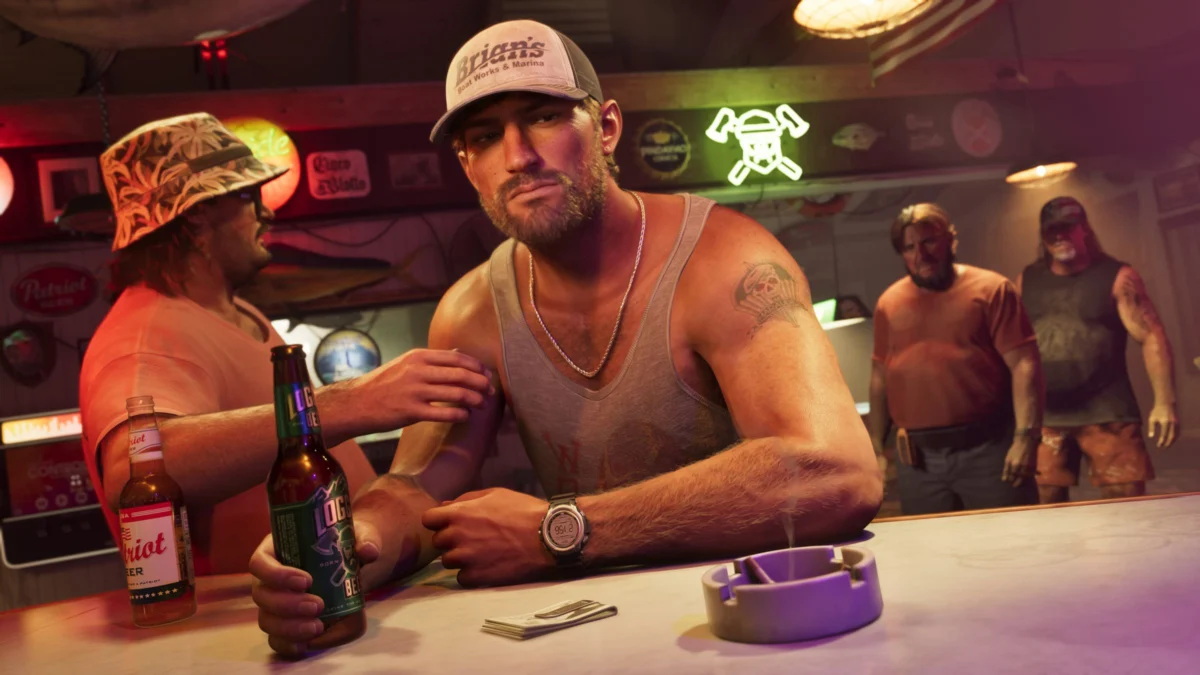
One notable example involves a cinematic clip featuring the two leads, Lucia Caminos and Jason Duval. In the scene, Lucia asks Jason for his opinion on an outfit—a standard, trope-heavy interaction found in sitcoms for decades. However, online agitators interpreted this as a sign of the male protagonist’s "subjugation" to a "feminist agenda." Another critic argued that the dialogue—specifically the mention of "cocktails" and "sequins"—suggested that the male lead possessed a "gay vibe," asserting that the script was penned by someone who fundamentally misunderstands how "real men" speak.
Furthermore, the involvement of female staff at Rockstar has become a lightning rod for abuse. A 2019 photo of female developers at the company’s Scotland studio, originally posted to celebrate International Women’s Day, has been repeatedly unearthed and shared with derisive commentary, implying that the mere presence of women in the development pipeline is responsible for the perceived "softening" of the franchise.
The Economics of Hype: Data vs. Discourse
While the digital noise suggests a widespread rejection of the upcoming title, the hard data tells a radically different story. The economic engine behind Grand Theft Auto VI remains largely unaffected by the "culture war" rhetoric, suggesting that the detractors represent a loud, yet statistically insignificant, minority.
According to third-party data analytics from Sensor Tower, GTA VI has already secured over 5.28 million preorders, translating to more than $500 million in early revenue. Industry analysts estimate that the game, which boasts a budget rumored to be in excess of one billion dollars—potentially making it the most expensive piece of media ever produced—is poised to recoup its entire development cost on the day of its release.
This financial dominance highlights a widening chasm between the performative outrage of social media influencers and the actual habits of the global consumer base. For the average gamer, the appeal of a high-fidelity, open-world experience in a satirical depiction of Miami remains the primary draw, rendering the "woke" discourse a sideshow rather than a systemic threat to the title’s commercial viability.
Official Silence and Industry Implications
Rockstar Games has maintained a policy of relative silence regarding the specific criticisms leveled at their development process. While they have stated their intent to portray the diversity of their Miami-inspired setting with nuance, they have largely avoided engaging directly with the "anti-woke" movement.
This approach is deliberate. By refusing to validate the agitators, the studio avoids the "Streisand Effect," where attempting to suppress or debate the controversy only serves to amplify it. However, the industry at large is watching closely. The success or failure of GTA VI will likely set the tone for how AAA studios approach "sensitive" content in the coming decade. If the game breaks every sales record in existence—which current projections suggest it will—it may effectively neutralize the power of such online backlash campaigns, proving that a loud digital crusade cannot derail a titan of the gaming industry.
Reflections on the Future of Gaming Discourse
The phenomenon surrounding GTA VI is indicative of a broader crisis in online discourse, where identity-based grievances have become the default lens for evaluating artistic expression. When a character’s choice of clothing or a lighting effect is framed as a "subliminal brainwashing" tactic, it suggests a profound level of alienation from the medium of gaming itself.
Interestingly, even some prominent voices on the right have begun to grow weary of this cycle. Figures like Zack Hoyt (Asmongold) and others have signaled a "wait-and-see" approach, with some even mocking the more extreme claims of their peers. When even hardline cultural commentators begin telling their audience to "touch grass," it signifies that the peak of this particular brand of hysteria may be passing.
As the release date nears, the "anti-woke" crusade against GTA VI faces an inevitable reckoning. Once the game is in the hands of millions of players—most of whom will be more concerned with the quality of the driving mechanics, the physics engine, and the depth of the open world than the gender of the lead character—the current narrative of "boycott" will likely dissolve.
Ultimately, the history of Grand Theft Auto is one of adaptability. From the early 2000s, when it was a target of the religious right, to today, where it is a target of the "anti-woke" fringe, the franchise has consistently managed to capture the cultural zeitgeist while remaining profitable. As the dust settles on this latest cycle of manufactured outrage, it will likely serve as a reminder that the gaming industry is a massive, diverse, and fundamentally commercial enterprise—one that is far more resilient to the shifting winds of social media grievances than the agitators would like to believe. The crusade will end, the records will be broken, and the "next fake controversy" will undoubtedly be waiting on the horizon.