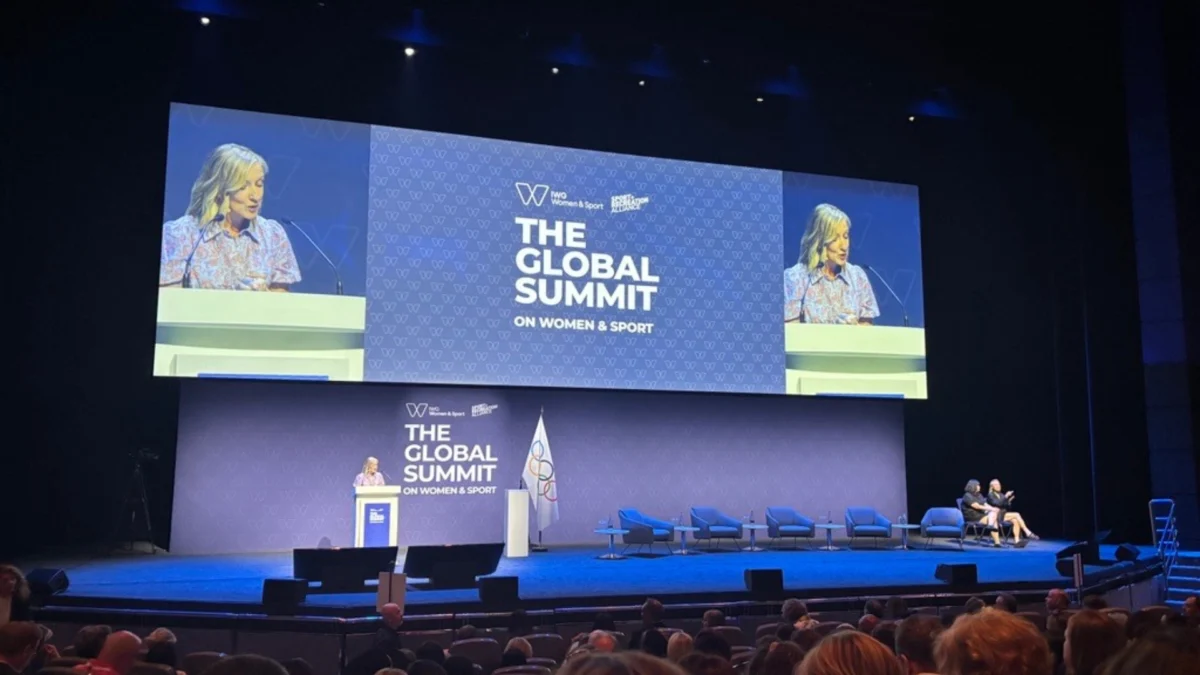
The landscape of international sports policy has reached a critical inflection point. For decades, the primary objective of gender equality initiatives was to shatter glass ceilings and bring visibility to systemic imbalances. However, as the 2026 International Working Group (IWG) on Women and Sport World Conference in Birmingham made clear, the era of merely identifying problems has passed. The movement has transitioned into a new, more complex phase: the deliberate, structural redesign of the global sporting ecosystem.
With 900 delegates from 80 countries in attendance, the conference served as a global laboratory for the future of sports governance, finance, and culture. The consensus among global leaders, including the Finnish delegation, is that progress is no longer a matter of advocacy; it is a matter of institutional architecture.
Main Facts: The Paradigm Shift
The IWG World Conference, held in July 2026, underscored a fundamental shift in strategy. The central theme, “Beyond the Breakthrough,” posits that the recent surge in the popularity and commercial viability of women’s sports is not a finish line, but a departure point.
The core takeaway is that women’s sports must move away from the "male-centric" model of development. For too long, the industry has attempted to shoehorn women’s athletic programs into structures designed by and for men. The new mandate is to treat women’s sports as a distinct market with unique audiences, different commercial trajectories, and specialized requirements regarding physiology, media engagement, and governance.
Chronology of the Movement
The evolution of this global dialogue can be traced through several key milestones:
- The Foundation: Decades of advocacy focused on the "Brighton Plus Helsinki" declaration, which established the baseline for inclusion and equality in sports governance worldwide.
- The Breakthrough Era (2020–2025): A period of rapid commercial growth, highlighted by record-breaking stadium attendances and the entry of private equity into women’s leagues.
- The Birmingham Summit (July 2026): The IWG World Conference served as the first major global forum to evaluate the sustainability of this growth. It moved the focus from "awareness" to "systemic design."
- The Post-Conference Phase (Late 2026–2027): National bodies, including those in Finland, are now tasked with translating conference outcomes into concrete policy changes, moving from theoretical equality to operational equity.
Supporting Data: The Business Case for Change
The statistics presented at the conference by Ipsos’s Trinh Tu provided an undeniable empirical foundation for the discussion. Data from across the globe confirms that the demand for women’s sports is no longer niche—it is mainstream. However, the commercial potential remains hampered by outdated metrics.
Investor Michele Kang, a prominent voice at the summit, argued that treating women’s sports as a "smaller version" of men’s sports is a strategic failure. Her research suggests that the most successful organizations are those that innovate rather than replicate.
Furthermore, the lack of research regarding female physiology remains a significant bottleneck. Much of the current sports science literature is based on male subjects, leading to training regimens that do not account for the hormonal, physiological, and life-cycle needs of female athletes. Addressing this data gap is not merely a social justice issue—it is a competitive necessity. Organizations that fail to invest in sex-specific research are effectively leaving performance potential on the table.
Official Responses and Strategic Leadership
The conference featured insights from some of the most influential figures in global sport. Their perspectives highlighted the tension between "soft" advocacy and "hard" structural change.
The Role of "Gentle Challengers"
UEFA Vice President Laura McAllister emphasized the necessity of what she terms "gentle challengers." Change in sports culture is rarely the result of a single, explosive event; rather, it is the result of consistent, patient pressure from individuals and organizations that challenge the status quo without triggering defensive tribalism. McAllister stressed that while patience is required, the pace of change must remain aggressive enough to maintain momentum.
The Power of Mandates
In contrast to the "incremental" approach, World Athletics President Sebastian Coe provided a blueprint for top-down enforcement. He noted that despite years of goal-setting, meaningful progress at World Athletics only occurred once the organization implemented binding quotas, overhauled its internal regulations, and tied funding to gender-parity targets.
For Coe, the lesson was clear: diversity in the boardroom is not just about representation—it is about the quality of decision-making. Boards with diverse backgrounds and experiences consistently produce more resilient, innovative, and commercially viable strategies.
Implications: The Path Forward
The implications for the global sports community are twofold: the need for "design fiction" in policy and the necessity of decentralized responsibility.
Design Fiction: Imagining the Future
Professor Fiona Chambers introduced the concept of "design fiction" as a tool for sports administrators. Instead of just fixing what is broken, leaders are encouraged to "design" what a perfectly equitable ecosystem would look like from the ground up. This involves asking: For whom are we building this sport? And why?
This approach shifts the focus from "accommodating" women in existing systems to building systems that are inherently inclusive. It means reconsidering everything from facility design to the way we define professional career paths, including maternity and family leave policies that were previously considered "disruptive" to the professional sporting calendar.
Shared Responsibility
One of the most profound conclusions of the Birmingham conference was that gender equality is no longer the sole responsibility of a "diversity officer" or a specific committee. It is an operational imperative that touches every level of an organization.
If a national sports federation claims to value equality, that value must be reflected in:
- Financial Allocations: Where are the resources going?
- Recruitment: Who is being trained for coaching and executive roles?
- Data Collection: Who is being left out of the research?
- Governance: Who has the power to define the rules?
National Implementation: The Finnish Context
For organizations like those in Finland—where 34 bodies have already committed to the Brighton Plus Helsinki declaration—the work now moves to the local level. The challenge is to move beyond the celebration of "breakthroughs" and into the granular, often difficult work of institutional audit.
National sports organizations must now critically evaluate:
- Decision-making Power: Are there actual, measurable mechanisms that ensure diverse perspectives reach the boardroom?
- Systemic Inclusion: Are there specific barriers for women and girls from marginalized groups or those with special needs?
- Long-term Sustainability: Is the organization building a pipeline for the next generation of athletes, or is it merely managing the current cohort?
Conclusion: A New Era of Leadership
The "window of opportunity" mentioned by many delegates in Birmingham is currently wide open. Despite a global trend toward conservative social policies in some regions, the economic and social case for women’s sports has never been stronger.
The next phase of this movement will not be defined by the voices that shout the loudest, but by the leaders who can effectively manage the transition. It requires a move away from the reactive policies of the past toward a proactive, evidence-based, and structurally sound future.
As the sporting world looks toward the next decade, the goal is clear: the creation of an environment where the gender of the athlete is not a variable that dictates their access, their support, or their potential for success. The breakthrough has occurred; now, the real work of building a new, equitable architecture begins.
For those interested in following the implementation of these goals, the discussion continues through the "Tasa-arvotyön etäkahvit" (Equality Work Remote Coffees) series, held on the second Friday of every month. These sessions serve as a vital platform for stakeholders to share research, discuss policy, and maintain the momentum generated in Birmingham.