Introduction: The Anomaly in Ultralight Packs
The Durston Wapta 30 occupies a fascinating, perhaps even contradictory, space in the modern ultralight (UL) gear market. In an industry currently obsessed with stripping ounces through minimalism, the Wapta 30—weighing in at approximately 14 ounces—purports to offer a "refined" and "comfortable" carrying experience typically reserved for heavier, framed packs. By utilizing Aluula Graflyte, a high-modulus, ultra-high-molecular-weight polyethylene (UHMWPE) composite, Durston has created a pack that blurs the lines between a traditional frameless soft-pack and a technical alpine hauler.
However, the marketing language surrounding the Wapta 30 frequently conflates three distinct mechanical concepts: harness comfort, pack stability, and true shoulder-to-hip load transfer. This review seeks to move beyond the enthusiast hype to determine whether the Wapta 30 actually achieves superior suspension mechanics or if it merely provides a more ergonomic version of the classic frameless design.
Chronology and Context: The Evolution of Frameless Carry
The history of the ultralight backpack is a narrative of subtraction. For decades, the goal was to eliminate the heavy aluminum stays and rigid framesheets that defined the "internal frame" era of the 1990s. Early pioneers like GoLite and later cottage industry leaders like Mountain Laurel Designs (MLD) and Gossamer Gear proved that if a base weight was sufficiently low, the frame was an unnecessary luxury.
The "Wapta moment" in this chronology represents a pivot back toward complexity. With the introduction of advanced laminates like Aluula, manufacturers are no longer limited by the tear strength or weight of nylon. They are now free to add padding, complex strap geometries, and internal structures that would have been prohibitively heavy a decade ago. The Wapta 30 arrives at a time when the market is fatigued by "simple" packs that lack durability, yet wary of the weight penalty of internal frames.
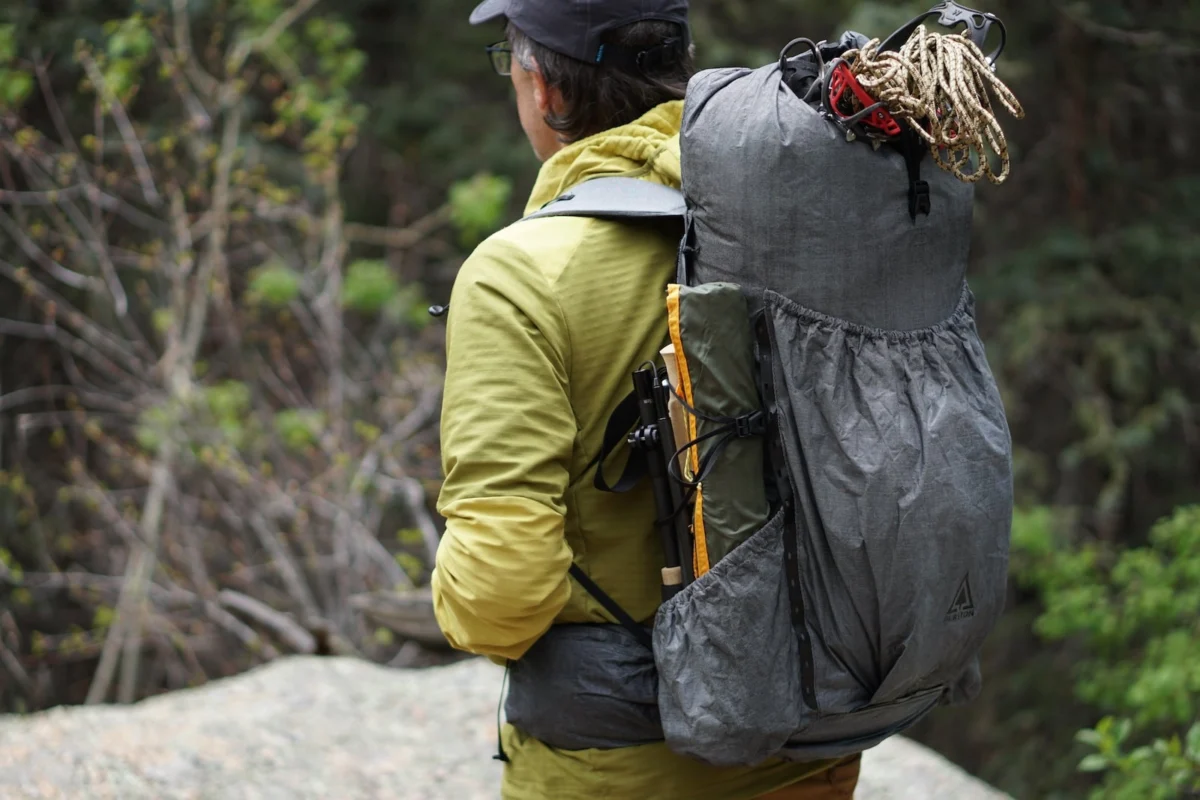
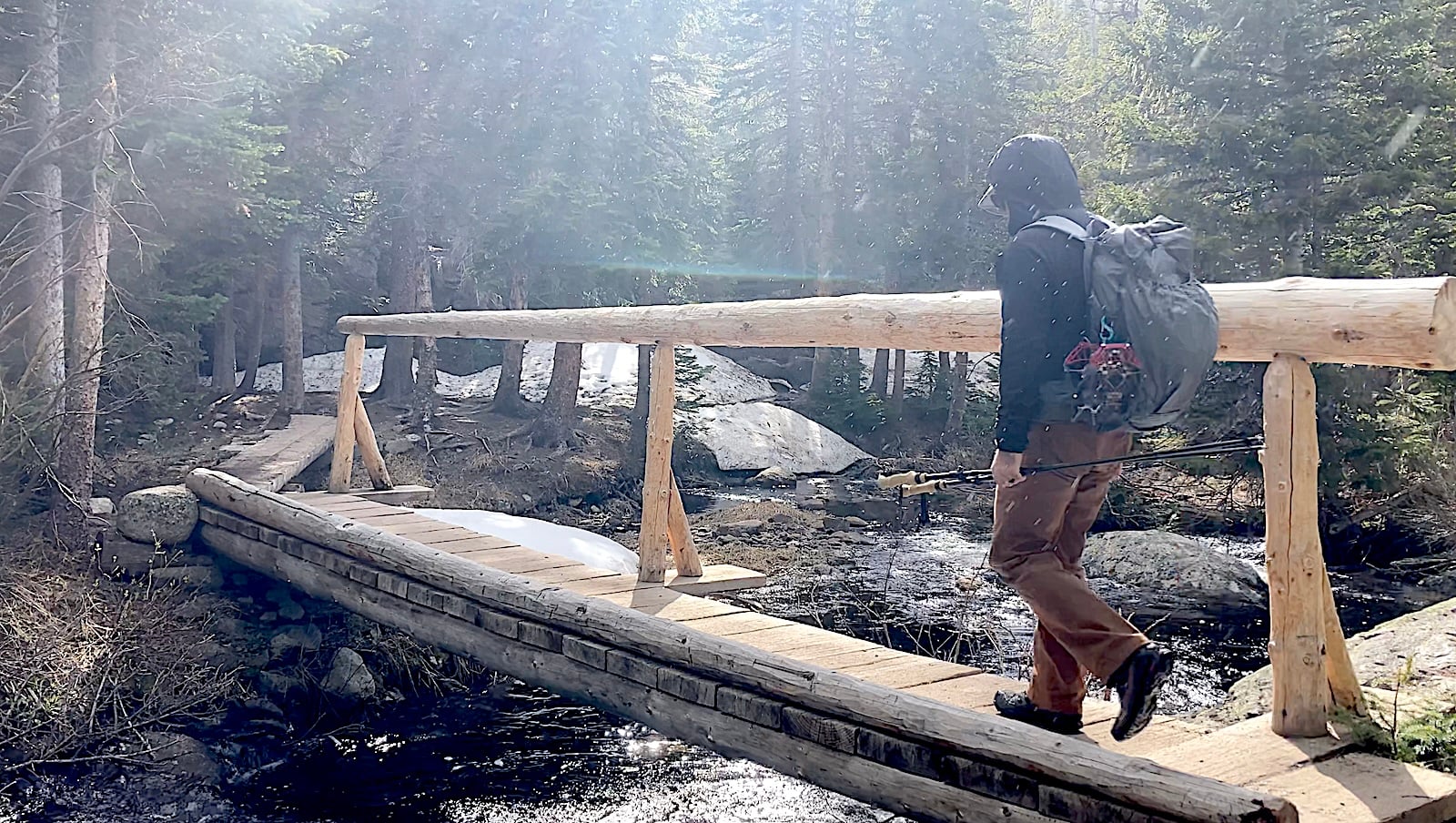
In testing, I loaded the Wapta 30 with a standard three-season mountain kit—including a solo tent, 20-degree insulation, a haul rope for scrambling, and three days of food—bringing the total carried weight to between 22 and 29 pounds. This range is critical, as it sits at the upper limit of what traditional frameless packs can handle before "torso collapse" occurs, where the lack of a frame causes the pack to buckle under its own contents.
Supporting Data: Mechanical Benchmarking
To understand the Wapta 30, we must compare it against the broader ecosystem of 30-liter class packs. The provided table highlights a key distinction: while many packs in this category claim a 25-pound capacity, the method by which they achieve that capacity varies wildly.
The Suspension Hierarchy
- Frameless/Mechanical Transparency: Packs like the Gossamer Gear Murmur or Pa’lante V2 rely on the user’s torso to provide structure. They are essentially sacks with straps; they move with the body but provide zero load transfer.
- Vest-Style/Dynamic Stability: Packs like the Nashville Cutaway or the Hyperlite Mountain Gear Aero 28 utilize wide, vest-style harnesses to distribute pressure across the chest. These improve stability (preventing the pack from bouncing), but they do not move weight from the shoulders to the hips.
- Frame-Mediated/Structural: Packs like the Gossamer Gear Mirage 40 represent the gold standard for load transfer. They utilize a physical bridge—a carbon fiber frame—to create a distinct load path from the shoulders to the hipbelt.
The central question regarding the Wapta 30 is where it falls on this spectrum. Despite its padded hipbelt and lumbar shaping, it lacks the rigid vertical stays necessary for true load transfer. Therefore, while it may feel better than a simpler pack, the physics remain those of a soft-pack.
Technical Observations: The Aluula Factor
The choice of Aluula Graflyte in the Wapta 30 is significant. In my previous analysis of materials science in outdoor gear, I noted that Aluula’s primary benefit is its incredible strength-to-weight ratio and its resistance to stretching under load.
In the Wapta 30, this creates a "tight" pack body. Unlike sil-nylon or Dyneema Composite Fabric (DCF), which may sag or "oil can" when packed unevenly, the Aluula shell maintains its shape. This is an underrated aspect of comfort. When a pack body is rigid, the load stays centered against the user’s back. By keeping the center of gravity closer to the spine, Durston has effectively optimized the frameless experience. It is not necessarily "transferring" weight to the hips, but it is preventing the "pendulum effect" that often makes heavy frameless packs feel miserable.
Official Responses and Industry Positioning
Durston’s design philosophy, as expressed through their product literature, emphasizes "refinement." When compared to the Arc’teryx Alpha SL 30—which uses a bonded framesheet for semi-structural support—the Wapta 30 feels significantly more "hiker-centric."
The industry at large is currently grappling with a division: the "Fastpack" movement (led by brands like Outdoor Vitals and Black Diamond) versus the "Traditional UL" movement. The Wapta 30 attempts to straddle these worlds. It has the hipbelt of a traditional pack and the vest-style shoulder pockets of a fastpack. However, in discussions with other gear testers, the consensus is that the Wapta 30 succeeds because it doesn’t try to be a "frame" pack. It accepts its frameless limitations and focuses on optimizing the interface—the straps, the back panel ventilation, and the hipbelt—rather than the structure.
Implications: Is the Wapta 30 the New Standard?
The implications of the Wapta 30’s design are twofold.
First, it suggests that for the average user, "comfort" is often a product of harness fit rather than load transfer. By providing S-shaped, well-padded straps and a highly adjustable hipbelt, Durston has solved the "shoulder fatigue" problem for loads under 25 pounds without the weight of a frame.
Second, the Wapta 30 demonstrates that the "UL community" is moving toward a higher level of complexity. The era of the "simple sack" is not over, but it is being challenged by packs that offer specialized pockets, better ventilation, and sophisticated ergonomic shaping.
Critical Summary for the Consumer
If you are looking for a pack to carry 30+ pounds for long-distance through-hikes, the Wapta 30 will likely disappoint, as no amount of "refinement" can replace a rigid frame at those weights. However, if your kit is dialed in and you are looking for a pack that bridges the gap between a high-performance running vest and a traditional backpack, the Wapta 30 is a technical achievement.
The Wapta 30 does not change the laws of physics—it does not magically move weight to your hips—but it does improve the experience of carrying that weight. It is an evolutionary step, not a revolutionary one. By refining the interface between pack and hiker, Durston has produced a piece of gear that feels premium, functions predictably, and sets a high bar for the next generation of frameless packs.
Final Verdict
The Durston Wapta 30 is arguably the most "civilized" frameless pack on the market. It rewards the user for having a light, high-density kit, and it makes the compromises of a frameless system feel far less like a sacrifice. Whether this complexity is worth the price of admission is a question of personal preference, but from an engineering perspective, it is a masterclass in optimizing the potential of a simple structure.