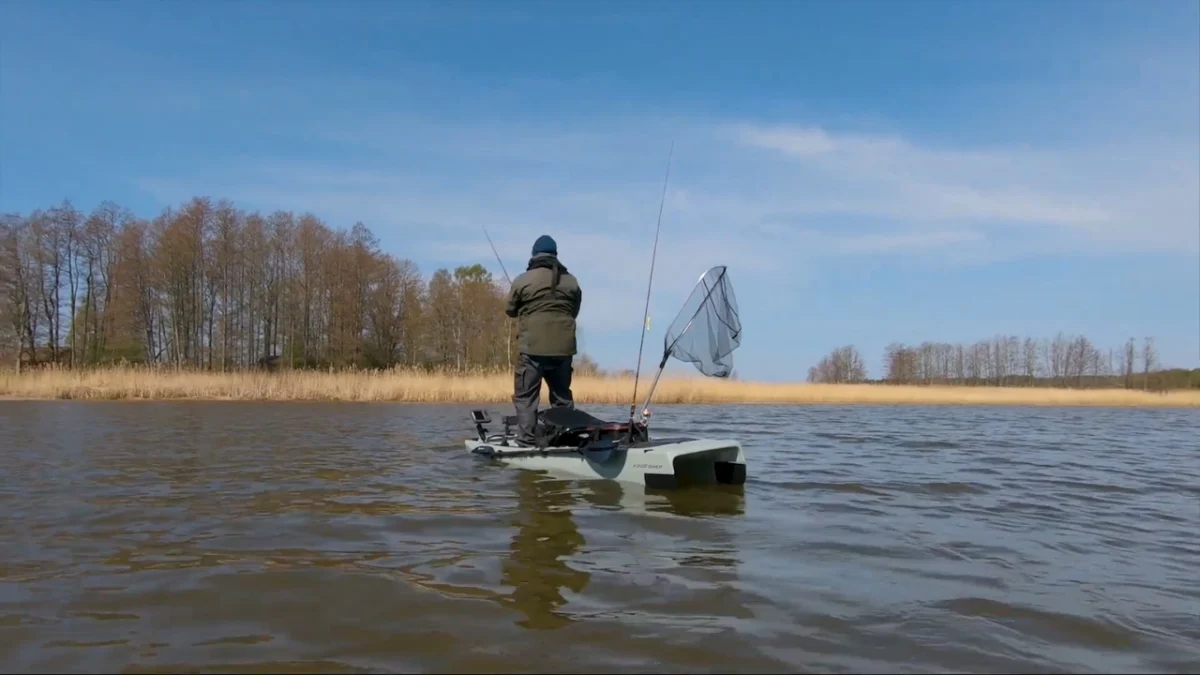
In the world of angling, the transition from paddle-powered to motor-assisted kayaking is often described as the "great equalizer." For years, kayak fishing was defined by physical endurance—the ability to paddle against the current, battle relentless winds, and traverse long distances to reach hidden honey holes. However, as the sport has evolved, the integration of trolling motors has shifted the focus from the labor of transit to the precision of the catch.
A motor on a fishing kayak is not merely a tool for speed; it is an instrument of control. When wind pushes you off a promising bank, or the current stubbornly rotates your bow away from your target, a motor acts as a stabilizer. It preserves your energy for the part of the day that truly matters: the strike. Yet, integrating a motor into a kayak ecosystem is a complex endeavor that requires more than just bolting on a prop.

Main Facts: The Anatomy of a Motorized Setup
The appeal of a motorized kayak is universal, but the execution varies wildly. Not every "motor-ready" hull is created equal. The market is currently bifurcated into three distinct categories:
- Factory-Integrated Systems: These kayaks are engineered from the keel up to house specific motor drives. They offer the cleanest wiring, balanced battery compartments, and optimized steering.
- Modular Platforms: Designed for versatility, these boats can be broken down for transport, making them ideal for urban anglers.
- Retrofit-Ready Hulls: These are traditional high-stability fishing kayaks that feature flat sterns or "flex pods" designed to accommodate aftermarket trolling motors.
The core challenge for any angler is the "load-out." Once you add a motor, a heavy lithium or lead-acid battery, a tackle crate, an array of rods, an anchor, and sensitive electronics, the weight distribution shifts significantly. A hull that feels like a dream on the showroom floor can become a sluggish, unstable, or cramped vessel once fully rigged.
Chronology: The Evolution of the Motorized Kayak
The rise of the motorized kayak was not an overnight phenomenon; it was a response to the growing ambition of modern anglers.
- The Early Years (Pre-2010): Kayak fishing was strictly paddle-based. Innovation was limited to DIY rod holders and basic depth finders.
- The Pedal Revolution (2010–2015): The introduction of pedal-drive systems (like Hobie’s MirageDrive) proved that anglers were hungry for hands-free propulsion. This created the psychological shift that paved the way for motorized units.
- The Motorized Era (2016–Present): With the refinement of lightweight lithium-ion batteries and compact brushless electric motors, manufacturers began designing hulls specifically for motorized propulsion. We moved from "strapping a motor to a boat" to "engineering a boat for a motor."
Top Tier Picks: Specialized Platforms
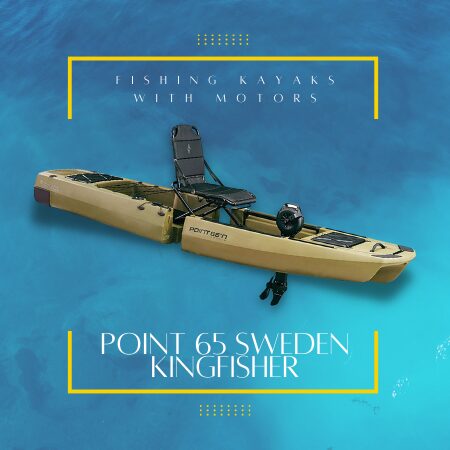
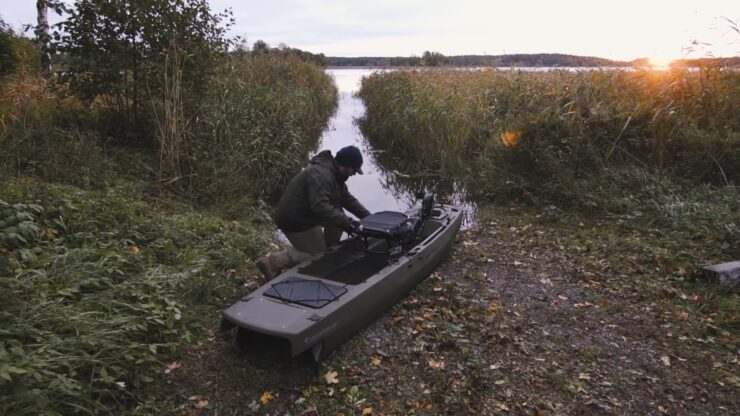
1. The Point 65 Sweden Kingfisher: Modular Innovation
The Kingfisher stands alone due to its modular architecture. By breaking into sections, it solves the "logistics bottleneck"—the frustration of transporting a 12-foot hull without a truck or a dedicated garage.
- Key Advantage: Unrivaled transportability for apartment dwellers.
- Performance: The trimaran-style hull provides exceptional lateral stability, which is essential when the motor is engaged and the angler is distracted by a fish.
- Caveat: With a weight capacity of approximately 287 pounds, it requires careful weight management. It is a precision tool for the solo, mobile angler.
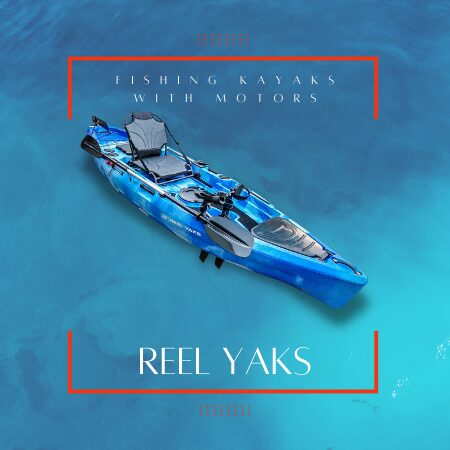
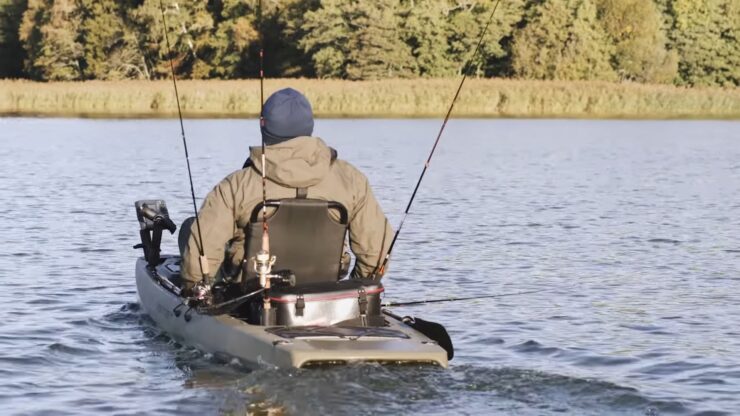
2. Reel Yaks: The Compact Solution
Reel Yaks targets the "efficiency angler." By focusing on a compact, W-shaped hull, they prioritize stability during casting and landing. The raised, breathable frame-style seat is a standout, preventing the fatigue common in long, low-seated sessions. It is the ideal vessel for smaller lakes and protected bays where maneuverability outweighs the need for high-speed transit.
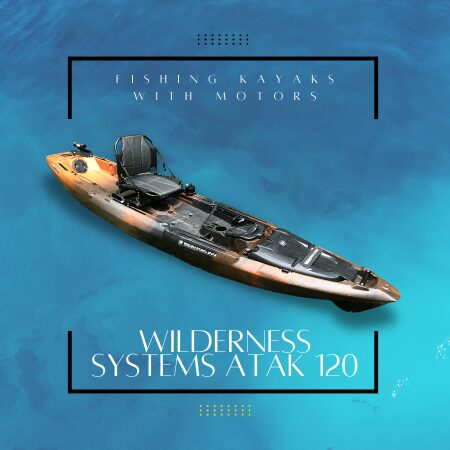
3. Wilderness Systems ATAK 120: The Tactical Standard
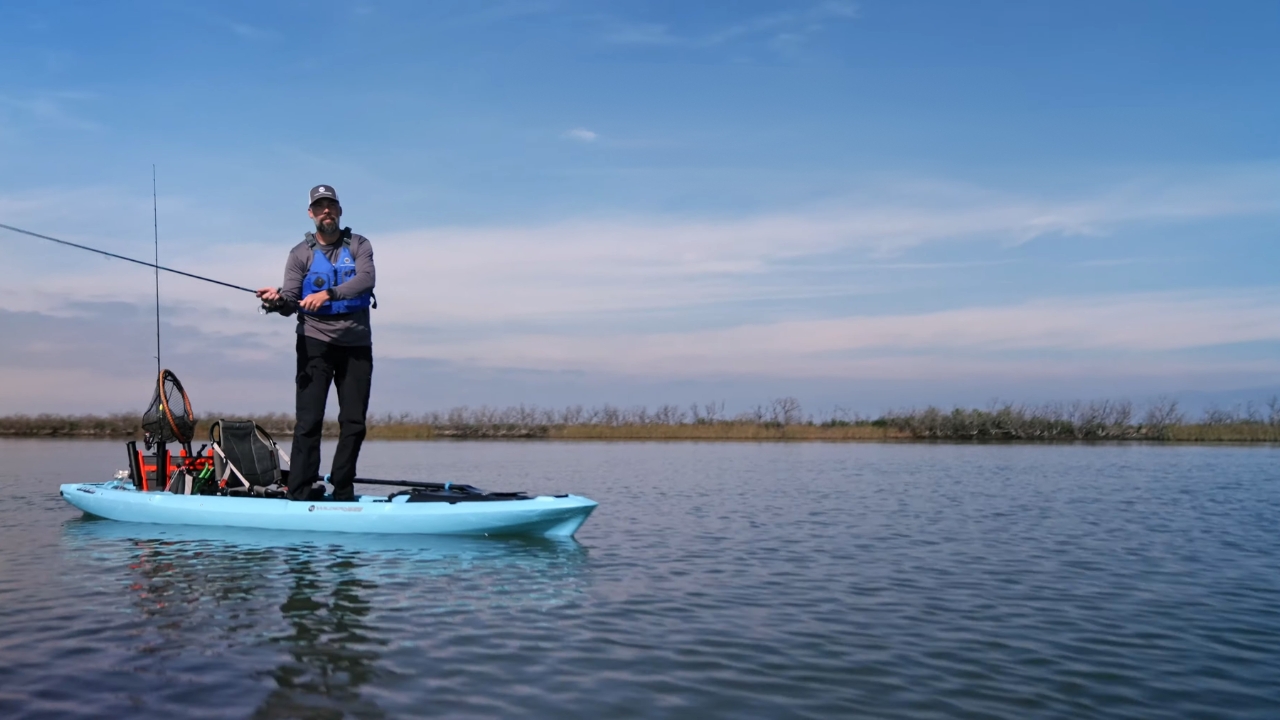
The ATAK 120 is arguably the most robust platform on the market for serious, gear-heavy anglers. "Advanced Tactical Angling Kayak" is a fitting moniker; it offers an expansive, open deck that prevents the "cluttered cockpit" syndrome. With a capacity of 400 pounds, it is designed to handle heavy-duty batteries and complex sonar arrays without compromising its buoyancy or handling.
Supporting Data: Understanding Your Power Requirements
When calculating your setup, the math must extend beyond the weight of the kayak itself.
- Battery Management: The weight of a 100Ah lead-acid battery can exceed 50–60 pounds. Upgrading to a lithium-ion (LiFePO4) battery can cut that weight by 60%, drastically improving the kayak’s center of gravity and total displacement.
- Speed vs. Consumption: A standard kayak motor setup typically yields 2 to 4 miles per hour. While many anglers chase higher speeds, data shows that the most efficient fishing occurs at "troll speeds" (1.5–2 mph), which maximizes battery life and reduces hull drag.
- Capacity Margins: A common rule of thumb is to operate at no more than 75% of the manufacturer’s stated weight capacity. This ensures that the scupper holes remain above the waterline and the hull retains its intended hydrodynamic profile.
Official Perspectives: The Regulatory Landscape
The addition of a motor changes the legal status of your craft. In many jurisdictions, a kayak is classified as a "vessel" once a motor is attached, regardless of whether it is a small electric trolling motor or a gas-powered unit.
- Registration: Check your local Department of Motor Vehicles or Natural Resources agency. In many states, a motorized kayak must be registered and display hull numbers.
- Safety Equipment: Once motorized, you are often legally required to carry specific safety gear, such as a whistle, a life jacket (PFD) that is worn at all times, and, in some cases, navigation lights if fishing during low-light hours.
- Gas vs. Electric: While gas motors are technically "more powerful," they are largely considered obsolete for kayak fishing due to weight, vibration, noise, and the difficulty of fuel storage. Electric motors offer the silent, stealthy approach necessary for targeting pressured species.
Implications: The Future of Angling
The implications of motorized kayaking are profound for the sport’s accessibility. Aging anglers who might have retired from the sport due to the physical toll of paddling can now remain competitive and active. Furthermore, the ability to cover vast distances means that anglers can now access "offshore" water that was previously the domain of expensive center-console boats.
However, this comes with a responsibility to the environment and the community. Motorized anglers must be cognizant of wake, particularly in shallow environments, and must adhere to "no-wake" zones. As technology continues to shrink the size of batteries and increase the efficiency of motors, we can expect to see even lighter, more integrated, and more capable hulls hitting the market in the coming years.
Conclusion: Final Considerations for the Buyer
The "best" motorized kayak is not necessarily the one with the highest speed or the most features. It is the one that fits your personal ecosystem.
Before committing to a purchase, consider these three final questions:
- How do I move it? If you cannot load it onto your car alone, you will fish less.
- Where is the battery? If the battery placement is awkward, your kayak will feel unstable.
- What is the end-game? If you are a minimalist, a modular, lightweight system is best. If you are an electronics-heavy angler, a high-capacity platform like the ATAK 120 is the only logical choice.
A motor should be an extension of your fishing style—an invisible assistant that allows you to cast more, worry less, and spend your time doing what you love: catching fish. Test your rig in the shallows before heading into open water, keep your battery secure, and remember that the best day on the water is the one where the equipment works so well, you forget it’s even there.