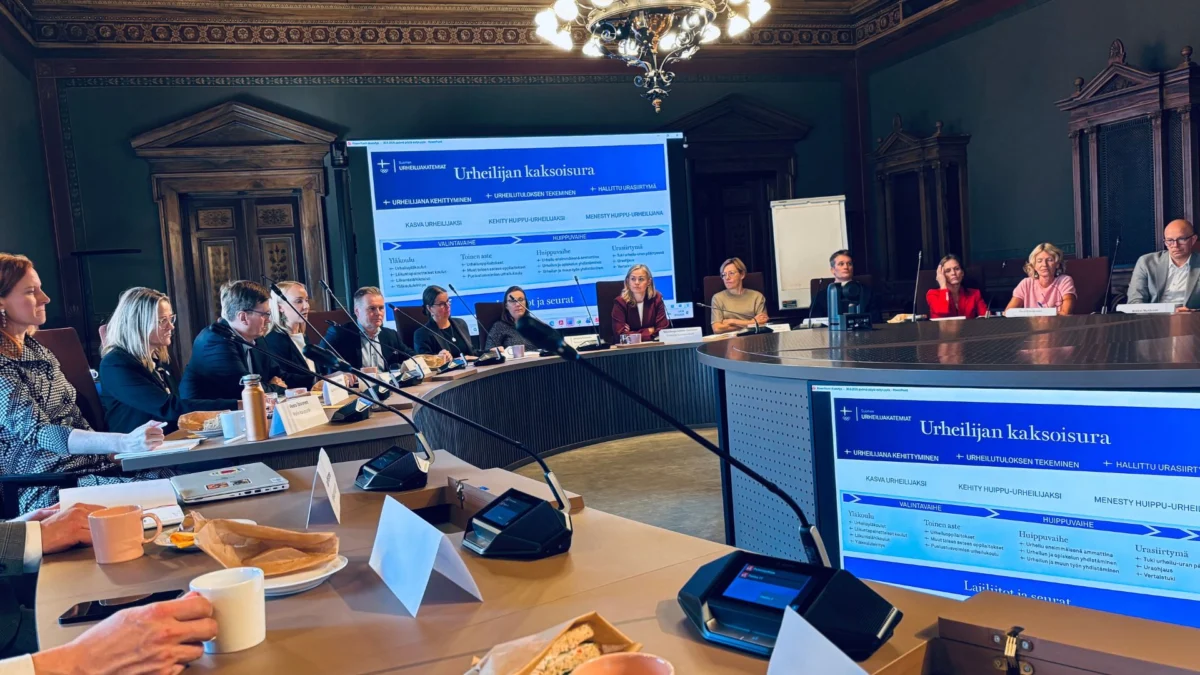
In an era where the demands of elite sports have reached unprecedented levels, the intersection of athletic excellence and professional development has become a critical focal point for the Finnish government. On September 29, 2026, a high-level roundtable discussion convened by Minister of Education Anders Adlercreutz and Minister of Sport and Youth Mika Poutala signaled a renewed national commitment to the "dual career" model—a framework designed to ensure that athletes can pursue Olympic-level performance while simultaneously building the foundations for a sustainable post-sports career.
The meeting, which brought together a diverse group of stakeholders, including elite athletes, representatives from sports academies, educational institutions, and municipal leaders, underscored a collective realization: for Finland to remain a competitive nation in the global sporting arena, it must provide its athletes with a safety net that values their intellectual and professional growth as much as their physical achievements.
The Core Mandate: Why Dual Careers Matter
At its heart, the dual career initiative is rooted in the Finnish government’s program to foster holistic human development. The overarching goal is simple yet ambitious: to remove the binary choice between "becoming an athlete" and "getting an education."
By integrating rigorous training schedules with academic and vocational pathways, the government aims to mitigate the "cliff-edge" effect that many athletes face upon retirement. When an athlete’s identity is solely tied to their performance on the track, field, or rink, the transition to the workforce can be psychologically and financially devastating. The current policy shift aims to normalize the simultaneous pursuit of both tracks, treating education not as a distraction from sport, but as a vital component of a resilient, high-performing life.
Chronology of the September 29th Initiative
The event held on September 29, 2026, was not merely a ceremonial gathering but a working session intended to evaluate the efficacy of current systems and identify critical gaps.
- Morning Session: The ministers opened the forum by reviewing the current state of the Finnish dual career model, which is widely recognized as one of the most robust in the international community.
- The Stakeholder Panel: Athletes Nathalie Blomqvist, Elmo Lakka, and Nette Kiviranta provided the "lived experience" narrative. Their testimonies highlighted the daily friction between competition travel, recovery protocols, and academic deadlines.
- Expert Analysis: Representatives from the Research Institute for Olympic Sports (KIHU) presented data-backed recommendations, specifically calling for the long-term stabilization of funding for regional sports academies.
- Closing Deliberations: The session concluded with a consensus on the need for clearer role definitions between municipal authorities and educational institutions to ensure that no athlete "falls through the cracks" due to bureaucratic ambiguity.
Supporting Data and Institutional Frameworks
The discussion was heavily informed by findings from the Research Institute for Olympic Sports (KIHU). Their latest report emphasized that the "regional academy network" is the backbone of Finnish athlete support. However, the report warned that this network is currently vulnerable to fluctuating annual budgets.
To address this, the government has already taken concrete financial steps. Notably, the administration has doubled the funding for vocational education specifically tailored for athletes. Furthermore, the government has institutionalized support by designating top-level competitive sports as a legitimate ground for the discretionary extension of student financial aid—a policy change that acknowledges the unique time constraints imposed by training camps and international tournament cycles.
Perspectives from the Table: Official and Athlete Voices
Minister Adlercreutz: A Balanced Vision
Minister of Education Anders Adlercreutz emphasized that while the Finnish model is already successful by international standards, the "good" is the enemy of the "better."
"For many young people, sports are the defining feature of their daily lives," Adlercreutz noted. "Our goal is to ensure that while they chase medals, they are not chasing a future of uncertainty. We need to distinguish between the needs of a recreational lifestyle and the grueling requirements of elite performance. The latter requires institutional flexibility—a willingness to adjust curricula, exam dates, and attendance requirements to accommodate the peak-performance windows of our athletes."
Minister Poutala: From Athlete to Architect
Minister Mika Poutala, who brings his own background as a former elite athlete to the cabinet, echoed the necessity of seamless cooperation. "The system is working, but it must be refined through the lens of the athlete’s actual day-to-day existence," Poutala remarked. "We aren’t just talking about policy; we are talking about the architecture of a person’s life. The feedback we received today is invaluable for creating a roadmap that is as diverse as the sports our athletes represent."
The Athlete Experience: Real-World Challenges
Athletes Nathalie Blomqvist, Elmo Lakka, and Nette Kiviranta provided the most poignant insights during the roundtable. They argued that "one-size-fits-all" solutions are ineffective. For instance, a swimmer’s training cycle—often requiring early morning sessions—differs vastly from the explosive, late-day demands of a track and field athlete. The athletes stressed that:
- Flexibility is non-negotiable: Institutions must move away from rigid, clock-in-clock-out academic structures.
- Mental Health Support: The pressure of managing two high-stakes careers requires dedicated psychological support, not just academic tutoring.
- Communication: Coaches and professors must be in constant dialogue to prevent burnout, ensuring that an athlete isn’t forced to choose between a crucial competition and a vital examination.
Implications: A New Era for Finnish Sports
The implications of the September 29th discussions extend far beyond the classrooms and gymnasiums. By prioritizing the dual career, Finland is effectively branding itself as a "smart" sporting nation—one that cares for its human capital.
1. Strengthening the Regional Network
The push for "long-term, predictable funding" for regional sports academies is the most significant policy implication. If implemented, this will allow smaller municipalities to maintain high-quality coaching and academic support centers, preventing the "brain drain" of talent toward the capital city, Helsinki.
2. Redefining Academic Success
The move to treat competitive sports as a legitimate cause for extended study time marks a cultural shift. It signals that the government views athletic contribution to the national brand as a form of social service, thereby warranting institutional grace and support.
3. A Holistic Approach to Professionalism
By encouraging the integration of professional development into the athletic path, the government is lowering the barriers to entry for athletes in the corporate and public sectors. Companies, in turn, are increasingly viewing "athlete-students" as high-value employees—individuals who have demonstrated the discipline, resilience, and time-management skills required to excel in the world’s most demanding arenas.
Conclusion: The Road Ahead
The roundtable discussion of September 29, 2026, was a definitive step toward a more integrated future. While challenges remain—particularly in standardizing the quality of dual career support across different regions and types of educational institutions—the commitment from the highest levels of government is clear.
As the government continues to refine these policies, the focus will likely shift to digital integration—creating platforms where athletes can track both their training progress and their academic credits in a unified, transparent manner. For Finland, the ultimate success of this initiative will be measured not just in medals brought home from the Olympics, but in the successful, professional lives that these athletes lead long after their final race has been run and their last jersey has been hung up.
The message from Helsinki is unambiguous: A nation that supports the total well-being of its athletes is a nation that truly understands the value of excellence, both on the field and in the workforce.