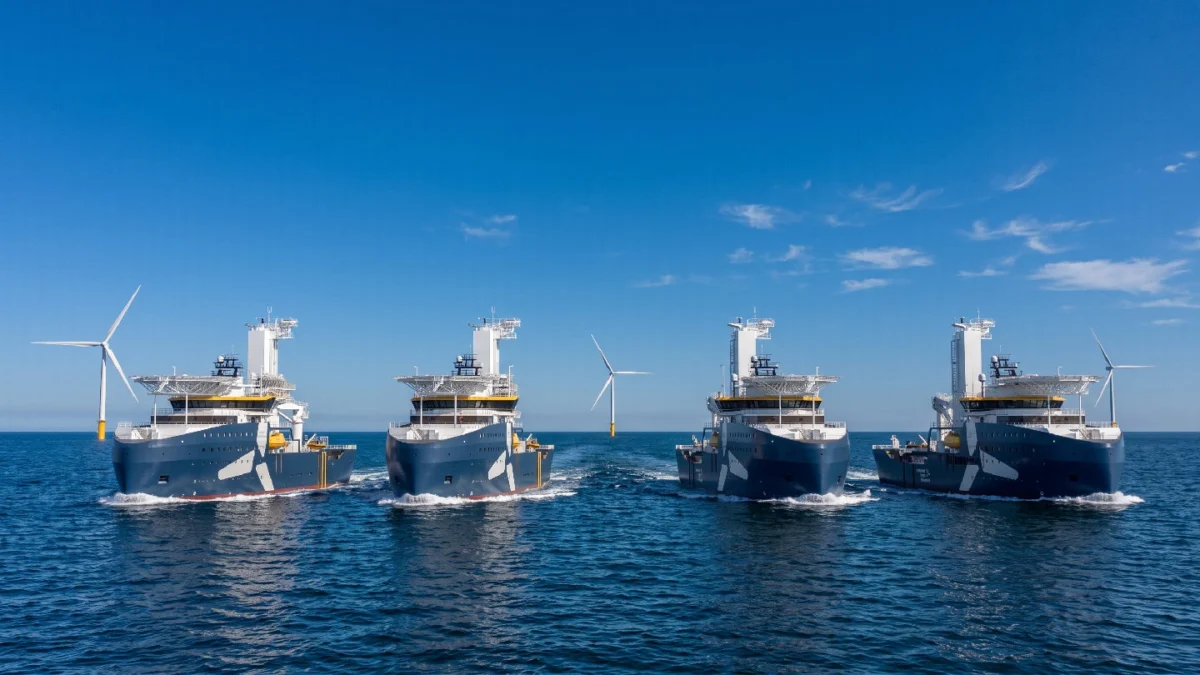
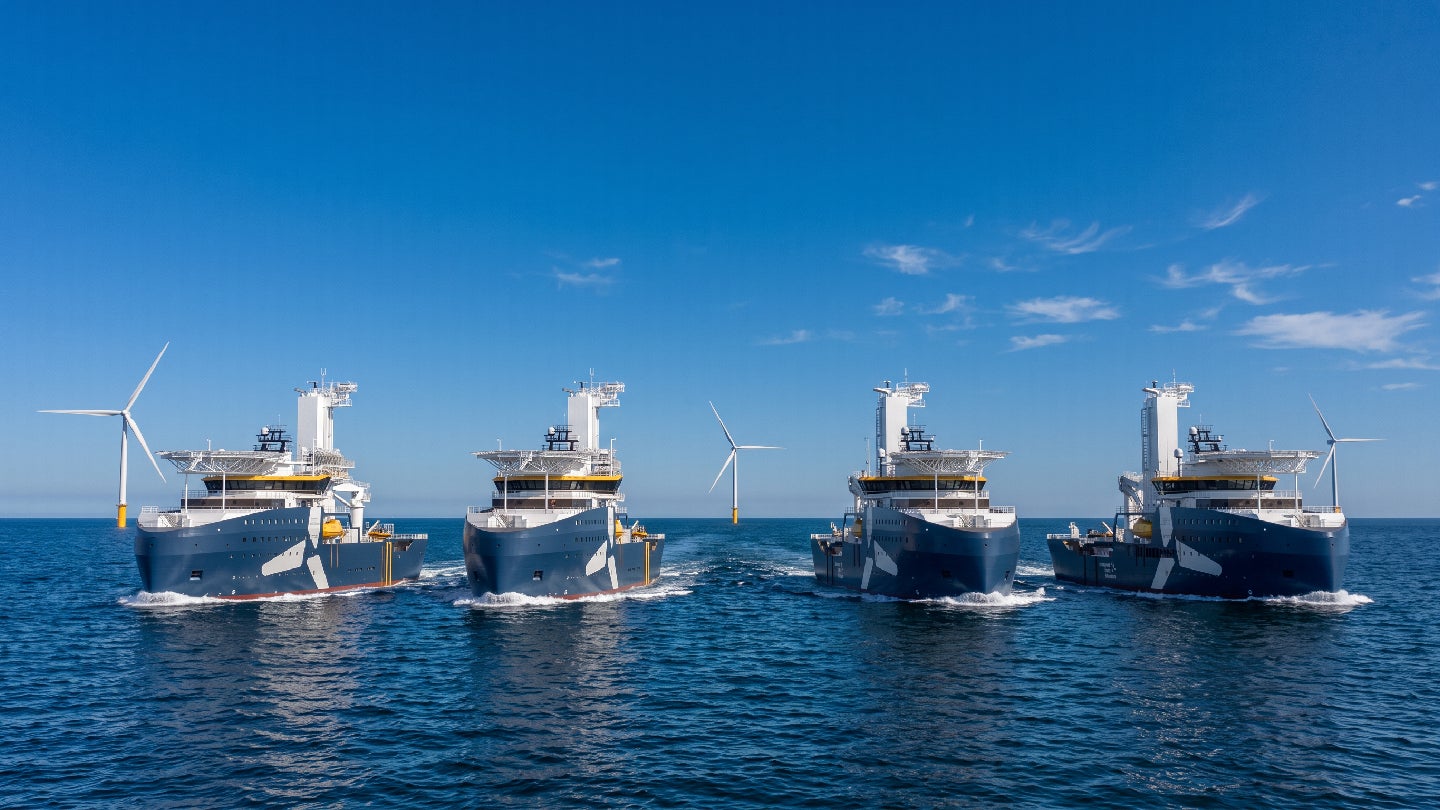
The offshore wind industry is currently undergoing a period of rapid, global expansion, driven by the urgent need for sustainable energy and the decarbonization of power grids. As wind farms move further from the coastline into deeper, more challenging waters, the logistical requirements for maintaining these massive assets have become increasingly sophisticated. Addressing this need, Norway’s Kongsberg Maritime has secured a pivotal contract with IWS Fleet—a subsidiary of Integrated Wind Solutions (IWS)—to deliver the design and integrated technology packages for four additional Skywalker Class Commissioning Service Operation Vessels (CSOVs).
This order, which brings the total number of Skywalker Class vessels to ten, represents a significant vote of confidence in specialized maritime architecture designed specifically for the offshore renewable sector.
Main Facts: The Evolution of the Skywalker Class
The latest agreement solidifies the partnership between Kongsberg Maritime and IWS Fleet. The vessels will be constructed at the Nantong Rainbow Offshore & Engineering Equipment shipyard in China, leveraging modern shipbuilding techniques to meet the rigorous demands of the North Sea and beyond.
These newbuilds are based on the highly regarded UT 5519 DEx design, the current gold standard for the Skywalker Class. The “DEx” designation refers to the vessel’s unique double-ended configuration, which provides a symmetrical operational profile. By utilizing rim-drive azimuth thrusters at both the bow and the stern, the vessels achieve exceptional maneuverability, allowing them to pivot and reposition between turbines with minimal transit time.
Each vessel is engineered to serve as a floating base of operations. Capable of accommodating up to 120 personnel, the ships provide high-standard living quarters for technicians, enabling them to remain offshore for extended durations. This "walk-to-work" capability—facilitated by sophisticated motion-compensated gangways—ensures that commissioning, maintenance, and repair tasks can be performed safely, even in variable sea states.
Chronology: Building a Fleet for the Future
The Skywalker Class success story is not an overnight development, but rather the result of a deliberate, multi-year strategy by IWS Fleet to dominate the specialized service vessel market.
- 2023: The initial deliveries of the Skywalker Class design commenced, marking the entry of these advanced CSOVs into the operational market. The performance of these early units set the benchmark for efficiency and reliability in the sector.
- 2023–2024: Following successful deployments, IWS Fleet began integrating the initial vessels into their operations, gathering critical performance data that would eventually inform the specifications for the subsequent orders.
- October 2026: The formal announcement of the contract for four additional vessels was made. This order expands the series from six to ten, signaling a massive scaling of the fleet.
- 2029: The scheduled delivery date for the first of the four newly ordered vessels. This timeline allows for the integration of the latest technological advancements in maritime propulsion and digital control systems.
This phased approach has allowed IWS Fleet to refine its operational model, ensuring that each subsequent vessel benefits from the lessons learned by its predecessors.
Supporting Data: Technical Excellence and Operational Efficiency
The UT 5519 DEx design is a masterpiece of maritime engineering, tailored to the specific needs of the wind industry. To understand the significance of this design, one must look at the technical integration provided by Kongsberg Maritime.
The Power of Integration
Kongsberg Maritime’s scope of supply is comprehensive. It encompasses:
- Vessel Design and System Integration: Ensuring that all onboard systems communicate seamlessly.
- Electrical Power Systems: Modern, high-capacity systems designed to support the vessel’s heavy hotel load and operational equipment.
- Navigation and Bridge Systems: State-of-the-art situational awareness tools that allow for precision navigation in busy wind farm arrays.
- Propulsion and Dynamic Positioning (DP): The heart of the vessel’s capability, enabling it to hold a fixed position against wind and current while technicians move between the ship and the turbine.
- Deck Machinery: Specialized cranes and handling equipment designed to move components and equipment from the deck to the turbine platform.
Rim-Drive Azimuth Thrusters
A standout feature of the Skywalker Class is the use of permanent magnet motor technology in its rim-drive thrusters. Unlike traditional thrusters, rim-drive technology eliminates the need for a traditional gear housing, resulting in reduced noise, vibration, and maintenance requirements. These thrusters are highly energy-efficient, providing the precise control needed for dynamic positioning while reducing the vessel’s overall fuel consumption—a key metric for operators looking to minimize the carbon footprint of their maintenance operations.
Official Responses: A Shared Vision for Maritime Excellence
The collaboration between Kongsberg Maritime and IWS Fleet is built on a foundation of mutual technical respect. Per Ståle Nykrem, Ship Design Sales Director at Kongsberg Maritime, highlighted the strategic importance of this expansion:
"Kongsberg Maritime is proud to continue its collaboration with IWS Fleet on this next phase of the Skywalker Class programme. This latest order takes the Skywalker Class series to ten vessels, underlining the confidence that owners and operators have in a design developed specifically for the requirements of offshore wind operations."
For IWS Fleet, the decision to continue with the Kongsberg design was driven by the proven reliability of the platform. The ability to standardize the fleet allows IWS to streamline training for its crew, simplify spare-part logistics, and offer its clients a consistent level of service across its entire portfolio of vessels.
Implications: The Future of Offshore Wind Logistics
The decision to expand the Skywalker Class fleet to ten vessels has profound implications for the global offshore wind industry.
1. The Rise of the Specialized CSUV
As wind turbines grow larger and farms move further offshore, the industry is moving away from generic support vessels toward highly specialized CSOVs. The Skywalker Class represents the cutting edge of this transition. By focusing on the "walk-to-work" model, IWS is enabling a shift in how maintenance is performed, moving away from high-cost, short-duration boat transfers toward sustainable, long-term offshore presence.
2. Standardization as a Competitive Advantage
By committing to a series of ten vessels, IWS is betting on the power of standardization. In an industry often plagued by custom-build delays and integration issues, having a fleet of identical vessels allows for rapid scaling and predictable maintenance costs. This strategy positions IWS as a major player capable of servicing large-scale, multi-year wind farm projects with a high degree of confidence.
3. Sustainability and Energy Efficiency
The integration of permanent magnet motors and optimized hull forms in the UT 5519 DEx design is not merely about performance; it is about environmental compliance. As offshore wind developers face increasing pressure to report on the carbon intensity of their supply chains, having a vessel fleet that maximizes energy efficiency is a distinct market advantage. The Skywalker Class is designed to operate with a reduced environmental impact, aligning with the green mission of the renewable energy sector it supports.
4. Economic Impact on Shipbuilding and Technology
The involvement of Nantong Rainbow Offshore & Engineering Equipment underscores the global nature of this project. While the design and core technology are Norwegian, the construction phase leverages global manufacturing capacity. This collaboration demonstrates how the maritime industry is pooling global resources to meet the demand for renewable energy infrastructure.
Conclusion: Setting the Pace for the Decade
The expansion of the Skywalker Class to ten vessels is more than just a procurement success; it is a signal of the maturity of the offshore wind sector. As we approach 2029, the year the first of these new vessels is set to arrive, the energy landscape will look significantly different. The demand for clean power will be higher, the offshore wind arrays will be more expansive, and the reliance on robust, efficient, and technologically advanced support vessels will be absolute.
By investing in the Kongsberg Maritime UT 5519 DEx design, IWS Fleet has secured a future-proof solution. These vessels will not only act as transport and accommodation units but as the critical nodes in the network of infrastructure that makes offshore wind a reliable, baseload-capable power source. As the Skywalker Class grows, it serves as a testament to the fact that the path to a carbon-neutral future is paved with precision engineering, strategic partnerships, and a relentless focus on operational efficiency at sea.