Main Facts: The Critical Necessity of Immediate Decontamination
In the high-stakes environment of inland oil spill response, the speed and efficiency of decontamination protocols are not merely operational details—they are the primary defense against the escalation of ecological and human health crises. When oil enters fast-moving water bodies, the volatility of the situation increases exponentially, creating a dynamic "hot zone" that demands immediate, rigorous, and strictly enforced decontamination (decon) procedures.
The fundamental tenet of modern spill response is the establishment of rigid work zones. Without clear demarcation, the risk of cross-contamination between the "hot" (exclusion) zone, the "warm" (contamination reduction) zone, and the "cold" (support) zone becomes a liability that can compromise the entire mission. Proactive decon is frequently the most overlooked phase in the initial hours of a spill, yet it is the most vital for protecting the long-term health of responders and the integrity of the surrounding landscape.
Chronology: The Lifecycle of a Decontamination Sequence
The response to a fastwater spill follows a strictly linear progression, where each step must be completed before a responder moves from a higher risk environment to a lower one.
Phase 1: The Initial Site Assessment
Upon arrival, incident command must immediately map the site. A detailed site map is not merely for documentation; it is an active safety tool. It must identify prevailing currents, entry/exit points, and the precise physical boundaries of the exclusion, contamination reduction, and support zones. This map must be communicated to every responder, as confusion in the early hours leads to avoidable exposure.
Phase 2: The Decontamination Corridor
Responders wearing Modified Level D or Level C protective equipment must undergo a standardized three-station decontamination process before they are permitted to retreat to the cold zone.
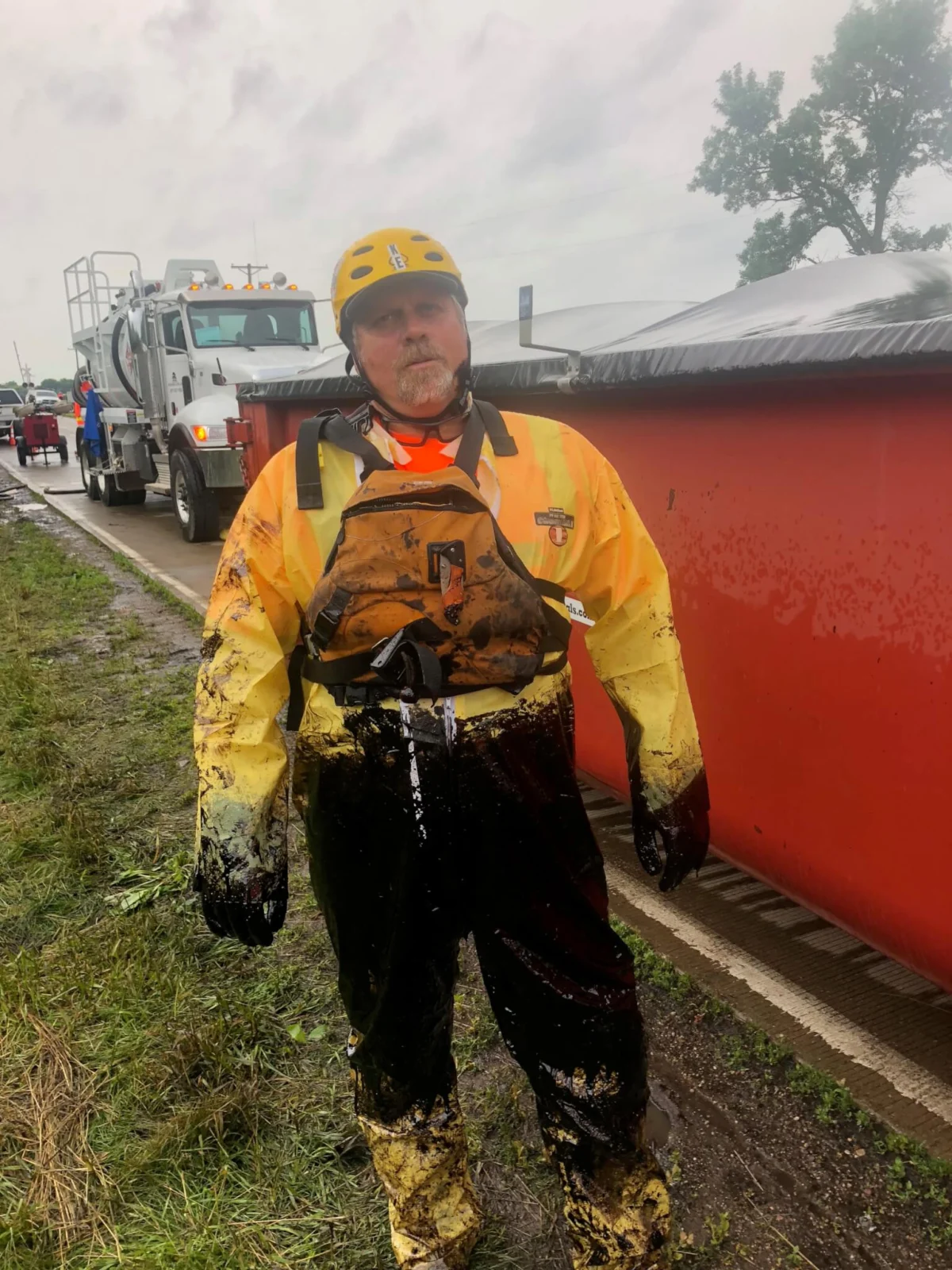
- Station 1 (Gross Decontamination): Responders exit the contaminated zone and immediately remove the heaviest, visible layers of oil from their outer garments and boots using brushes, sponges, or spray systems.
- Station 2 (Outer Layer Removal): Responders shed their outer protective layers and gloves, which are immediately relegated to properly labeled hazardous waste containers. Hard hats and boots are then scrubbed with an aqueous detergent solution. These items are held for transport to the next stage.
- Station 3 (Final Sanitization): This is the final barrier before entering the Clean Reduction Zone (CRZ). Personnel perform a thorough hand and facial scrub. Any respirators used are sanitized, dried, and sealed in clean, labeled plastic bags to prevent re-exposure.
Phase 3: Equipment and Asset Recovery
Decontamination does not stop at the human responder. All vehicles that have crossed the threshold of the exclusion zone must be processed at a designated decon pad. If the oiling is minimal, a high-pressure rinse of tires and wheel wells may suffice. However, in cases of heavy saturation, steam cleaning or high-pressure washing is mandatory to ensure that vehicles do not transport hydrocarbons into the public transport network.
Supporting Data: Why Standardized Protocols Matter
Data from past inland incidents suggests that the primary cause of responder health issues—such as dermatitis, respiratory irritation, and long-term chemical sensitivity—is not the primary spill event, but rather the secondary "take-home" exposure caused by poor decon protocols.
Current industry standards emphasize the use of single-use, disposable external protective clothing wherever possible. The logic is sound: if the gear is disposable, the risk of residual contaminants clinging to the fabric is eliminated. For reusable equipment, the challenge lies in the disposal of the "rinsate." The water used to clean equipment is itself a hazardous material. The protocol requires that all wash-water be collected and treated as waste, preventing the runoff from entering storm drains or clean groundwater. This containment is essential to comply with federal environmental regulations and to maintain the "Social License to Operate" in the communities where these spills occur.

Official Responses and Regulatory Oversight
Regulatory bodies, including the EPA and state-level environmental agencies, have moved toward a more aggressive stance on enforcement. Incident Command Systems (ICS) are now required to demonstrate, via documented logs and site maps, that their decon corridor was fully operational before the first cleanup crews were deployed.
In recent briefings, safety officers have emphasized that "assertive" decon is the only acceptable standard. In the context of fastwater, where oil can travel miles downstream in a matter of hours, the temptation to "cut corners" to speed up containment is high. However, the official response is unanimous: a delayed cleanup is preferable to a cleanup that spreads contaminants through poor hygiene and equipment maintenance. Failure to adhere to these protocols not only risks the health of the crew but can lead to significant legal and financial penalties for the responding party.
Implications: The Long-Term Impact of Decon Success
The implications of the fastwater spill response protocol are far-reaching. By strictly adhering to the hot/warm/cold zone hierarchy, agencies can significantly reduce the "incident footprint."
Ecological Preservation
Effective decontamination minimizes the secondary spread of oil. When vehicles and responders move from site to site, they act as vectors for the pollutant. By ensuring that every boot, glove, and tire is treated before leaving the decon pad, response teams protect clean segments of the waterway from accidental contamination.
Responder Retention and Health
A workforce that feels safe is a workforce that remains productive. By prioritizing decon, incident commanders foster a culture of safety. When responders know that the equipment they are putting on in the morning is clean and that the process for removing it is rigorous, they are less likely to suffer from the anxiety of chemical exposure.
Strategic Scalability
These protocols are designed to be scalable. Whether a spill is a localized pipeline leak or a large-scale river contamination event, the three-station decon model remains the gold standard. As technology advances, we may see the implementation of automated decontamination spray booths for equipment and more advanced biodegradable surfactants that neutralize oil more quickly than standard detergents.
However, the technology will never replace the human element of command. The necessity for proactive, assertive, and clearly mapped decon remains the cornerstone of professional spill management. As we move forward, the integration of these protocols into standard training curricula for all emergency responders will be the defining factor in how successfully the industry manages the inherent risks of inland oil transport. In the unforgiving environment of fast-flowing rivers and streams, there is no room for complacency; the protocol is not just a set of instructions—it is a safeguard for the future.