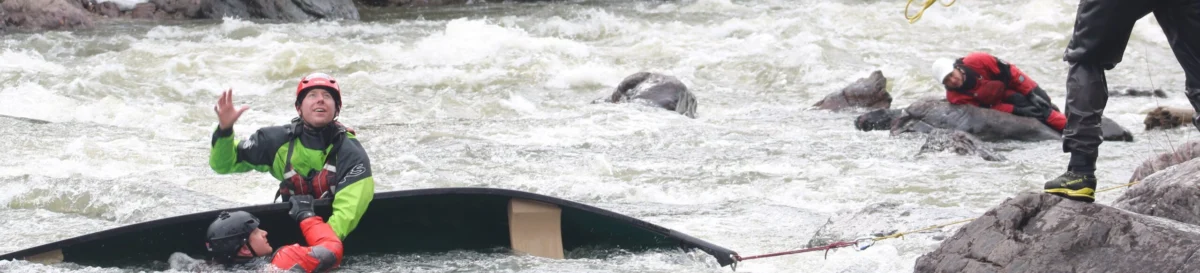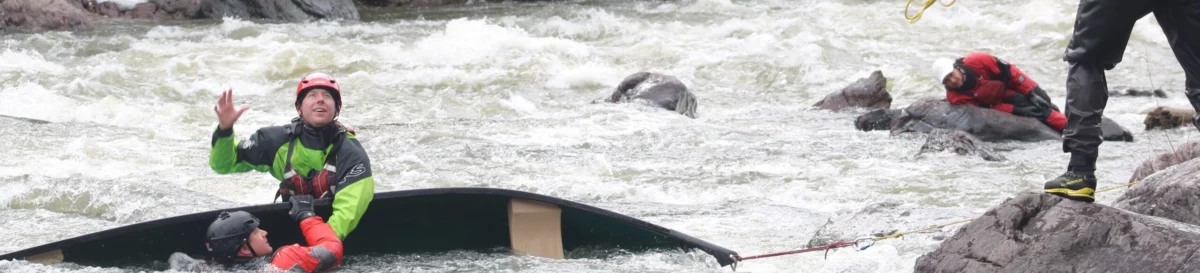
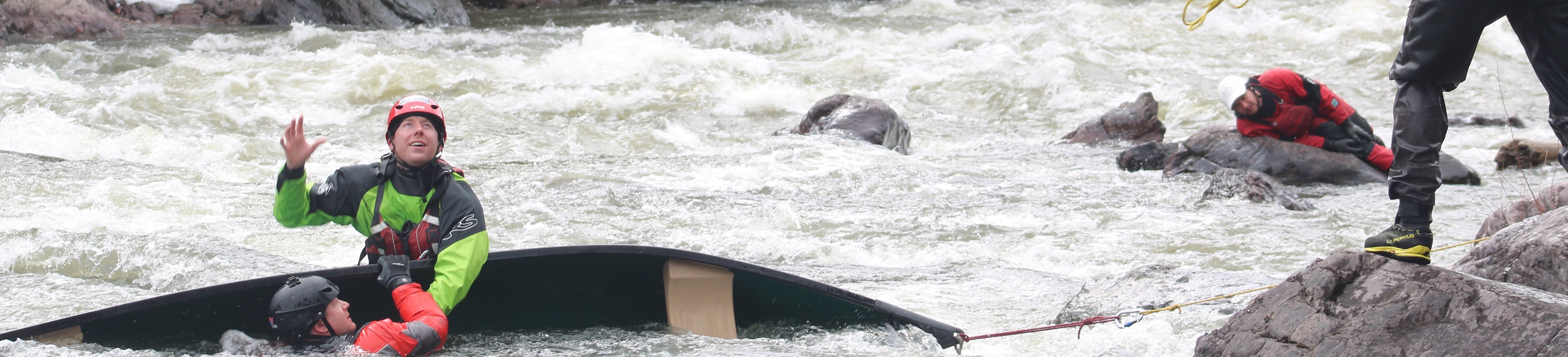
In the high-stakes world of river running, the mantra is simple: preparation is the difference between a minor inconvenience and a life-threatening disaster. Among the most fundamental skills a whitewater boater must master is the "pin"—the technical extraction of a watercraft that has become wedged against a rock, bridge abutment, or strainer. While the industry has long relied on standardized, commercially available "pin kits," seasoned rescue professionals are sounding an alarm: the one-size-fits-all approach is not just inadequate—it is dangerous.
The Illusion of Safety: Why Standard Kits Fall Short
For many recreational rafters, a pin kit is a box that sits at the bottom of a gear bag, rarely opened, and rarely inspected. It is purchased as a safety blanket, a checkbox for trip leaders, and a piece of gear that is "good enough" for the average day on the water. However, the reality of dynamic river environments rarely aligns with the specifications found on the back of a retail package.
The primary failure of these kits is the assumption of universality. A kit optimized for a narrow, technical creek in the Southeast will be fundamentally insufficient for the high-volume, wide-channel rivers of the American West. When a boat is pinned, the variables are aggressive: the speed of the current, the weight of the boat, the lack of suitable anchor points, and the sheer distance to the shoreline. When these factors collide, the standard 150-foot rope and two-pulley setup often leaves rescuers stranded in a state of technical bankruptcy.
Chronology of a Crisis: The Middle Fork Scenario
To understand the inadequacy of the standard kit, one must look at the math of a rescue in real-time. Consider a multi-day expedition on the Middle Fork of the Salmon River. A raft loses an oar entering Haystack Rapid, misses the technical line, and wraps firmly against a boulder.
- The Assessment: The river is 250 feet wide at the site of the pin, with the boat lodged 100 feet from the nearest bank.
- The Deployment: The crew pulls their standard commercial pin kit from the sweep boat. They successfully deploy a throw line and secure a connection to the pinned raft.
- The Anchor Setup: The team traverses 100 feet to the shore and seeks a solid anchor. Because the shore is rocky and lacks immediate, optimal trees, they are forced to walk an additional 50 feet upstream to find a reliable tie-off point.
- The Friction Loss: To gain the necessary mechanical advantage, they construct a Z-drag (a 3:1 pulley system).
- The Failure: As the team begins to pull, the system reaches its limit. The 150 feet of rope provided in the kit is entirely consumed. Why? The distance to the boat (100 feet) plus the distance to the anchor (50 feet) equals the total length of the rope. By the time you account for the four feet of rope consumed by a Figure-8 knot and the mechanical loss inherent in the Z-drag configuration, the rope is already over-extended before a single pound of force has been applied to the raft.
This is not a hypothetical failure; it is a mathematical certainty. The "standard" 150-foot rope is, in many expedition scenarios, essentially a paperweight.
Supporting Data: Rethinking the Hardware
The shift away from standardized kits requires a move toward mission-specific gear. Expert river runners and swiftwater rescue instructors advocate for a modular, custom-built kit that prioritizes reach, mechanical advantage, and durability.
The Rope Revolution
Many kits utilize 1/2-inch static line, which is rated for massive loads (up to 10,000 lbs). While safety margins are important, the sheer weight and volume of this rope limit the amount a boat can carry. Experienced rescuers are increasingly switching to 9mm static rope with a 5,000 lb (22kN) rating. By dropping the diameter, a boater can carry 330 feet of line in the same space—and at the same weight—as 150 feet of 1/2-inch line. This doubling of reach fundamentally changes the tactical options available during a rescue.
Anchoring and Webbing
Anchors are the most frequent point of failure in a rescue system. Relying on a measly 10 feet of tubular webbing is a recipe for disaster. Professional rescuers recommend carrying 25 feet of 1-inch tubular webbing, augmented by manufactured slings such as 13mm Dynex Rabbit Runners or long 240cm slings. These materials are lighter, stronger, and significantly more versatile when wrapping large rocks or trees.
Mechanical Advantage: The Role of Pulleys
A Z-drag is only as good as its efficiency. Low-quality, plastic, or fixed-side pulleys can drag under tension, wasting precious energy. Prusik Minding Pulleys (PMPs) are essential. They allow for a smooth system that captures progress without binding. Furthermore, a kit should ideally contain at least three pulleys. The third pulley allows for a "redirect," which changes the angle of the pull, often the most important factor in breaking the suction or friction holding a boat against a rock.
The Carabiner Protocol
A pin kit is not a repository for spare carabiners. It must contain dedicated, locking carabiners that are never used for water bottles, boat rigging, or casual tasks. Cross-loading a carabiner during a high-tension rescue can result in catastrophic structural failure. Using only rated, high-strength locking hardware is a non-negotiable safety standard.
Professional Perspectives: The Importance of Maintenance
The gear is only as reliable as its maintenance cycle. Experts emphasize that the "set and forget" mentality is a precursor to equipment failure.
"Rope is a living material," notes one veteran instructor. "If you leave it in a damp, sandy dry bag for months, the fibers will degrade, and the sheath will become impregnated with grit. Sand acts like an internal abrasive, slicing through the core of the rope under tension."
The recommendation is to transition to a high-quality, dedicated dry bag—such as those manufactured by Watershed—to store the pin kit. A true dry bag prevents moisture ingress, keeps sand away from the pulleys, and, crucially, provides buoyancy. In a flip or an emergency dump, the pin kit should be the one piece of gear that is guaranteed to stay dry and float to the surface.
Implications for the Future of River Safety
The industry is currently at a crossroads regarding gear standards. While commercial kits provide a low barrier to entry, they also provide a false sense of security that can lead to complacency. As river traffic increases and more participants venture into remote, multi-day environments, the responsibility falls on trip leaders to audit their safety gear.
The implications are clear:
- Customization is Mandatory: Every river runner must assess the specific hazards of their environment—flow rates, river width, and bank stability—before packing their kit.
- Technical Literacy: Owning a kit is insufficient; one must know how to build a 3:1, a 5:1, and how to utilize redirects effectively.
- Equipment Lifecycle Management: Safety gear must be inspected for UV degradation, corrosion, and debris after every excursion.
Ultimately, the goal of a pin kit is not just to get a boat off a rock—it is to keep the rescue crew safe throughout the process. By moving away from "standard" pre-packaged solutions and toward a thoughtfully curated, high-capacity system, boaters can ensure that when the unexpected happens, they are not left wanting for rope, strength, or options. When you are between a rock and a wet place, the gear in your hand is the only thing that matters. Make sure it is built for the worst-case scenario.