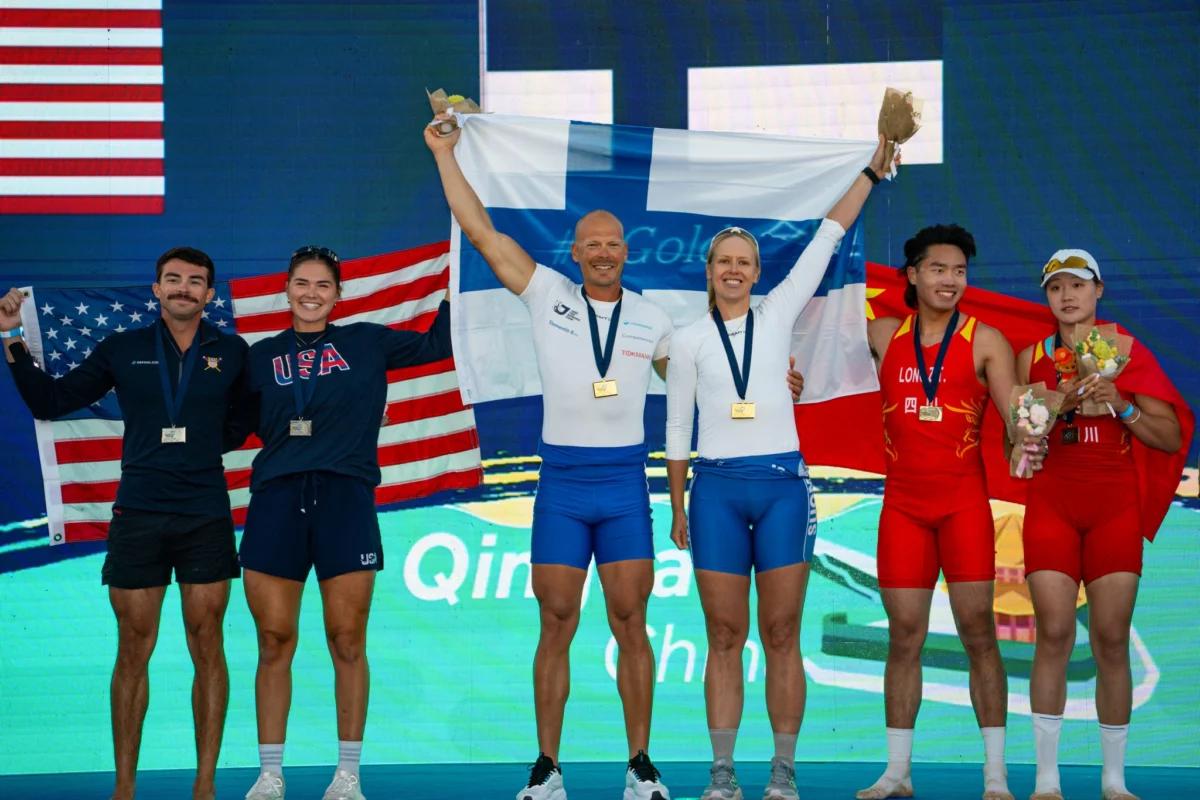
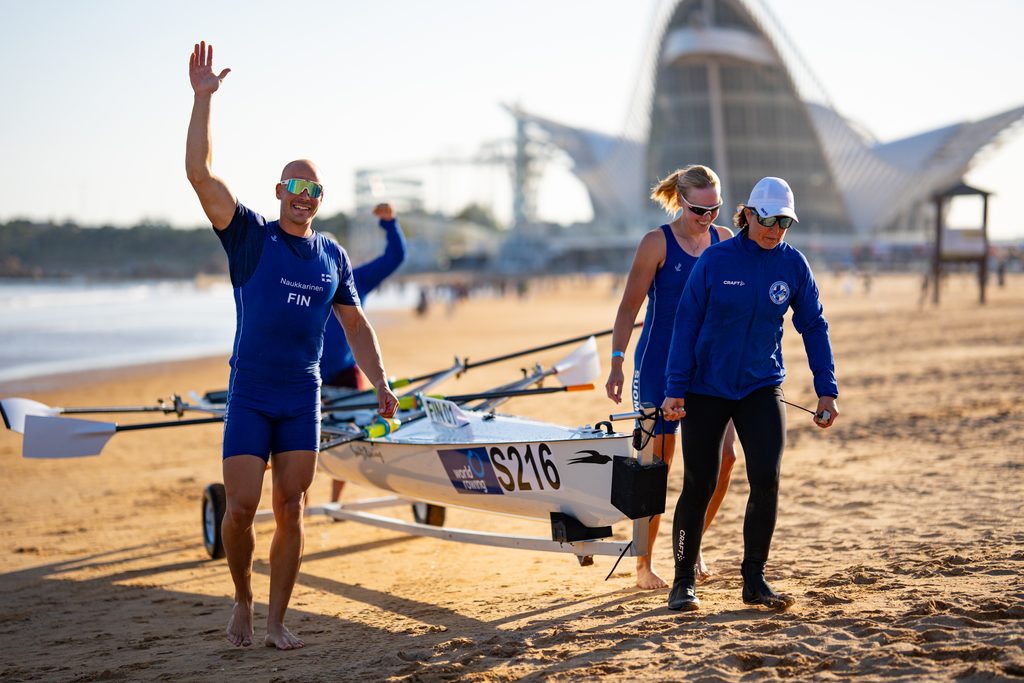
QINGDAO, China – October 13, 2026 – Finnish rowing etched a new golden chapter into its history books today, as Joel Naukkarinen and Eeva Karppinen powered their way to a spectacular World Championship victory in the coastal rowing mixed double sculls. The formidable duo claimed the gold medal on the challenging waters of Qingdao, China, marking a monumental achievement for the sport in Finland. Their triumph was further amplified by individual bronze medals for both athletes in their respective single sculls events, concluding the Coastal Rowing Endurance World Championships with an impressive haul of three medals for the Nordic nation.
The victory not only solidified Naukkarinen and Karppinen’s status as global elite but also ended a 26-year drought for open-water rowing world championship gold for Finland, a testament to their unwavering dedication, strategic prowess, and exceptional teamwork. The demanding 6-kilometer course tested the limits of endurance, skill, and navigational acumen, all of which the Finnish pair demonstrated in abundance.
Main Facts
The coastal city of Qingdao, known for its picturesque coastline and often challenging maritime conditions, served as the perfect backdrop for a historic day in Finnish sports. On Tuesday, October 13, 2026, the Finnish flag rose highest at the Coastal Rowing World Championships, celebrating the extraordinary performance of Joel Naukkarinen and Eeva Karppinen. Their gold medal in the mixed double sculls was the crowning glory of a meticulously planned and flawlessly executed race, solidifying their dominance after back-to-back European titles.
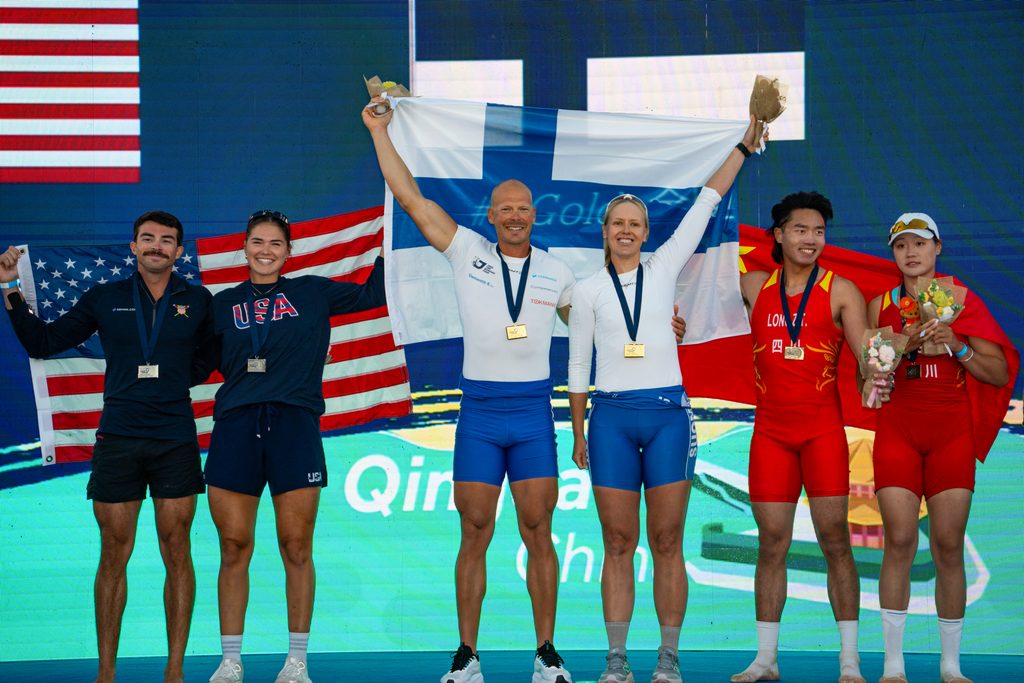
The Finnish pair completed the grueling 6-kilometer course in a blistering 29 minutes and 31.37 seconds, leaving their closest competitors, the United States, 14.33 seconds behind. The Chinese team, racing on home waters, secured the bronze medal, finishing 24.61 seconds adrift of the champions. This decisive victory was not an isolated success; it was complemented by individual brilliance, as both Naukkarinen and Karppinen secured bronze medals in their respective men’s and women’s single sculls events earlier the same day. This trifecta of medals underscored Finland’s emergence as a significant force in the rapidly growing discipline of coastal rowing.
The significance of this gold medal reverberates far beyond the shores of Qingdao. It marks the first time since 2000 that Finland has claimed an open-water rowing world championship gold, a feat last achieved by Laila Finska-Bezerra in the women’s lightweight single in Zagreb, Croatia. For a nation with a rich history in winter sports, this summer discipline success heralds a potential shift and a renewed focus on aquatic endeavors. The performance of Naukkarinen and Karppinen is not merely a personal triumph but a beacon of inspiration for aspiring rowers across Finland, promising to elevate the profile of the sport nationally and internationally. Their achievement is a powerful narrative of ambition, resilience, and the relentless pursuit of excellence against formidable global competition.
The Road to Gold: A Chronological Ascent
The path to world championship glory for Joel Naukkarinen and Eeva Karppinen has been a journey marked by consistent improvement, strategic partnerships, and an unyielding commitment to mastering the unpredictable nature of coastal rowing. Their story is one of building momentum, learning from every challenge, and ultimately, conquering the global stage.
Early European Dominance
The foundation of their world championship success was laid years prior, notably through their dominant performances at the European Coastal Rowing Championships. In 2025, the Finnish duo first signaled their immense potential by clinching the mixed double endurance title in Antalya, Turkey. This victory was not just a win; it was a declaration of intent, demonstrating their ability to work seamlessly together under pressure and navigate complex courses. Their synergy was evident, with Karppinen’s powerful strokes complementing Naukkarinen’s strategic steering and tactical awareness.
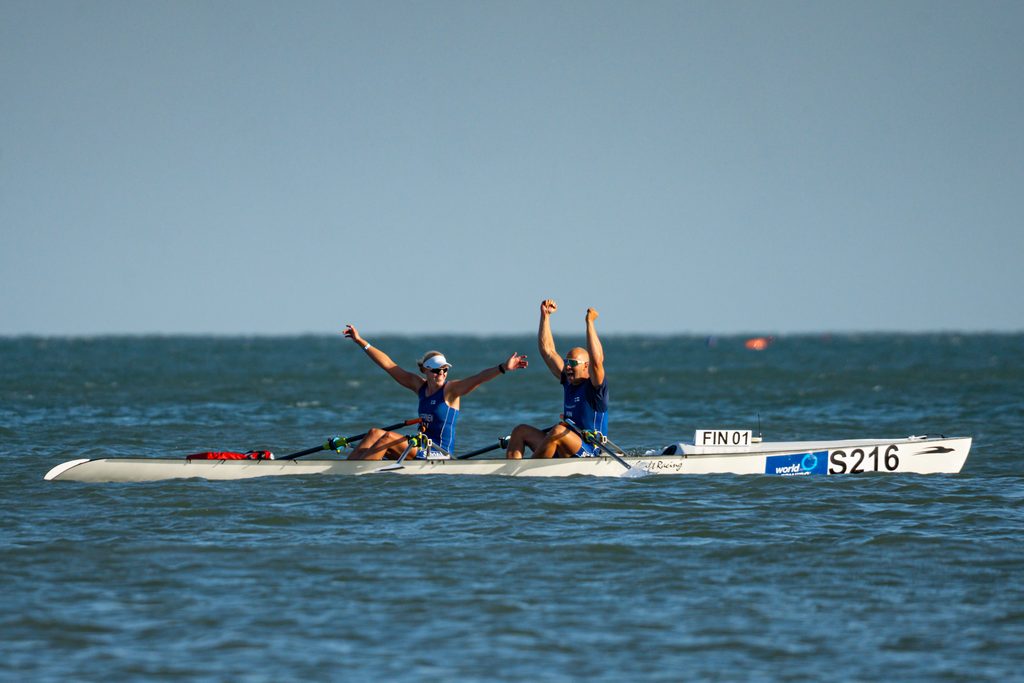
They proved this was no fluke when they successfully defended their European title in September 2026, just weeks before the World Championships, in La Línea, Spain. This repeat performance underscored their consistency and their ability to maintain peak form across multiple seasons. Each European victory refined their partnership, honed their race strategy, and instilled an invaluable confidence that they could translate their regional dominance onto the global stage. The experience of navigating different coastal conditions, from the Mediterranean to the Atlantic, prepared them for the varied challenges Qingdao would present.
The Qingdao Challenge: Endurance Race Day
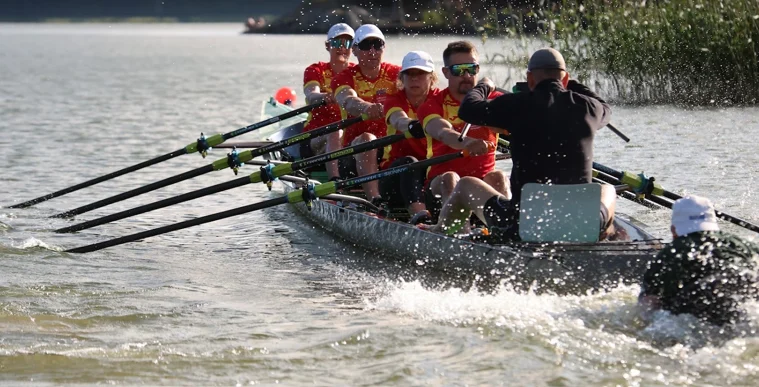
The atmosphere in Qingdao on October 13th was electric, charged with anticipation and the raw energy of elite athletes ready to push their limits. The weather conditions, characterized by a strong northern wind, added an extra layer of complexity to the already demanding 6-kilometer endurance course. Coastal rowing, unlike its flatwater counterpart, requires not only immense physical stamina but also acute awareness of currents, waves, and wind shifts, making navigation as crucial as raw power.
The day began with the individual single sculls finals, providing an early taste of the conditions. Naukkarinen and Karppinen, both seasoned competitors, raced with determination, securing their individual bronze medals. This initial success, while impressive, also offered Naukkarinen critical insights into the water, insights he would later leverage in the mixed double race. The single sculls races served as a vital reconnaissance mission, allowing them to adapt their strategy for the main event.
Mixed Double Masterclass
When it came time for the mixed double final, Naukkarinen and Karppinen approached the start line as reigning European champions, but with the added pressure of vying for a world title. Their strategy was clear and rehearsed. "In the double, Eeva and I had a clear plan and role division in the boat," Naukkarinen recounted. "We agreed beforehand how Eeva would adapt her rowing technique across different sections of the race to ensure we delivered our best performance ever." This level of pre-race communication and trust is paramount in mixed doubles, where synchronicity and mutual understanding can make the difference between victory and defeat.
The challenging northern wind became a pivotal factor, demanding "bold solutions in navigation," as Naukkarinen described. Drawing from his earlier experience in the single scull, he felt confident in his understanding of the conditions. "I had a good feel for the conditions from the single scull, so I told Eeva that no matter how unbelievable my instructions might seem, she just had to trust me. I knew what needed to be done." This unwavering trust in each other’s judgment, particularly Naukkarinen’s navigational calls in the tumultuous waters, allowed them to execute a near-perfect race. They systematically pulled away from the competition, demonstrating superior boat handling and a relentless pace, ultimately crossing the finish line as undisputed world champions.
Individual Grit: The Bronze Battles
Before their golden triumph, both athletes faced intense competition in their respective single sculls finals. Joel Naukkarinen competed in the men’s single, a race he felt was among his best individual performances. He led for a significant portion of the race, showcasing his formidable power and skill. However, an unforeseen equipment malfunction – a problem with the right oarlock – severely hampered his ability to maintain a consistent stroke. "I led the race for a long time, but there was a problem with the right oarlock, which prevented me from keeping the oar properly in the water," Naukkarinen explained. "In the strong crosswind, I couldn’t compensate for the problem with my rowing technique, and the rowers from the United States and France eventually passed me."
Despite the profound disappointment of missing out on an individual world championship due to a technical issue, Naukkarinen’s mental fortitude shone through. "It was very frustrating that a personal world championship remained unachieved due to equipment failure. However, I managed to mentally regroup quickly for the mixed double final," he stated. This ability to compartmentalize and refocus is a hallmark of elite athletes, and it proved crucial for their subsequent success.
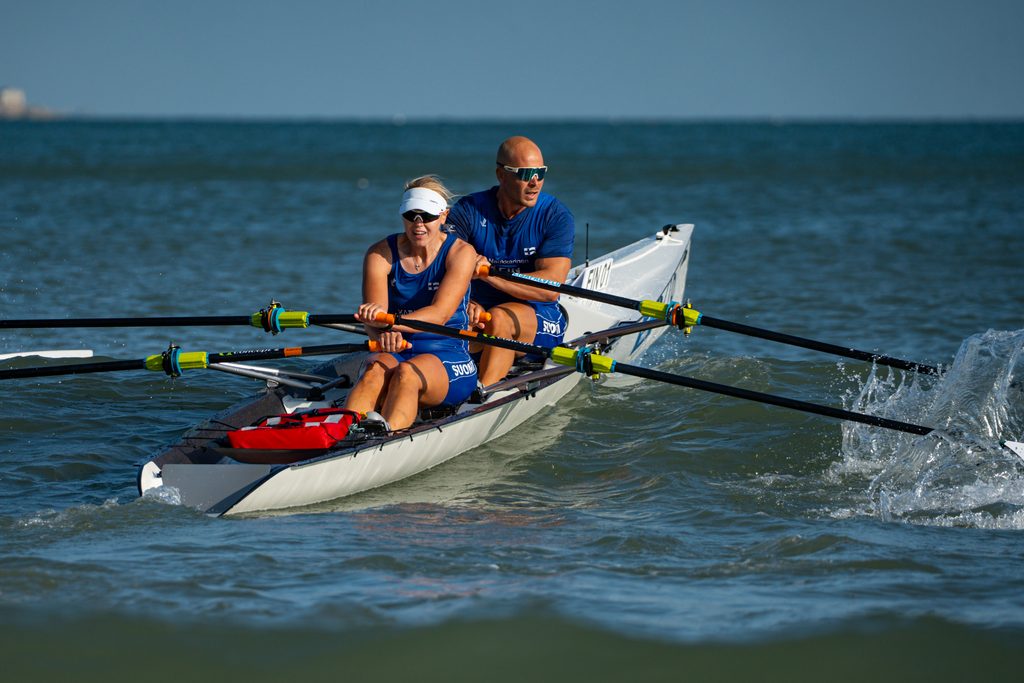
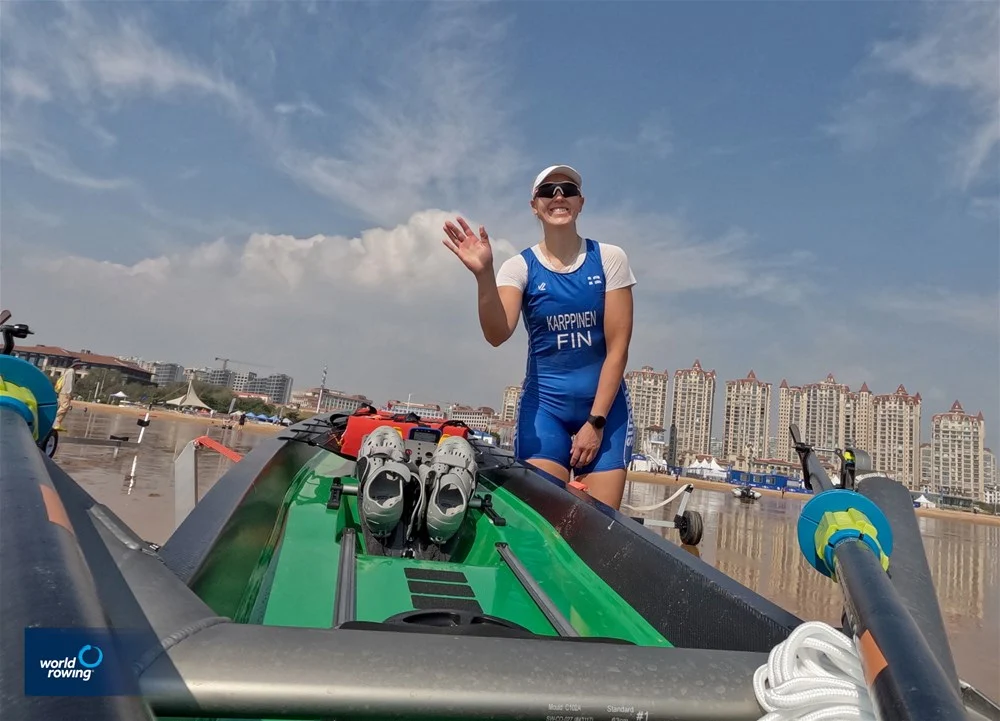
Eeva Karppinen, too, secured a bronze medal in the women’s single sculls, demonstrating her consistent high-level performance. Her medal, combined with Naukkarinen’s, set a positive tone for the day and highlighted the depth of talent within the Finnish coastal rowing team. Both athletes ended the endurance championships with two medals each, a remarkable individual achievement alongside their shared world title.
A Season of Milestones
The Qingdao World Championship victory serves as the pinnacle of an already extraordinary season for Joel Naukkarinen. His 2026 campaign has been a cascade of successes, illustrating his versatility and relentless pursuit of excellence across various rowing disciplines. Prior to Qingdao, in September, Naukkarinen earned an EM silver medal in beach sprint in La Línea, Spain – his first European medal in that rapidly growing discipline. This added to his existing Beach Sprint World Championship bronze from 2022 in Wales, signaling his proficiency in a format that will make its Olympic debut.
Beyond the major championships, Naukkarinen’s season included triumphs in the Spanish Beach Sprint League, where he secured victories in both the men’s single and mixed double categories. He also showcased his prowess at the Baltic Championships, winning gold in the men’s single and bronze in the mixed double with Karppinen. Domestically, August saw him claim three Finnish national championships in single, mixed double, and quadruple sculls in Espoo, Oittaa, underscoring his complete dominance on the national scene. This consistent string of high-level performances underscores his position as one of the world’s leading rowers and provides a strong foundation for his Olympic aspirations.
Supporting Data and Context
The success of Naukkarinen and Karppinen is not just a story of individual brilliance, but also a reflection of the evolving landscape of rowing and a resurgence of Finnish prowess on the international stage.
Finnish Rowing Legacy Reinvigorated
For 26 years, Finnish rowing had yearned for another open-water world championship gold. The last such triumph was in 2000, when Laila Finska-Bezerra captivated the nation by winning the women’s lightweight single sculls world title in Zagreb, Croatia. Her victory was a moment of national pride, and for decades, it stood as a benchmark for Finnish open-water rowing. The intervening years saw various successes, but the top step of the world championship podium remained elusive.
Naukkarinen and Karppinen’s gold medal therefore represents more than just a win; it is a powerful symbol of renewal and reinvigoration for Finnish rowing. It signifies that with dedication, strategic planning, and investment in talent, Finland can once again compete and win at the highest echelons of global rowing. This achievement is expected to spark renewed interest in the sport, potentially attracting new athletes and resources, and creating a virtuous cycle of development and success. It allows the current generation to look beyond Finska-Bezerra’s legacy and build their own.
The Demands of Coastal Rowing
Coastal rowing is a dynamic and increasingly popular discipline within the sport, distinct from traditional flatwater rowing. It takes place on open water, often in challenging conditions such as strong winds, waves, and currents. This requires a unique blend of physical strength, endurance, technical skill, and navigational expertise. The boats are wider and more robust than those used in flatwater racing, designed to handle the rougher conditions. Athletes must not only propel their boat forward but also constantly adapt to the environment, making split-second decisions about steering and technique to maintain speed and direction.
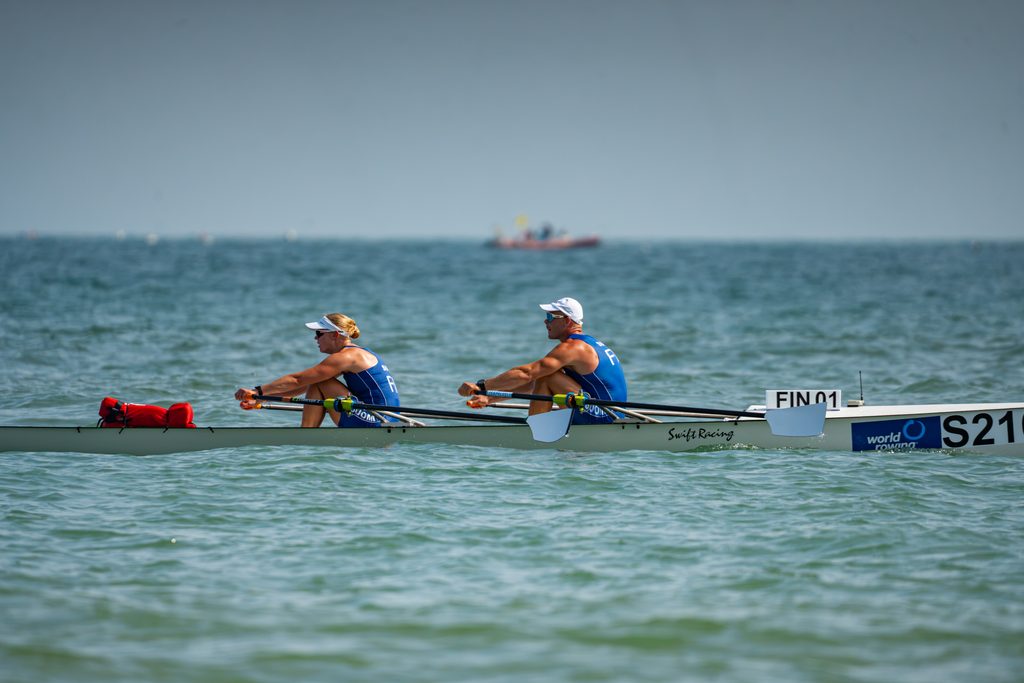
The 6-kilometer endurance race in Qingdao is a prime example of these demands. Unlike the predictable lanes of an Olympic flatwater course, coastal races are often triangular or rectangular, with buoys marking turns, requiring precise steering and tactical choices to find the fastest lines and minimize exposure to adverse conditions. The physical toll is immense, combining the cardiovascular demands of long-distance rowing with the muscular strain of constantly stabilizing the boat and adjusting to waves. The mental aspect is equally critical, requiring unwavering focus and resilience. The fact that Naukkarinen and Karppinen excelled in such conditions speaks volumes about their comprehensive skill set.
Athlete Profiles and Partnership Dynamics
Joel Naukkarinen is a multi-talented athlete with a diverse background that extends beyond the rowing shell. Known for his analytical mind and academic pursuits, he brings a strategic approach to his sport. His individual achievements, including multiple national titles and previous world and European medals in both coastal rowing and beach sprint, highlight his versatility and adaptability. Naukkarinen is not just a powerful rower; he is a thinking athlete, constantly analyzing conditions, tactics, and his own performance. His leadership and navigational skills, particularly evident in the Qingdao mixed double race, are invaluable assets.
Eeva Karppinen, a seasoned rower herself, complements Naukkarinen with her immense power and consistent technique. Her bronze medal in the women’s single sculls underscores her individual strength and capability. In the mixed double, Karppinen’s role extends to maintaining a powerful, adaptable stroke that can respond to Naukkarinen’s steering commands and the ever-changing water conditions. The trust Naukkarinen spoke of, where Karppinen adapted her technique based on his navigation, highlights a profound synergy built on shared experience and mutual respect. Their partnership is a textbook example of how two strong individuals can combine their strengths to create an even more formidable unit, where communication and understanding are paramount.
The Global Stage: Qingdao as Host
Qingdao, a major port city in China’s Shandong province, boasts a rich maritime heritage and a proven track record of hosting international sporting events, including sailing during the 2008 Beijing Olympics. Its natural coastal environment, with varied wind and wave patterns, offers an ideal, albeit challenging, setting for coastal rowing championships. The city’s infrastructure and experience in managing large-scale events ensured a professional and well-organized competition, attracting top athletes from around the globe. Hosting such an event further cements Qingdao’s reputation as a world-class venue for water sports and provides an excellent platform for promoting coastal rowing to a wider audience, particularly in Asia.
Official Responses and Reactions
The historic victory has naturally elicited strong reactions, from the athletes themselves to the national sporting authorities, signaling a wave of pride and optimism for Finnish rowing.
Athlete Reflections
Joel Naukkarinen’s reflections after the races provided a candid insight into the highs and lows of his day. His disappointment over the individual single sculls race, where an equipment malfunction cost him a potential gold, was palpable. "It felt like I was doing my best rowing ever in the men’s single," he lamented, underscoring the frustration of having a world title slip away due to circumstances beyond his control. However, his swift mental recovery and ability to channel that energy into the mixed double race speak volumes about his mental toughness. His strategic calls in the mixed double, born from the direct experience of the single sculls, highlight his adaptive leadership. "I knew what needed to be done," he confidently asserted, a testament to his deep understanding of the sport and the Qingdao conditions.
While Eeva Karppinen was not directly quoted in the original article regarding the mixed double, her consistent performance, culminating in an individual bronze and the mixed double gold, undoubtedly reflects immense satisfaction and pride. Her trust in Naukkarinen’s navigation, as described by him, points to a strong, collaborative partnership where each athlete plays a critical, interdependent role. The shared embrace at the finish line, or the moment they stood on the podium together, would have been a powerful symbol of their collective effort and shared dream realized. Their combined perspective would likely emphasize the years of training, the sacrifices made, and the profound joy of achieving the ultimate prize in their sport.
National Federation’s Jubilation
The Finnish Rowing and Paddling Federation would undoubtedly be brimming with pride and enthusiasm following this historic achievement. A likely official response would emphasize the significance of the gold medal as a testament to years of strategic development and the tireless efforts of athletes and coaches. Statements would likely commend Naukkarinen and Karppinen not only for their athletic prowess but also for their exemplary sportsmanship and dedication.
"This world championship gold is a monumental moment for Finnish rowing," a representative might declare. "Joel and Eeva have not only made history but have also inspired a new generation of rowers across Finland. Their hard work, resilience, and incredible teamwork have paid off in the most spectacular way. This success validates our development programs and reinforces our commitment to supporting our athletes on the international stage." The Federation would likely view this as a powerful catalyst for growth, hoping to capitalize on the public interest generated by such a high-profile victory.
International Acclaim
Within the international rowing community, the Finnish victory would be recognized as a significant achievement. The dominance of certain nations in flatwater rowing often means that emerging powers in coastal rowing garner particular attention. The decisive margin of victory over strong rowing nations like the USA and China would command respect. The story of overcoming an equipment issue in an individual race only to regroup and win a team gold would also resonate widely, highlighting the mental fortitude required at the elite level. As coastal rowing gains more prominence, especially with its Olympic inclusion, performances like these from Finland will undoubtedly be closely watched and lauded.
Implications and Future Outlook
The golden performance in Qingdao has far-reaching implications, not just for the careers of Naukkarinen and Karppinen, but for the trajectory of Finnish rowing and the sport of coastal rowing itself.
Olympic Dreams and the Road to LA2028
One of the most significant implications of Naukkarinen’s consistent success, particularly in the beach sprint format, is its direct bearing on the Los Angeles 2028 Olympic Games. Beach Sprint is set to make its highly anticipated Olympic debut in LA, and Naukkarinen’s current form positions him as a strong contender for a medal. His 2022 World Championship bronze and 2026 European Championship silver in the discipline are crucial markers of his capability.
The world championship gold in endurance coastal rowing, while a different format, further elevates his profile and demonstrates his overall mastery of open-water conditions. This comprehensive skill set, combining endurance, power, and tactical acumen, is invaluable for the fast-paced, high-stakes nature of beach sprint. His achievements provide compelling evidence to the Finnish Olympic Committee and international selectors that he is a prime candidate for the inaugural Olympic coastal rowing team. The road to LA2028 will now likely involve a focused effort on optimizing his performance for the beach sprint format, leveraging the confidence and experience gained from his endurance successes.
Inspiring a New Generation
Such a high-profile victory has the potential to ignite a wave of interest in rowing across Finland. Children and young adults, seeing Finnish athletes standing atop the world podium, may be inspired to try the sport. The visibility of coastal rowing, with its dynamic nature and the thrill of racing on open water, could prove particularly appealing. Rowing clubs nationwide could see an influx of new members, fostering a new generation of talent. This "Naukkarinen and Karppinen effect" could be crucial for the long-term health and growth of Finnish rowing, providing role models and demonstrating that international success is achievable.
The Next Challenge: Beach Sprint Worlds
The excitement in Qingdao isn’t over yet. The Coastal Rowing World Championships continue into the following week, with the highly anticipated Beach Sprint World Championships on the agenda. For Joel Naukkarinen, this presents an immediate opportunity to add another world title to his rapidly growing collection, specifically in the discipline that holds Olympic aspirations. Having already secured a European silver and previous world bronze in Beach Sprint, he will be a strong favorite. The mental recovery he demonstrated between his single sculls disappointment and the mixed double triumph bodes well for his ability to perform under pressure in the upcoming sprint events. A strong showing here would further cement his status as a leading figure in the burgeoning sport of coastal rowing.
Sustaining Momentum
To truly capitalize on this historic success, the Finnish Rowing and Paddling Federation, along with the athletes themselves, will need to strategize on sustaining this momentum. This includes ensuring adequate funding for training camps, equipment, and international competition exposure. Continued investment in coaching expertise, sports science, and athlete welfare will be paramount. Developing a robust talent pipeline, from grassroots programs to elite development, will be essential to ensure that Naukkarinen and Karppinen’s triumph is not an isolated event but rather the start of a new golden era for Finnish rowing on the world stage. Their achievements have set a new benchmark, and the challenge now lies in building upon this foundation to secure future glories.