As extreme heatwaves sweep across Europe, French energy giant EDF has been forced to temporarily suspend operations at three major nuclear reactors. This move, while essential for environmental compliance, highlights the growing tension between the necessity of base-load energy production and the increasingly volatile realities of climate change. With temperatures soaring, the delicate balance between cooling industrial infrastructure and protecting river ecosystems has become a focal point of national energy policy.
Main Facts: The Scope of the Shutdowns
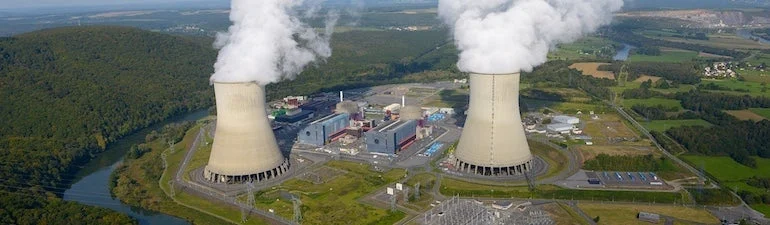
The current wave of reactor suspensions involves three distinct units: Unit 2 at the Golfech power station (1.3GW), Unit 3 at the Bugey facility (900MW), and Unit 2 at the Chooz plant (1.45GW). Together, these reactors represent approximately 3.65GW of capacity, accounting for roughly 6% of France’s total 61GW installed nuclear fleet.
These shutdowns are not a result of mechanical failure or nuclear safety concerns, but rather a direct response to regulatory environmental thresholds. Nuclear power plants typically utilize river water to cool their secondary cooling circuits. Under normal operations, this water is returned to the river slightly warmer than when it was extracted. However, when ambient river temperatures rise due to prolonged heatwaves, the discharge of this water risks raising the river’s temperature to levels that could prove lethal to local aquatic flora and fauna. To comply with environmental mandates designed to safeguard biodiversity, EDF is legally required to throttle or halt production when specific river temperature triggers are reached.
Chronology of the Crisis
The current outages follow a pattern of increasing frequency. This summer marks the second time in recent weeks that EDF has had to intervene to adjust its production schedule due to meteorological extremes.
As of the latest reports, the recovery of these units is contingent upon shifting weather patterns:
- Bugey 3: Currently scheduled to remain offline until July 19.
- Golfech 2: Expected to return to the grid by July 22.
- Chooz 2: The final unit currently scheduled for reactivation, with a target date of July 25.
These timelines are, however, subject to revision. EDF has confirmed that the scheduling and duration of these environmentally driven outages will be dynamically adjusted based on real-time meteorological forecasts. Should the heatwave persist beyond current predictions, further extensions to these closures are likely. Moreover, seven additional reactors are currently being monitored closely and may require output adjustments if river temperatures continue their upward trajectory.
Supporting Data and the Impact on Generation
While the loss of 3.65GW is significant, EDF maintains that the overall impact on the French energy grid remains manageable. In statements provided to Euronews, an EDF representative emphasized that the long-term historical impact of these climate-driven shutdowns is statistically minor.
"Since 2000, production losses resulting from high river water temperatures and low river flows have represented, on average, 0.3% of the French nuclear fleet’s annual electricity generation," the spokesperson noted.
This statistic serves to contextualize the current crisis: while the visual impact of shuttered reactors is dramatic, the structural resilience of the French nuclear fleet has historically proven robust. However, as climate change accelerates, energy analysts are questioning whether this 0.3% average is a reliable metric for the future, or if it represents a legacy figure that will inevitably rise as heatwaves become more frequent and more intense.
Official Responses and Safety Assurances
A central priority for EDF during these events is maintaining public confidence in the safety of nuclear operations. Because the shutdowns are "environmental" rather than "safety-related," the company has been keen to decouple the two issues.
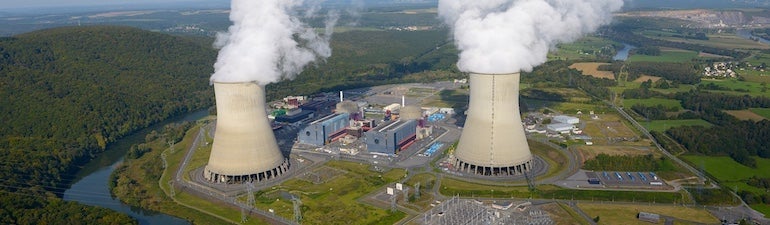
"There is no nuclear safety risk," the EDF spokesperson clarified. "Reactors are perfectly capable of operating under high-temperature conditions. These limits are intended to protect aquatic flora and fauna."
The narrative being pushed by the utility is one of environmental stewardship rather than technical failure. By framing the shutdowns as a proactive measure to protect river ecosystems, EDF seeks to highlight its role as a responsible corporate citizen. However, the regulatory pressure remains high, as the French Nuclear Safety Authority (ASN) and environmental agencies continue to enforce strict standards on thermal pollution, leaving little room for operational flexibility during record-breaking summers.
Implications for Climate Adaptation and Future Infrastructure
The recurring nature of these shutdowns has forced EDF to integrate long-term climate adaptation into its core strategy. The utility has acknowledged that the era of "stable" climate conditions for power generation is over, necessitating a massive investment in infrastructure resilience.
The €8.7 Billion Adaptation Plan
In early 2026, EDF unveiled an ambitious adaptation roadmap, with an estimated price tag of €8.7 billion ($9.98 billion) to be deployed over the next 15 years. This plan is comprehensive, covering nuclear, hydropower, and the energy systems of France’s island territories.
The primary goal is to decouple nuclear power generation from its dependency on river-water cooling. Among the technological solutions under consideration are:
- Advanced Cooling Towers: The construction or modification of cooling towers to allow for more efficient heat dissipation, reducing the temperature of the water before it is released back into the environment.
- Closed-Loop Systems: Transitioning more units to systems that recycle cooling water, thereby minimizing the volume of water extracted from and returned to local rivers.
- Pilot Successes: The company points to the Civaux nuclear power plant as a blueprint for the future. Civaux currently employs a cooling system that manages the temperature of the blowdown process, serving as a successful proof-of-concept for the broader fleet-wide upgrades.
The Macroeconomic and Geopolitical Context
Beyond the technical challenges, these shutdowns carry significant economic weight. France has historically been a major exporter of electricity within Europe. When reactors go offline—whether for maintenance, strikes, or climate-related issues—the sudden reduction in supply can lead to price volatility in the European energy market.
Furthermore, as Europe seeks to decarbonize its economy, the reliance on nuclear power as a steady, carbon-neutral source is paramount. If climate change threatens the availability of this power during the very times it is most needed (e.g., during heatwaves when air conditioning demand spikes), the energy security of the entire continent could be compromised.
Looking Ahead: The New Normal
The situation at Chooz, Golfech, and Bugey is a microcosm of the global energy transition. It serves as a reminder that the energy infrastructure of the 20th century was designed for a 20th-century climate. As temperatures climb, the engineering challenges of the 21st century involve not only increasing output but also ensuring that power plants can exist in harmony with a rapidly changing natural environment.
For France, the path forward is clear: the energy transition is not just about moving from fossil fuels to renewables or nuclear; it is about building a system that is resilient to the very impacts that the transition aims to mitigate. The €8.7 billion earmarked for climate adaptation is a significant commitment, but as the heatwaves of 2026 demonstrate, the cost of inaction—measured in both energy instability and ecological degradation—could be far higher.
As July progresses, all eyes will be on the thermal sensors in the Garonne, Rhône, and Meuse rivers. For EDF and the French government, the cooling water in these rivers has become as critical to national security as the uranium fuel in the reactors themselves. The coming weeks will test not only the technical capacity of the cooling systems but also the efficacy of the long-term adaptation strategies now being put to the test.