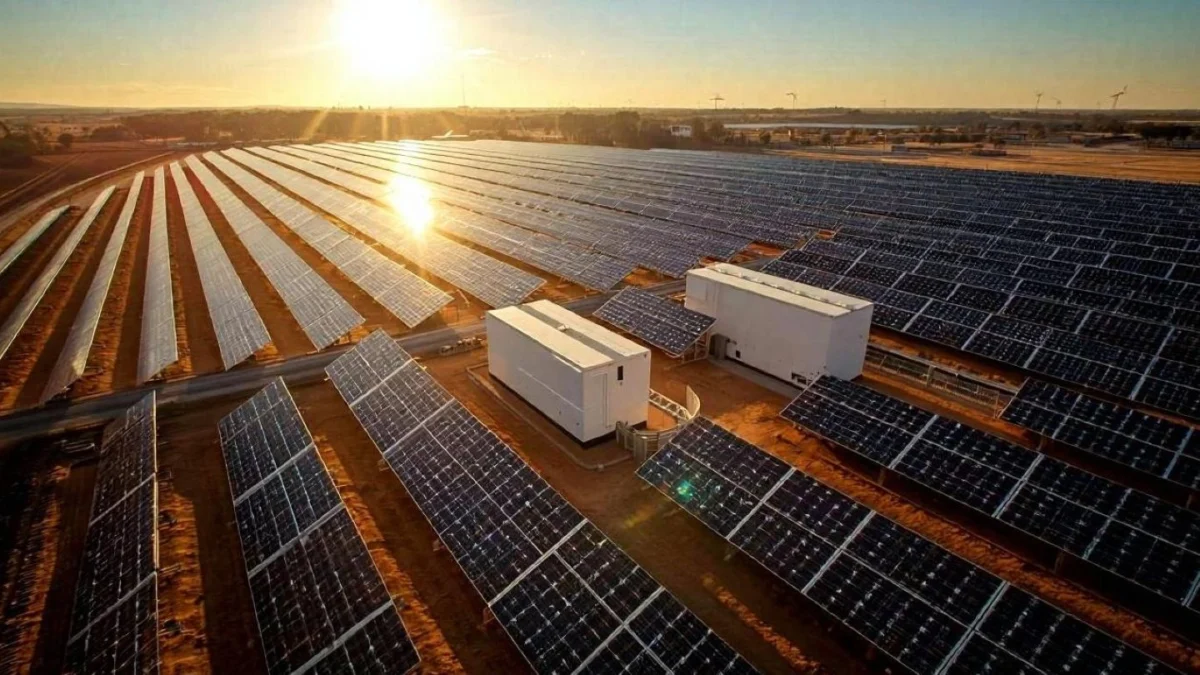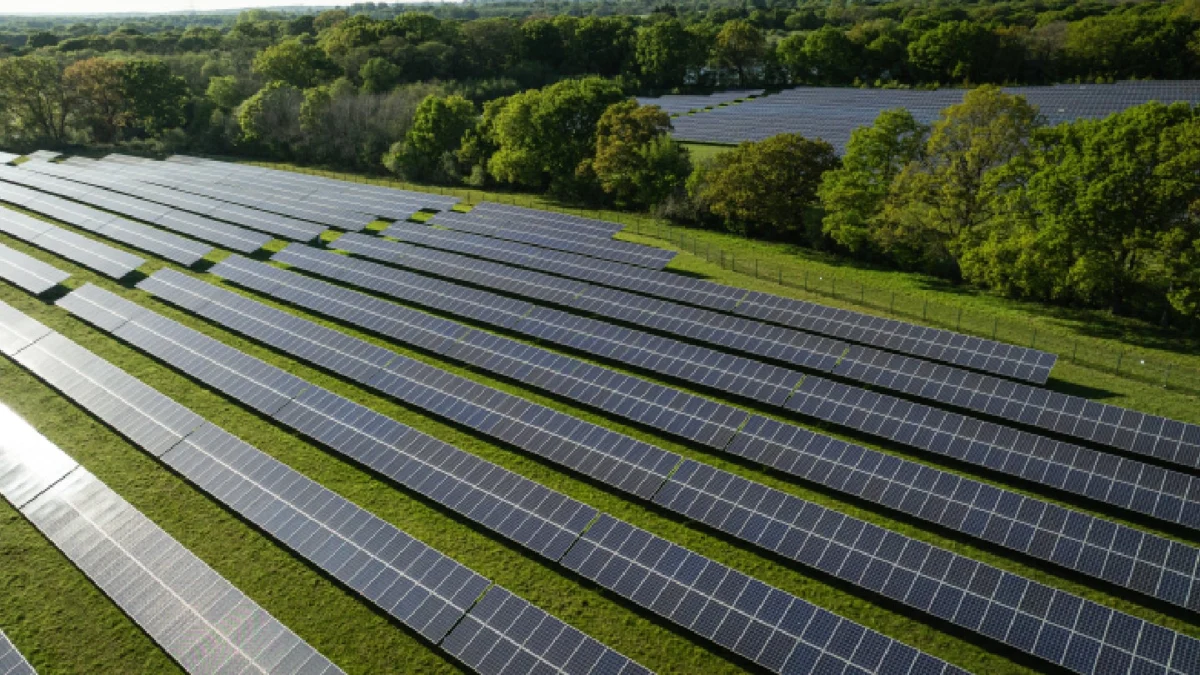
In a significant stride toward diversifying its energy mix and bolstering long-term grid stability, Georgia Power has received formal authorization from the Georgia Public Service Commission (PSC) to execute power purchase agreements (PPAs) for an additional 1.14 gigawatts (GW) of solar generation capacity. This massive procurement represents not only a technological upgrade for the state’s utility infrastructure but also a historic benchmark for the company, marking its largest single solar acquisition to date.
The approved projects, sourced through the competitive CARES 2023 and CARES 2025 request for proposals (RFP) programs, are slated to begin coming online in 2029. By integrating these new assets, Georgia Power aims to provide cost-effective, fixed-price renewable energy to its diverse customer base, reinforcing the state’s position as an emerging hub for large-scale solar deployment.
The Core Facts: Expanding the Renewable Footprint
The authorization covers seven distinct solar installations distributed across a wide geographical swathe of Georgia, including Appling, Decatur, Emanuel, Irwin, Jefferson, Sumter, and Warren counties. These projects are designed to add 1.14GW of capacity to the grid, a substantial increase that reflects the growing demand for clean energy among both residential and commercial subscribers.
The CARES (Customer-Aligned Renewable Energy Subscription) program serves as the primary mechanism for this expansion. Developed through a collaborative effort between Georgia Power and the PSC, the initiative allows eligible subscribers to purchase specific shares of renewable energy production, effectively democratizing access to solar power while maintaining the grid reliability that Georgia Power is known for.
By locking in these PPAs, the utility ensures that the energy generated will be available at a fixed price, shielding customers from the volatility often associated with fossil fuel market fluctuations. This financial predictability is a cornerstone of the company’s long-term resource planning.
Chronology: A Multi-Year Strategy for Solar Integration
The recent approval is not an isolated event but rather the culmination of a multi-year, methodical approach to renewable procurement. To understand the current trajectory, one must look at the timeline of the CARES program and the broader regulatory framework in Georgia.
September 2025: Building Momentum
The foundation for the current expansion was solidified in September 2025, when the PSC approved an initial 1.07GW of solar projects under the CARES 2023 program. Those early agreements targeted key sites in Coffee, Jefferson, Laurens, Mitchell, and Wilkinson counties. The success of that initial round provided the regulatory confidence required to push forward with the even larger 1.14GW acquisition approved this month.
2026–2028: Project Development and Permitting
Between the initial approvals and the projected 2029 commercial start date, Georgia Power and its selected developers are entering a critical phase of land acquisition, environmental assessment, and infrastructure engineering. The distribution of these projects across seven different counties necessitates complex logistical planning, particularly regarding transmission grid interconnection.
2029 and Beyond: Commercial Operations
The 2029 horizon is strategic. It allows sufficient time for the construction of utility-scale solar arrays and the necessary upgrades to local substations. Once operational, these facilities will function as a backbone for the state’s energy transition, providing steady, reliable power to help meet the growing industrial load in Georgia.
Supporting Data: The Scale of the Transition
To appreciate the magnitude of this 1.14GW expansion, it is helpful to contextualize the numbers. A single gigawatt is enough to power hundreds of thousands of homes, depending on climate and energy efficiency standards. By adding 1.14GW, Georgia Power is effectively replacing the capacity of a traditional, medium-sized coal or gas-fired power plant with carbon-free, sunlight-dependent energy.
The CARES CIR Program: A New Frontier
Beyond the standard CARES program, Georgia Power has introduced the CARES Customer Identified Resource (CARES CIR) program. This is a game-changer for the state’s commercial and industrial (C&I) sectors. Approved for up to 3GW of potential generating capacity, the CARES CIR program allows large-scale corporate customers to nominate specific renewable projects for inclusion in the utility’s subscription offerings.
This model is particularly attractive to tech companies and manufacturing firms that have aggressive internal sustainability goals. By allowing these large entities to "identify" the resource, the utility creates a symbiotic relationship: the customer gets the renewable energy credits and the sustainability profile they need, while the utility secures the long-term commitment required to build new infrastructure.
Official Perspectives: Aligning Utility and Regulator
The success of these initiatives relies on the synergy between the utility provider and the regulatory oversight of the Georgia PSC.
Wilson Mallard, the renewable development director at Georgia Power, emphasized the long-term benefits of the acquisition during the recent hearing:
"These new solar resources will deliver affordable and reliable energy at a fixed price for the benefit of all Georgia Power customers for years to come. The approval of these agreements by the Georgia PSC helps advance cost-effective renewable energy in our state and adds more than 1,100MW [1.1GW] of renewable energy resources to our diverse generation portfolio."
For the PSC, the focus remains on balancing the "three-legged stool" of utility regulation: affordability, reliability, and sustainability. The commissioners have noted that the competitive bidding process utilized in the CARES RFP programs has consistently driven down the cost of solar energy, proving that renewable energy is no longer just an environmental choice, but an economically sound business decision.
Implications: The Future of the Georgia Grid
The implications of this expansion extend far beyond the immediate increase in megawatt-hours.
1. Attracting High-Tech Industry
The recent approval of a power supply contract for OpenAI’s planned project in Effingham County serves as a bellwether for the state. As data centers and AI-driven industries look for locations, they demand massive amounts of electricity—often with a preference for renewable sources. Georgia Power’s proactive investment in large-scale solar makes the state a prime destination for these power-hungry enterprises.
2. Grid Resilience and Diversification
A more diverse generation portfolio is a more resilient one. By layering solar onto a base of nuclear, natural gas, and hydroelectric power, Georgia Power reduces its dependency on any single fuel source. As weather patterns become more unpredictable, this modular approach to energy generation—distributed across seven different counties—provides a safeguard against localized disruptions.
3. Economic Impact in Rural Counties
The selection of sites in counties like Appling, Sumter, and Warren is a significant economic driver. Utility-scale solar projects bring construction jobs, increased tax revenue for local school systems, and land-lease income for agricultural landowners. This "energy harvesting" model allows rural Georgia to participate directly in the state’s transition to a modern, high-tech economy.
4. Setting a Precedent for the South
Georgia’s approach to solar—combining large-scale utility procurement with customizable subscription programs for industrial customers—is being watched closely by other states in the American South. If the CARES and CARES CIR programs continue to deliver on their promises of cost-effectiveness and reliability, they may well become the blueprint for other regions that are currently hesitant to shift away from traditional base-load generation.
Conclusion: A Sustained Trajectory Toward 2029
The path forward for Georgia Power is defined by an ambitious, data-driven strategy. With over 2GW of solar capacity approved through the CARES 2023 and 2025 programs combined, the utility is fundamentally restructuring its generation portfolio to meet the needs of the 21st century.
While the 2029 launch date may seem distant, the intervening years will be marked by intensive engineering, site development, and the continued expansion of the CARES CIR program. As Georgia continues to position itself as a powerhouse of industrial growth, the integration of these solar assets will remain a critical pillar of the state’s economic and environmental health. Through a blend of competitive market forces, regulatory foresight, and customer-centric design, Georgia Power is proving that the transition to renewable energy can be both scalable and stable.