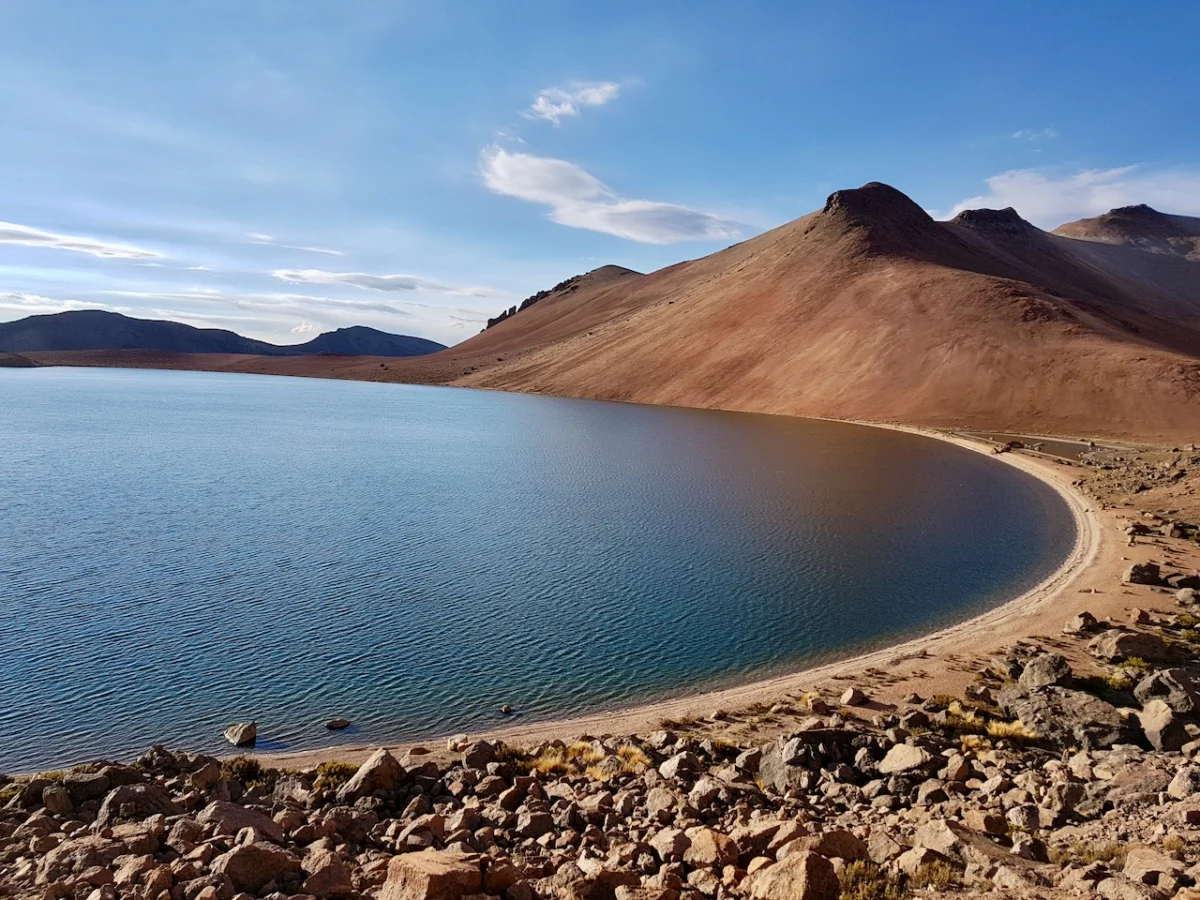
In the remote, thin-aired reaches of the Bolivian Altiplano lies a landscape that feels less like a part of Earth and more like a glimpse into a primordial, extraterrestrial realm. While much of the world’s attention in this region is drawn to the iconic Salar de Uyuni or the technical, death-defying climbs of the surrounding volcanoes, there exists a quieter, more intimate masterpiece of high-altitude geography: the Five Lakes Loop.

Tucked away near the village of Sajama—a settlement that claims the title of one of the highest permanently inhabited places on the planet—this 47-kilometer (29-mile) trek offers a profound encounter with solitude, geology, and the raw, biting beauty of the Andes.

Main Facts: The Anatomy of a High-Altitude Expedition
The Five Lakes Loop is a trek defined by its extremes. It is not a trail for the faint of heart, nor for the unacclimatized. Spanning a distance of approximately 47 kilometers, the route functions as a border-straddling overnighter that dips into both Bolivia and Chile.

Key Logistics
- Difficulty: Moderate, though significantly impacted by altitude.
- Total Elevation Gain: 946 meters (3,104 ft).
- Elevation Range: 4,230 meters (13,879 ft) at the village of Sajama to a peak of 5,130 meters (16,831 ft).
- Optimal Window: June through September, when the skies are at their most crystalline, though the mercury regularly plummets well below freezing.
- Route Nature: Approximately 40% of the trek involves off-trail navigation. While the terrain is open and treeless, making line-of-sight navigation relatively straightforward, the physical toll of oxygen deprivation requires a cautious, measured pace.
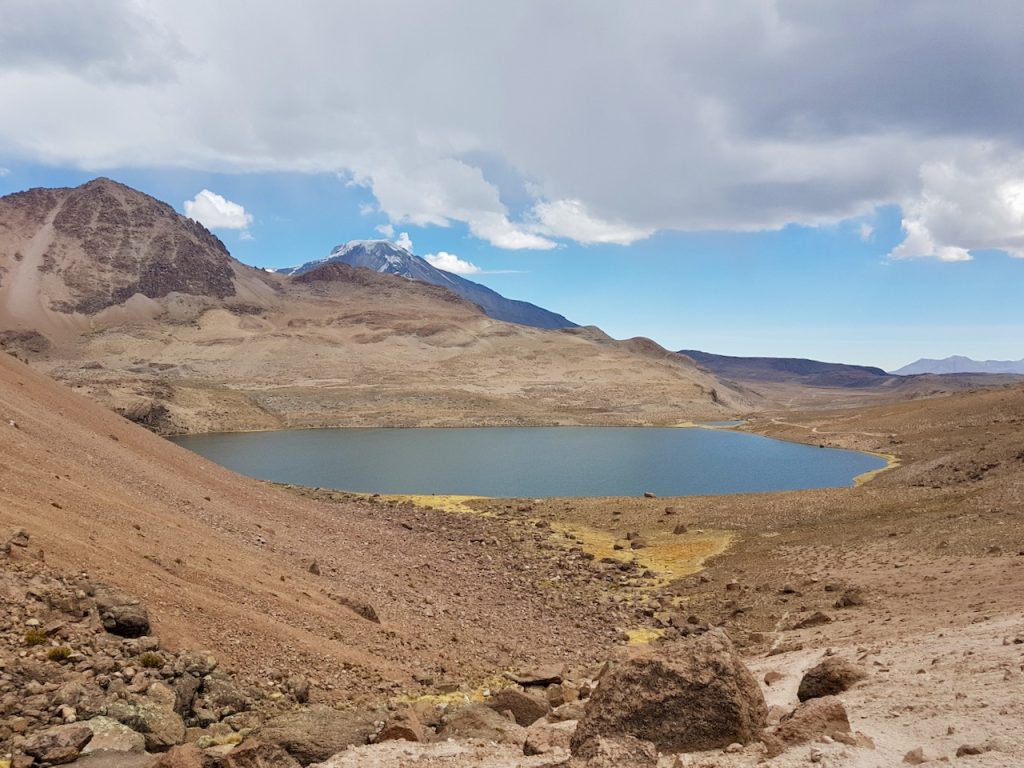
The "Five Lakes" themselves are the jewels of the journey, reflecting the snow-dusted summits of volcanoes like the towering Nevado Sajama. The trek is a testament to the scale of the Altiplano, where mountains dominate the horizon and the sheer expanse of the landscape humbles the individual traveler.

Chronology: A Journey Through the Clouds
The journey begins in the village of Sajama, an outpost that serves as the gateway to the Sajama National Park. At 4,230 meters, the very act of walking through the village serves as a reminder of the altitude.

Day One: Into the High Desert
The departure from the village marks the transition from civilization to the wilderness. As the trail winds away from the modest dwellings of the locals, the path leads toward the base of the volcanic massif. The early hours are characterized by a gradual ascent, passing through plains where herds of llamas—the silent, watchful guardians of the high plateau—graze on sparse scrub.

The terrain quickly gives way to the rugged beauty of the Quebrada passes. The trek toward the first of the lakes provides dramatic vistas of the twin peaks, Volcan Pomerape (6,282 m) and Volcan Parinacota (6,348 m). By mid-day, the route reaches the approach to the higher mountain passes. Navigation here is a matter of reading the land; without a formal, worn-in trail, the hiker relies on GPS coordinates and the visual markers of distant peaks.

As the sun begins its descent, the atmosphere changes. The temperature drops rapidly, often hitting levels that would be considered extreme in lower latitudes. A notable campsite at 4,928 meters (16,168 ft) serves as the primary stop for the night. In these conditions, the environment is unforgiving—it is often described as “colder than a loan shark’s heart”—but the reward is a clear, star-studded sky and a profound silence that is rare in the modern world.

Day Two: The Circuit Closes
The second day is characterized by the descent and the traverse of the remaining lake systems. The path winds through the rugged terrain, bringing the trekker face-to-face with the llareta (Azorella compacta). This remarkable, moss-like plant is a botanical marvel; it appears as a solid rock, yet it is a living, centuries-old organism that clings to the Andes at elevations between 3,200 and 5,000 meters.

Descending back toward the village, the landscape shifts from the austere, volcanic high ground to the sheltered valleys near Sajama. The return to the village feels like a re-entry into a different world. The final hours of the trek are often capped with the simple, human pleasure of observing a local football match, where the players display a remarkable level of fitness despite the thin air that leaves most visitors gasping for breath.
Supporting Data: Environmental and Biological Context
The Altiplano is not merely a high-altitude desert; it is a complex ecosystem. The existence of the five lakes—some of which sit on the Chilean side of the border—is dependent on glacial melt and subterranean aquifers.

- Geological Significance: The region is a hotbed of volcanic activity. The soil is rich in minerals, and the water bodies are often highly alkaline, creating unique, vibrant colors that change with the light.
- Botanical Resilience: The llareta is a keystone of this environment. It grows at a rate of only a few millimeters per year, meaning some of the specimens seen along the loop are likely hundreds of years old.
- Climatic Factors: The combination of intense solar radiation during the day and sub-zero temperatures at night creates a high-stress environment for both flora and fauna. This diurnal temperature range is a defining characteristic of the Altiplano and requires specialized gear, including high-rated sleeping systems and robust UV protection.
Official Perspectives and Local Significance
Sajama village is more than a transit point; it is a center of indigenous culture. The community has long adapted to the extreme altitude, with a way of life that centers around the pastoral management of alpacas and llamas.

Tourism in this region is strictly regulated by the national park authorities. Official guidelines emphasize the "Leave No Trace" philosophy, which is critical in an environment where the slow growth of vegetation makes any damage permanent. Local authorities encourage visitors to hire local guides, not only for safety during the off-trail sections of the Five Lakes Loop but to provide a sustainable economic bridge for the local population.

The village’s status as a high-altitude settlement provides an essential service to the scientific community as well, serving as a site for studying human physiological adaptation to chronic hypoxia.

Implications: Why the Five Lakes Loop Matters
In an era where "adventure travel" has become increasingly commodified, the Five Lakes Loop stands out as an exercise in authentic exploration. It requires self-sufficiency, respect for the environment, and a willingness to confront one’s own physical limitations.

The Value of "Slow" Exploration
Unlike the high-traffic circuits of the Everest region or the Inca Trail, the Five Lakes Loop offers a rare commodity: solitude. There are no teahouses, no crowded base camps, and no digital connectivity. This allows for a deeper, more introspective experience. The implications for the modern traveler are significant—it is a reminder that the most rewarding landscapes are often those that require the most effort to reach.

Conservation and the Future
As climate change continues to impact glacial retreat in the Andes, the long-term sustainability of the water sources in the Altiplano is a growing concern. The lakes are the lifeblood of the high desert, supporting both wildlife and local agriculture. Future visitors are encouraged to be mindful of their impact. The Five Lakes Loop is a fragile ecosystem; it remains open, but it relies on the stewardship of those who traverse it.

Conclusion
The Five Lakes Loop is not merely a hike; it is a pilgrimage into the heart of the Andes. It is a journey that strips away the noise of the world, leaving the hiker with nothing but the sound of the wind, the sight of the snow-capped volcanoes, and the steady rhythm of their own breath. For those prepared to face the cold, the altitude, and the physical challenge, it offers an experience that is as enduring as the ancient llareta that clings to the mountainside. Whether you are seeking a test of endurance or a quiet moment of reflection under the vast, thin air of the Altiplano, this loop remains one of the world’s truly essential, albeit hidden, alpine treasures.