By Page Buono
September 9, 2026
For more than a century, the Colorado River—the lifeblood of the American West—has been governed by a complex, often contradictory architecture of legal mandates. Known collectively as the "Law of the River," this intricate tapestry of compacts, court decrees, and federal guidelines dictates how water is shared among seven U.S. states, numerous Tribal Nations, and the Republic of Mexico.
As of August 24, 2026, the Bureau of Reclamation has released a pivotal framework aimed at stabilizing this system for the next decade. Yet, as the region grapples with the permanent reality of a hotter, drier climate, the challenge remains: can we govern a river as if it were a living body, or will the weight of these agreements eventually cause the system to collapse?
The Anatomy of the Basin: A Metaphor for Complexity
To understand the management of the Colorado River is to engage with a puzzle of immense scale. Perhaps the most effective way to conceptualize the "Law of the River" is to view the entire basin as a single, interdependent human body.
The 1922 Colorado River Compact serves as the skeleton. It is the rigid, foundational framework upon which all other biological functions—the political and economic operations—are built. The limbs of this body are the diverse stakeholders: the sprawling urban centers, the vast agricultural valleys, the sovereign Tribal Nations, the industrial enterprises, and the fragile riparian ecosystems that rely on the river’s flow to survive.
The various agreements that have evolved since 1922—such as the 2007 Interim Guidelines and the 2019 Drought Contingency Plan (DCP)—function as the nervous system. These agreements act as the nerves that trigger movement, dictate muscle response, and facilitate cooperation during times of scarcity. If these nerves fail to fire in unison, the body suffers from paralysis or, worse, internal conflict.
The brain, in this metaphor, is the network of decision-makers: the Bureau of Reclamation, state governors, water districts, Tribal leaders, and international partners. Their ability to maintain consensus is the difference between a functional organism and a system operating at cross-purposes. The water itself, flowing through the arteries of the canal systems, is the blood. Without the blood, the body dies; if the blood is managed poorly, the body weakens.
Chronology of Crisis and Coordination
The management of the Colorado River has never been static. It has been a century-long exercise in reactive governance.
- 1922: The Colorado River Compact is signed, dividing the river into Upper and Lower Basins and allocating water based on historically wet hydrology that has not existed for decades.
- 1944: A treaty with Mexico secures a fixed annual allocation of water, adding an international dimension to the management body.
- 1964: The Supreme Court ruling in Arizona v. California settles long-standing disputes over Lower Basin allocations.
- 2007: The Interim Guidelines are established to provide a roadmap for shortages and surplus conditions.
- 2019: The Drought Contingency Plan (DCP) is enacted, representing a rare moment of multi-state cooperation to protect critical reservoir levels in Lake Mead and Lake Powell.
- August 2026: The Bureau of Reclamation releases a new 10-year framework. This document creates a two-year operational plan and establishes the decision-making process for the following eight years.
This latest move by the Bureau of Reclamation is an attempt to transition from a cycle of "crisis management" to a more proactive, long-term operational strategy.
Supporting Data: The Reality of the Flow
The urgency behind these new guidelines is not political theater; it is driven by hard, empirical data. Since the turn of the 21st century, the Colorado River Basin has experienced what scientists call "aridification"—a structural shift in the climate characterized by higher temperatures and reduced snowpack runoff.
- Reservoir Depletion: Lake Mead and Lake Powell, the two largest reservoirs in the United States, have spent years hovering at historically low levels, threatening the ability to generate hydroelectric power and deliver water to over 40 million people.
- Agricultural Impact: Agriculture accounts for nearly 70% of Colorado River water usage. New management strategies must balance the economic necessity of food production with the shrinking availability of supply.
- Tribal Water Rights: Indigenous Nations, which hold senior, unquantified water rights, are now playing a central, long-overdue role in negotiations. Ensuring that these rights are honored is a primary test of the new framework’s legitimacy.
The data suggests that the "skeleton" of 1922 is no longer sufficient to support the "limbs" of 2026. The new guidelines are an attempt to add layers of muscle to the system, providing the flexibility needed to handle years of severe drought without triggering systemic failure.
Official Responses and Stakeholder Perspectives
The release of the Bureau of Reclamation’s three-part document has been met with a mixture of cautious optimism and intense scrutiny.
"The framework provides the clarity we have lacked for several years," says a representative from the Bureau of Reclamation. "By separating the immediate two-year operational needs from the long-term eight-year strategic goals, we are creating the breathing room necessary for stakeholders to negotiate in good faith."
However, environmental advocacy groups remain vigilant. While they acknowledge the necessity of the new guidelines, they emphasize that the human-centric focus of these agreements often neglects the "heart" of the system: the river itself.
"We are managing the water, but are we managing the river?" asked one policy analyst. "If we treat the river merely as a commodity to be divided, we will eventually run out of the very thing we are trying to manage."
Tribal leaders have also emphasized that "cooperation" must not be a buzzword. For decades, Tribes were sidelined in the negotiation process; today, they are demanding that any new agreement includes robust protections for their water rights and investments in infrastructure that benefits their communities.
Implications: The Test of Time
As we look toward the next six months, the ultimate test of these guidelines will be their implementation. Are they merely ink on paper, or do they possess the "nerves" to force action?
The consequences of failure are severe. A breakdown in cooperation would likely lead to protracted litigation, economic instability for the agricultural sector, and severe water restrictions for the major metropolitan areas of the Southwest.

The critical questions that will define the success of this 10-year framework include:
- Enforceability: Do these guidelines have the teeth to mandate conservation, or are they merely suggestions that can be ignored during the next dry cycle?
- Equity: Do the agreements ensure that the burden of shortage is shared fairly, or are the most vulnerable communities—and the river itself—being asked to bear the brunt of the sacrifice?
- Climate Resilience: Does the framework account for the accelerating pace of climate change, or does it rely on outdated hydrological assumptions?
Conclusion: The Heart of the Basin
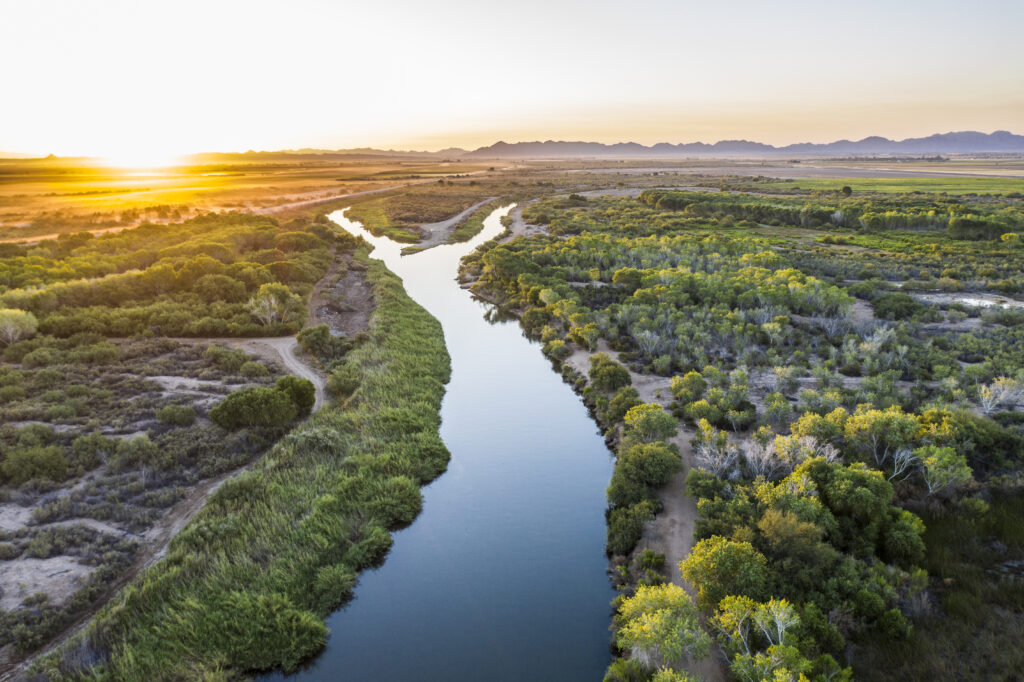
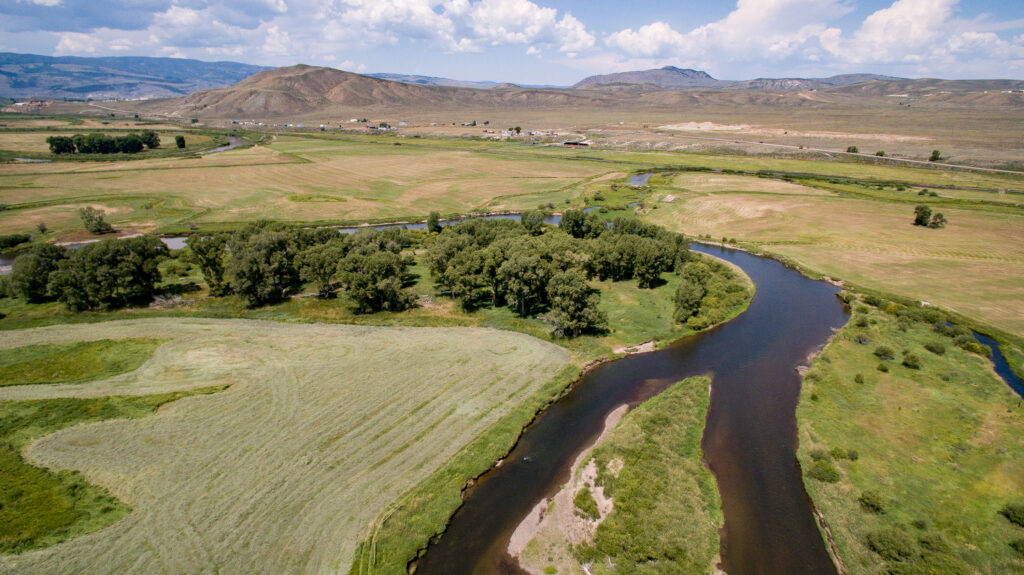
At the center of all the legal jargon, the political posturing, and the complex engineering, there is a river. The Colorado River is not just a resource; it is a heart that pumps life into the high deserts and deep canyons of the American West.
The new guidelines must recognize healthy rivers and watersheds as core elements of the Basin’s resilience infrastructure. Connected floodplains, intact forests, and thriving riparian zones are not luxuries; they are the immune system of the Basin. They help filter water, reduce the risk of catastrophic wildfire, support biodiversity, and strengthen the region’s ability to withstand the unpredictable nature of our changing climate.
If we succeed in our management, if we have any hope of keeping this "body" upright, we must never lose sight of the heart. We can build all the dams, write all the contracts, and coordinate all the agencies we want, but if the river itself ceases to be a living, functioning ecosystem, the rest of the anatomy will inevitably fail.
The management of the Colorado River is, and will always be, a work in progress. It is a dialogue between the past and the future—a constant effort to balance the demands of a growing population with the finite, fragile reality of the natural world. Whether this new 10-year framework provides the stability we need remains to be seen, but one thing is certain: the river will always be the final arbiter of our success.