While Crete is globally celebrated for its sun-drenched Mediterranean beaches and the labyrinthine ruins of the Minoan civilization, the island’s true soul is often found in its interior. Towering above the Aegean Sea, the White Mountains—known locally as Lefka Ori—form a rugged, limestone spine across western Crete. Among these peaks, which boast over 30 summits exceeding 2,000 meters, lies a geological wonder that serves as both a natural masterpiece and a symbol of Cretan resilience: the Samaria Gorge.

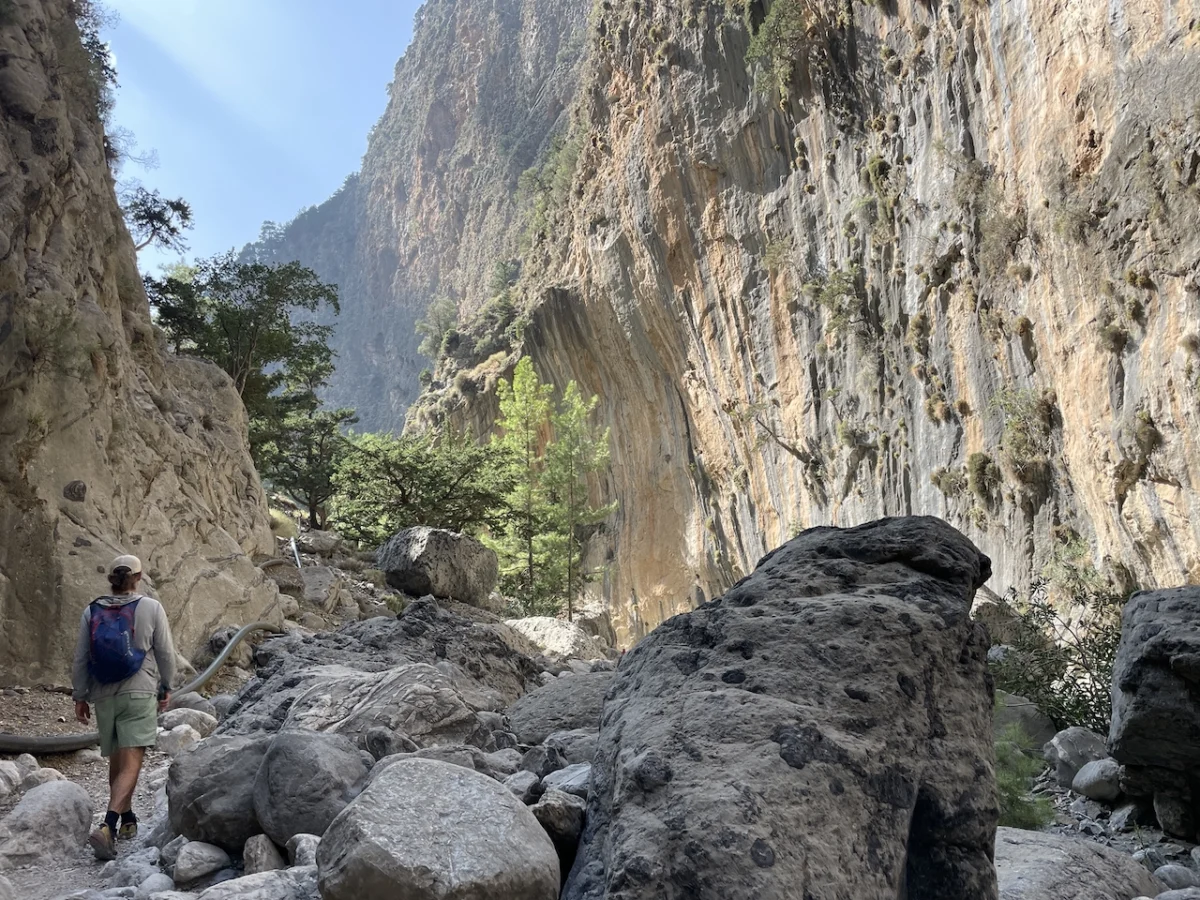
Spanning 16 kilometers (9.9 miles) from the high-altitude plateau of Omalos down to the Libyan Sea, the Samaria Gorge is widely considered the crown jewel of Greek hiking. With sheer cliffs soaring nearly 300 meters high and a landscape that shifts from pine-scented mountain air to the salt-kissed breezes of the coast, it is an ecosystem-spanning journey that demands respect, preparation, and a sense of wonder.

Main Facts: An Overview of the Gorge
The Samaria Gorge is not merely a trail; it is a protected National Park and a vital sanctuary for endemic wildlife.

- Distance: 14.5 km (8.9 miles) from the primary trailhead to the southern exit.
- Total Elevation: A significant descent of 2,327 m (7,635 ft) with an initial gain of 1,099 m (4,285 ft) for those tackling the full topography.
- Difficulty: While often classified as "easy" for experienced hikers due to the well-maintained path, the sheer distance and constant downhill strain require good physical conditioning.
- Key Landmark: The "Iron Gates" (Sideroportes), where the gorge narrows to a mere three meters in width, flanked by towering cliffs that reach 300 meters into the sky.
The trail serves as a living museum, featuring the deserted village of Samaria, a settlement that dates back to the Byzantine period. It was here that the gorge earned its reputation as a place of refuge. For centuries, the impassable terrain provided cover for local freedom fighters during the Ottoman occupation, turning the gorge into a bastion of liberty.

Chronology of the Trail: A Descent Through History
The hiking experience begins at the Xyloskalo trailhead, situated at the edge of the Omalos plateau. The journey begins with a steep, switchbacking descent that tests the knees and rewards the eyes.

- The Morning Descent (0–4 km): As you navigate the cobbled paths, the sunrise over the White Mountains creates a spectacle of light and shadow on the bald, off-white limestone summits. By the 4 km mark, hikers arrive at Ayios Nikolaos, a shaded oasis featuring a centuries-old chapel and ancient cypress trees. Historically, this site was home to a temple dedicated to Apollo in the 1st Century B.C., underscoring the area’s long-standing cultural significance.
- The Village of Samaria (7 km): Reaching the midpoint, hikers find the abandoned village of Samaria. Once a vibrant community, it was emptied in 1962 when the area was designated a National Park. Today, the stone buildings stand as silent witnesses to the past, now serving as outposts for park rangers and researchers.
- The Iron Gates (11 km): Beyond the village, the path transitions into the riverbed. This is the most dramatic segment of the trek. The canyon walls close in, creating the legendary Iron Gates—a narrow passage that feels like a portal to another world.
- The Final Stretch (14.5 km+): Emerging from the gorge, the trail leads to the southern entrance and eventually the seaside village of Agia Roumeli. Here, the rugged mountain experience concludes with the cooling embrace of the Libyan Sea and a well-deserved meal.
Supporting Data: The Biodiversity of Samaria
The establishment of the National Park in 1962 was a turning point for the local fauna, most notably the Kri-kri (Cretan Goat). These shy, sure-footed animals are the icons of the White Mountains.

In the early 1960s, the population was estimated at a precarious 200 individuals. Through the strict protection afforded by the National Park status, the population has rebounded to over 2,500. Though often viewed as a symbol of Crete, historical evidence suggests the Kri-kri may have been introduced to the island during the Minoan civilization (3100 B.C.–1100 B.C.), as their likeness frequently appears on ancient vases, coins, and seals of that era.

Official Responses and Park Management
The management of the Samaria Gorge is a delicate balance between tourism and conservation. Rangers, who patrol the trail regularly, are tasked with enforcing safety protocols, particularly regarding closing times.

In recent years, the trend of "out-and-back" hiking—where enthusiasts hike the full distance and return on foot rather than taking the ferry—has sparked debate among park officials. During a 2023 expedition, hikers reported varied responses from staff. While some officials expressed skepticism regarding the feasibility of a round-trip journey, others were supportive, provided hikers demonstrated appropriate pace and preparation.

The primary concern for park officials remains the "6:00 PM" rule. Because the gorge is prone to flash floods and rockfall, the park is strictly cleared by dusk. Any hiker attempting a more ambitious route is expected to maintain a steady, disciplined pace, as the terrain, while beautiful, is unforgiving to those caught unprepared.

Implications for Future Visitors
For the modern traveler, Samaria is a reminder of the importance of "slow travel." To truly appreciate the gorge, one must look beyond the physical challenge.

Planning Considerations:
- Accommodation: The Hotel Neos Omalos, located near the northern trailhead, has been a staple for hikers for over 70 years and provides an excellent base for early morning departures.
- Hydration: Despite the rugged appearance of the landscape, potable water is readily available at designated rest areas throughout the trail, making it a manageable trek for those who pack light.
- Respect the Environment: The "Leave No Trace" ethos is paramount. The gorge is a fragile ecosystem; visitors are encouraged to stay on marked paths to protect the local flora and avoid disturbing the Kri-kri.
The Legacy of Resistance
The narrative of the Samaria Gorge is deeply intertwined with the concept of "resistance." The most famous historical event occurred in 1770, when 4,000 women and children retreated into the gorge to escape Turkish invaders. Led by the local hero Giannis Bonatos, a small force of 200 fighters successfully defended the Iron Gates, proving that the terrain itself was the ultimate ally of the Cretan people.

Today, when hikers traverse the narrow stone passages of the Iron Gates, they are walking through a corridor of history. The gorge is not just a destination for outdoor recreation; it is a monument to the endurance of the human spirit. Whether you are a seasoned trekker or an occasional hiker, the Samaria Gorge offers a profound connection to the natural and cultural legacy of the Mediterranean.

For those seeking deeper insight into the region, the Samaria Gorge is featured extensively in the recent publication "Wanderlust Mediterranean" by Gestalten, which explores the most iconic trails across the southern European landscape.