By Page Buono | September 9, 2026
For over a century, the Colorado River—the lifeblood of the American West—has been governed by a rigid, labyrinthine architecture of legal mandates. This collection of statutes, court decrees, and interstate compacts, collectively known as the “Law of the River,” dictates how water is shared among seven U.S. states, thirty Tribal Nations, and the Republic of Mexico. However, as the climate grows increasingly volatile and the river’s flows diminish, the fragility of this century-old framework has been laid bare.
On August 24, 2026, the U.S. Bureau of Reclamation released a comprehensive 10-year management framework, marking a pivotal transition in how the Basin will navigate the immediate future. To understand the gravity of these new guidelines, one must look beyond the dry legalese and view the Colorado River system as a complex, living body—one that is currently fighting for its health.
The Anatomy of the Basin: A Metaphor for Complexity
To conceptualize the web of agreements currently guiding the Colorado River, it is helpful to visualize the system as a biological entity. The 1922 Colorado River Compact serves as the skeleton—the foundational framework upon which all subsequent functions are built. The limbs of this body are the communities, agricultural hubs, Tribal Nations, and ecosystems that rely on the river’s water as their vital lifeblood.
The regulatory agreements that followed—such as the 2007 Interim Guidelines and the 2019 Drought Contingency Plan (DCP)—function as the nervous system, transmitting signals that trigger action, curtailment, or cooperation. The brain of this entity is the network of decision-makers: the Bureau of Reclamation, state water managers, Tribal leaders, and international representatives. When these parts work in harmony, the system functions. When they work at cross-purposes, the entire body risks paralysis.
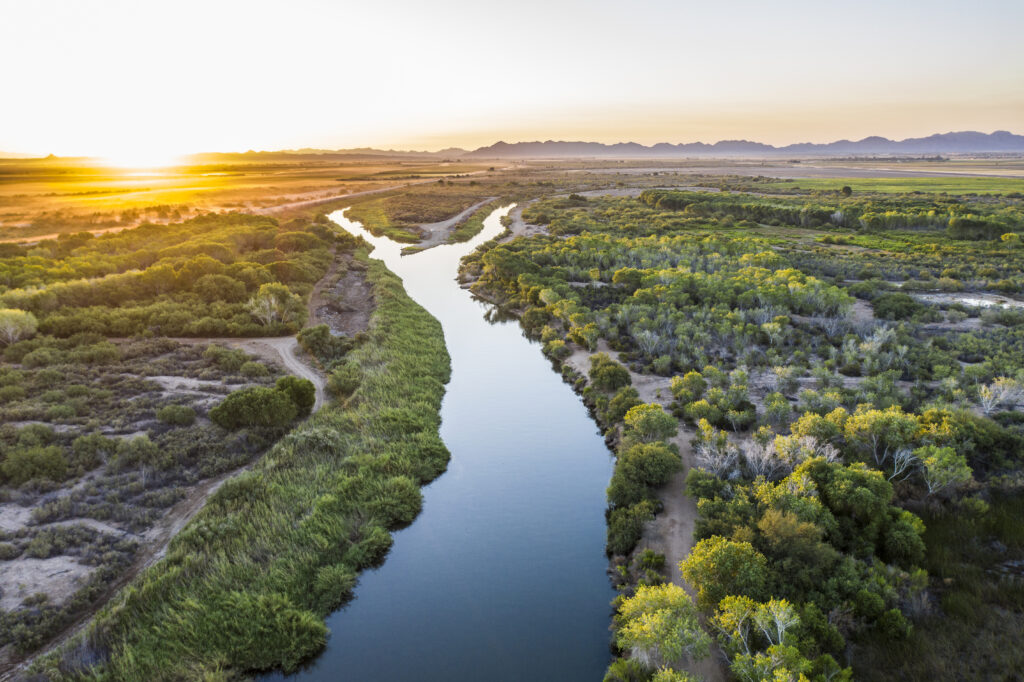
The new federal documents released in late August aim to refine these nervous signals, ensuring that the system does not merely survive, but maintains a functional posture in an era of unprecedented scarcity.
Chronology: A Century of Allocation and Adaptation
The governance of the Colorado River is not a static set of rules, but a historical progression of reactionary measures:
- 1922: The Colorado River Compact is signed, dividing the basin into Upper and Lower regions and allocating water based on historically wet hydrology that has since proven to be an anomaly.
- 1944: The U.S.-Mexico Water Treaty guarantees 1.5 million acre-feet of water to Mexico, cementing the international dimension of the river’s management.
- 2007: The Interim Guidelines are established to manage shortages and surplus conditions in the Lower Basin.
- 2019: The Drought Contingency Plan (DCP) is enacted, representing a desperate, collaborative effort to keep water levels in Lake Mead and Lake Powell from dropping to catastrophic levels.
- 2026: The Bureau of Reclamation introduces a 10-year roadmap. This plan bifurcates the management strategy: providing concrete operational numbers for the next two years, while establishing a framework for decision-making through 2036.
Supporting Data: Why the Shift is Necessary
The necessity for this new framework is driven by cold, hard data. Climate change has fundamentally altered the hydrology of the Colorado River Basin. Rising temperatures have led to "aridification"—a permanent shift in the basin’s moisture balance.
According to recent hydrological reports, the river’s natural flow has declined by nearly 20% over the last two decades. Simultaneously, reservoir storage—specifically in Lake Mead and Lake Powell—has oscillated near historic lows. The Bureau’s new guidelines are designed to address the "structural deficit" of the river, where total allocations under the 1922 framework far exceed the actual water available in the river channel.
The 2026 framework aims to replace the "emergency" mindset of the early 2020s with a more sustainable, predictive model. By setting clear parameters for the next two years, the Bureau hopes to stabilize the system, allowing for a more deliberate, eight-year negotiation process that will define the long-term future of the basin.
Official Responses and Stakeholder Perspectives
The reception to the August 24 announcement has been one of cautious optimism tempered by deep-seated anxiety.
The Bureau of Reclamation has characterized the document as a "bridge to a more resilient future." In their official summary, they emphasized the necessity of consensus. "The Colorado River is a shared resource," a spokesperson noted. "Our goal is to ensure that no single entity bears the burden of scarcity alone, and that the system remains viable for all stakeholders, including the Tribal Nations who have been historically marginalized in these negotiations."
However, stakeholders across the basin remain divided. Agricultural interests are concerned about the long-term impact on food security and rural economies if mandatory water reductions become the "new normal." Conversely, environmental advocacy groups are pushing for the new guidelines to prioritize ecosystem health, arguing that a river without a functioning riparian zone is a failed river.
Implications: The Heart of the Matter
As we look toward the next six months and beyond, the ultimate test of the new guidelines will be their efficacy in keeping the “body” of the river upright. The consequential questions for the next phase of implementation include:
- Enforceability: Do these guidelines have the teeth to ensure that every state and entity adheres to its reduction obligations?
- Tribal Equity: How will the new rules integrate the water rights of Tribal Nations, ensuring that their sovereignty is respected in the face of basin-wide shortages?
- Climate Resilience: Do the guidelines account for the "worst-case" climate scenarios, or are they still tethered to the optimistic projections of the past?
- Ecosystem Preservation: How much water will be protected to maintain the ecological integrity of the Grand Canyon and the Colorado River Delta?
The most critical implication of this new era is the shift in focus toward the river itself. For too long, the Colorado has been treated as a plumbing system—a commodity to be divided and diverted. The 2026 guidelines offer a moment of reckoning. We must recognize healthy rivers, connected floodplains, and intact watersheds as core infrastructure.

Healthy forests and watersheds are not just "nature"; they are the front line of defense against drought and wildfire. They are the essential organs of the basin. If the blood (water) is to continue moving through the system, we must ensure that the heart (the river) remains vibrant.
Conclusion: A Future Focused on the River
At the center of all the agreements, negotiations, and political maneuvering is the river. It has always been the river. As we move forward under this new 10-year framework, the goal must transcend simple arithmetic. We are not just managing water volumes; we are managing a complex, living, and struggling ecosystem.
If we are to succeed in keeping this body upright, our management strategies must evolve to view the river not as a resource to be exhausted, but as a system to be sustained. The guidelines released in 2026 are a step in that direction, but they are only as strong as the collaboration behind them. The challenge ahead is to ensure that the river—the heart of the West—is not left out of the equation.
Stay Informed:
The crisis of the Colorado River is a dynamic and evolving story. At American Rivers, we are dedicated to protecting and restoring the vital waterways of the Southwest. Join us in advocating for a sustainable future for our water and our rivers. Sign up for our newsletter to receive the latest updates, analysis, and opportunities for action delivered directly to your inbox.