By Samuli Haapasalo | September 8, 2026
Deep within the sprawling, mist-shrouded forests of Kuhmo, near the Russian border, the line between the observer and the observed blurs. For the wildlife photographer, the hide is not merely a tool; it is a bridge into a world that exists entirely independent of human interference. On the night of August 17–18, 2026, that bridge offered a rare, visceral glimpse into the nocturnal lives of Finland’s most elusive apex predators.
Main Facts: The Resilience of the Wild
The wilderness does not accommodate human comfort. During the evening hours of August 17, the Kuhmo region experienced a deluge of such intensity that it defied urban drainage logic. In a city, such rainfall would have paralyzed infrastructure, turning streets into rivers. Here, on the edge of a vast mire, the landscape simply absorbed the fury.
The primary subject of this expedition was to document the behavior of large carnivores—wolves, bears, and wolverines—under challenging meteorological conditions. Contrary to popular belief, these animals are rarely deterred by heavy rain. Their coats are evolutionarily designed to repel water, and the inclement weather provides a secondary benefit: it suppresses the swarms of insects that typically plague the marshlands. For the predators, it is a night of quiet efficiency; for the photographer, it is a test of patience and technical precision.
Chronology: A Night of Atmospheric Shifts
The night began in a state of suspended animation, with the torrential rain dominating the sensory landscape. By midnight, the intensity of the storm necessitated a brief rest within the cramped confines of the wooden hide. However, the true nature of a hide-based stakeout is that the most critical moments often occur during the transition between the deep night and the first light of dawn.
- 17:00 – 21:00: Persistent heavy rainfall. The mire transformed into a series of ephemeral pools. Despite the intensity, the sheer scale of the landscape allowed for a majestic display of raw elemental power.
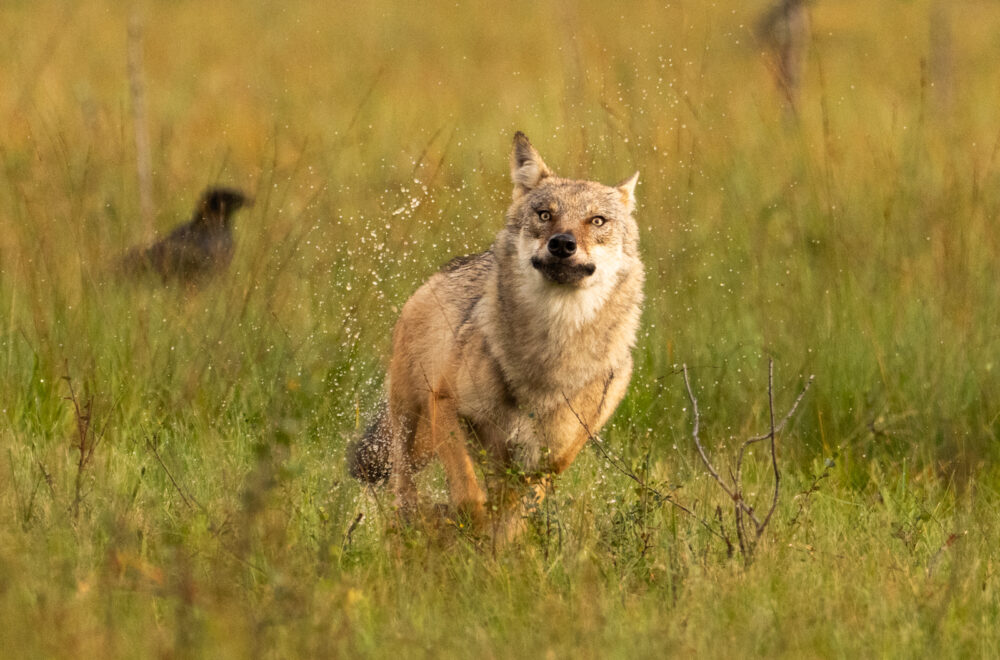
- 22:00 – 02:00: Intermittent calm. During these lulls, the first visitors emerged. Two wolves were spotted traversing the sodden moss, scouting the terrain with clinical precision, searching for sustenance in the saturated environment.
- 04:30: The pre-dawn ritual. A photographer’s discipline requires rising at least 30 minutes before sunrise. Coffee is consumed, senses are sharpened, and the camera settings are adjusted for the low-light conditions of the "blue hour."
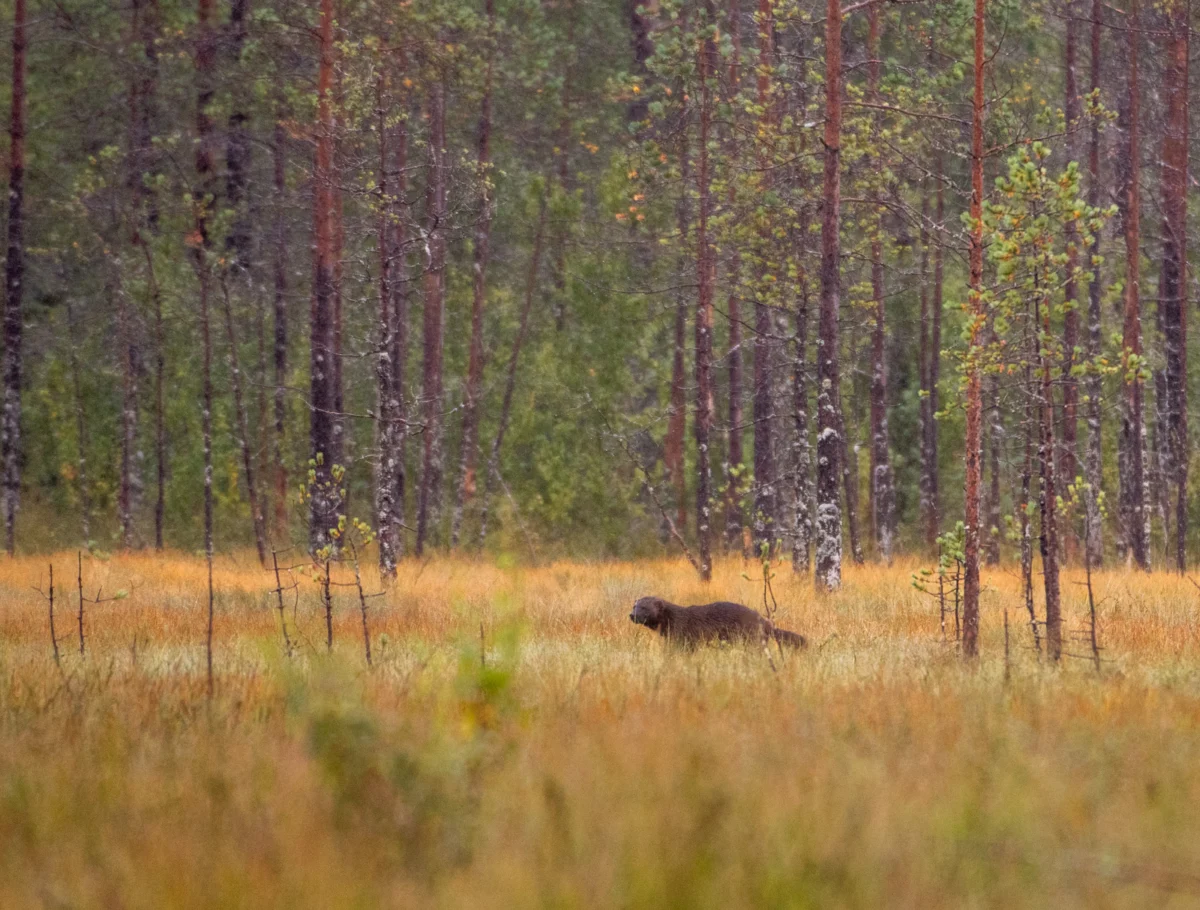
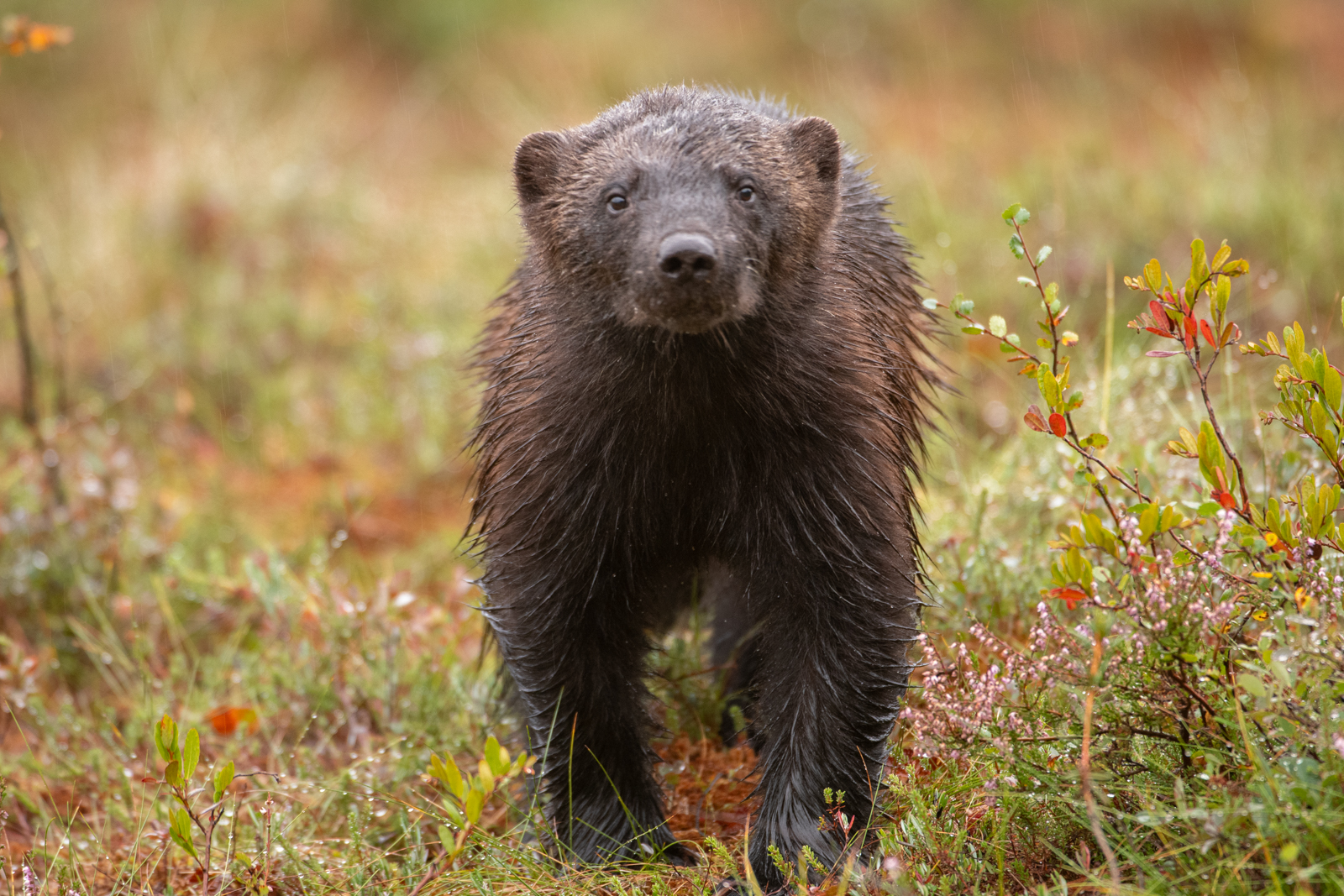
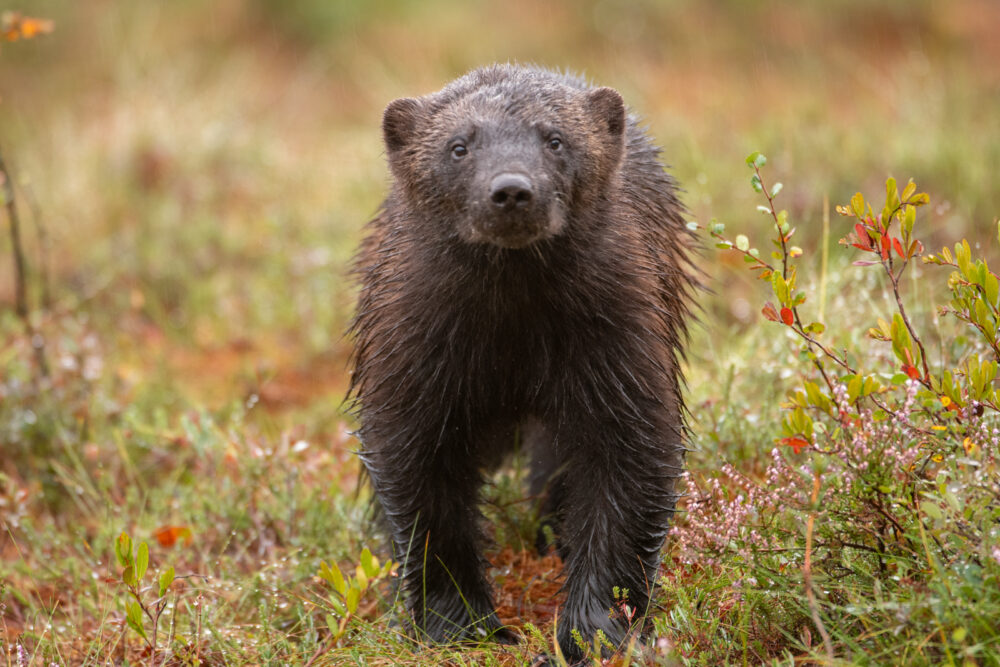
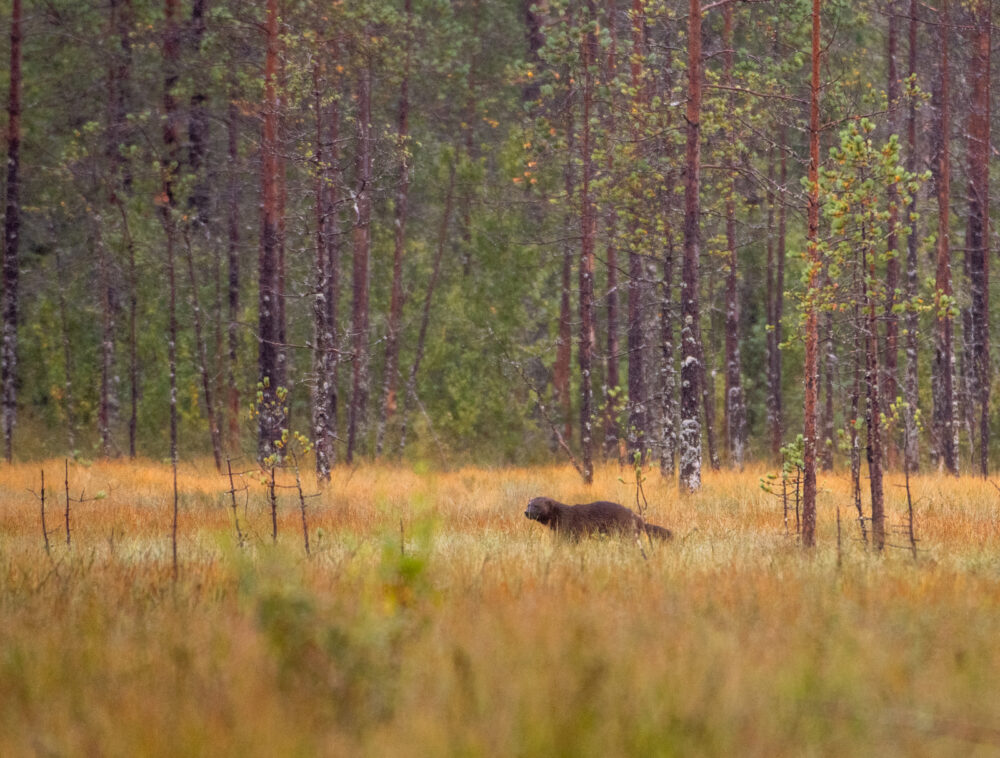
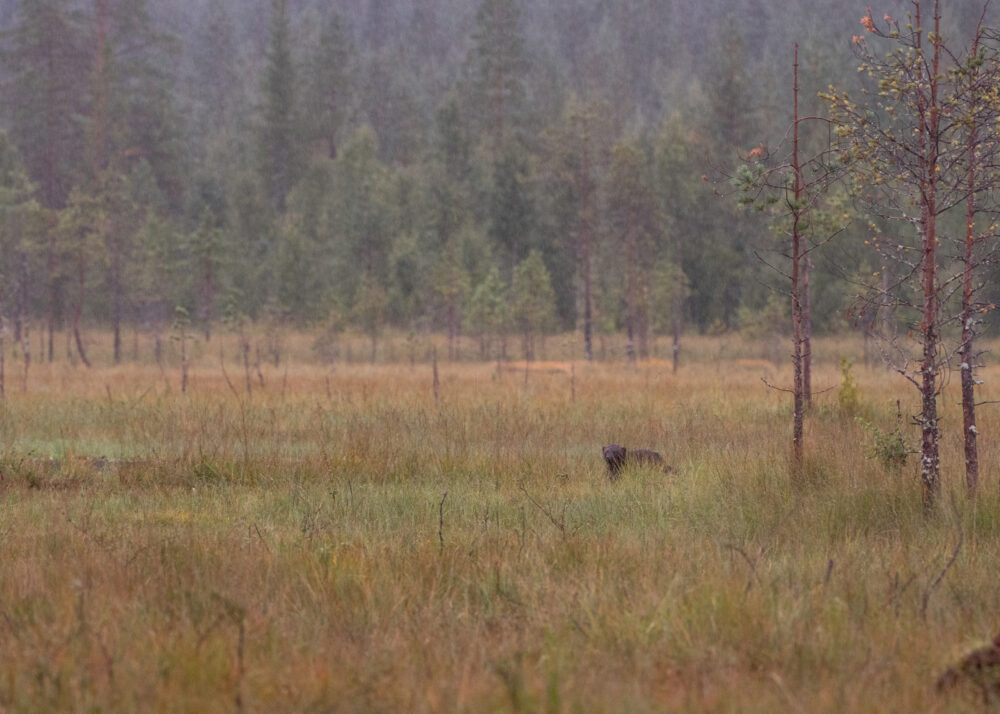
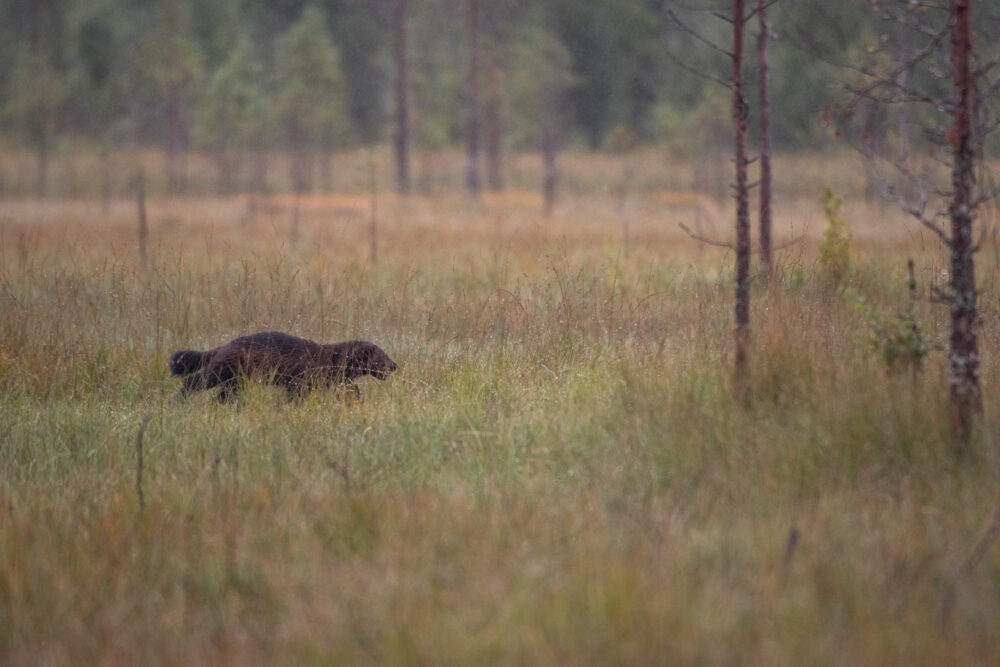
- 06:36: The climax. A wolverine, the "phantom of the north," emerged from the mist. This sighting, a rare reward for the previous ten hours of stillness, provided an intimate look at the animal’s characteristic, rolling gait and territorial behavior.
Supporting Data: Predator Behavior and Range
The behavior witnessed during this session aligns with current biological understanding of these species in the Finnish taiga.
The Wolverine (Gulo gulo):
The wolverine observed on the morning of the 18th displayed the high-energy, investigative behavior typical of the species. A single male wolverine may patrol a territory spanning 30 to 40 kilometers in a single day. Their movement is not erratic; it is a systematic search for cached food, often stolen from the kills of wolves or bears. The wolverine’s ability to "disappear" into the tall grasses and reappear minutes later, miles away, highlights their mastery of the terrain.
The Wolf (Canis lupus):
Wolves in this region are primarily nocturnal or crepuscular, moving through the shadows of the forest edge. Their appearance during the lulls in the rain suggests a high degree of habituation to the local climate, though they remain cautious. They do not hunt with reckless abandon; they are calculated, moving with an awareness of the landscape that feels almost strategic.
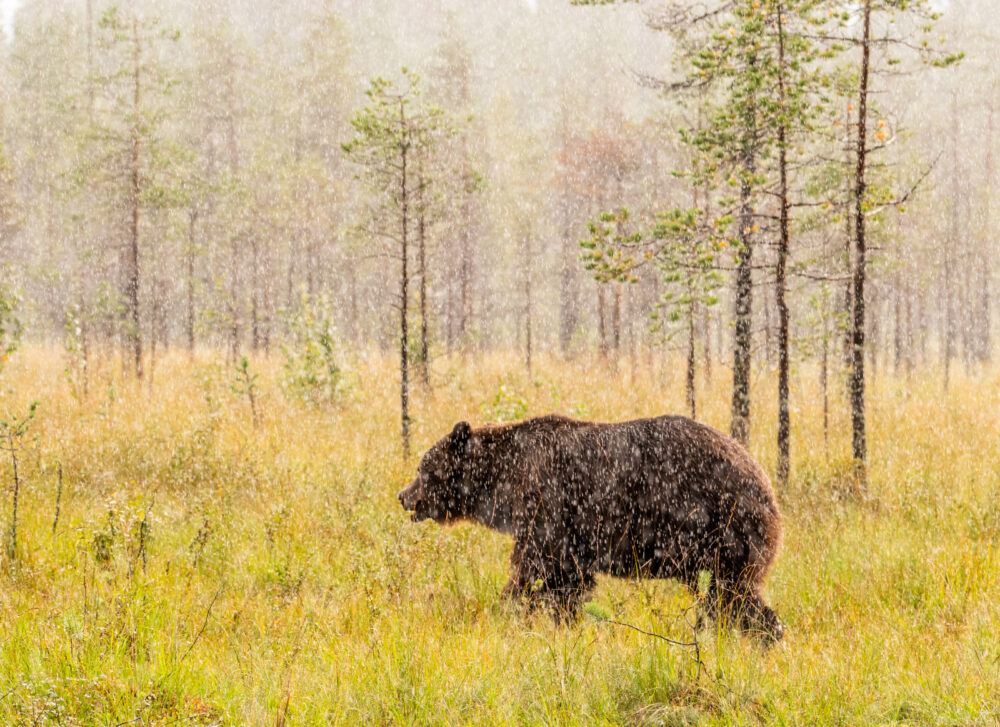
The Bear (Ursus arctos):
While the bears were less active during this specific window, their presence is a constant in the Kuhmo ecosystem. Their tolerance for extreme weather is superior to most mammals, largely due to their thick, insulating fur.
The Art and Science of the Hide
Photography from a hide is often misconstrued as "easy" or "lucky." In reality, it is a game of probability dictated by time. The success of a shot is directly proportional to the time spent in the field.
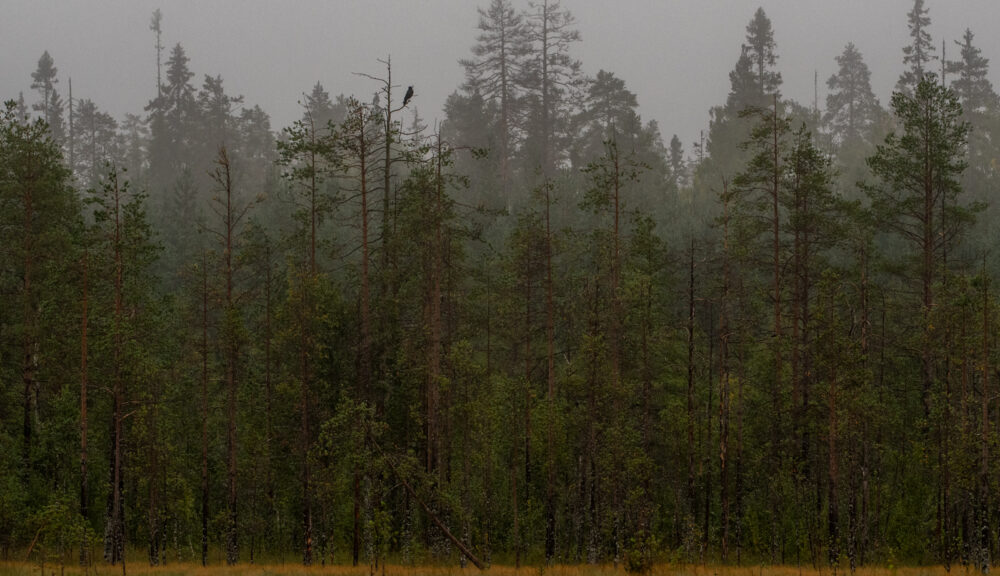
Professional wildlife photography requires an absolute commitment to stillness. The hide acts as a neutral space. When the photographer remains 100% silent and avoids sudden movements, the animals act as they would in the complete absence of human presence. This is the goal of the discipline: to capture the authentic, unfiltered behavioral patterns of the animals in their natural habitat.
On this trip, the challenge was twofold: the light was consistently grey and flat, and the subjects were moving rapidly. This forced a move away from "portrait" style photography toward "graphic" nature photography—focusing on the lines of the forest, the mist rising from the mire, and the raw motion of the animals as they navigated the wet landscape.
Implications: Conserving the Quiet
The experience in the Kuhmo mire serves as a reminder of the fragility and the resilience of the Finnish wilderness. As climate patterns become more volatile, the behavior of these large predators may shift, yet the importance of undisturbed habitats remains constant.
The "luck" often attributed to successful wildlife photographers is, in truth, the result of endurance. It is the willingness to sit through a storm, to wake in the freezing dark, and to accept that on many nights, the forest may offer nothing more than the sight of a solitary raven. Yet, when the wilderness finally reveals its secrets—a wolverine’s sudden sprint or a wolf’s silent patrol—the reward is a profound connection to the natural world.
For those interested in supporting the continued study and protection of these ecosystems, institutions like Suomen Luonto remain vital. By documenting the intersection of human curiosity and animal existence, we ensure that these stories of the wild continue to be told, not just in photographs, but in the preservation of the landscapes that make such encounters possible.
Reflections on the Experience
As the wolverine vanished into the dense undergrowth, leaving only the memory of its presence and a few high-speed shutter clicks on a memory card, the true value of the excursion became clear. It was not about the "perfect shot." It was about the forty-five minutes of observation, watching an apex predator move through its home with purpose, unaware of the lens directed at it.
The Kuhmo wilderness remains one of the few places in Europe where one can still find this level of isolation and biodiversity. To protect it is to protect the silence of the night, the sudden movement in the mist, and the complex, beautiful, and often harsh reality of the animal kingdom. The next time you find yourself in the woods, remember: you are not just walking through a landscape; you are a guest in a home that has been carefully managed by its inhabitants for millennia.