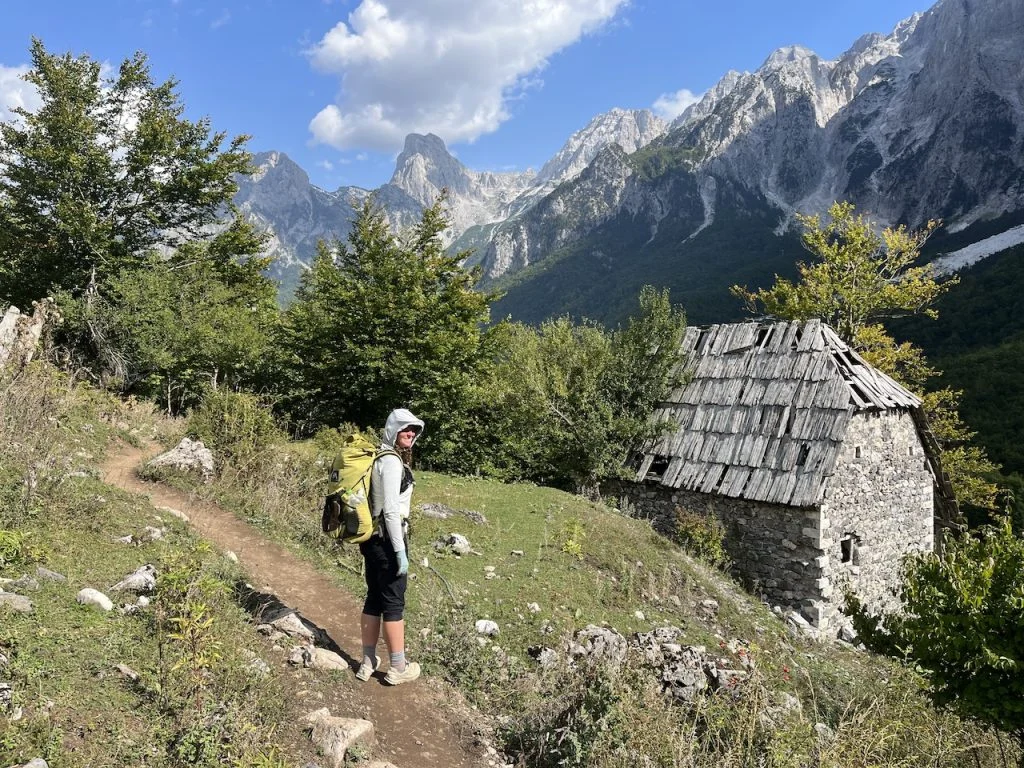
For generations, the "Accursed Mountains"—the Prokletije range—existed in the western imagination as a forbidding, impenetrable frontier. To the superstitious, the name itself carried a warning; to the modern traveler, however, it serves as a siren song. Once a geopolitical no-go zone marked by the remnants of conflict and isolation, the Balkan borderlands have undergone a remarkable metamorphosis. Today, the Peaks of the Balkans trail stands as a testament to regional reconciliation, offering one of the most pristine and rewarding long-distance trekking experiences in Europe.

Main Facts: The Anatomy of the Trail
The Peaks of the Balkans is a 192-kilometer (119-mile) circular route that weaves through the dramatic, jagged limestone peaks of Albania, Montenegro, and Kosovo. Since its inception in 2012, the trail has evolved from a series of disjointed shepherd’s paths into a world-class hiking destination.

- Distance: 192 km (119 miles).
- Total Elevation Gain/Loss: 12,020 meters (39,436 feet).
- Difficulty: Moderate to Challenging, depending on daily pace and weather.
- Standard Duration: 10 days, though flexible based on fitness and itinerary.
- Accessibility: Most commonly accessed via Theth (Albania), Pejë (Kosovo), or Plav (Montenegro).
The trail was established as a collaborative effort between the German development corporation GIZ and local action groups. The primary mission remains twofold: to foster cross-border unity in a region once defined by ethnic and political friction, and to provide sustainable, eco-friendly economic opportunities for the inhabitants of these remote mountain villages.

Chronology and Evolution: From Conflict to Connectivity
The transformation of this landscape is nothing short of miraculous. During the late 20th century, these mountains were effectively closed to outsiders. The remnants of that era are still visible to the observant hiker: concrete-domed pillboxes—thousands of which were commissioned by the late Communist dictator Enver Hoxha—still dot the hillsides, and abandoned guard towers serve as somber sentinels on mountain passes.

By the early 2000s, the political climate began to thaw. The establishment of the trail in 2012 marked a symbolic turning point, physically connecting communities that had been separated by both borders and history. Today, the trail is a thriving artery of tourism, allowing backpackers to witness the transition from the isolationist era of the 20th century to a modern, interconnected Balkan region.

Supporting Data: Planning Your Expedition
For the independent trekker, the Peaks of the Balkans requires logistical foresight. The trail is best tackled between June and early October. While strong, light-pack hikers can complete the circuit in as little as six or seven days, most enthusiasts opt for a 10-to-13-day itinerary, allowing for "zero-days" and spontaneous side trips.

Resupply and Navigation
Water is generally abundant, though filtration is recommended. Resupply options are limited to the villages along the route, where guesthouses offer legendary hospitality. A "second breakfast" of local bread, fresh peppers, thick churned cream, and byrek (a savory spinach and feta pastry) is a staple experience.

Notable Alternatives
While the main loop is the gold standard, there are high-value alternatives for those looking to customize their experience:

- The Prosllopit Pass: An essential deviation from the lowland route between Valbona and Ceremi. It is more challenging but offers some of the most spectacular scenery in the entire range.
- The Kosovo Cut-Offs: For hikers looking to bypass the paved-road sections of the Kosovo leg, several mountain trails allow for a direct route between the Albanian and Montenegrin borders, shaving off 20–30% of the total distance without sacrificing the mountain experience.
The Cultural Landscape: History and Heritage
The trail is more than just a physical challenge; it is a profound cultural education. A highlight for many is the 400-year-old "Lock-in Tower" (Kulla) in Theth. This fortress-like stone building served as a sanctuary for those caught in the ancient tradition of gjakmarrja (blood feuds). Learning about these social obligations provides a haunting, necessary context to the rugged, stoic nature of the mountain culture that survives here to this day.

The Human Element: An Author’s Anecdote
The true beauty of the trail lies in the moments between the miles. In the fall of 2023, while hiking the trail, we encountered the harsh reality of the high-altitude climate. After arriving late in the village of Dobërdol, we found refuge at the Bashkimi Guesthouse. The following morning, we set out at 5:00 AM to summit the "Three Countries" Peak (Tromedja).

The temperature was well below freezing, and the darkness was absolute. As we climbed, we overheard the muffled, shivering complaints of other campers nearby, deciding to stay in their sleeping bags. That decision to push through the cold, however, led us to the summit of Tromedja (2,366 m) just as the sun crested the horizon. Standing on the border of three nations, surrounded by a 360-degree panorama of silence, one realizes that the "Accursed" reputation of these mountains is merely a mask for a place of unparalleled, ancient tranquility.

Official Responses and Sustainability
The development of the Peaks of the Balkans has been widely praised by environmental NGOs and tourism boards. By converting old shepherd’s paths into a regulated, marked trail, the local authorities have successfully incentivized the protection of regional flora and fauna.

However, the success of the trail brings challenges. Increased foot traffic in fragile alpine environments requires ongoing management. Organizations like the Balkan Hiking Union work closely with local guesthouse owners to ensure that waste management and trail maintenance remain at the forefront of the region’s development strategy. It is imperative that hikers respect the "Leave No Trace" principles, as the infrastructure—while growing—is still largely based on small-scale, family-run enterprises.
Implications for the Modern Hiker
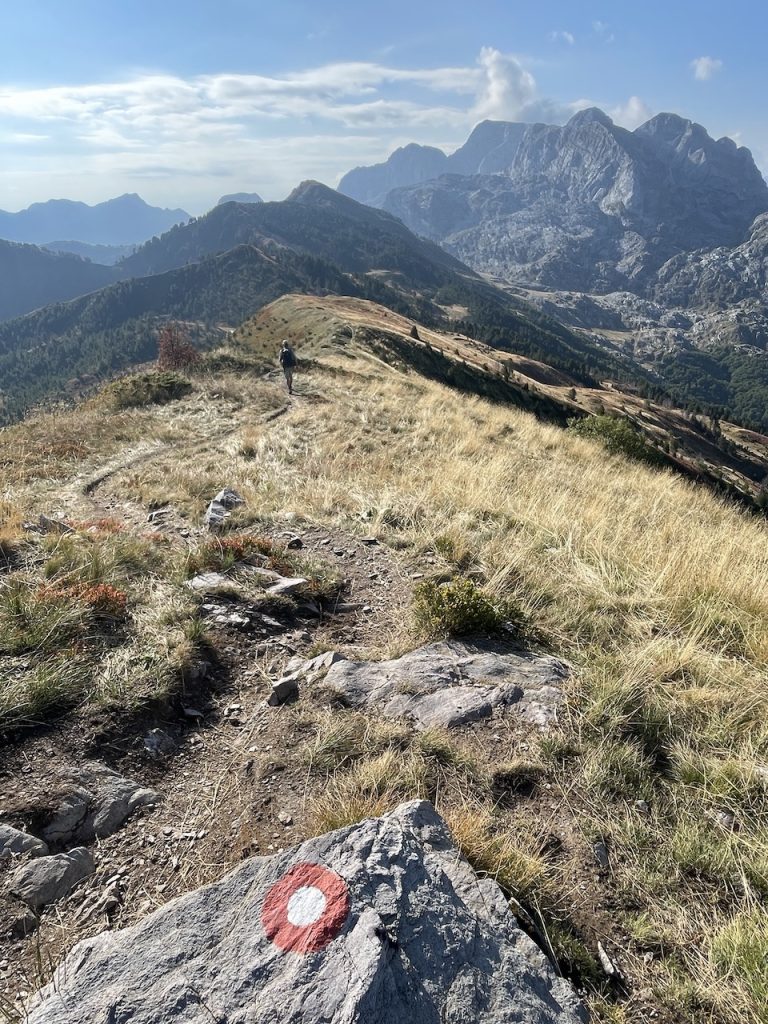
The Peaks of the Balkans is not merely a "checklist" hike; it is a gateway to a disappearing way of life. The implication for the modern traveler is clear: this is a destination that demands presence. Whether you are navigating the karst landscapes leading to the Prosllopit Pass or sharing a meal in a village home, you are participating in a project of regional healing.

For those who choose to walk these paths, the rewards are immense. You will find a region that has moved past its "accursed" history to embrace a future built on the quiet, steady rhythm of mountain life. The trail does not just offer you views of the Mediterranean’s most hidden peaks; it offers you a chance to see how, through the simple act of walking, borders can be rendered irrelevant, and the most jagged, feared landscapes can become places of connection and profound human warmth.

Quick Reference for Planning
- Best Time to Go: July through September for the most stable weather.
- Essential Gear: Sturdy, broken-in boots, a reliable GPS or map, and layers for unpredictable alpine weather.
- Important Note: Always check border permit requirements well in advance, as crossing between Albania, Kosovo, and Montenegro involves specific administrative protocols that can change seasonally.
As you plan your journey, remember that the true essence of the Peaks of the Balkans is found in the people you meet at the end of a long, cold day—those who keep the fire lit, the coffee hot, and the traditions of these mountains alive for the next generation of travelers.