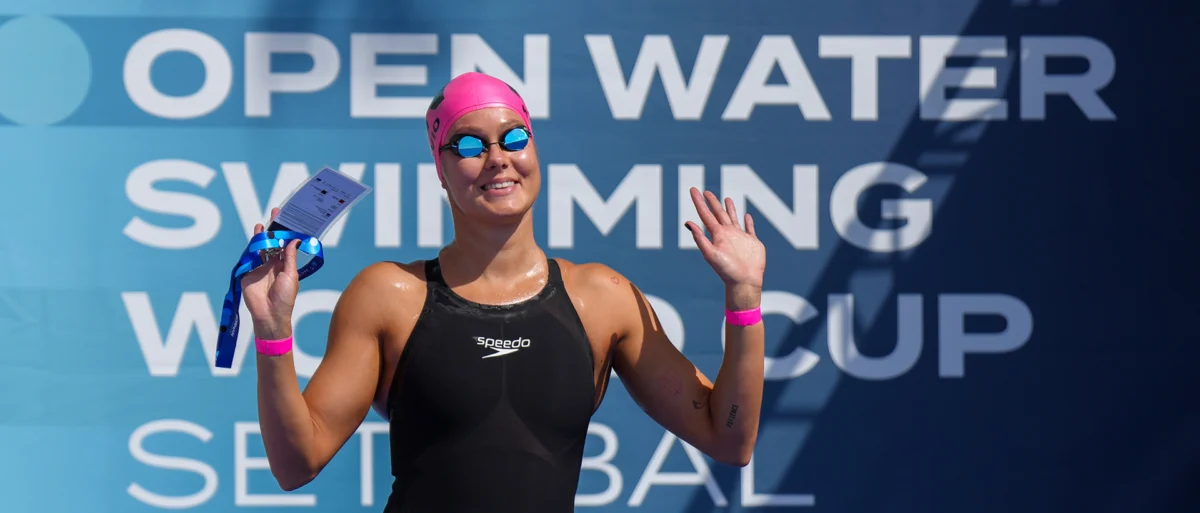
The morning air at Leppävaara outdoor swimming pool is crisp, dampened by a low-pressure front that would keep most athletes indoors. Yet, slicing through the water with rhythmic, powerful strokes is Louna Kasvio. She is the solitary star of Finnish open-water swimming, an athlete who has redefined what it means to commit to a sport that, until recently, barely had a footprint in the Nordic nation.
As her hand strikes the tiled wall at the end of a two-hour session, she surfaces, a subtle smile playing on her lips. "Excuse me, could you shift just a little? I need to see the clock on the wall. I’m planning on swimming a bit longer," she laughs.
For Kasvio, "a bit longer" is a relative term. Her daily ritual—a grueling two-hour morning session—is merely the foundation of a lifestyle that consumes every waking minute. As she climbs out of the pool, her demeanor shifts from the fluidity of the water to the focused intensity of a professional athlete. "This is my life now. It is total, full-time, professional swimming," she says, her voice carrying the weight of a woman who has found her singular purpose.
The Architecture of an Elite Career
The statistics behind Kasvio’s training are nothing short of staggering. A typical week involves 80 to 100 kilometers of swimming, supplemented by three strength training sessions and four dry-land aerobic workouts. In total, she logs between 30 and 35 hours of high-intensity training per week. The remaining hours are meticulously partitioned for recovery, nutrition, and mental preparation.
"There is nothing about sports I don’t love," Kasvio explains. "The training, the competitions, the entire life of an athlete—it’s a natural choice for me. I’ve never questioned it. It comes from within, from my own desire."
This clarity of purpose is striking, especially given the weight of her surname. As the scion of the most famous swimming dynasty in Finnish sports history, Kasvio is constantly measured against the giants who came before her. Yet, she is adamant about carving out her own identity. "When I was younger, it used to irritate me when people compared me to my father or grandparents. I decided early on that I wanted to make my own career and achieve my own results."
A Four-Generation Legacy
To understand the magnitude of Louna Kasvio’s pursuit, one must look at the lineage. Her father and coach, Antti Kasvio, is a freestyle world champion, European champion, and Olympic bronze medalist. Her grandfather, Matti Kasvio, represented Finland at the 1964 Olympics, while her grandmother, Ulla Patrikka, competed in backstroke at the 1968 Games. The pedigree extends even further, to the early 20th century with Taisto and Mila Kasvio.
Four generations of elite swimmers is a rarity in any sport, globally. While Louna acknowledges the history, she refuses to let it become a burden. "We talk about swimming a lot in our family, and it’s always been a central part of our lives, but I was never forced into the pool. I don’t dwell on the past or feel pressure from the legacy; I look forward to my own career."
The Evolution of Coaching
Antti Kasvio, now his daughter’s primary mentor, brings a unique perspective to the deck. He admits that while his own experience as an elite athlete is invaluable, the sport has undergone a radical evolution.
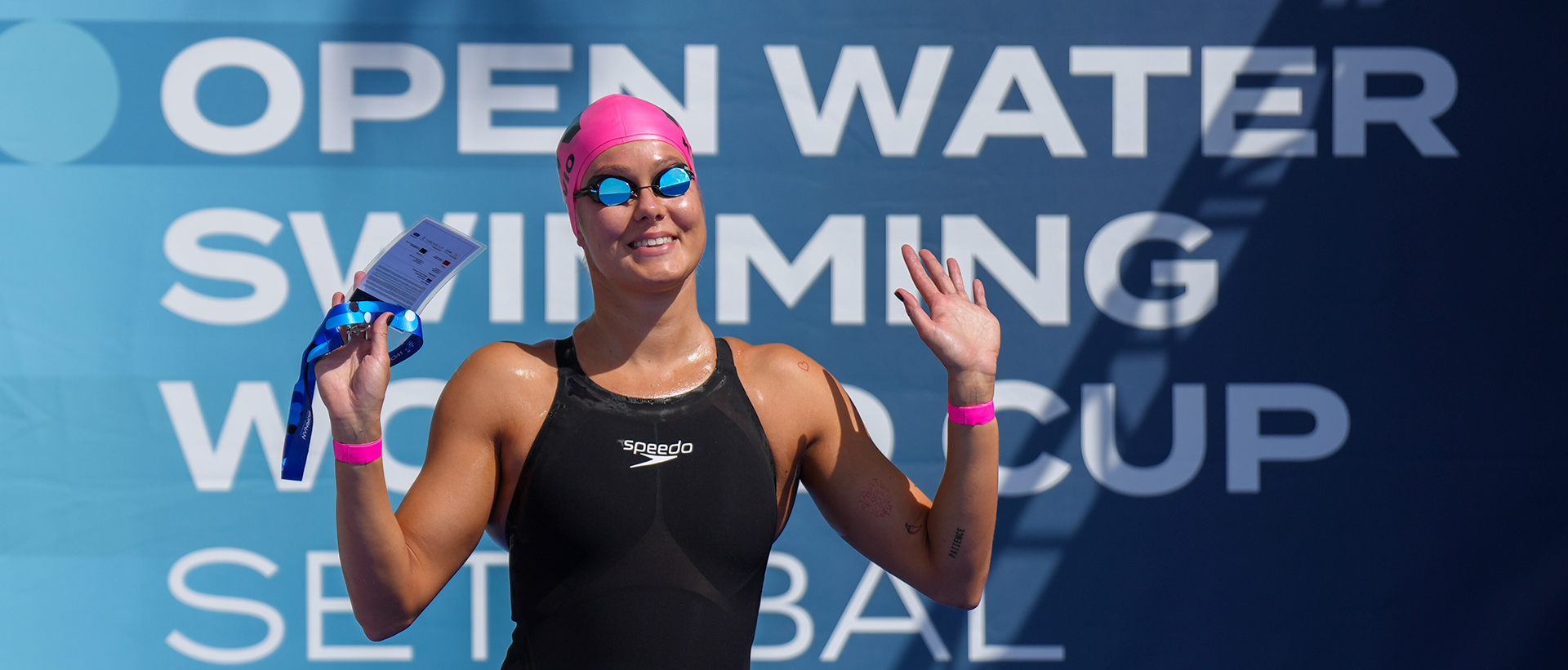
"Open-water swimming is essentially swimming, but it’s a marathon event conducted in highly variable conditions where opponents are constantly pressing against you," Antti explains. "I trained for 2–4 minute bursts; Louna’s events last 120 minutes. The processes are vastly different. I’d argue that what Louna does is even more brutal than what I did."
Antti’s coaching philosophy centers on technical mastery under duress. "We focus on efficient technique that allows her to maintain an anaerobic threshold throughout the race while having the capacity to shift gears. Her hard workouts are simulations of race conditions—swimming at high speeds for long durations, followed by explosive finishes."
From the Lane to the Open Sea
Kasvio’s path to the global summit was not linear. Though she learned to swim at age three, her competitive fire was slow to ignite. "I wasn’t particularly athletic as a child; I preferred reading and talking," she admits. Her breakthrough came at age ten, following a victory in a 25-meter school competition. By 17, she had already secured medals at the junior European level and reached finals in senior championships.
The pivot to open water occurred during a difficult, illness-plagued period in her late teens. Her father suggested she try an open-water SM (Finnish Championship) race in Raasepori. Despite the freezing rain and harsh conditions, she finished second overall among both men and women. "I was hooked," she says. "The competitive dynamic, the tactical nature of the water—it added a new dimension to my life."
The Tactical Battlefield
Unlike lane swimming, where an athlete controls their environment, open water is a game of chaos. "You can’t set your own pace entirely," Kasvio notes. "You have to stay with the pack. Drafting is essential, but if you fall behind, you aren’t catching up. You have 80 swimmers within touching distance at all times. You have to hold your ground, but you must stay calm. Aggression only raises your lactate levels and destroys your form."
One of the most peculiar aspects of the sport is mid-race refueling. "Coaches offer us liquid from fishing poles in the middle of the chaos," she laughs. "You have maybe two or three seconds to grab your bottle while still swimming at full speed. It’s a skill in itself."
Implications and Future Horizons
The logistical hurdles for a Finnish open-water swimmer are significant. Access to 50-meter lanes for two-hour, undisturbed blocks is a constant battle in municipal facilities. Hanna Kasvio, Louna’s mother and manager, handles the logistical heavy lifting, ensuring that the team spends over a third of the year abroad to secure proper training environments.
"International competitors often have access to private pools or dedicated lanes that simply aren’t available to us in Finland," Hanna notes.
Despite these disadvantages, Louna’s results have been stellar. In 2025, she won the Junior World Cup overall title and finished 19th in the senior World Championships. This summer, she secured 8th place in the 10km and 10th in the 5km at the European Championships.
The Road to the Podium
The sport of open-water swimming rewards maturity, with peak performance often occurring between ages 24 and 25. At 20, Kasvio is perfectly positioned for the next Olympic cycle.
"I know I have the fitness and the technique," Louna says. "I’ve trained with Olympic medalists and I know I can match their speed. The jump to the podium now is about refining the tactics and accumulating the race-hardened routine that only experience can provide."
The mental aspect of her training is equally disciplined. "There are days when it’s dark, cold, and miserable at 6:00 AM in the Finnish autumn," she admits. "But those mornings are easy to get through because I know the work pays off. I’m not looking for a shortcut or a break. I want to maximize my potential while I have this opportunity."
Supporting the Next Generation
Kasvio’s trajectory is now bolstered by the Finnish Olympic Committee’s Next Generation Team Finland program. Designed for athletes aged 15–22, the program provides a support package worth over €10,000, including financial assistance, expert consulting, and specialized services.
This program represents a strategic shift in Finnish sports, moving from general support to bespoke, athlete-centered development. For Kasvio, it is an affirmation that her "brutal" process is recognized not just as a family endeavor, but as a national priority.
As she looks toward the future, Kasvio remains grounded. She isn’t driven by the desire to eclipse her father or validate her ancestors; she is driven by the internal silence that comes from pushing one’s body to the absolute limit.
"I hope to have a long career and enjoy every moment of it," she concludes. "I want to succeed, of course, but more than that, I want to see what I am truly capable of. Right now, there is nothing else I would rather be doing."
In the quiet of the Leppävaara pool, the story of the fourth-generation swimmer is being written—not in the ink of her family’s past, but in the wake she leaves behind in the water. She is, without question, the future of Finnish swimming.