The deadlift is arguably the most fundamental movement in the strength athlete’s arsenal. It is a full-body masterpiece that engages the glutes, hamstrings, quadriceps, traps, lats, and core. Yet, for all its structural benefits, the deadlift is often misunderstood. While the premise—picking a heavy object up from the floor—seems primitive, the biomechanics required to perform it safely and efficiently at a high level are akin to rocket science.
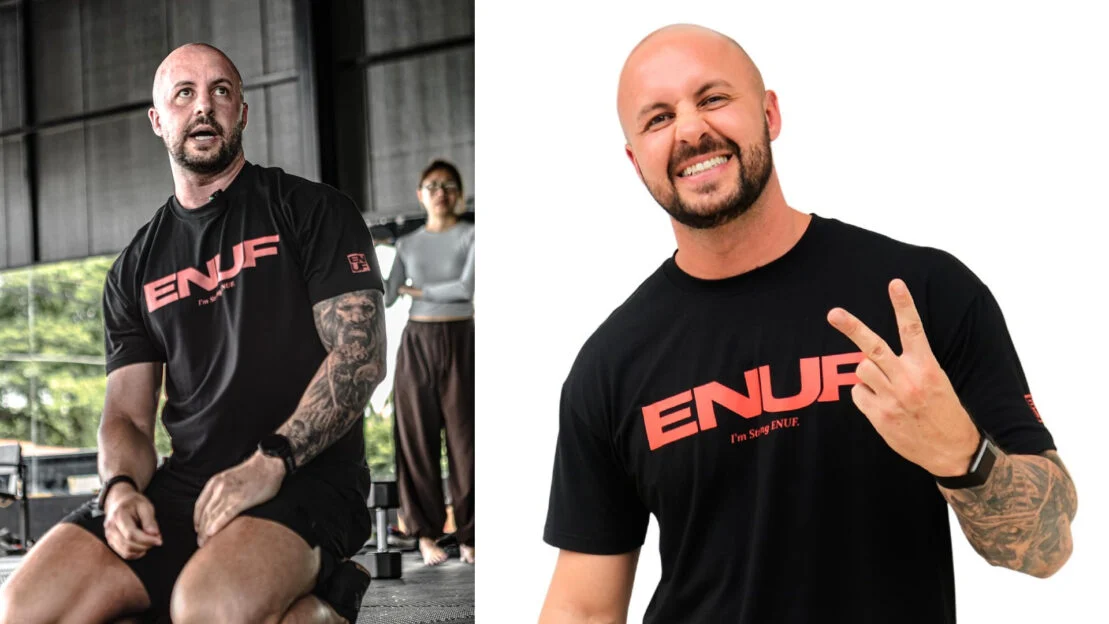
Bad habits formed early can lead to stalled progress, chronic pain, and significant injury. Fortunately, the veil of mystery surrounding elite-level technique has been lifted. Sebastian Oreb, known globally as “The Australian Strength Coach,” has opened his playbook. Oreb is the architect behind the staggering success of Hafþór “Thor” Björnsson, the Icelandic giant who has shattered world deadlifting records. Oreb’s message is clear: if you are looking to smash your personal record or simply build a foundation of strength, you must master the mechanics first.
The Universal Nature of Elite Technique
There is a common misconception in the fitness community that the techniques used by world-class strongmen are reserved for professional athletes. When Oreb shares the methods he used to coach Thor Björnsson to an earth-shattering 1,124-pound deadlift, many casual gym-goers dismiss the advice as inapplicable to them.
“He’s a 200 kg, 6-foot-9-inch Icelandic giant, so it doesn’t apply to me,” Oreb often hears. He is quick to correct this narrative. “The techniques that he uses are the same techniques that I teach my daughter.” By stripping away the ego and focusing on the physics of the movement, Oreb proves that the deadlift is not about how much you weigh, but how well you move.
Tip One: The Architecture of the Stance
The breakdown of a perfect lift begins before a single muscle is flexed. Oreb identifies the most common error in the gym as poor bar positioning. When a lifter places the barbell too far away from their shins, they force their hips to shift forward to meet the bar during the ascent. This creates an unstable, inefficient “seesaw” effect where the bar rolls away from the body, forcing the lumbar spine to compensate for the shifted center of gravity.
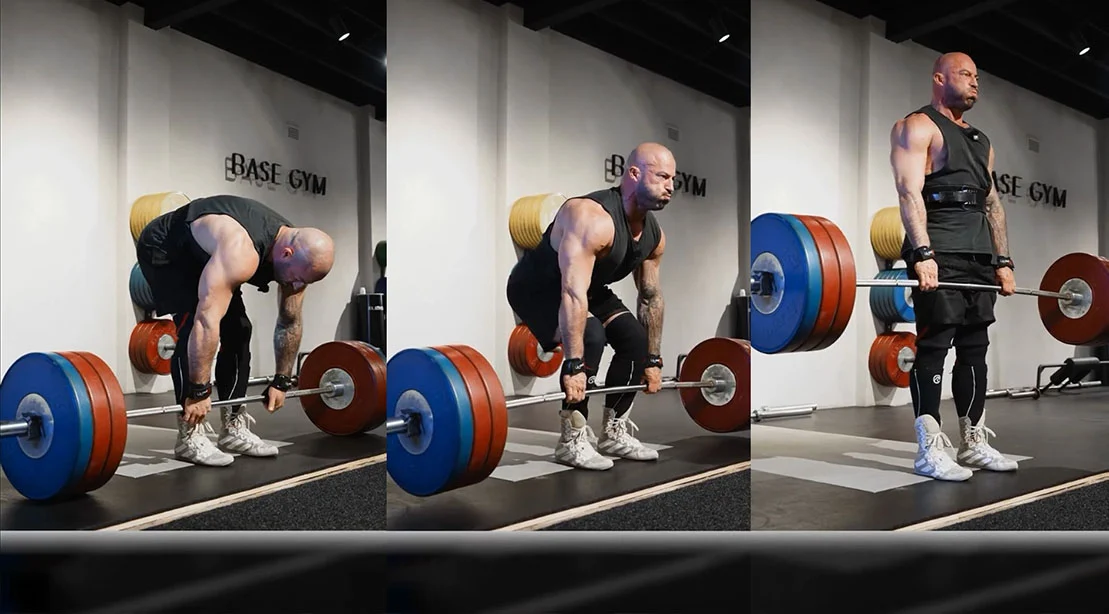
“The barbell must be inline with your midfoot,” Oreb explains. “That is your base of support. At maximal loads, that bar won’t leave the ground efficiently until it is perfectly aligned with that base.” By anchoring the bar over the midfoot, the lifter ensures the weight travels in a straight, vertical line—the shortest distance between two points. This eliminates the energy leaks that occur when the bar drifts forward, allowing the posterior chain to exert maximum force directly into the floor.
Tip Two: The Geometry of Lever Length
The deadlift is a game of levers. Oreb emphasizes that maximizing efficiency requires understanding how your limbs interact with the barbell. To maintain a proper, hip-width stance, Oreb keeps his legs straight and allows his arms to hang naturally outside of his legs.
“If your stance is too wide, your arms are forced further apart, which effectively makes them shorter,” Oreb notes. “When your arms are shorter, you have to travel further to lock out the lift, which is less efficient.” In powerlifting, efficiency is the difference between a successful lift and a failed attempt.
Furthermore, Oreb warns against the common pitfall of bending the elbows before the lift begins. Many lifters do this in a subconscious attempt to "tighten" their grip, but this is a dangerous error. “If your arms are bent, your biceps are engaged. Your biceps are not strong enough to deadlift what your back can handle. This is the primary cause of bicep tears in the sport.” By keeping the arms long and straight—essentially acting as hooks—the lifter ensures that the load is transferred through the skeletal structure and the massive muscles of the back, rather than the delicate tissues of the arm.
Tip Three: The Trigger for the Pull
One of the most debated aspects of the deadlift is the starting position of the hips. Should they be high? Low? Oreb simplifies this complexity by turning it into a sensory cue rather than a visual target.
“Lower your hips and squat until your shins gently touch the barbell,” Oreb instructs. This contact point is the absolute floor for your hips. If you go lower, your shins will push the bar forward, ruining your base of support. Once the shins are in contact with the bar, the lifter must brace the lats by pulling the armpits toward the pelvis. This creates a rigid torso that can transfer force without collapsing.
Crucially, Oreb advises against the mental cue of “pulling the bar up.” Instead, he suggests, “Push the world away.” By focusing on driving the feet into the floor—rather than pulling with the back—the lifter utilizes the quadriceps to initiate the drive, transitioning into the posterior chain as the bar clears the knees. This shift in mindset prevents the common “hitch” in the lift and ensures a fluid, powerful motion.
Supporting Data: The Science of the Hinge
The biomechanical principles championed by Oreb are supported by exercise science. The deadlift is a hinge movement that requires the integration of the kinetic chain. When the bar is kept close to the body, the moment arm—the horizontal distance between the load and the joint—is minimized. By reducing the moment arm at the lumbar spine, the lifter drastically decreases the shear force applied to the vertebrae.
Data from elite powerlifting programs consistently shows that lifters who adhere to a strict vertical bar path experience fewer injuries and higher long-term strength gains. The "seesaw" effect described by Oreb is not just an aesthetic issue; it is a mechanical failure. When the bar travels away from the center of mass, the lower back muscles must work exponentially harder to maintain stability. Over time, this leads to fatigue, technical breakdown, and the high injury rates often associated with the exercise.
Official Responses and Industry Reception
Since Sebastian Oreb began disseminating these specific technical cues via social media, the response from the strength community has been overwhelming. Professional trainers and casual enthusiasts alike have noted the clarity of his instruction.
“One of the best deadlift technique videos I have ever seen,” commented one verified user. Another user highlighted the detail: “I’ve been lifting for years and never realized how much my bicep position was costing me in terms of stability.”
The consensus among industry experts is that Oreb’s ability to translate the complex movements of a 400kg+ deadlifter into actionable advice for the average person is a significant contribution to the sport. By removing the "mystique" of the strongman, he has democratized elite-level technique, allowing for a safer and more effective training environment for everyone.
Implications for Future Training
The implications of adopting Oreb’s methodology are profound. For the novice, it means building a foundation that will prevent injury and foster long-term physical development. For the seasoned lifter, it offers a path to break through plateaus that have likely been caused by subtle technical flaws.
The "Australian Strength Coach" model emphasizes that strength is a skill. It is not just about raw power; it is about the mastery of one’s own body in relation to external weight. By prioritizing the base of support, optimizing lever lengths, and using the correct initiation cues, athletes can redefine their physical capabilities.
As you prepare for your next training session, consider these steps as a checklist. Before you grip the bar, verify your stance. Before you initiate the lift, ensure your arms are straight. And finally, remember that you are not pulling a weight; you are pushing the earth beneath you. In the world of strength sports, the difference between a good lift and a legendary one is often found in the smallest details of technique. With Oreb’s blueprint, the path to your next personal record has never been clearer.
For those looking to deepen their understanding of these mechanics, Oreb continues to provide regular, detailed breakdowns via his Instagram platform, serving as a beacon of knowledge in an industry often clouded by misinformation. Whether you are aiming for a world record or simply a healthier back, the science of the deadlift remains constant. Master the process, and the results will inevitably follow.