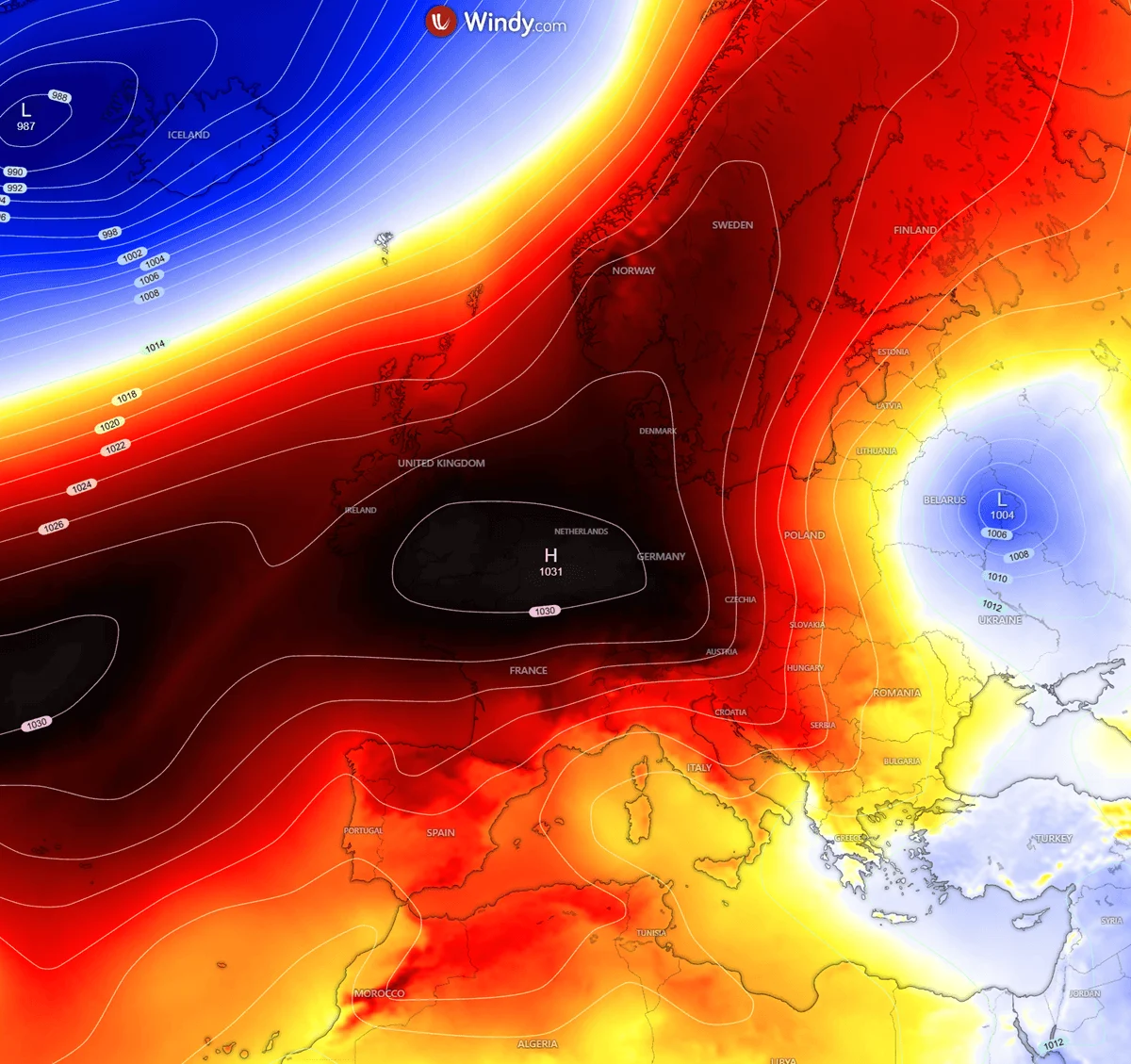
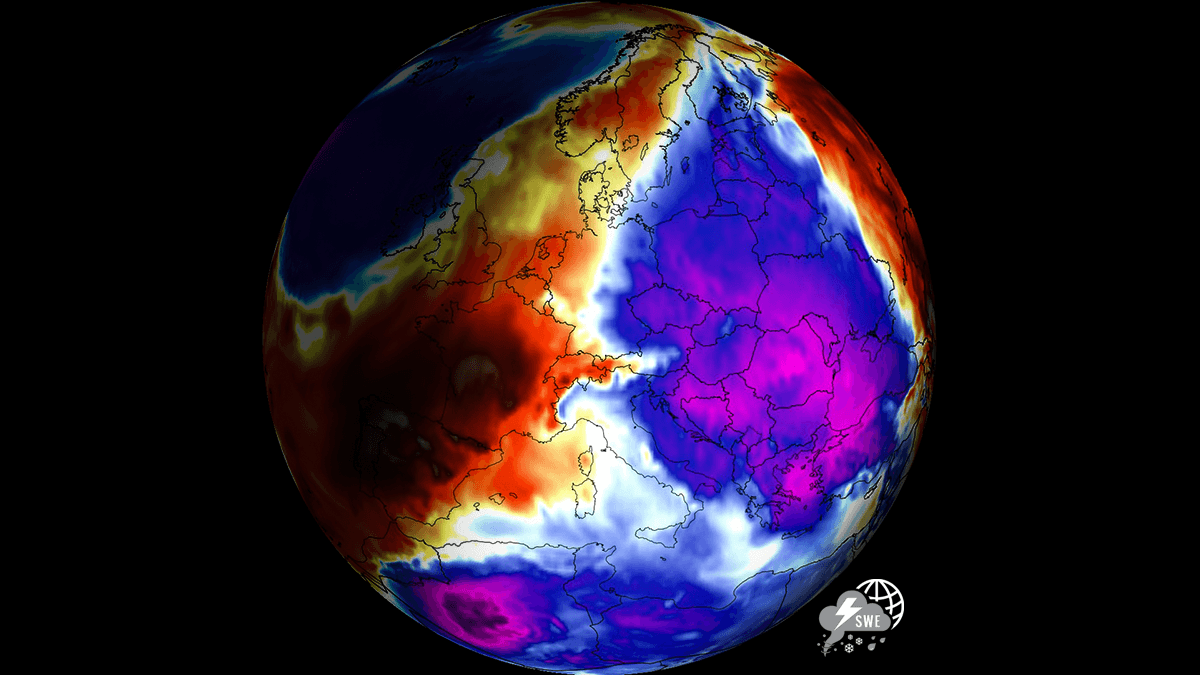
The late-September warmth that has characterized the start of autumn 2026 is coming to a sudden and dramatic end. A massive, high-pressure blocking ridge, anchored over the North Atlantic and Scandinavia, has fundamentally altered the continent’s atmospheric circulation. By forcing a direct, meridional corridor for polar-origin air to cascade southward, the system is driving a deep, arctic-infused chill across Eastern Europe, the Balkans, and stretching as far as Turkey.
For millions of residents, this transition marks the first true "thermal shock" of the season. Temperatures are projected to plunge by 10 to 15°C below the long-term seasonal averages, effectively ending the lingering summer-like conditions that have persisted throughout the first half of the month.
The Synoptic Mechanism: Why the Continent is Freezing
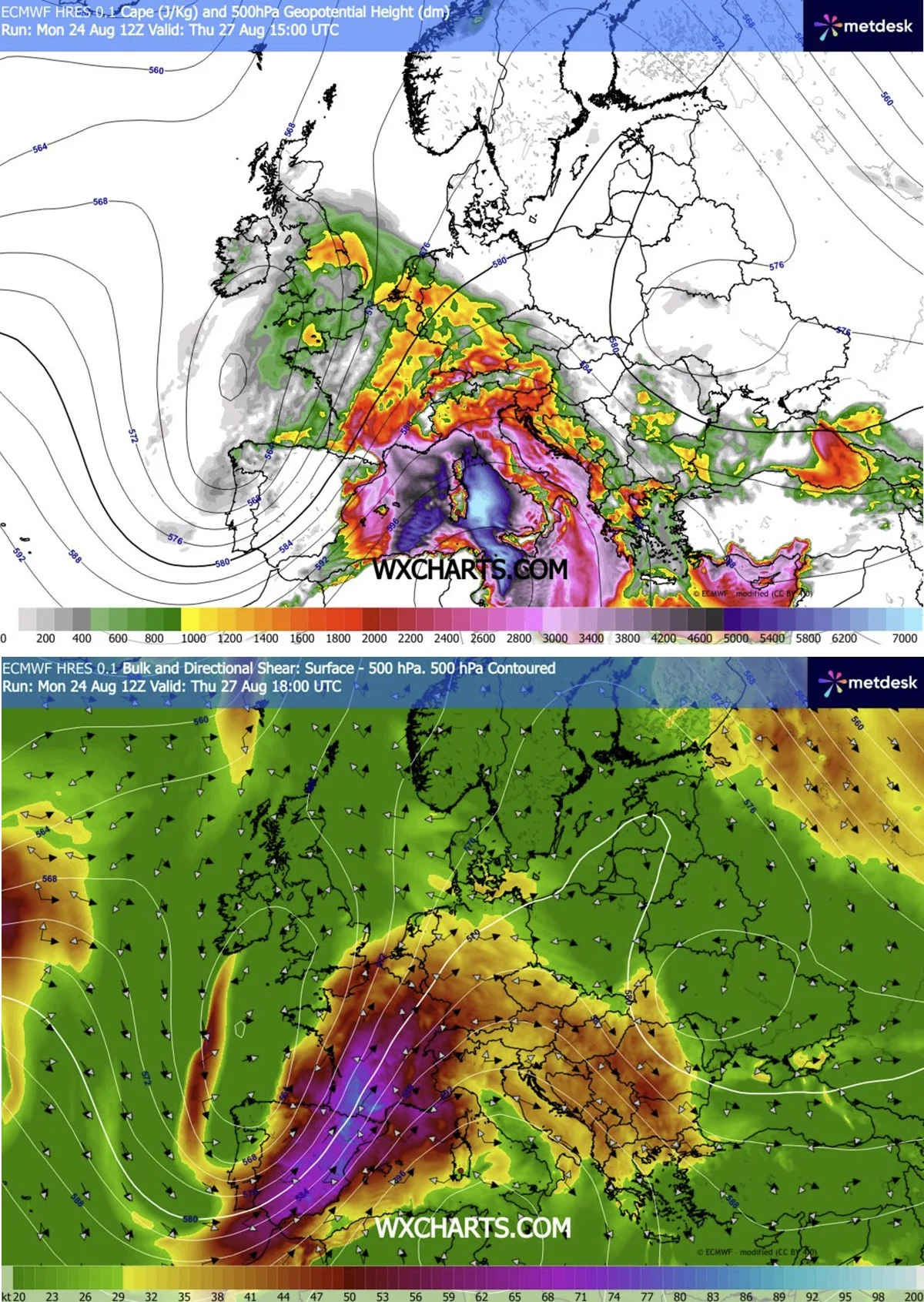
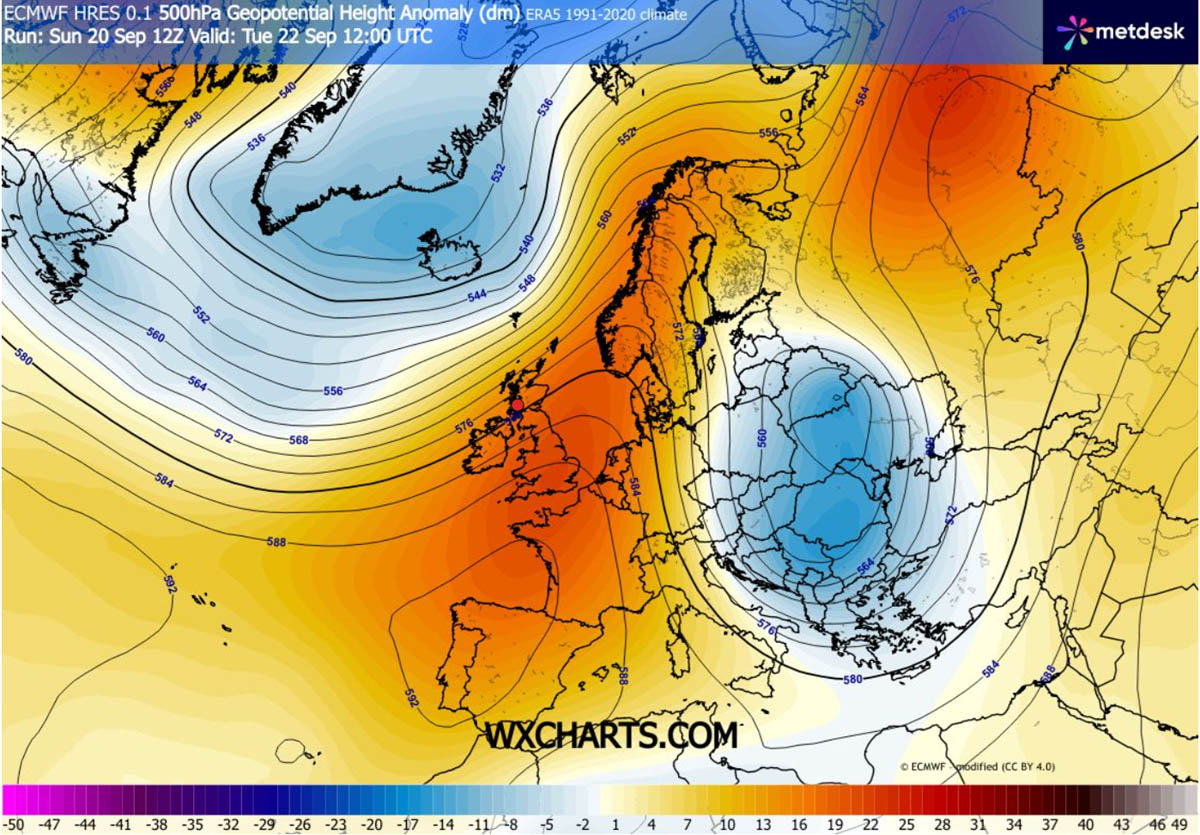
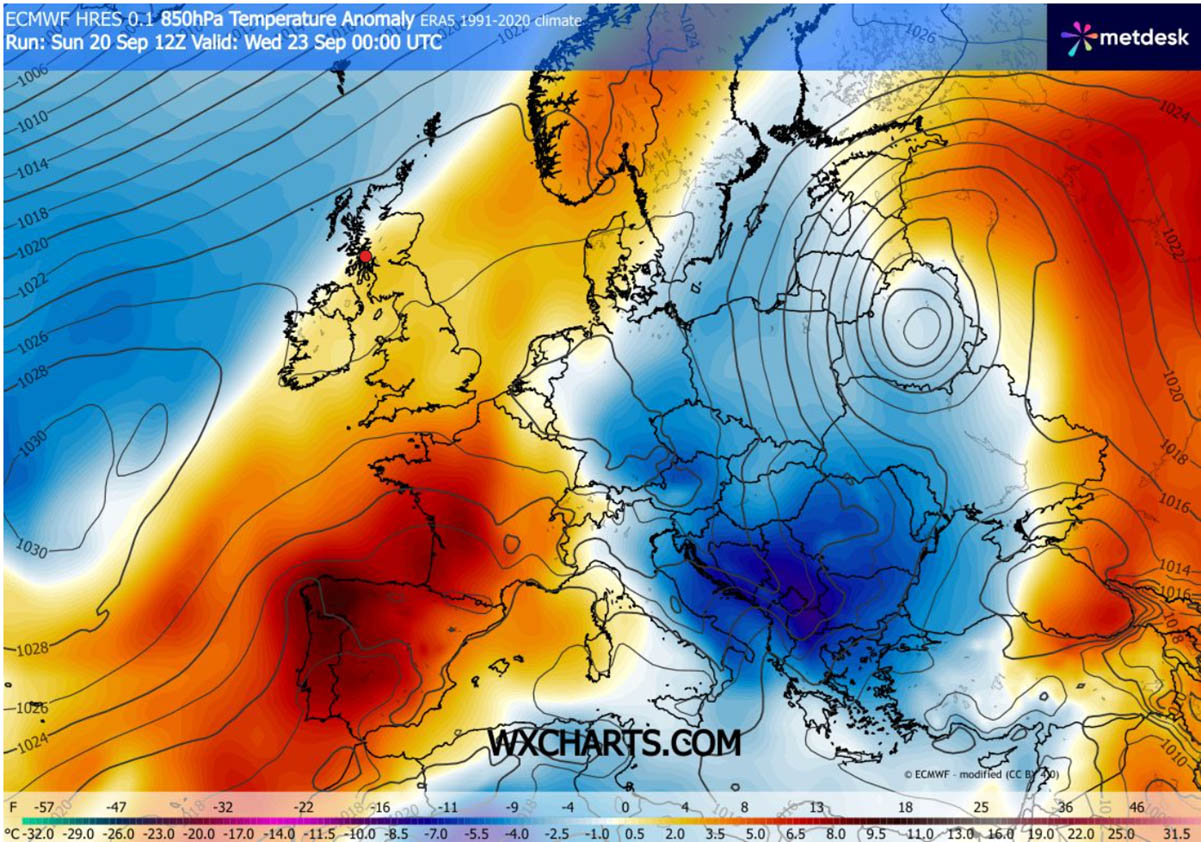
The weather phenomenon currently unfolding is driven by a classic "blocking" setup. Meteorologically, a strong upper-level ridge positioned over Western and Southwestern Europe has expanded, acting as a massive wall in the atmosphere. Simultaneously, a potent upper-level wave is tracking into Eastern Europe, creating a pressure gradient that encourages a "meridional" flow—a North-to-South conveyor belt of air.
Unlike the standard west-to-east "zonal" flow that typically keeps Europe’s climate temperate, this meridional pattern allows cold, dense air masses from the Arctic circle to penetrate deep into continental landmasses without being moderated by the warmth of the Atlantic.
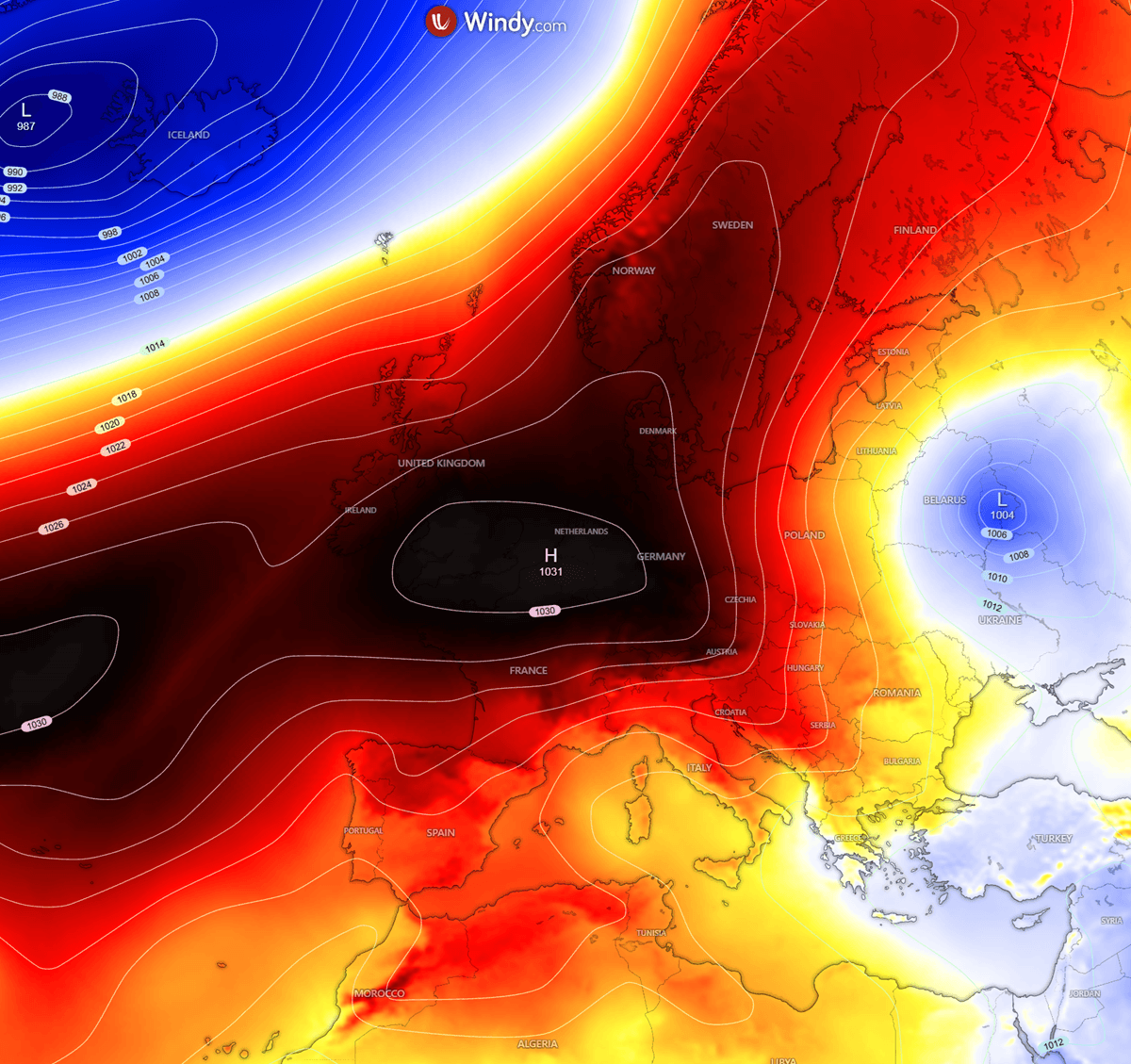
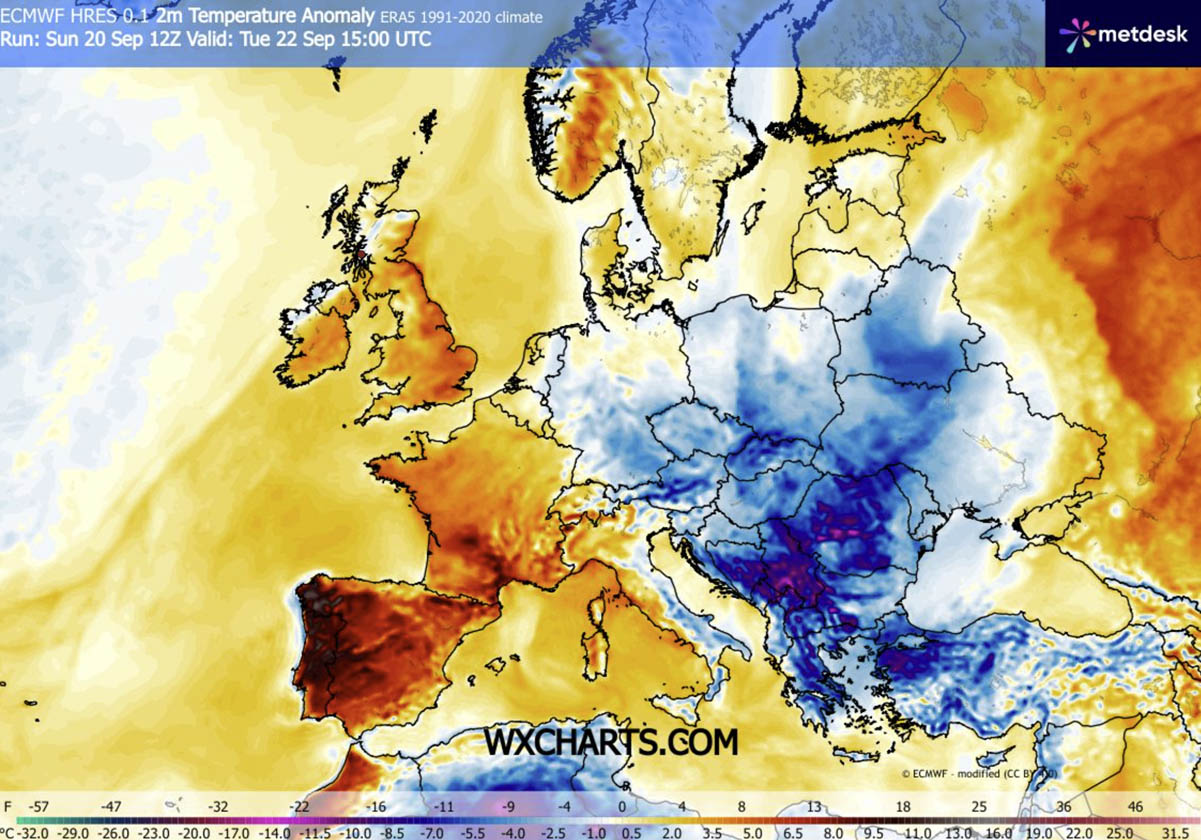
By Tuesday, the surface high-pressure system associated with this Scandinavian block began pushing southward, funneling freezing air into the Balkan Peninsula, Romania, Bulgaria, and eventually the Black Sea region. This displacement of warm continental air is not merely a gradual cooling; it is a rapid, dynamic atmospheric displacement that has left meteorologists monitoring significant thermal anomalies across the map.
Chronology of the Cold Intrusion
The progression of this arctic blast is defined by a rapid, southward march over a 72-hour window:
- Tuesday: The Onset: The cold air mass made its initial landfall across the Balkan Peninsula, with Serbia, Bosnia, Romania, and Bulgaria experiencing the brunt of the temperature drop. Daytime highs, which were recently in the mid-to-high 20s, struggled to reach the low teens.
- Wednesday: The Southern Migration: The core of the polar air reached deeper into the Aegean Sea and northern Greece. Western Turkey also felt the impact, with localized temperature anomalies plummeting 12 to 16°C below historical norms. This period marks the nadir of the cold event for the southeastern quadrant of Europe.
- Thursday: The Peak and Stabilization: As the center of the cold pool reaches its southernmost point, the air mass begins to stagnate. While the freezing levels remain low, the intensity of the "inflow" begins to wane, setting the stage for a gradual, though slow, recovery as the Western European ridge begins to shift eastward toward the end of the week.
Supporting Data and Meteorological Anomalies
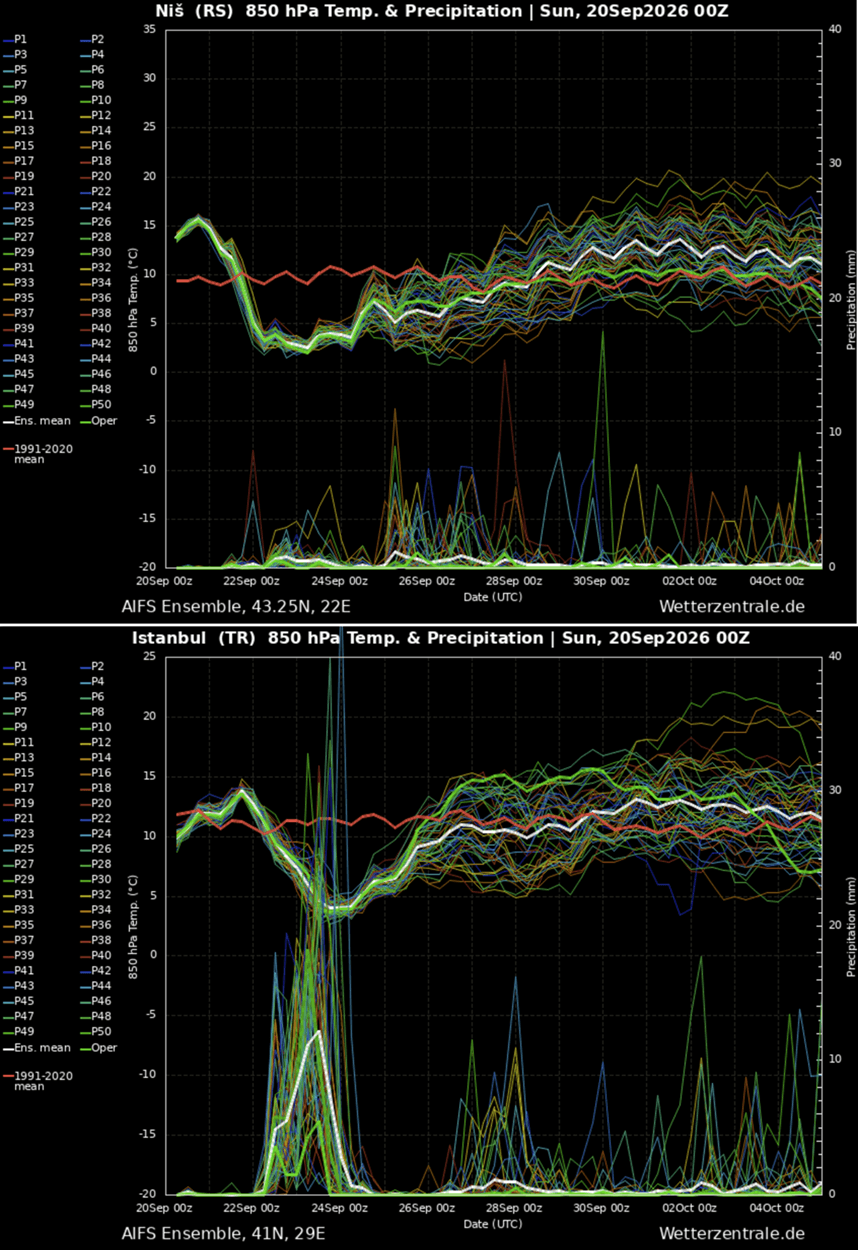
Data derived from advanced forecast models, including 850 hPa temperature anomaly maps, confirm the severity of this event. In many regions, temperatures at the 850 hPa level—the standard height for tracking air mass temperatures—are hovering 6 to 10°C below what is typically expected for late September.
Meteorological charts from stations in Niš, Serbia, and Istanbul, Turkey, illustrate this "thermal cliff." The meteograms show a vertical drop in temperature projections, signifying a sudden transition from autumn-mild to winter-adjacent conditions.
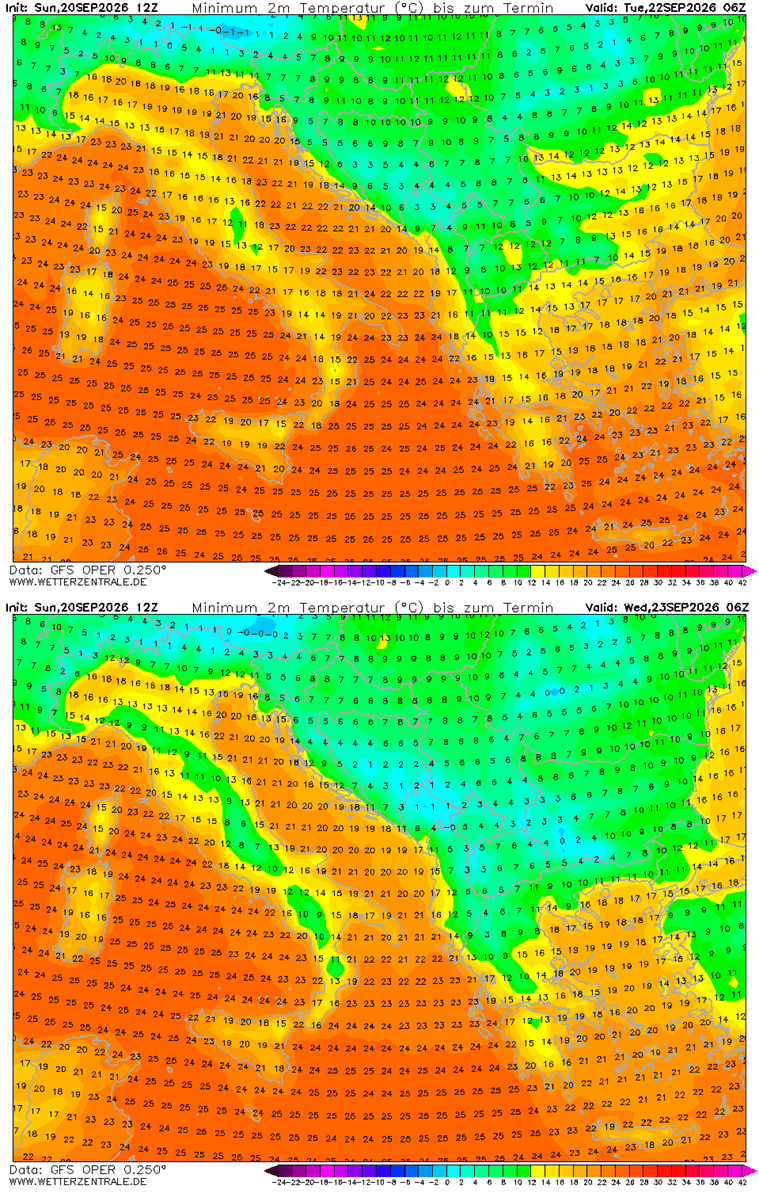
Perhaps most significant is the nighttime temperature forecast. As the skies clear behind the passing cold front, the lack of cloud cover combined with lighter winds will allow for efficient radiative cooling. This is expected to push nighttime lows into the low single digits, triggering the first widespread frost of the 2026 season. For agricultural basins and low-lying valleys, this poses a tangible threat to late-harvest crops that have not yet been protected or gathered.
Implications for Agriculture and Society
The human impact of this rapid cooling is significant, particularly in areas where the tourist season remains active. In Greece and Turkey, where coastal resorts and outdoor activities are usually enjoyed well into late September, the sudden drop in temperature is forcing a rapid change in plans for travelers and local business operators.
1. Agricultural Vulnerability
The primary concern for regional authorities is the "first frost" risk. While the cold front is short-lived, even a few hours of sub-zero temperatures at ground level can damage sensitive vegetation. Farmers in the Carpathian foothills and the agricultural valleys of the Balkans are being advised to take precautions for sensitive crops.
2. Infrastructure and Energy Demand
The sudden transition to cold weather typically triggers a spike in energy demand. Heating systems, which have been dormant throughout the summer, are being fired up simultaneously across entire nations. Utility providers in Eastern Europe have been alerted to the potential for a "load spike" as households compensate for the 15°C temperature deficit.
3. Early High-Altitude Winter
In the higher elevations of the Carpathian Mountains and the Northern Balkans, the drop in freezing levels has already triggered the first notable snowfalls of the autumn. While these are not expected to result in significant accumulations at lower altitudes, they serve as a stark reminder of the season’s progression and have necessitated caution for hikers and mountain transport services.
Official Responses and Long-Term Outlook
While meteorological agencies across the affected nations are treating this as a "significant but transient" event, they are not ruling out the potential for localized severe conditions. Official weather warnings have been issued for regions experiencing the most extreme anomalies, primarily focused on the frost risk in valley basins.
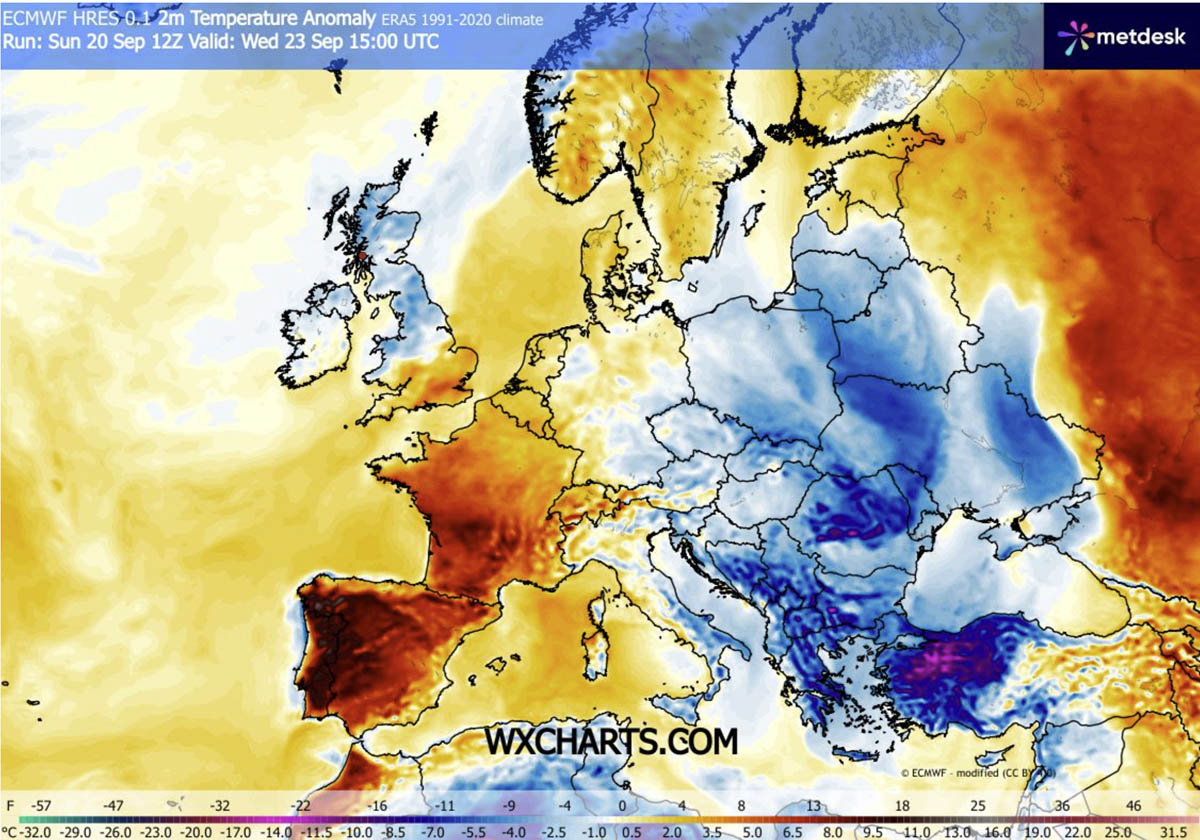
Looking toward the end of September, the long-term trends suggest a return to a more stable, though cooler, pattern. The "dipole" effect—where Western Europe remains under a warm ridge while the East is locked in cold—is expected to break down as we enter the final week of the month. Forecast models indicate that the upper-level ridge will eventually expand eastward, bringing a return to more seasonal, moderate temperatures.
However, this event is part of a larger, more complex discussion regarding the upcoming winter of 2026/2027. Climate scientists are closely monitoring the emergence of a new Polar Vortex structure over the North Pole. Should this structure undergo a significant disruption—a process often linked to sudden stratospheric warming—the continent could face a much more volatile winter than in previous years.
For now, the focus remains on the current week. Citizens in Eastern and Southeastern Europe are urged to prepare for the continued cold through Wednesday, monitor local news for frost alerts, and finalize any preparations for the cold-weather transition that is now firmly upon the region. As the atmosphere stabilizes late this week, the memory of this arctic blast will likely fade into the background of a standard autumn, but its arrival serves as a powerful reminder of how quickly the European climate can shift under the influence of large-scale atmospheric blocking.