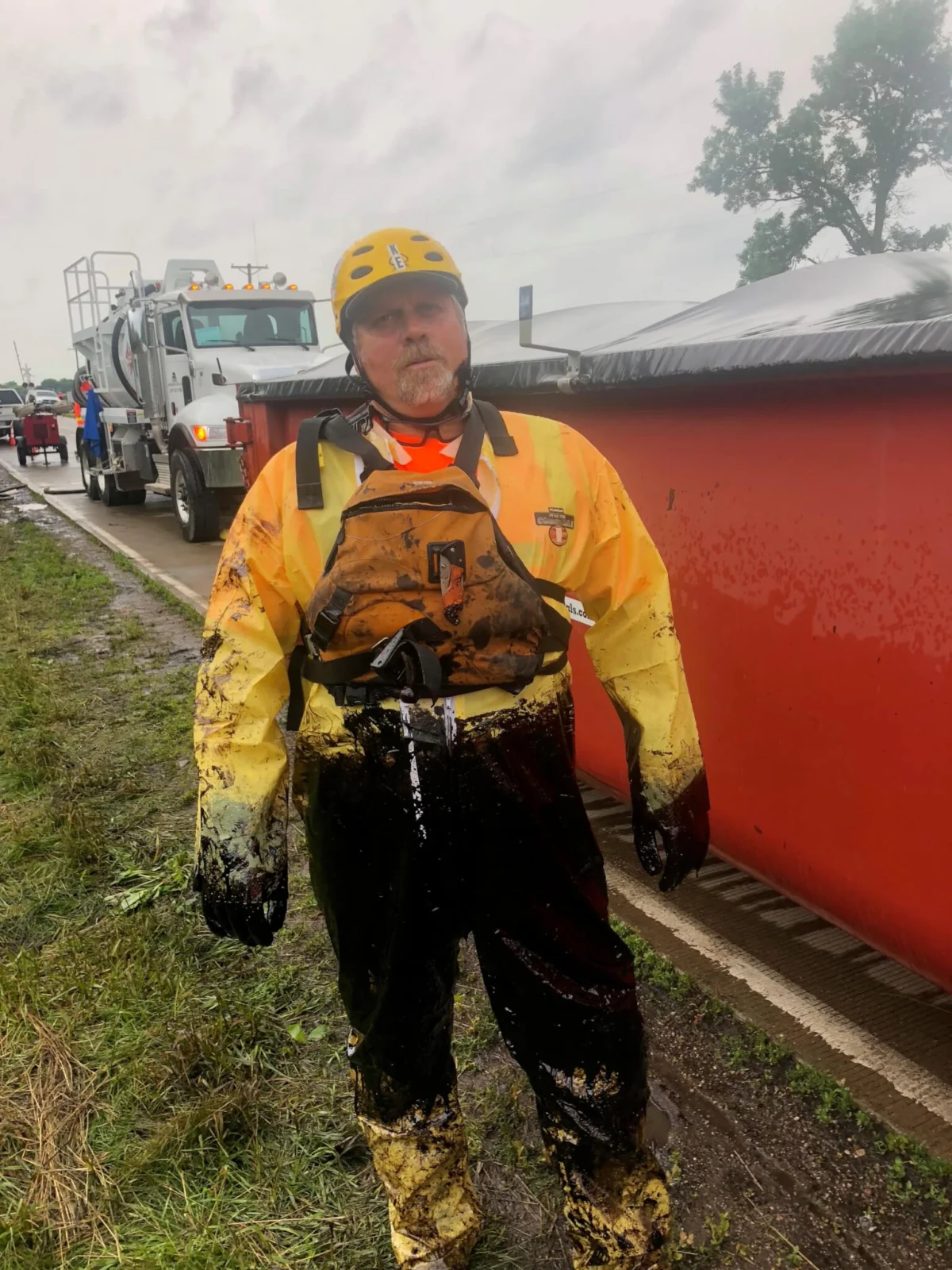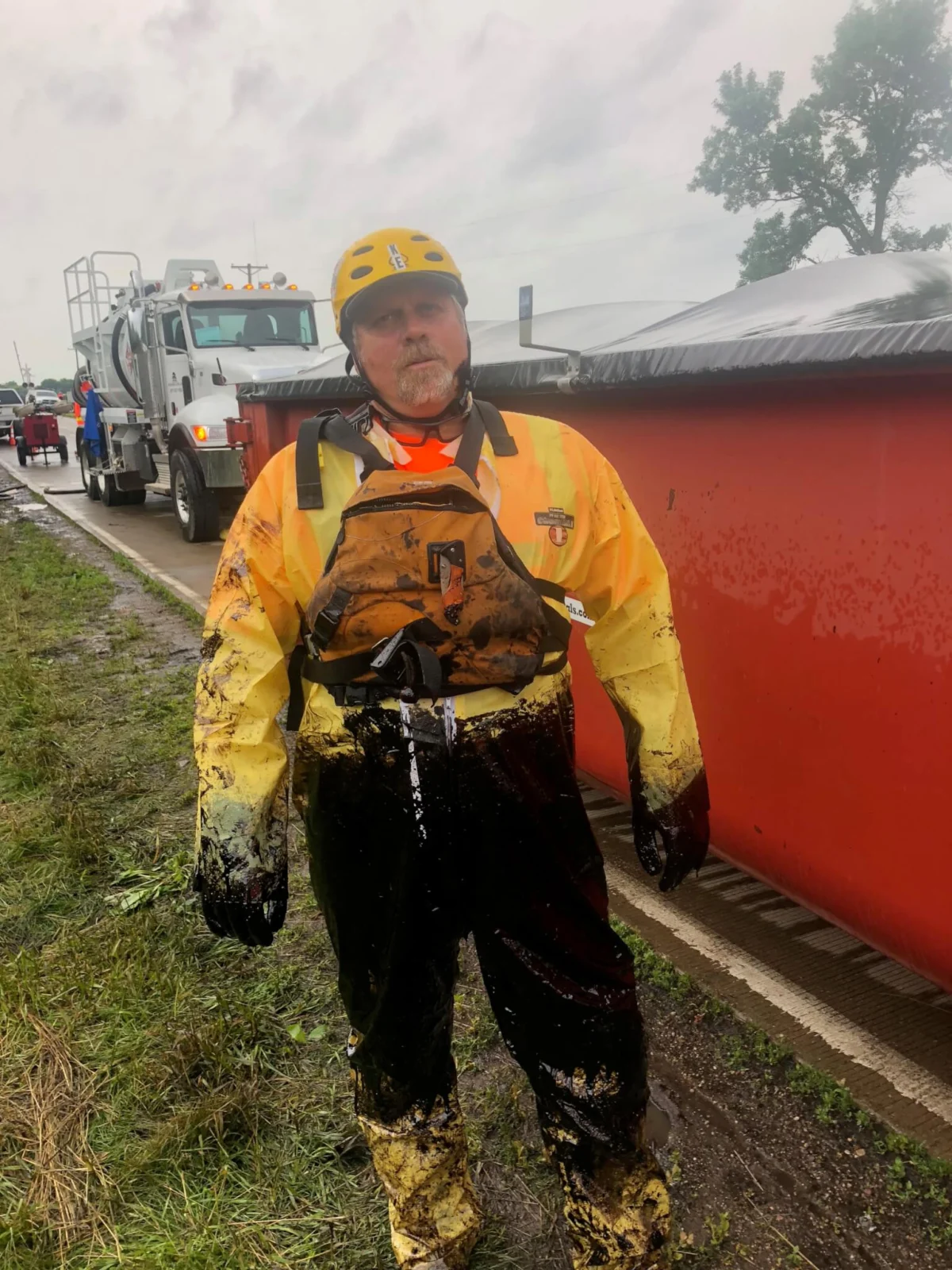
In the high-stakes environment of inland oil spill response, the difference between a controlled containment and a long-term environmental catastrophe often hinges on the discipline of the responders. While containment booms and skimming operations receive the lion’s share of public attention, the logistical backbone of a successful operation is the rigorous implementation of decontamination (decon) protocols. Without a systematic approach to cleaning personnel and equipment, responders inadvertently become vectors for cross-contamination, spreading hazardous materials from the spill site into the surrounding community and clean support zones.
The following report outlines the critical requirements for maintaining safety and operational integrity during fastwater spill response, drawing on industry-standard best practices and the technical guidelines established by Inland Oil Spill Response (IOSR) experts.
The Operational Framework: Defining the Work Zones
The first rule of any hazardous spill response is the establishment of clear, enforceable work zones. A common failure in the early, chaotic phases of a spill is the lack of demarcation, leading to accidental tracking of hydrocarbons out of the affected area.
H2: Zoning for Success
To maintain safety, every site must be mapped with specific attention to three distinct zones:
- Exclusion Zone (Hot Zone): This is the area where the spill is active. Access is strictly limited to authorized personnel wearing the appropriate level of Personal Protective Equipment (PPE). No one leaves this zone without undergoing full decontamination.
- Contamination Reduction Zone (CRZ/Warm Zone): This is the buffer area. It is here that the critical work of removing contaminants from personnel and equipment takes place. It acts as a safety valve, ensuring that no hazardous material reaches the clean zone.
- Support Zone (Cold Zone): This is the clean area where command centers, medical support, and logistical staging are located. It must remain entirely free of contaminants.
A detailed site map is not merely a suggestion; it is a regulatory and safety imperative. This map must be physically posted and clearly communicated to all responders during every shift briefing. Failure to identify site features—such as prevailing wind directions or water currents—in relation to these zones can render the entire decon process ineffective.
The Anatomy of Personnel Decontamination
When responders are operating in Modified Level D or Level C protective gear, they are essentially walking hazardous waste sites once they step out of the Exclusion Zone. Proactive and assertive decontamination is the only way to ensure that these individuals do not carry oil into the Support Zone.
H3: The Three-Station Decon Protocol
At a minimum, the personnel decontamination area within the CRZ must be segmented into three distinct stations. These stations are designed to strip away layers of contamination in a controlled, sequential manner.
- Station 1: Gross Decontamination. Before any clothing is removed, responders must undergo a preliminary wash to remove gross contamination. This involves spraying down outer protective suits and boots to remove bulk oil, preventing the shedding of large quantities of hazardous waste during the subsequent undressing process.
- Station 2: Garment Removal and Boot Sanitization. At this stage, personnel remove their outer garments and gloves. These items must be treated as hazardous waste and deposited into properly labeled, leak-proof containers. Following the removal of outer layers, hard hats and boots are cleaned with an aqueous solution of detergent or a specialized cleaning agent. Crucially, these items are then carried—not dragged—to the next station to prevent secondary contamination.
- Station 3: Final Scrub and Sanitization. Before a responder is permitted to exit the CRZ into the Cold Zone, they must thoroughly wash their hands and face. If respirators were utilized, they must be sanitized at this station. Once cleaned, respirators are stored in clean, sealed plastic bags to prevent contact with ambient air in the clean zone.
Equipment Decontamination: Preventing Cross-Contamination
Decontamination is not limited to human responders. Any piece of machinery, from handheld tools to heavy transport vehicles, that touches the Exclusion Zone must be treated as a potential carrier of contaminants.
H2: Vehicle and Heavy Equipment Protocols
Vehicles are the most common culprits in the spread of inland oil spills. A vehicle that drives through a muddy, oil-slicked bank in the Hot Zone and then returns to the public highway system is a major liability.
The protocol for vehicles is dictated by the level of exposure:

- Low-Level Contamination: If the vehicle has only made minimal contact with the spill area, decontamination may be limited to a rigorous rinsing of the tires and wheel wells. This should be performed on a dedicated decontamination pad to ensure that run-off is captured and not allowed to seep into the soil or local waterways.
- High-Level Contamination: For vehicles that have been heavily coated in hydrocarbons, standard rinsing is insufficient. In these cases, steam cleaning or high-pressure power washing is required. These methods ensure that oil is forced out of the undercarriage, brake assemblies, and engine components where it can hide and leak later.
H3: The Role of Capture and Containment
A frequently overlooked aspect of equipment decon is the disposal of the "rinsate." The water, detergent, and oil mixture generated by washing vehicles is itself hazardous waste. Site managers must ensure that decon pads are equipped with sumps or absorbent materials to collect all liquid run-off. Releasing this contaminated wash-water back into the environment is a violation of environmental law and fundamentally undermines the purpose of the response.
PPE Selection and Reusability
The choice of protective clothing is a balance between safety, cost, and the ability to effectively decontaminate. Whenever the mission allows, single-use, external protective clothing should be the standard for work within the Hot Zone or CRZ.
The advantage of single-use gear is twofold: it eliminates the risk of incomplete decontamination of fabric fibers, and it simplifies the waste stream. Once the outer layer is removed and placed in a labeled container, the threat is effectively neutralized.
However, when reusable protective clothing is necessary, it must be subjected to a rigorous cleaning cycle. Rinsing reusable gear at the site using a mixture of detergent and water is the baseline requirement. This must be done in a controlled fashion, with the collected wash-water treated as hazardous waste. If the gear cannot be brought back to a "clean" standard, it must be decommissioned and disposed of as waste to protect the health of the responder during the next deployment.
Official Responses and Industry Standards
Inland Oil Spill Response agencies emphasize that decon is not a "finish line" task but an ongoing, integrated process. According to the latest field notes from whitewater and fastwater rescue experts, the most successful operations are those where the decontamination team is treated as a specialized unit with its own command structure.
When a spill occurs in fastwater, the time-sensitive nature of the containment often puts pressure on responders to skip decon steps to "get back to the action." This is a critical error in judgment. Regulatory bodies, including the EPA and regional environmental departments, have repeatedly cited improper decontamination as a primary cause for the widening of a spill’s impact area.
Implications for Future Response
As inland oil transportation continues to face scrutiny, the protocols for fastwater spill response are evolving. The future of decon operations lies in three areas:
- Automation: The use of automated wash-racks for vehicles and equipment to ensure a consistent, high-pressure clean that eliminates human error in the decon process.
- Advanced Absorbents: The development of more effective chemical agents that can break down oil on protective gear more efficiently than standard detergents, reducing the volume of water required.
- Real-time Monitoring: The deployment of field-grade sensors to detect residual hydrocarbon presence on equipment after the decon process is complete, providing a scientific "green light" before a vehicle or responder leaves the CRZ.
Conclusion
The decontamination process is the silent guardian of the environment during an inland oil spill. By strictly adhering to the division of work zones, maintaining a rigorous three-station personnel decon flow, and treating all equipment—down to the tires of a support truck—with the same level of caution, responders can prevent a localized incident from becoming a regional disaster.
The mantra for every responder should be: "Assertive decon is proactive safety." By the time a responder enters the Support Zone, they should be as clean as when they first arrived on site. Anything less is a failure of the response, and ultimately, a failure of our duty to protect the land and water we serve.