In a significant milestone for the European climate-tech sector, German innovator Reverion has successfully closed a $175 million (€154.07 million) Series B funding round. This massive injection of capital is earmarked for an ambitious industrial scaling project: the construction of a new "mega-factory" that will increase the company’s manufacturing capacity tenfold, reaching 250MW per year.
As the global energy transition grapples with the intermittency of wind and solar power, Reverion’s container-based, carbon-negative power plants offer a compelling solution. By converting renewable gases into electricity with unprecedented efficiency, the company is positioning itself as a vital player in the decarbonization of grids and energy-intensive industries, such as data centers.
The Core Technology: A Paradigm Shift in Energy Conversion
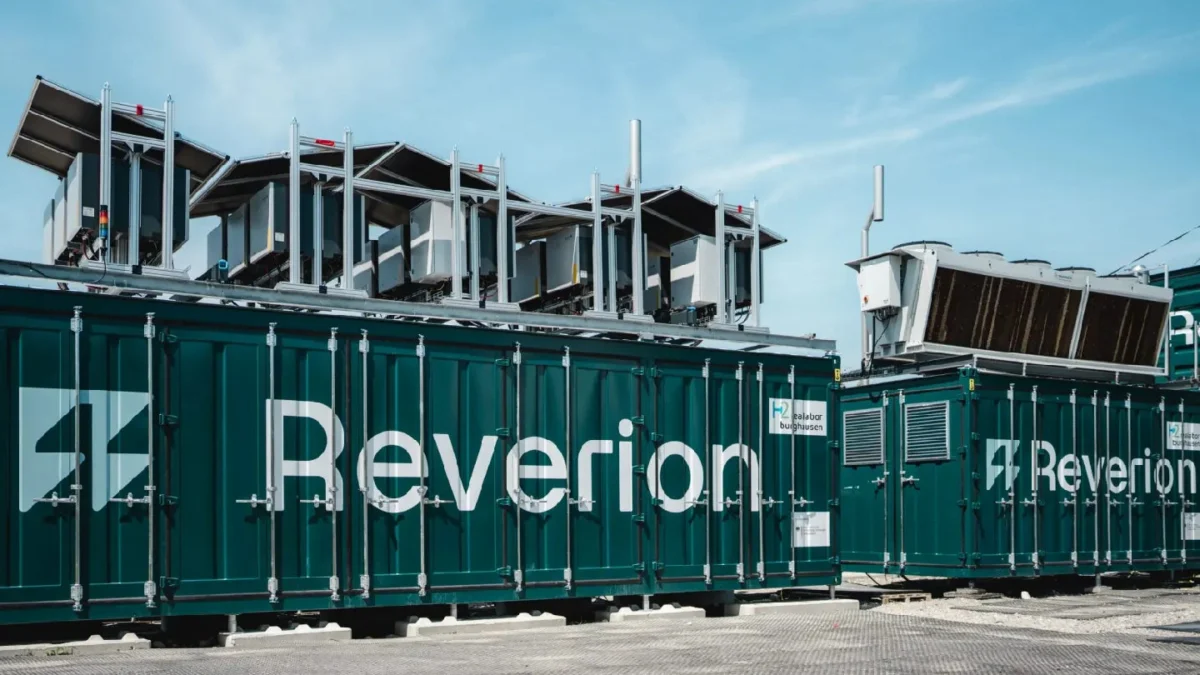
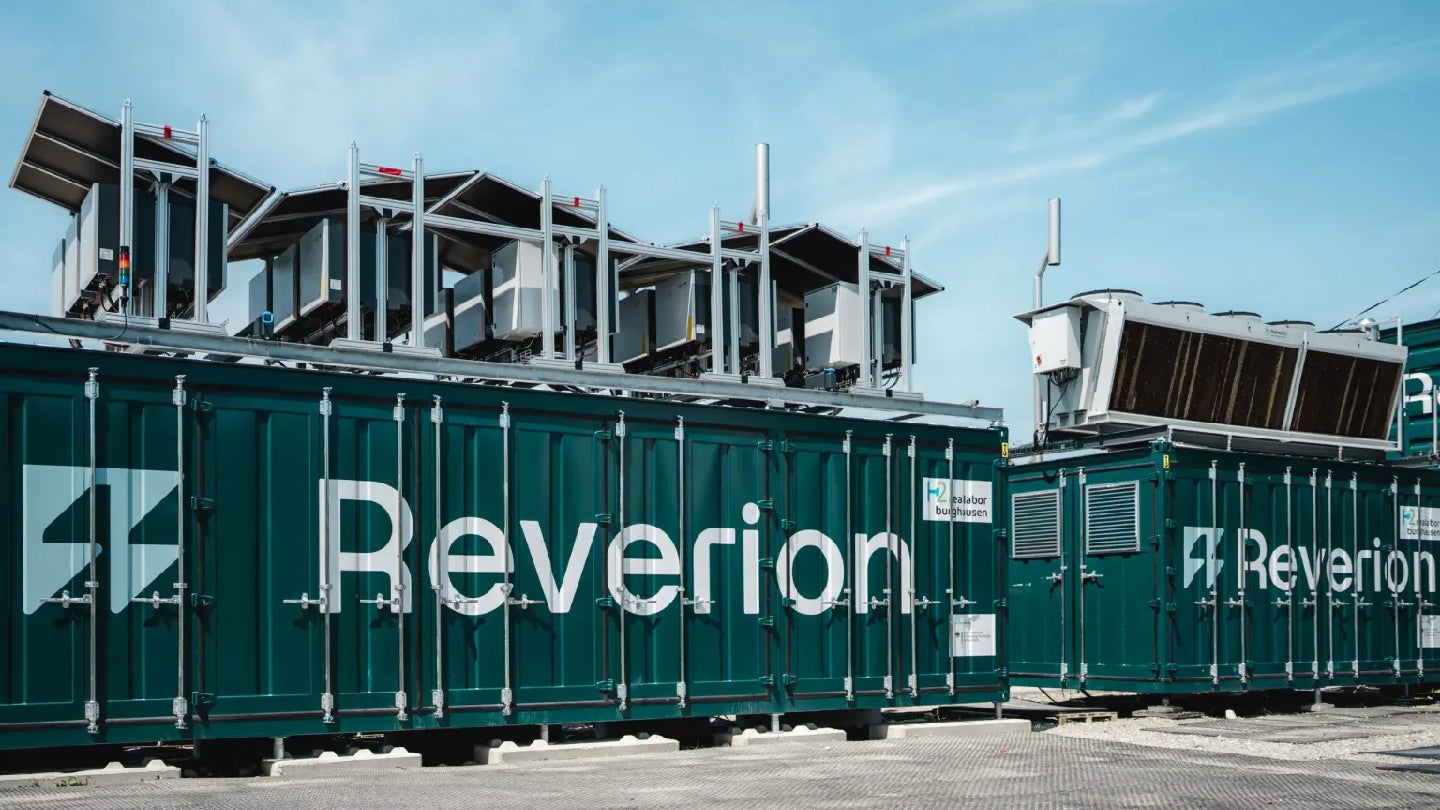
Reverion, founded in 2022, has rapidly moved from a promising startup to an industrial powerhouse. The company’s flagship product—a containerized system that functions as both a power plant and an electrolyzer—is designed to address the "missing link" in the renewable energy puzzle: dispatchability.
Unlike traditional biogas generators, which often suffer from low electrical efficiency, Reverion’s systems have achieved a verified electrical efficiency of 74.2% in live customer operations. This figure is nearly double the efficiency of conventional generators, marking a technical breakthrough that allows operators to extract significantly more power from the same amount of feedstock.
The systems are highly versatile, capable of running on biogas, natural gas, or hydrogen. Furthermore, the units operate in a bi-directional mode; they can generate electricity from gas when demand is high, and, when renewable energy surpluses are available on the grid, they can switch to electrolysis mode to convert that excess electricity back into storable gases. This "energy hub" capability makes them a cornerstone for smart grids that require both flexible supply and long-term storage.
Chronology of Growth: From Eresing to Global Markets
Reverion’s trajectory has been defined by rapid technical validation and commercial traction:
- 2022: The company is founded in Eresing, near Munich, with the goal of commercializing high-efficiency, containerized power conversion technology.
- Early Operational Phase: The company deploys its first units to pilot sites, focusing on integrating with existing biogas infrastructure.
- Performance Validation: Rigorous real-world testing proves the 74.2% efficiency threshold, cementing the technology’s reputation among early adopters.
- Expansion Phase: Seven power plants are currently operational across various customer sites, providing reliable, carbon-negative energy.
- September 2026: The company announces the successful close of its $175 million Series B funding round, led by Kembara. This funding marks the transition from boutique manufacturing to industrial-scale production.
With this new capital, Reverion is preparing to scale its workforce significantly, expecting to create up to 800 new jobs as it expands its footprint beyond its Eresing headquarters.
Supporting Data and Market Potential
The financial backing for this round highlights the intense investor confidence in Reverion’s business model. The round was led by Kembara, a European scale-up fund specializing in deep tech and climate solutions. The list of participants is a "who’s who" of the financial and industrial sectors, including Allianz, Aurum Impact, KfW Capital, and Carbon Equity. These new investors join a strong foundation of existing backers, including alfa8, the European Innovation Council Fund, Energy Impact Partners, Extantia, Possible Ventures, and UVC Partners.
The economic incentive for the company is substantial. Reverion currently reports a commercial project pipeline valued at over $2 billion in potential revenue. This demand is not merely domestic; it is international. As grid constraints become a universal challenge, Reverion’s modular, containerized approach allows for rapid deployment in regions where grid expansion is lagging or impossible.
The technical specifications are equally impressive. By capturing pure biogenic carbon dioxide during the power generation process, the units are not just "carbon neutral"—they are inherently carbon-negative. This is a critical selling point for industries under increasing pressure to comply with stringent ESG (Environmental, Social, and Governance) mandates.
Official Perspectives: The Vision for Industrial Mass Production
The leadership at Reverion views this funding as more than just a balance sheet boost; it is the starting gun for a new era of clean, 24/7 energy.
Stephan Herrmann, CEO and co-founder of Reverion, emphasized the strategic importance of the funding during the announcement:
"By closing this Series B, we are laying the foundation for industrial mass production. We are building the dispatchable, carbon-negative engine that allows grids and heavy industry to run 100% clean, 24 hours a day, 365 days a year. The financing allows us to build an additional production site and to scale the product further, into the megawatt class. That opens up entirely new markets for Reverion."
Herrmann’s vision for "megawatt-class" units indicates that the company is preparing to service much larger industrial clients than its initial biogas partners, moving directly into the territory of major utility providers and heavy manufacturing conglomerates.
Implications: Solving the "Data Center Dilemma"
One of the most promising markets for Reverion, beyond the agricultural biogas sector, is the data center industry. Data centers are currently facing a dual crisis: they require massive amounts of constant, uninterrupted power, and they are increasingly being denied grid connections by utility providers who cannot keep up with the power demand of AI and cloud computing infrastructure.
Reverion’s units provide a sophisticated workaround for these entities. Because the systems can be connected to local gas infrastructure, they provide a reliable, on-site, "behind-the-meter" power source. This mitigates the risks associated with electricity price volatility and removes the reliance on delayed or congested grid expansion projects.
Grid Stability and Decarbonization
The broader implications for the European energy grid are profound. As intermittent renewables like wind and solar become the dominant sources of energy, the grid requires "peaker plants"—facilities that can be turned on instantly to cover supply gaps. Historically, these plants have relied on fossil fuels. Reverion’s ability to provide this same service using carbon-negative biogas or hydrogen turns a liability into an asset.
Furthermore, the capability to switch into an electrolysis mode means that Reverion’s plants can help stabilize the grid during periods of peak renewable generation. When the wind is blowing at night and electricity prices plummet—or turn negative—Reverion units can absorb that power, store it as hydrogen or synthetic gas, and release it back to the grid when the sun sets or the wind dies down.
Socio-Economic Impact
The creation of 800 jobs is a significant contribution to the regional economy in Germany. As the EU pushes for "strategic autonomy" in green technologies, companies like Reverion are proving that Europe can lead the world in manufacturing advanced energy hardware. By anchoring their production in Germany, the company is ensuring that the supply chain remains resilient, localized, and aligned with European environmental standards.
Conclusion: The Road Ahead
As Reverion moves into its next phase, the challenges will shift from technological validation to execution and scaling. Building a "mega-factory" and scaling production tenfold is a complex industrial undertaking. However, with $175 million in the bank, a robust pipeline of over $2 billion, and a technology that addresses the most pressing pain points of the modern energy transition, the company is well-positioned for success.
The energy industry is moving toward a future defined by decentralization, digitalization, and decarbonization. Reverion’s modular, bi-directional, and highly efficient units sit at the intersection of these three trends. Whether by enabling data centers to operate independently of the grid or by providing the balancing services required for a 100% renewable grid, Reverion is not just participating in the energy transition—it is providing the heavy-duty machinery required to make it a reality.
As the company transitions to the megawatt class, all eyes will be on its Eresing facility. If they can successfully replicate their current efficiency metrics at industrial scale, Reverion will likely become a household name in the global energy infrastructure landscape, proving that clean energy can be as reliable, dispatchable, and scalable as the fossil-fuel-based systems it is destined to replace.