The global race to build the infrastructure of the artificial intelligence (AI) era has hit a hard, unyielding wall: the electricity grid. For months, market analysts, tech investors, and hyperscalers have been locked in a high-stakes debate over capital expenditure (CapEx). Bulls argue that the massive investments in data centers will yield exponential returns through AI-driven productivity, while bears point to daunting depreciation schedules and the potential for a massive, underutilized asset bubble.
However, both sides are operating under a fundamental misconception. They are arguing about the availability of money, when the true, binding constraint on the buildout is the availability of power.
According to data from GlobalData, companies have announced data center projects that would collectively require 400GW of electricity by 2030. In stark contrast, global grid infrastructure is only expected to support approximately 200GW of new data center capacity in that same timeframe. We are facing a massive “deliverability gap”—a chasm between the digital ambitions of tech giants and the physical realities of global power transmission and distribution.
The Anatomy of the Gap: A Data-Driven Reality
To understand the scale of this bottleneck, one must look at the math of modern infrastructure. In 2024, the world’s installed data center capacity hovered around 100GW. Projections suggest that by 2030, this will climb to just under 300GW. While that represents a significant expansion, it is only half of the 400GW pipeline currently being tracked across more than 80 countries.
The Geography of Congestion
The imbalance is not uniform; it is concentrated in the regions where AI development is most aggressive. North America, the epicenter of the hyperscaler boom, accounts for more than half of the global pipeline capacity. In these jurisdictions, the "queue" for grid interconnections has become a graveyard for ambitious timelines. Utilities, which historically planned for steady, predictable demand growth, are now being asked to accommodate load increases that were previously unthinkable.
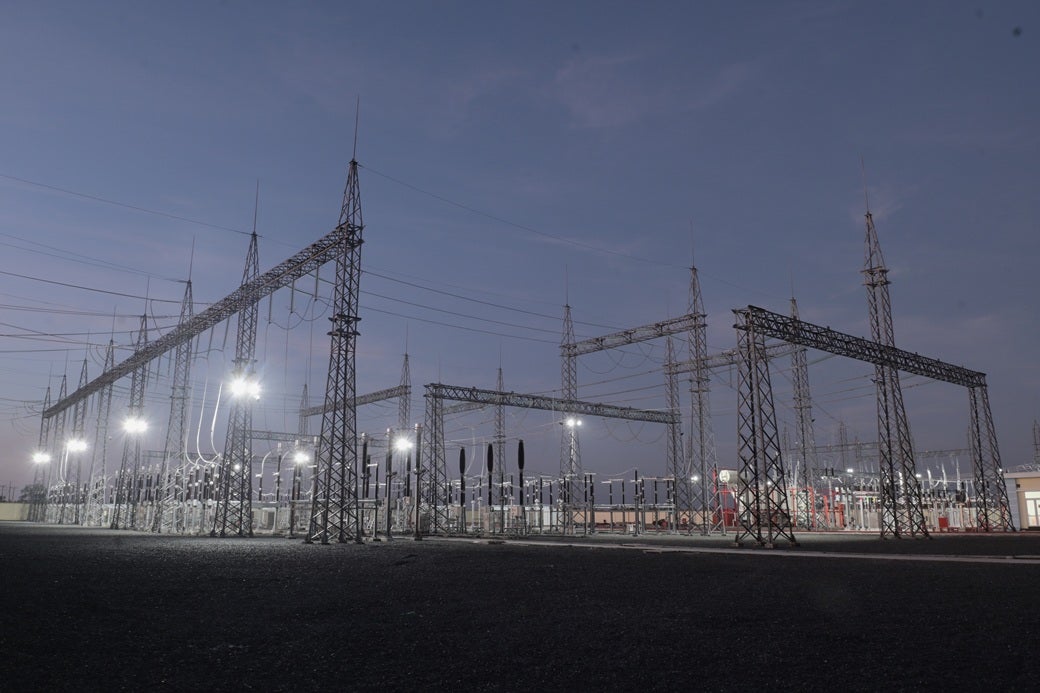
The result is a bottleneck that stretches across the entire value chain. A data center is, in essence, a massive, power-hungry machine that only begins to generate revenue the moment it is energized. Without a grid connection, a multi-billion-dollar facility is nothing more than a stranded asset—an expensive box of servers that cannot perform a single compute cycle.
Chronology: From AI Hype to Infrastructure Reality
The current crisis did not emerge overnight. It is the result of a rapid collision between two historically separate industries: the rapid-fire, agile world of software and the slow-moving, heavily regulated world of utility infrastructure.
- 2020–2022: The Silent Expansion. As the pandemic forced a global shift to remote work, cloud demand surged. Data center builds accelerated, but they remained within the historical capacity of the grid.
- 2023: The Generative AI "Big Bang." The release of large language models (LLMs) changed the requirements for data centers. These facilities suddenly required higher power densities to support thousands of interconnected GPUs.
- 2024: The Realization of Constraints. By early 2024, the industry began to notice that the lead times for transformers, switchgear, and substation upgrades were extending into years, not months.
- 2025–2026: The Strategic Pivot. Major hyperscalers began to pivot from merely "announcing" projects to securing their own power sources, including investments in nuclear energy, behind-the-meter generation, and grid-scale energy storage.
- 2027–2030 (Forecasted): The Shakeout. As the gap between announced projects and grid capacity widens, we expect a period of market consolidation where projects with secured grid access command a significant premium, while those without stall indefinitely.
The Myth of the "Announced" Pipeline
A critical error in market analysis is equating a public announcement with a shovel-ready project. GlobalData’s construction project records provide a sobering look at the reality behind the press releases.
Approximately 71% of the data center construction pipeline, by value, has yet to sign a construction contract. Even more telling is that nearly one-third of these projects show no sign of recent, tangible construction activity. Many of these announcements are "placeholder" projects—declarations of intent designed to signal to shareholders that the company is at the forefront of the AI arms race.
Furthermore, even when capacity is successfully brought online, it is rarely fully utilized from day one. Data center operators traditionally build ahead of demand, resulting in a lag between facility completion and full utilization. GlobalData forecasts that by 2030, the world’s data centers will be operating at only 59% of their total installed capacity. This means that at the end of the decade, roughly two-fifths of the world’s data center infrastructure will be effectively "idling"—consuming capital without yielding a commensurate return.
Why Efficiency Isn’t a Silver Bullet
Some observers have argued that increases in power-use effectiveness (PUE) and more efficient chip designs will close the gap. However, the numbers do not support this. While data centers are becoming significantly better at turning electricity into compute, the projected efficiency gains to 2030 will likely offset less than 10% of the energy demand. Technology is making compute cheaper, but it is not making it "energy-free." The sheer scale of the 400GW pipeline dwarfs any gains to be made through incremental efficiency.
Winners and Losers in the Infrastructure Squeeze
The shifting constraints of the market are redefining the power dynamics of the tech sector.
The New Kingmakers: Grid Specialists
Companies that ease the bottleneck—transformer and switchgear manufacturers, high-voltage cable producers, and grid-connection specialists—are now in a position of unprecedented leverage. Their order books are full, and their pricing power has never been stronger. These firms are no longer just suppliers; they are the gatekeepers of the AI revolution. If you cannot get a transformer, you cannot build a data center, regardless of your valuation.
The Laggards: Fit-out and Server Suppliers
Conversely, those who sit further down the value chain, such as general contractors and server suppliers, find themselves in a precarious position. Their revenue is entirely dependent on the project owner’s ability to clear the power bottleneck. A large, announced pipeline is, for these companies, a mirage. If the grid connection is delayed by two years, the revenue for the server fit-out is delayed by two years.
Implications for the Global Economy
The "Deliverability Gap" will have profound implications for the global economy as we approach 2030:
- Market Bifurcation: We will see a clear divide between "Power-Ready" projects and "Power-Constrained" projects. The former will attract top-tier tenants, while the latter will struggle to justify their development costs.
- Inflationary Pressure on Power: As hyperscalers compete with industrial users and residential grids for limited electrical capacity, the price of power in high-demand regions is likely to remain elevated or rise sharply, further complicating the profitability models of smaller data center operators.
- Regulatory Intervention: Governments, recognizing that data centers are vital to national security and economic competitiveness, will likely step in to fast-track grid upgrades. However, permitting and construction of transmission lines are historically slow processes that rarely keep pace with the needs of the private sector.
- Strategic Resource Allocation: We anticipate a shift toward decentralized power generation. Expect to see data centers increasingly paired with localized power solutions—microgrids, fuel cells, and dedicated modular nuclear reactors (SMRs)—to bypass the limitations of the aging central grid.
Conclusion: A Reality Check
The era of easy growth for data centers has ended. As we move toward 2030, the winning companies will not necessarily be those with the largest balance sheets or the most ambitious announcements. They will be the companies that demonstrate the most sophisticated understanding of energy logistics.
Investors and stakeholders must move beyond the "CapEx vs. Depreciation" debate and focus on the "Grid Connection" metric. The bottleneck is physical, it is local, and it is here to stay. As highlighted in GlobalData’s The Deliverability Gap whitepaper, the success of the AI revolution depends not on the speed of the processor, but on the capacity of the wire.
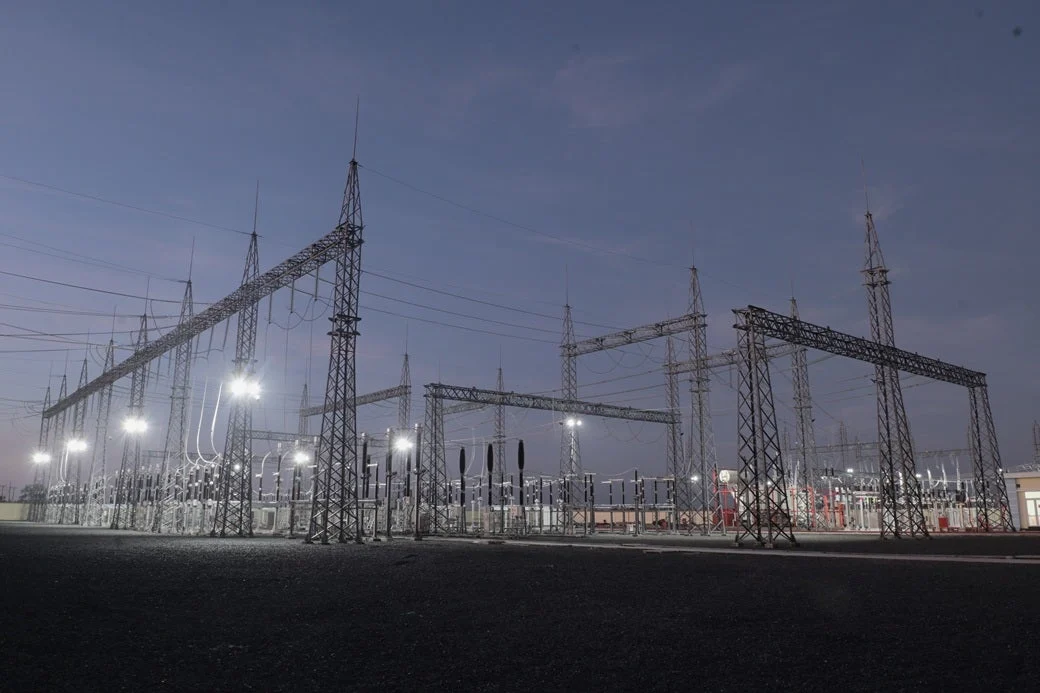
In the coming years, the real story will be told not in the data center, but at the substation. Those who can navigate this electrical bottleneck will define the next decade of digital infrastructure; those who cannot will find themselves trapped in a queue that may never move.