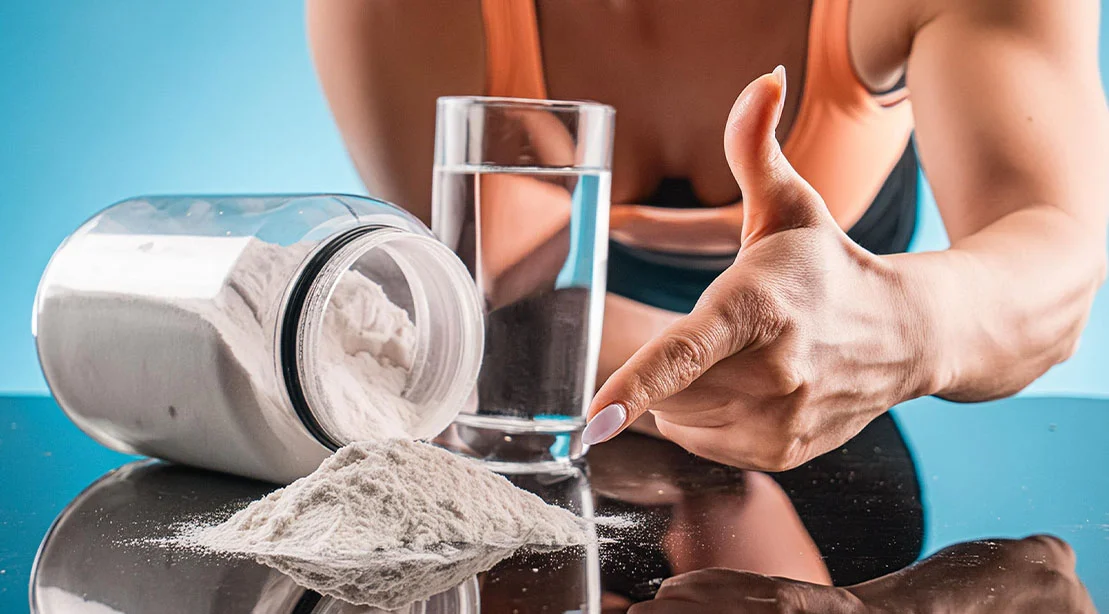
For three decades, creatine monohydrate has occupied the most unassuming shelf in the supplement aisle. While flashy canisters promising "anabolic matrixes" or molecules with names sounding more like Cold War-era weapon systems dominate the marketing budget, creatine remains a humble, inexpensive white powder. It is the steady, reliable workhorse of the fitness industry, having survived every fleeting supplement fad—from herbal stimulants to complex proprietary blends—that has come and gone since the mid-1990s.
Despite its ubiquity, there is a lingering demographic gap in its usage. Historically, female athletes and fitness enthusiasts have been hesitant to incorporate creatine, often citing fears of "bulking up" or unnecessary water retention. However, a wave of new, rigorous scientific inquiry is finally closing the knowledge gap. Recent meta-analyses suggest that while creatine isn’t a magical panacea, it is an evidence-backed tool that deserves a place in the regimens of women across all stages of life.
The Evolution of Creatine Research: A Chronological Overview
To understand why we are only now getting definitive data on women, we must look at the history of sports nutrition science. For years, the "standard" test subject in exercise physiology was almost exclusively male. Researchers frequently cited convenience and the avoidance of hormonal cycle interference as reasons for this bias.
- The 1990s (The Discovery Phase): Creatine burst into the mainstream consciousness as the secret weapon of strength athletes. Early studies established its role in ATP (adenosine triphosphate) regeneration, proving that it could buffer fatigue during explosive, short-duration movements. However, these studies were overwhelmingly focused on male bodybuilders and powerlifters.
- The 2000s (Refinement): The focus shifted toward dosing protocols. We moved away from the "loading phase" myths and began to understand the importance of consistent, daily intake. Still, the data remained male-centric, leading to a "one-size-fits-all" approach to supplementation that ignored potential physiological differences in women.
- The 2020s (The Era of Inclusion): We have entered a period of academic correction. Researchers are now prioritizing the "female athlete," acknowledging that factors such as the menstrual cycle, hormonal fluctuations, and different muscle fiber distributions require specific attention. The studies published in 2026 represent the culmination of this shift, moving the needle from generalized assumptions to targeted clinical evidence.
What the Latest Science Says: The September 2026 Meta-Analysis
On September 4, 2026, a groundbreaking systematic review and meta-analysis was published, providing the most comprehensive look at creatine supplementation in women to date. The research team faced a gargantuan task, initially screening over 13,000 records to identify high-quality, relevant data.
Ultimately, they narrowed their focus to 34 distinct studies, representing 692 female participants. The primary statistical analysis was drawn from 21 of these studies, ensuring that the findings were based on robust, peer-reviewed data rather than anecdotal evidence.
The results were not "earth-shattering"—and that is precisely why they are significant. The study found a small but statistically significant benefit for both performance and body composition. The performance effect was measured at approximately 0.30 standardized units, while the body-composition effect sat at 0.24.
For the layperson, this means that while creatine is not a "magic pill" that will transform a sedentary individual into an elite athlete overnight, it provides a measurable, tangible edge. When paired with structured training, it offers a slight but consistent advantage that compounds over time.
Breaking the Myths: Why "Bulking" is a Misconception
Fitness marketing has conditioned the public to believe that any supplement worth taking must provide a radical, visible transformation in a matter of days. If you aren’t looking like a professional bodybuilder by the end of the month, the supplement is labeled "ineffective."
This binary thinking has contributed to the persistent fear among women that creatine leads to unwanted weight gain. It is essential to address the science of this:
- Intracellular vs. Extracellular Water: Creatine does indeed draw water into the muscle cells—this is a primary mechanism of its efficacy. It is "intracellular" hydration, which actually makes muscles look fuller and helps facilitate protein synthesis. It is not the "puffy," bloated look associated with excessive sodium intake or hormonal fluctuations.
- The "Arnold" Fallacy: A woman will no more accidentally become "enormous" from taking five grams of creatine than a person will become a concert pianist by checking into a hotel that happens to have a piano in the lobby. Muscle hypertrophy is a result of years of intense training, caloric surplus, and genetic potential—not a simple amino acid derivative.
- The Performance Edge: Creatine facilitates the regeneration of phosphocreatine, which helps restore ATP stores during high-intensity, repeated efforts. This is why its benefits are seen in sprinters, soccer players, and those performing heavy resistance training. It allows the athlete to squeeze out one or two extra reps or maintain a higher speed for a few seconds longer. Over months, that volume adds up to real muscle growth and performance improvement.
Implications for Postmenopausal Women: A Critical Window
While the general meta-analysis covered a broad spectrum of female athletes, a separate 2026 meta-analysis specifically targeted the postmenopausal population—a group for whom muscle mass preservation is a critical health marker.
As women age, they face the dual challenges of sarcopenia (the loss of muscle mass) and decreased bone density. Seven randomized trials involving 608 postmenopausal women revealed that creatine supplementation, when combined with resistance training, led to an increase in lean mass and improved leg-press strength.
The implications here are profound. This isn’t just about athletic performance; it is about healthy aging, metabolic health, and functional independence. For postmenopausal women, the "boring" supplement of creatine could be a vital component of a preventative health strategy.
Professional Perspectives: The Scientific Consensus
The authors of these recent studies have been careful to maintain a tone of "restrained optimism." They note that because the studies analyzed varied significantly in terms of participant fitness levels, sports, and dosing protocols, the overall certainty of evidence is categorized as "low to moderate."
However, the consensus is clear: Creatine is safe, effective, and underutilized. When we look at the official responses from nutritionists and sports scientists, the advice is consistent:
- Dosing: A simple 3–5 gram daily dose is sufficient for most women. There is no need for the aggressive "loading" phases that were once marketed to sell more product.
- Consistency: The magic is in the routine. Creatine requires a period of saturation in the muscles to be effective.
- The Foundation: No supplement—creatine included—replaces the fundamental pillars of health: protein intake, progressive overload in training, adequate sleep, and dietary discipline.
Conclusion: The Reality of Ergogenic Aids
In an industry rife with hyperbole and expensive, unproven "proprietary blends," creatine stands apart. It is perhaps the only supplement in the market that is both boring and undeniably effective.
For women, the takeaway from the latest research is empowering. You don’t need a specialized "female-marketed" version of creatine, nor do you need to fear it as a tool that will fundamentally change your aesthetic against your will.
Creatine is simply a tool that helps you do a little more of what you are already doing. It helps you lift a little heavier, sprint a little faster, and preserve muscle a little better as you age. It is not a miracle; it is science. And for those looking to optimize their training, it is arguably the best investment you can make for less than the cost of a cup of coffee a day.