As Switzerland stands at a pivotal juncture in its industrial and environmental history, the nation’s energy policy is undergoing a profound transformation. Long reliant on the bedrock of hydropower and nuclear generation, the Swiss grid is now pivoting toward a more diversified, decarbonized, and decentralized future. With the recent lifting of the ban on new nuclear power plants and an aggressive push toward solar integration, the Alpine nation faces a complex challenge: how to reconcile ambitious climate goals with the non-negotiable requirement of grid reliability.
Main Facts: The Changing Face of Swiss Power
The Swiss energy landscape is defined by its geography and its political commitment to a "2050 Energy Strategy." Traditionally, the country’s power mix has been dominated by hydropower—which provides seasonal storage and grid stability—and nuclear energy, which provides consistent baseload power.
However, the current transition is marked by a shift in investment and policy priority. While hydropower and pumped storage remain the foundational elements for winter balancing, the portfolio is rapidly diversifying. Recent government-led auctions and subsidy schemes have seen solar power emerge as the primary growth driver.
The most significant recent development is the legislative shift regarding nuclear energy. For years, the Energiewende (energy transition) policy was tethered to a prohibition on the construction of new nuclear reactors. The recent decision to lift this ban is not an immediate return to nuclear expansion but rather a strategic "keeping of options open." It reflects a growing consensus among policymakers that as the European grid tightens, relying solely on imports and intermittent renewables may be insufficient to guarantee security of supply during the peak demand of the winter months.
A Chronological Evolution of Policy
To understand the current state of play, one must look at the timeline that has shaped Swiss energy policy over the last two decades:
- 2011: The Post-Fukushima Pivot: Following the Fukushima Daiichi disaster, the Swiss Federal Council and Parliament decided to phase out nuclear power in the long term, opting not to replace the existing five reactors at the end of their operational lifespans.
- 2017: The Energy Strategy 2050: Swiss voters approved a new Energy Act, which enshrined the phase-out of nuclear power, promoted renewable energy, and focused on energy efficiency.
- 2020–2022: The European Energy Crisis: The geopolitical instability triggered by the war in Ukraine exposed the fragility of Europe’s energy supply chains. Switzerland, which is heavily integrated into the European synchronous grid, faced record-high prices and concerns regarding winter shortages.
- 2023: Accelerated Renewables Legislation: Parliament passed "emergency" measures to fast-track solar and wind projects, particularly those in high-alpine regions where winter solar yields are higher than in the plateau.
- 2024–2025: Re-evaluating Nuclear: A growing political movement began to challenge the 2011 nuclear phase-out. The argument shifted from "nuclear vs. renewables" to "nuclear AND renewables" as a hedge against energy insecurity.
- Late 2026: The New Legislative Framework: The formal lifting of the ban on new nuclear reactors signals a new chapter where technology neutrality—rather than exclusion—becomes the guiding principle of Swiss energy policy.
Supporting Data: The Balancing Act
The challenge for the Swiss Federal Office of Energy (SFOE) is balancing the intermittent nature of solar and wind with the steady demand of an industrialized nation.
The Solar Surge
In recent auctions, solar photovoltaic (PV) projects have consistently outpaced other technologies in terms of both volume and cost-effectiveness. The decentralized nature of solar—installed on rooftops, facade-integrated photovoltaics, and large-scale alpine arrays—has transformed thousands of Swiss households and businesses into "prosumers." However, the "winter gap" remains a statistical hurdle. In January, solar production in Switzerland drops to a fraction of its summer peak due to cloud cover and shorter daylight hours.
The Role of Hydropower
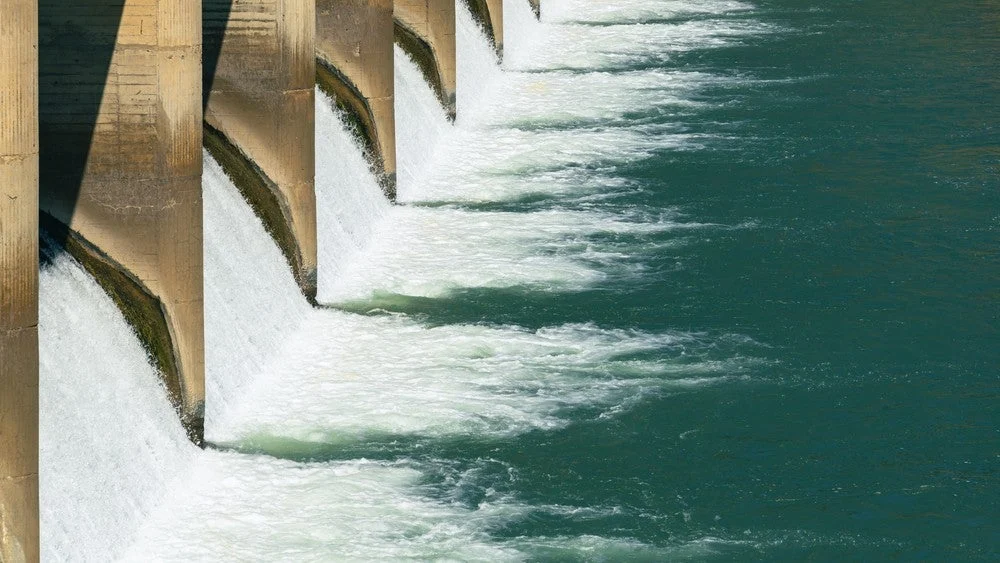
Hydropower currently accounts for approximately 57% of Swiss electricity production. The expansion of pumped storage facilities—such as the massive Nant de Drance project—has been instrumental in providing "batteries" for the grid. These facilities pump water to high-altitude reservoirs when energy is cheap (or abundant from solar/wind) and release it to drive turbines when demand peaks.
Imports and Interdependence
Switzerland acts as a central hub for the European power grid. In the summer, it is often a net exporter; in the winter, it is a net importer. The reliance on neighboring countries (France, Germany, and Italy) for winter power makes Switzerland vulnerable to the supply dynamics of its neighbors. If France experiences nuclear maintenance outages or Germany faces low wind output, Switzerland’s supply security is immediately tested.
Official Responses and Political Debate
The decision to lift the nuclear ban has been met with a spectrum of reactions from stakeholders across the spectrum:
The Federal Government: The official stance is one of "pragmatic caution." Officials emphasize that lifting the ban does not mean a nuclear power plant will be built tomorrow. Instead, it is a strategic insurance policy. The government maintains that the primary focus remains on the "Electricity Act" (the federal act on a secure electricity supply with renewable energies), which aims to massively expand domestic generation capacity.
The Nuclear Industry: Industry associations argue that the lifting of the ban is essential for long-term investment. They contend that modern Small Modular Reactors (SMRs) offer a safer, more flexible, and potentially more cost-effective way to provide carbon-neutral baseload power that complements, rather than competes with, intermittent renewables.
Environmental NGOs: Opponents argue that nuclear energy is a distraction from the urgent need to scale up efficiency and renewables. They point to the high capital costs, the unresolved issue of long-term radioactive waste storage, and the long lead times for construction as reasons why nuclear should not be part of the "immediate" solution for 2030.
The Economic Sector: Swiss industry, particularly the high-tech and manufacturing sectors, has lobbied for a "technology-open" policy. Their primary concern is price volatility and the potential for grid instability, which could jeopardize Switzerland’s status as a competitive industrial hub.
Implications: The Path to 2030 and Beyond
As Switzerland moves toward 2030, the implications of these decisions are far-reaching:
1. Technological Pluralism
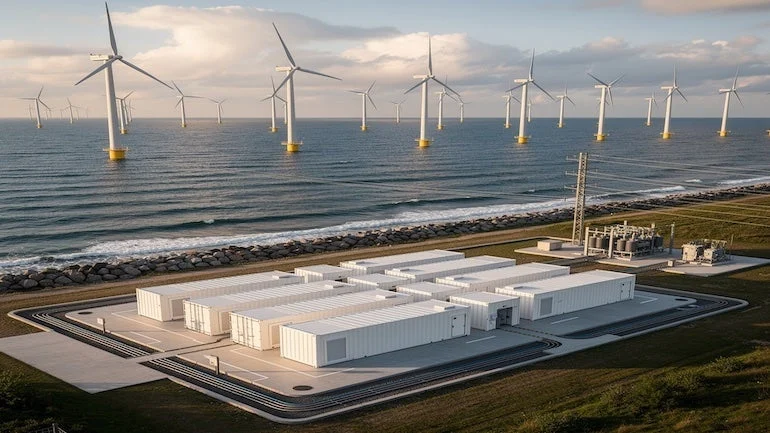
The era of choosing between "all-renewables" or "all-nuclear" is effectively over. The future grid will likely be a hybrid system where hydropower provides the core flexibility, solar and wind provide the bulk of the volume, and nuclear (or advanced thermal storage) provides the necessary baseload stability to prevent price spikes during extreme weather events.
2. Grid Modernization
Increased decentralization requires a fundamental upgrade to the Swiss distribution grid. The move toward "Smart Grids" is no longer optional; it is a prerequisite for managing the two-way flow of electricity from thousands of residential solar arrays and the increasing demand from electric vehicle charging infrastructure.
3. Geopolitical Alignment
Switzerland’s energy policy is inextricably linked to the European Union. Ongoing negotiations regarding a broader electricity agreement with the EU are crucial. A stable, long-term treaty would allow for more efficient market coupling and a more reliable emergency response mechanism during supply crises.
4. Preservation vs. Progress
A significant domestic hurdle remains the conflict between landscape protection and energy development. High-alpine solar plants and wind farms often face local opposition due to their impact on pristine mountain vistas. Balancing the "Climate Goal" with the "Landscape Preservation Goal" will be the defining political battle of the next five years.
Conclusion
Switzerland’s energy transition is a microcosm of the global challenge: the pursuit of a net-zero future without compromising the economic engine that relies on 24/7 reliability. By diversifying its portfolio, embracing solar, maximizing its hydro potential, and re-evaluating the role of nuclear, the nation is positioning itself to be more resilient.
However, the "crossroads" metaphor is apt. The decisions made between now and 2030 will lock in the infrastructure for the next half-century. Whether Switzerland succeeds will depend not just on the technology it chooses, but on its ability to forge a political consensus that satisfies both the immediate need for security and the long-term imperative for sustainability. The path ahead is neither simple nor linear, but for a nation known for its precision and engineering prowess, it is a challenge that—if managed correctly—could serve as a blueprint for other industrialized nations grappling with the same energy trilemma.