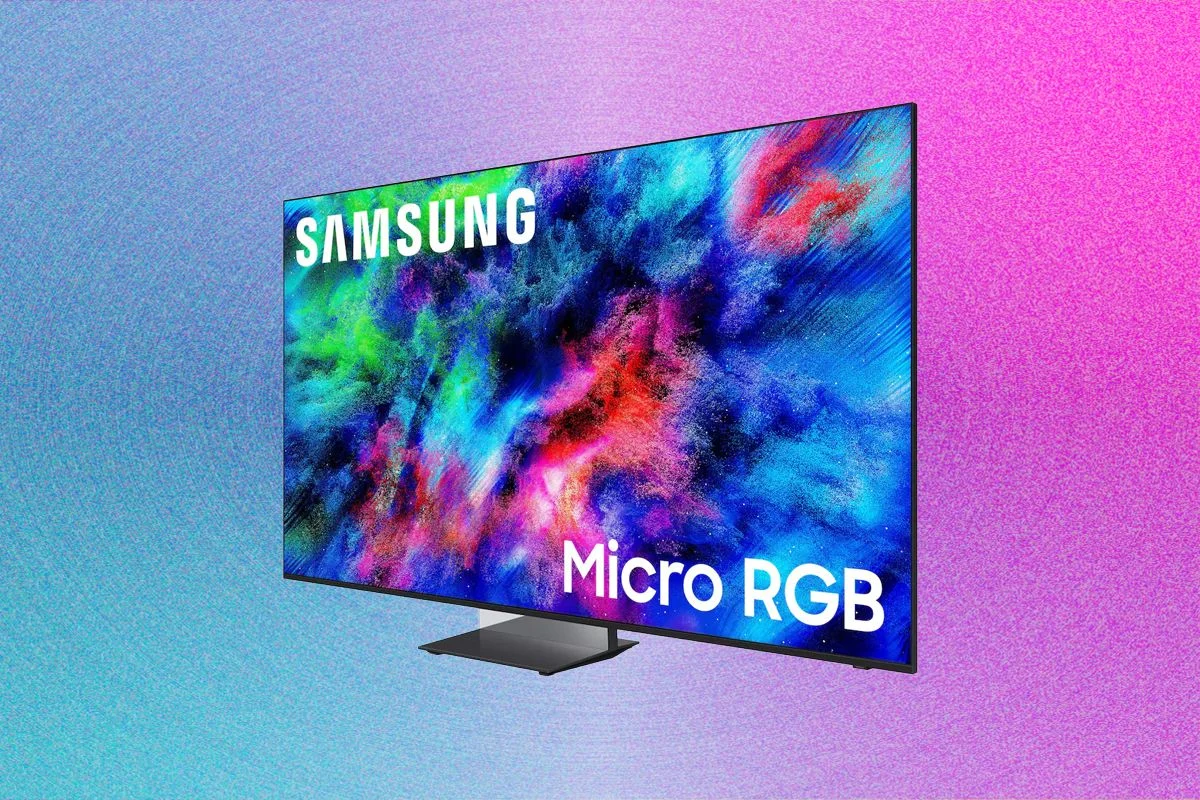
In the high-stakes arena of premium home entertainment, the promise of “Micro RGB” technology has long been heralded as the next great leap forward. By utilizing individual red, green, and blue pixels to generate light—eschewing the white or blue backlighting of traditional LED displays—manufacturers like Samsung, LG, and Hisense have promised a future where contrast is absolute and color saturation is breathtaking.
However, as the dust settles on the launch of the Samsung Micro RGB R95H, the reality is more nuanced, and perhaps more disappointing, than the marketing brochures suggest. While it succeeds as a functional, user-friendly piece of hardware, it falls short of the "mind-blowing" visual experience expected at its $3,200 entry price point.
Main Facts: The Hardware Landscape
The Samsung Micro RGB R95H arrives with the weight of expectation. It features an innovative, tool-free pedestal design that prioritizes ease of installation, making it a standout for users who want a high-end experience without the headache of complex assembly.

Core Specifications at a Glance:
- Display Technology: Micro RGB (Red, Green, Blue pixel-level illumination).
- Price: $3,200 (65-inch model); $4,500 (75-inch model).
- Refresh Rate: 120-Hz native (with specialized high-refresh gaming ports).
- Connectivity: Wi-Fi 6E, four HDMI ports (one dedicated for gaming), eARC support, and compatibility with Samsung’s Wireless One Connect box.
- Operating System: Tizen OS.
While the physical build is sturdy and the aesthetics are clean, the R95H faces stiff competition. When stacked against the LG Micro RGB Evo—which offers superior customization and a more punchy, vibrant color palette—the Samsung unit feels strangely restrained. Its aggressive anti-glare technology, while effective in bright rooms, seems to sap the vitality out of cinematic content, leaving images feeling “flat” or “subdued” in darker environments.
Chronology: From Unboxing to Disillusionment
The lifecycle of the R95H experience can be categorized by an initial sense of ease, followed by a gradual frustration with its software and imaging limitations.
Phase 1: Installation and Setup
The unboxing process is undeniably the R95H’s strongest suit. Samsung has engineered a single-pedestal foot that snaps into place in roughly ten seconds. It is a masterclass in industrial design, allowing the display to sit comfortably on narrow furniture without the need for the wide, awkward footprints seen on competing sets.

Phase 2: The Software Struggle
Once powered on, the user is greeted by Tizen OS. While functional, it lacks the intuitive, ecosystem-rich nature of Google TV. During testing, the unit encountered significant friction, including a failure to install the Netflix app—a bug Samsung has acknowledged but not yet patched. Users are forced to rely on the Samsung SmartThings app for setup, which requires a multi-step two-factor authentication process that feels unnecessarily cumbersome for a home entertainment device.
Phase 3: Real-World Content Testing
The most critical phase involved putting the display through its paces with modern streaming services. Testing across a variety of genres—from the dark, moody visuals of Awake to the vibrant, fast-paced action of Tron: Ares—revealed a persistent issue: a lack of color depth. Even when tweaking white balance and brightness, the R95H struggled to present deep, nuanced tones, often rendering vibrant blues as drab or muted.
Supporting Data: Benchmark Performance
"Benchmarks don’t lie," as the old industry adage goes. While the R95H meets the technical requirements of the BT.2020 color gamut, the subjective experience of those numbers is where the magic (or lack thereof) occurs.

Using the Spears & Munsil Benchmarks, the disparity between the R95H and its peers became stark. Skin-tone variance, a hallmark of high-end display calibration, was notably absent. Two individuals with distinct complexions appeared to have nearly identical skin tones on the Samsung display.
Furthermore, the "Dynamic" mode—intended to boost vibrancy—resulted in distracting color blooming and bleeding. Conversely, the "Filmmaker" mode, meant to preserve director intent, often pushed the image into a realm of extreme shadow where detail was lost. While the AI Picture setting proved somewhat effective for sports, it could not salvage the overall lack of contrast in cinematic demos.
Official Responses and Industry Context
Samsung has publicly acknowledged some of the software hurdles, specifically noting that the issues surrounding streaming app installation are currently under investigation. However, the company has remained quiet regarding the broader critiques concerning the "subdued" nature of its anti-glare screen.

Industry analysts suggest that Samsung’s reliance on its proprietary Tizen OS is a strategic choice meant to lock users into the Samsung ecosystem, but it is a choice that comes at the cost of user experience. When compared to the Hisense UR9, which consistently ranks higher in independent reviews for its out-of-the-box accuracy, Samsung’s reliance on "AI" to fix inherent hardware limitations appears to be a stopgap measure rather than a solution.
Implications: Is the R95H Worth the Investment?
The implications for the consumer are clear: at $3,200, the Samsung R95H is priced as a flagship, but it performs like a high-midrange unit.
The Good
- Installation: The easiest setup in the industry.
- Gaming: Excellent response times and low latency for Xbox Series X users.
- AI Soccer Mode Pro: A standout feature that genuinely enhances the vividness of live sports.
- Remote Design: Minimalist, ergonomic, and arguably the best remote included with any modern high-end TV.
The Bad
- Color Depth: The display consistently fails to produce the "pop" associated with Micro RGB technology.
- Software Glitches: Frequent issues with app installation and voice-command reliability.
- Anti-Glare Trade-off: The hardware intended to reduce reflections simultaneously degrades the overall picture quality.
The Verdict
The Samsung Micro RGB R95H is a television that wants to be the centerpiece of a home theater but ends up being more suited to a bright living room where the primary content is news, sports, and casual gaming.

If your priority is absolute color accuracy, deep, rich blacks, and a cinematic experience that honors the intentions of filmmakers, the current market offers better alternatives. The LG Micro RGB Evo, while more expensive, provides a significantly more refined picture, while the Hisense UR9 offers better value for those looking for high performance without the premium price tag.
Ultimately, the R95H is a product of engineering compromise. By prioritizing a minimalist aesthetic and a specific type of anti-glare finish, Samsung has sacrificed the very thing that users pay for when they upgrade to Micro RGB: the breathtaking, lifelike brilliance of the image. For the average viewer, it is a perfectly fine television. For the enthusiast, it is a missed opportunity.
As the display market continues to evolve, Samsung will need to look beyond its own ecosystem and prioritize the raw performance of its panels if it hopes to maintain its standing in the high-end tier. Until then, prospective buyers should wait for a price drop or consider the more capable competition.