There is an age-old adage often whispered in the locker rooms of elite athletics and the corridors of military academies alike: “Luck is when hard work meets opportunity.” For Dan Browne, a man whose life has been defined by a relentless pursuit of human potential, the word "luck" feels insufficient. Instead, Browne points to a synthesis of faith, unyielding preparation, and a structural commitment to growth. His trajectory—from a young boy running alongside his father in Oregon to an Olympian and a decorated military leader—serves as a masterclass in what is possible when an individual refuses to accept the boundaries of the "impossible."
"I was always a driven person, even from a young age," Browne reflects. That drive was not merely an internal spark; it was the fuel for a career that bridged the gap between civilian athletic excellence and military discipline.
A Foundation Built on Endurance: The Early Years
Browne’s story begins in the lush, temperate landscapes of Oregon. Long before he was a household name in track and field, he was a child discovering the rhythmic, meditative, and grueling nature of distance running. These early "fun-runs" with his father were the genesis of a lifelong passion.
While he engaged in various sports, the solitary and grueling nature of cross-country and long-distance track events resonated with his temperament. "I always enjoyed the feeling I got from running," he says. It was here that he first understood that the reward of running was not just the finish line, but the profound sense of self-discovery that occurred mid-stride. As he matured, his talent became undeniable, catching the eyes of recruiters across the nation. However, for Browne, the choice of where to take his talents was never just about track splits; it was about character.
The Crucible: West Point and the Four-Minute Milestone
When Browne committed to the United States Military Academy at West Point, he wasn’t just joining a team; he was entering a crucible. "Because of my personality and desire to challenge myself to become a leader of character, West Point was going to be the natural fit for me," Browne explains.
At West Point, the pressure is multifaceted: academic rigor, military training, and physical excellence collide. Most would find the balancing act untenable, but Browne thrived. He began to dismantle the record books, setting new benchmarks in the 3,000, 5,000, and 10,000-meter events. Yet, his most historic achievement remains the breaking of the four-minute mile—a feat that, at the time, made him the first cadet in the Academy’s history to do so.
His record-setting time of 3:59.37, achieved in a head-to-head battle against rival Navy, stands as a testament to his mental fortitude. Even in 2026, it remains the fastest mile in West Point history. To put this into perspective, fewer than 2,500 people in the history of the world have ever broken the four-minute barrier.
"I believe God gives us certain gifts," Browne says, "and I believe that curiosity to explore my potential combined with belief in myself spurred me on."
Chronology of a Champion
- Early Life: Grew up in Oregon, developing a passion for distance running through family runs.
- The West Point Era: Enrolled at the U.S. Military Academy, where he balanced rigorous cadet life with record-breaking track performances.
- The Olympic Breakthrough: As a junior, Browne competed in his first U.S. Olympic Trials, proving that world-class status was within reach.
- Professional Transition: Joined the Army’s World Class Athlete Program (WCAP) and later teamed up with legendary coach Alberto Salazar and the Nike Oregon Project.
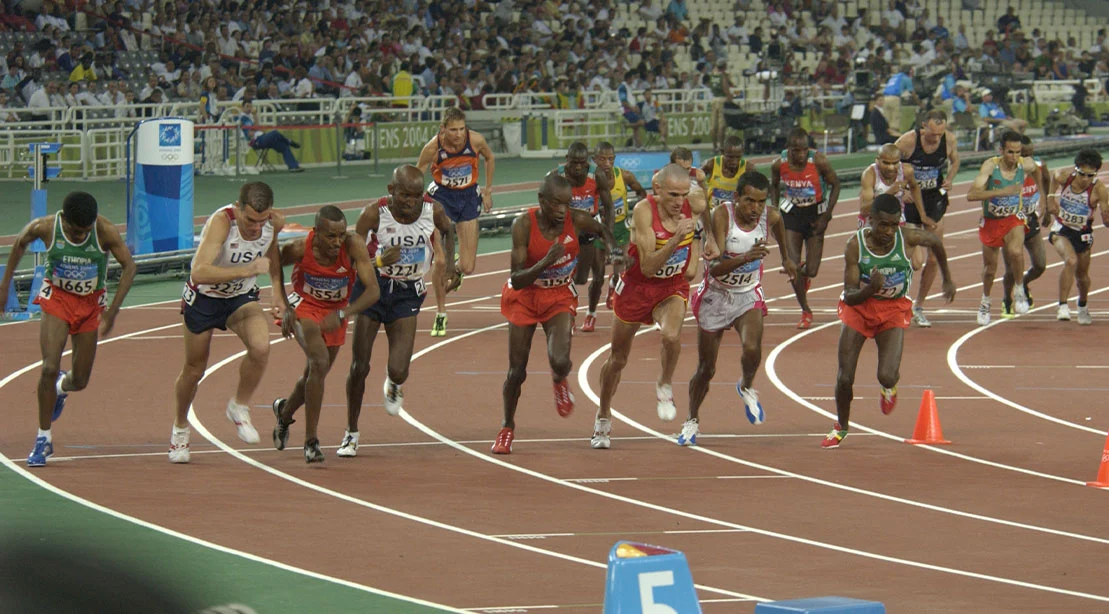
- The 2004 Athens Games: Achieved the ultimate dream of representing the United States in both the 10,000 meters and the marathon.
- Post-Competition: Transitioned into a career as a coach, mentoring athletes for the 2016 Rio Olympics and serving in the Oregon National Guard.
Supporting Data: The Anatomy of "Near-Successes"
In the high-stakes world of elite sports, failure is often treated as a binary outcome. Browne, however, views his early career through a different lens. He points to his high school years, where he consistently finished second behind the same rival, as his most formative period.
"I didn’t like to call them failures," he notes. "They were near-successes. They were moments that allowed me to calibrate my efforts and refine my approach."
This philosophy of constant iteration—of viewing a loss as a diagnostic tool rather than a final judgment—is what allowed him to navigate the transition from college standout to Olympian. By the time he reached the 2004 Athens Olympics, he had logged an estimated 100,000 miles over two decades. His 12th-place finish in the 10,000 meters and his participation in the marathon were the culmination of thousands of "near-successes" that built the necessary callus for the world stage.
Official Perspectives: The Philosophy of Coaching
After retiring from professional competition, Browne transitioned into the role of mentor. His tenure as a coach for the Army’s World Class Athlete Program (WCAP) saw him applying the same principles of military leadership he learned as a cadet.
"I feel those who have achieved high levels in sports should give back," Browne asserts. "It’s very important." His guidance during the 2016 Rio de Janeiro Games proved that his methodology—a blend of military discipline and elite athletic science—was highly effective.
Browne argues that the culture of excellence cultivated in the military and by elite organizations like Nike is not just beneficial for sports; it is essential for national health. He posits that the current generation faces a crisis of purpose, and that the path to solving it lies in embracing the "harder path."
The Societal Implications of the "Hard Right"
Perhaps the most significant takeaway from Browne’s career is his insistence that the lessons of the track and the barracks are transferable to all walks of life. He warns that if the next generation avoids the challenges that foster growth, there will be long-term societal consequences.
"West Point teaches to do the hard right over the easy wrong," he says. "I think young kids across the nation could benefit from those lessons, and applying them could benefit our national security."
For Browne, "national security" isn’t just about military strength; it’s about the strength of character of individual citizens. When a person pushes themselves to their physical and mental limits, they develop an internal resilience that is impervious to the shifting trends of the outside world. He views his own life as a microcosm of this ideal. By choosing the path of most resistance—whether through the grueling training of an Olympian or the service of a National Guardsman—he found that he was not just building a career, but building a framework for a meaningful life.
A Legacy of Mentorship
As he looks toward the future, Browne remains committed to coaching and leadership development. He sees his role as an "inviter of culture"—someone who brings others into the orbit of high-performance habits and ethical rigor. He remains active on professional platforms like LinkedIn, sharing insights that bridge the gap between tactical leadership and athletic performance.
For those watching, whether they are aspiring athletes or young people searching for their "North Star," Browne’s advice is simple yet daunting: Do not fear the setbacks. Do not fear the "near-successes." Instead, embrace the grind, respect the process, and above all, hold yourself to a standard of character that exists independent of the applause of the crowd.
"There are things you learn about yourself as you explore your potential," Browne concludes, "and if we as a country separate ourselves from that growth, there will be consequences."
In an era defined by instant gratification, Dan Browne’s life stands as a reminder that the most significant achievements in life are not "lucky." They are forged in the fire of consistent, difficult, and deliberate effort. He has run thousands of miles, but his greatest contribution may be the map he has left behind for those willing to follow in his footsteps.
For more information on the military-to-athlete pathway, visit the Army WCAP website. You can connect with Dan Browne and follow his continued efforts in leadership and coaching on LinkedIn.
M&F Senior Military Editor Rob Wilkins contributed to this Fit to Serve article.