By Michael Sertle
August 26, 2026
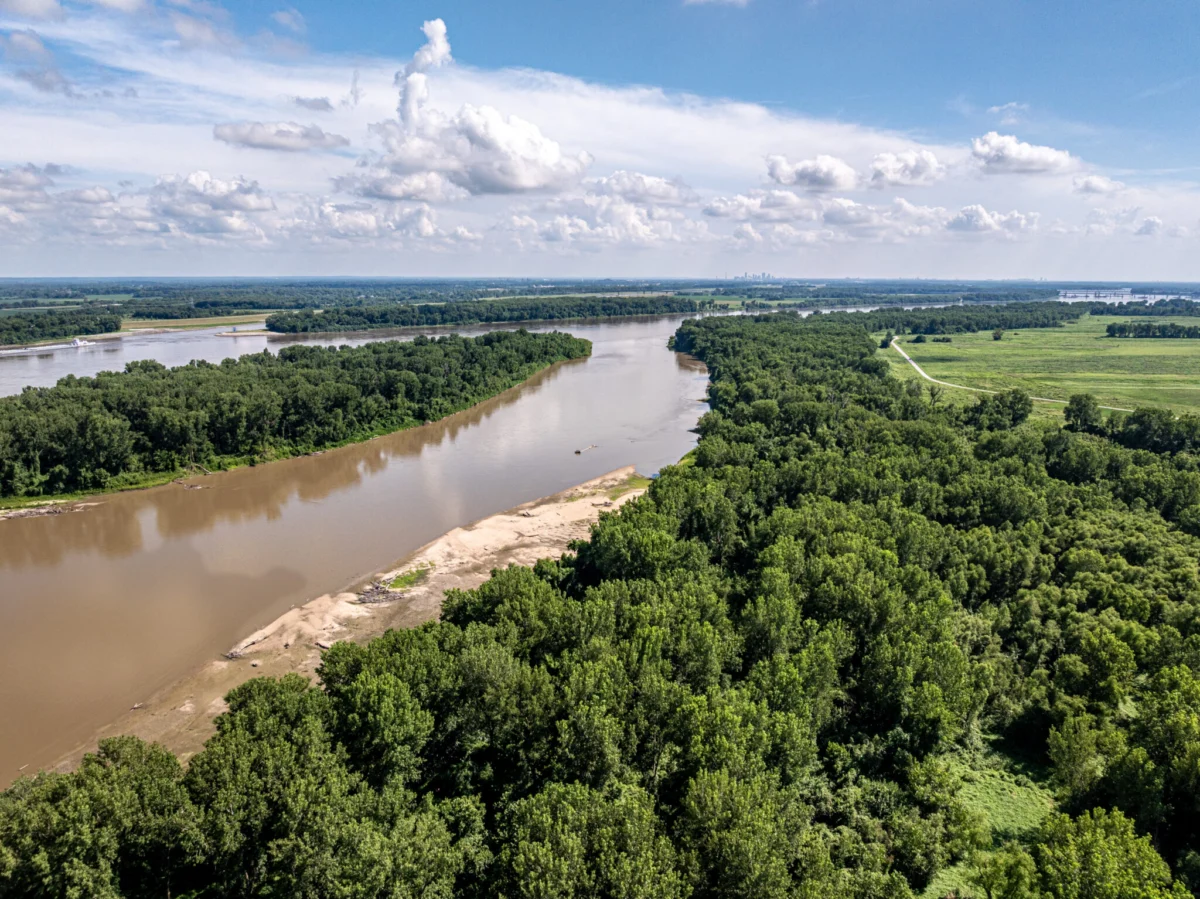
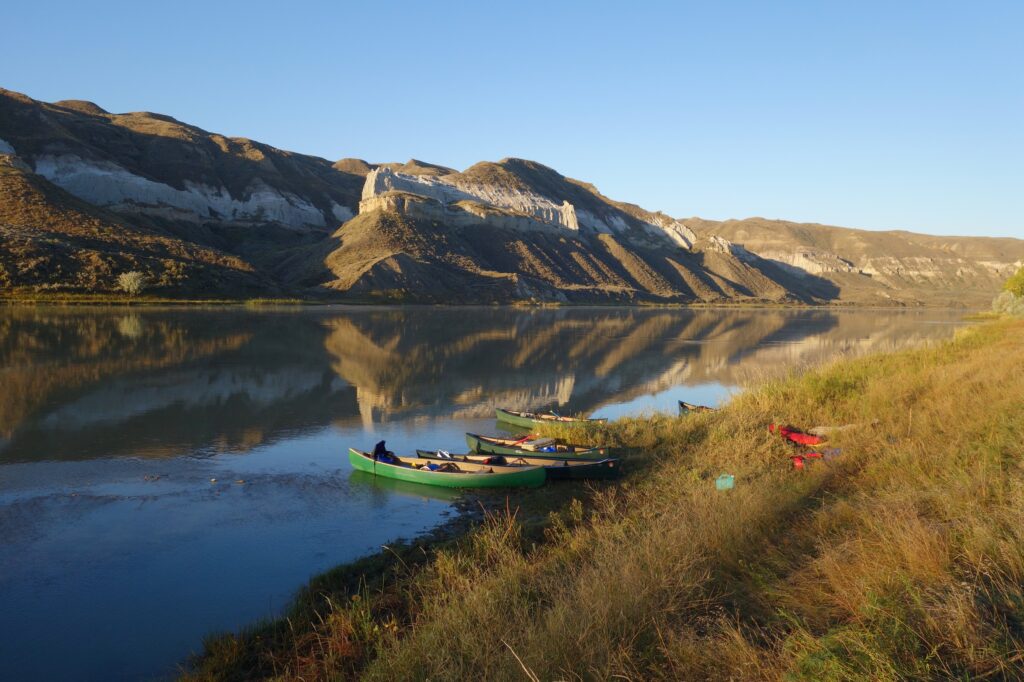
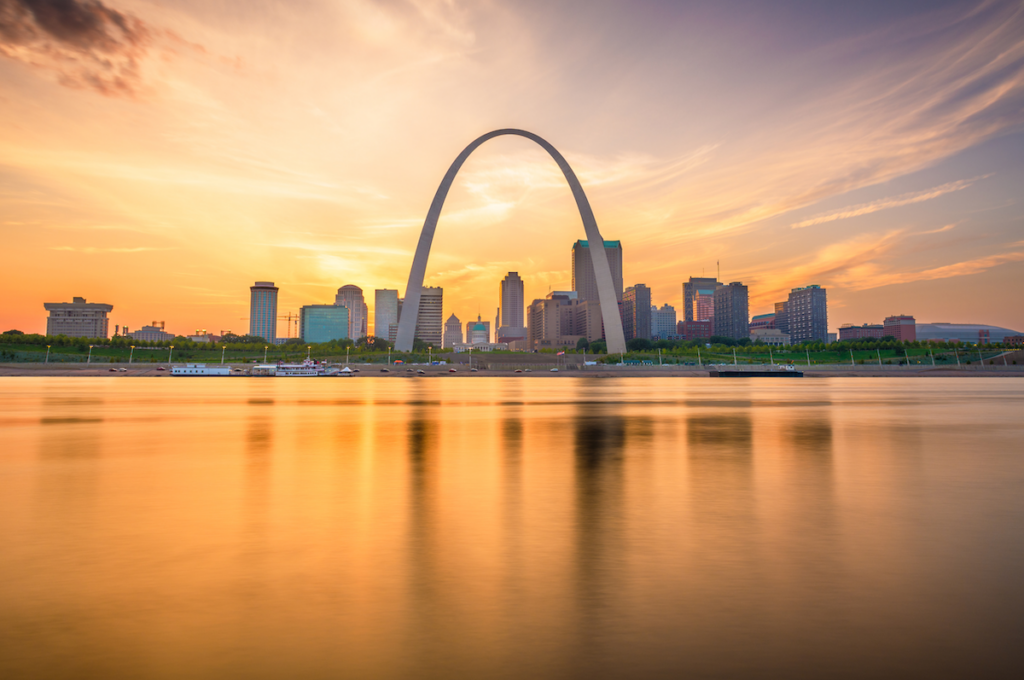
From its humble beginnings as a crystalline snowflake perched atop the jagged peaks of Montana’s Rocky Mountains to its final, turbulent embrace with the Mississippi River in St. Louis, the Missouri River—affectionately and historically known as the “Big Muddy”—has served as the lifeblood of the American heartland. For centuries, this 2,341-mile waterway has been more than a river; it has been a crucible of culture, an engine of commerce, and a testament to the resilience of the natural world. Yet, as we stand in 2026, the Missouri is at a critical juncture, caught between the industrial legacy of the mid-20th century and the urgent, shifting requirements of a climate-impacted future.
The Historical Tapestry: From Lewis and Clark to the Pick-Sloan Era
The history of the Missouri River is inseparable from the history of the United States itself. Long before European expansion, the river was the center of life for twenty-nine Tribal Nations, who held—and continue to hold—vital cultural, spiritual, and economic rights to its waters. To the Indigenous peoples, the river was a sacred artery; to the explorers of the early 19th century, most notably the “Corps of Discovery” led by Meriwether Lewis and William Clark, it was a gateway to the Pacific, a path of infinite possibility that beckoned the young nation westward.
However, the 20th century brought a radical transformation. As the nation industrialized, the river’s wild, meandering spirit was viewed as an impediment to progress. The watershed became increasingly developed, subjected to intensive farming, and eventually, physically shackled.
The turning point was the Pick-Sloan Flood Control Act of 1944. This landmark, albeit controversial, piece of legislation fundamentally altered the hydrology of the Missouri. In an effort to harmonize flood control, irrigation, navigation, and hydropower, the federal government authorized the construction of massive dams, sprawling reservoirs, and thousands of miles of concrete-reinforced levees. While the Act succeeded in its mission to tame the river, it set in motion a long-term decline in the river’s ecological function, creating a legacy of habitat loss and environmental degradation that we are still working to undo today.
Chronology of Conservation: A Fight for Survival
The recognition of the Missouri’s decline prompted the birth of modern river advocacy. American Rivers, among other conservation organizations, recognized that the “Big Muddy” was dying from a thousand cuts. The construction of dams and the channelization of the river destroyed the sandbars, side channels, and shallow-water habitats that once defined the Missouri’s ecosystem.
Key Milestones in the Recovery Effort:
- 1980s–1990s: Advocacy intensifies for the listing of iconic, endangered species, including the pallid sturgeon, the piping plover, and the interior least tern. These species served as "canaries in the coal mine," signaling that the river’s natural cycles were failing.
- The Creation of the MRRP: Persistent advocacy led to the Congressional mandate for the U.S. Army Corps of Engineers (USACE) to establish the Missouri River Recovery Program (MRRP). This program was designed to balance the river’s authorized purposes with its ecological necessities.
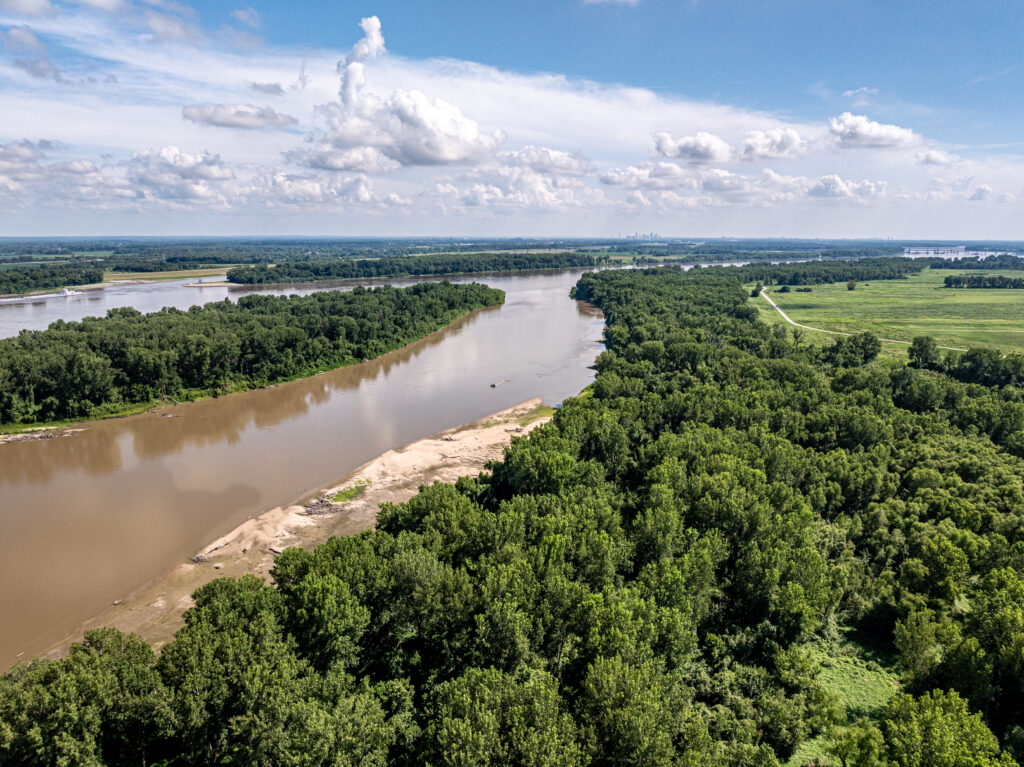
- 2020s Progress: Recent years have seen tangible wins, most notably the successful de-listing of the interior least tern—a triumph of targeted recovery efforts. Furthermore, the implementation of levee-setbacks has begun to reconnect the river to its natural floodplain, allowing for the restoration of essential wetland areas.
The Current Landscape: Data and Challenges
Despite these victories, the data remains sobering. We are only halfway to the ambitious goal of acquiring and restoring 166,750 acres of Missouri River floodplains as mandated by the BSNP (Bank Stabilization and Navigation Project) mitigation program.
The challenges of 2026 are exacerbated by an increasingly erratic climate. Flooding and drought, once considered cyclical phenomena, are now occurring with greater intensity and unpredictability. This instability puts immense pressure on infrastructure and local communities. Furthermore, source water protection is increasingly in jeopardy as agricultural runoff and industrial pollutants threaten the water quality for millions of Americans who rely on the Missouri for their drinking water.
Supporting Data on Ecosystem Health:
- Floodplain Connectivity: Only 50% of the targeted 166,750 acres of floodplain have been successfully acquired or restored.
- Species Recovery: While the interior least tern has recovered, the pallid sturgeon remains a critical focus, requiring consistent, high-quality habitat that mimics the river’s historical flow patterns.
- Climate Volatility: Regional studies indicate that the Missouri River basin is experiencing a 15–20% increase in extreme precipitation events compared to the late 20th-century baseline, necessitating a more flexible approach to water management.
Official Responses and Strategic Advocacy
To address these mounting threats, American Rivers has positioned itself as an active participant in the governance of the river. By serving as official “Fish and Wildlife Stakeholders” to the Missouri River Recovery Implementation Committee (MRRIC), our staff ensures that conservation science is given a seat at the table alongside industrial and commercial interests.
Our role within MRRIC is twofold:
- Advocacy for Congressional Funding: Ensuring that the USACE has the necessary resources to continue the vital work of levee-setbacks and habitat restoration.
- Strategic Partnerships: Acting as a bridge between federal agencies, private landowners, and non-profit organizations to identify collaborative solutions that protect the river while respecting local agricultural needs.
The Road Ahead: Implications for a Healthy Future
The implication of our current trajectory is clear: if we do not accelerate the pace of restoration, we risk the permanent loss of the Missouri River’s ecological integrity. The path forward involves a multi-pronged strategy.
First, we must aggressively pursue enrollment in U.S. Farm Bill conservation programs. By incentivizing private landowners to adopt sustainable practices and restore wetlands, we can create a patchwork of protection that functions as a natural buffer against both drought and flood.
Second, we must prioritize federal and state policies that treat the Missouri not as a simple plumbing system, but as a living landscape. This means moving beyond the rigid constraints of the 1944 Pick-Sloan mindset and embracing “nature-based solutions.” Whether it is restoring side channels for fish spawning or managing reservoirs to better mimic natural snowmelt pulses, the goal is to work with the river’s natural tendencies rather than against them.
Finally, we must expand public access. The Missouri River belongs to the people of the United States. By restoring floodplains and creating new, accessible natural areas, we provide communities with the recreational opportunities that foster a deeper connection to the river. When citizens have the chance to paddle the side channels or hike the restored banks of the “Big Muddy,” they become the most potent advocates for its protection.
A Call to Action
The Big Muddy is resilient, but it is not indestructible. It has carried our history, powered our growth, and provided the water that sustains our lives. Now, it is our turn to ensure that the river continues to flow with vitality for the generations to come.
The task ahead is significant, but it is entirely achievable. Through science-based restoration, robust policy advocacy, and community engagement, we can turn the tide. The Missouri River is a national treasure, and it deserves a future as dynamic, powerful, and clean as its source in the high mountains of the West. It is time to treat this storied waterway with the respect it has earned—not just as a resource to be used, but as a living system to be nurtured.
To stay informed about the most important developments regarding the Missouri River and to learn how you can support our ongoing conservation efforts in the Central Region, we invite you to join our mailing list. Together, we can secure a healthy, vibrant future for the rivers that define us.