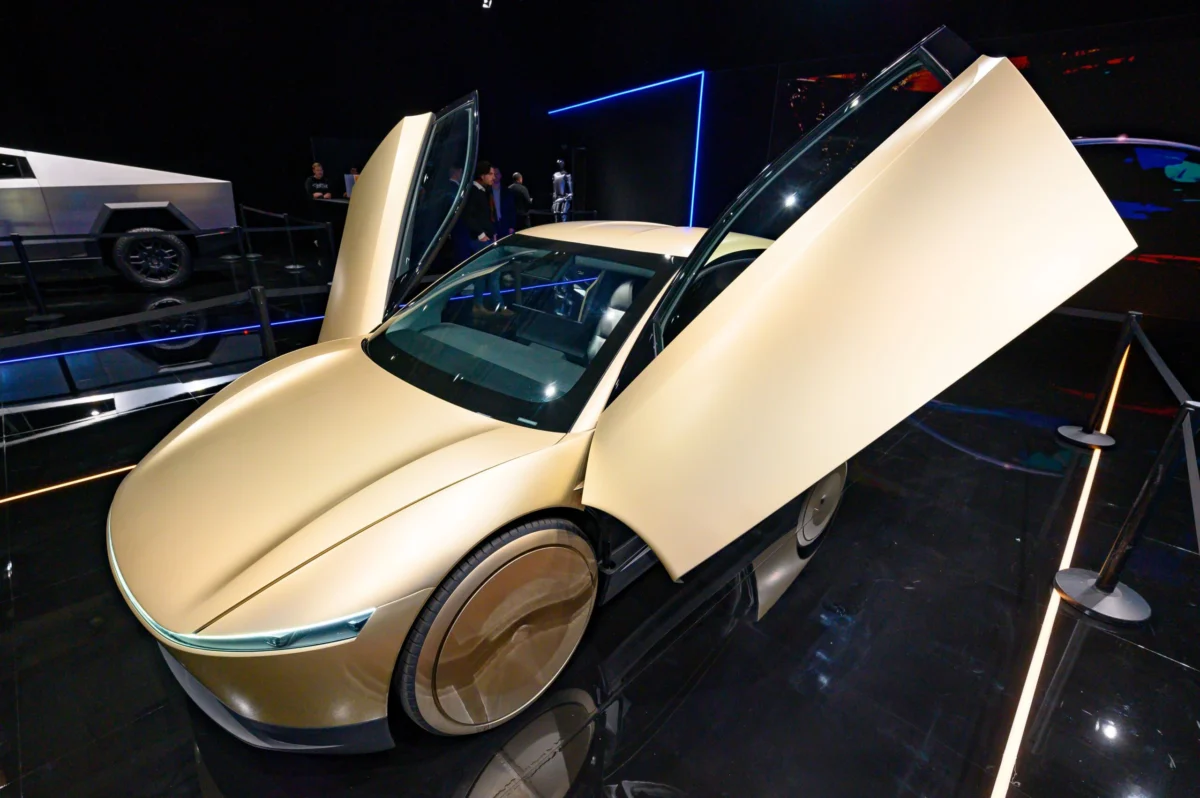
The transition from traditional automotive manufacturing to a future dominated by autonomous robotics has long been the primary objective of Elon Musk’s Tesla. However, that vision hit a significant regulatory speed bump this week as the company’s flagship "Cybercab"—a sleek, two-seater vehicle devoid of steering wheels or brake pedals—became the subject of a formal federal investigation just as it began public passenger operations in Austin, Texas.
The National Highway Traffic Safety Administration (NHTSA) has launched an "Audit Query" to determine whether Tesla’s assertion that the Cybercab complies with existing federal safety standards holds merit. While Tesla maintains that its design adheres to the law, the federal government’s intervention signals a deepening tension between the rapid pace of Silicon Valley innovation and the cautious, rigorous oversight required by national safety regulators.
A Vision for the Future: The Cybercab Debut
For Tesla, the Cybercab represents more than a new model; it is a fundamental pivot in the company’s identity. CEO Elon Musk has repeatedly stated that Tesla should no longer be categorized merely as an automaker, but as a leader in robotics and artificial intelligence. The Cybercab is the physical manifestation of this pivot, designed specifically for the company’s ambitious Robotaxi ride-hail network.
This week, the company celebrated the arrival of these vehicles in downtown Austin, welcoming hundreds of fans to experience the driverless future firsthand. With approximately 45 vehicles currently registered in the Texas fleet, the event was intended to be a showcase of operational readiness. However, the celebration was short-lived as the NHTSA’s investigation cast a shadow over the debut, questioning the regulatory foundation upon which these vehicles were launched.
Chronology of Conflict: From Roadmap to Regulatory Probe
To understand the gravity of the current situation, one must look at the timeline of the Cybercab’s development and the evolving landscape of federal safety standards.
- Mid-2024: Tesla accelerates its pivot toward autonomous infrastructure, moving away from affordable consumer mass-market vehicles toward specialized robotics.
- Summer 2024: Amazon’s subsidiary, Zoox, successfully navigates the regulatory landscape, becoming the first manufacturer to receive an exemption for a steering-wheel-free vehicle to charge for rides, albeit with a strict cap of 2,500 units.
- Late 2024: Tesla begins moving its Cybercab fleet into Austin, Texas, asserting that the vehicle is fully compliant with existing Federal Motor Vehicle Safety Standards (FMVSS).
- Current Week: Tesla initiates public rides in downtown Austin.
- Immediate Aftermath: Within hours of the public launch, the NHTSA announces an Audit Query. The federal agency declares it will investigate the specific data and internal processes Tesla utilized to conclude that its steering-wheel-free, pedal-free design meets current safety mandates.
The Regulatory Gap: Why Standards Lag Behind Innovation
The core of the conflict lies in a disconnect between existing safety laws and modern autonomous design. Current FMVSS regulations were written for human-operated vehicles. They mandate the presence of components like rearview mirrors, windshield wipers, and physical brake pedals—hardware that is arguably redundant in a fully autonomous system driven by sophisticated AI and sensor arrays.
The NHTSA is currently in the process of updating these rules to accommodate driverless technology, with eight specific rule sets currently under review. However, until these amendments are finalized and enacted, the "years-old" standards remain the law of the land.
The regulatory environment requires companies to either demonstrate total compliance with these legacy standards or, if they wish to deviate from them, apply for a specific federal exemption. While companies like Zoox have sought and received these exemptions, Tesla has taken a different path. By insisting that its vehicles already meet all existing safety standards, Tesla has bypassed the exemption process—a move that has drawn the scrutiny of federal authorities who are now questioning the validity of that self-certification.
Supporting Data: Ambition vs. Reality
The disparity between Tesla’s stated goals and its current operational footprint is vast. While the current fleet in Texas stands at roughly 45 vehicles, the company has communicated an intent to scale production to millions of units annually.
For the NHTSA, the stakes are not merely about the current 45 cars, but the precedent being set for mass-scale deployment.
- The Exemption Model: The Zoox precedent proves that the government is willing to allow steering-wheel-free vehicles, but only under controlled conditions, limited volume, and rigorous monitoring.
- The Audit Query: The NHTSA’s decision to open an Audit Query indicates that the agency is not just looking at the vehicle’s hardware, but at the corporate governance and engineering validation processes behind Tesla’s claim of compliance.
Official Responses and the Stance of the Regulator
The NHTSA has been careful to frame its investigation as a matter of due process rather than a condemnation of autonomous technology. In a formal statement, NHTSA Administrator Jonathan Morrison underscored the agency’s dual mandate:
"The agency fully supports the safe development and deployment of automated vehicles. But as the federal regulator, we need to ensure that all of our laws are followed."
This statement serves as a warning shot to the tech sector. It confirms that while the U.S. government is eager to support the economic and social benefits of autonomous transit, it will not allow the "move fast and break things" ethos of Silicon Valley to supersede established safety protocols.
Tesla, for its part, remained uncharacteristically quiet in the immediate aftermath of the announcement. The company did not provide a comment, leaving analysts to speculate whether they are preparing a technical defense based on advanced sensor-fusion data or if they are bracing for a potentially lengthy legal and regulatory standoff.
Implications: What Happens Next?
The potential consequences of an Audit Query are significant. Unlike a simple request for information, this is a formal legal process. If the NHTSA determines that Tesla’s internal validation was insufficient or that the vehicles do not, in fact, meet the requirements they claim to, the company could face several outcomes:
- Design Mandates: The agency could force Tesla to retrofit the vehicles with hardware currently required by law, effectively halting the deployment of the current Cybercab design.
- Civil Penalties: The NHTSA has the authority to issue heavy fines. A historical example is the $130 million penalty levied against the Volvo Group in 2023 regarding recall management. Such fines, while perhaps manageable for a company of Tesla’s market cap, serve as a major deterrent and a signal of federal dissatisfaction.
- Third-Party Oversight: If the government determines that Tesla’s internal processes are flawed, they may impose mandatory, multi-year oversight by a third-party auditor. This would force a level of transparency and external control that Tesla has historically resisted.
- Operational Moratoriums: In the most extreme scenario, the government could issue a cease-and-desist order on public operations until full compliance is proven, which could set back the company’s Robotaxi rollout by years.
Conclusion: A Turning Point for Autonomy
The clash between Tesla and the NHTSA is a watershed moment for the autonomous vehicle industry. It highlights the growing tension between a future defined by AI-driven, steering-wheel-free transportation and a legal system designed to protect passengers through the physical safeguards of the 20th century.
Whether Tesla’s gamble—that its technology is safe enough to override existing legacy requirements—pays off remains to be seen. What is clear is that the federal government is no longer content to observe from the sidelines. As the Cybercab traverses the streets of Austin, it carries the weight of Tesla’s future as a robotics company, but also the heavy burden of proving that its technological ambition does not come at the expense of public safety. The coming months will determine if the Cybercab is a revolutionary advancement in mobility or a cautionary tale of regulatory overreach.