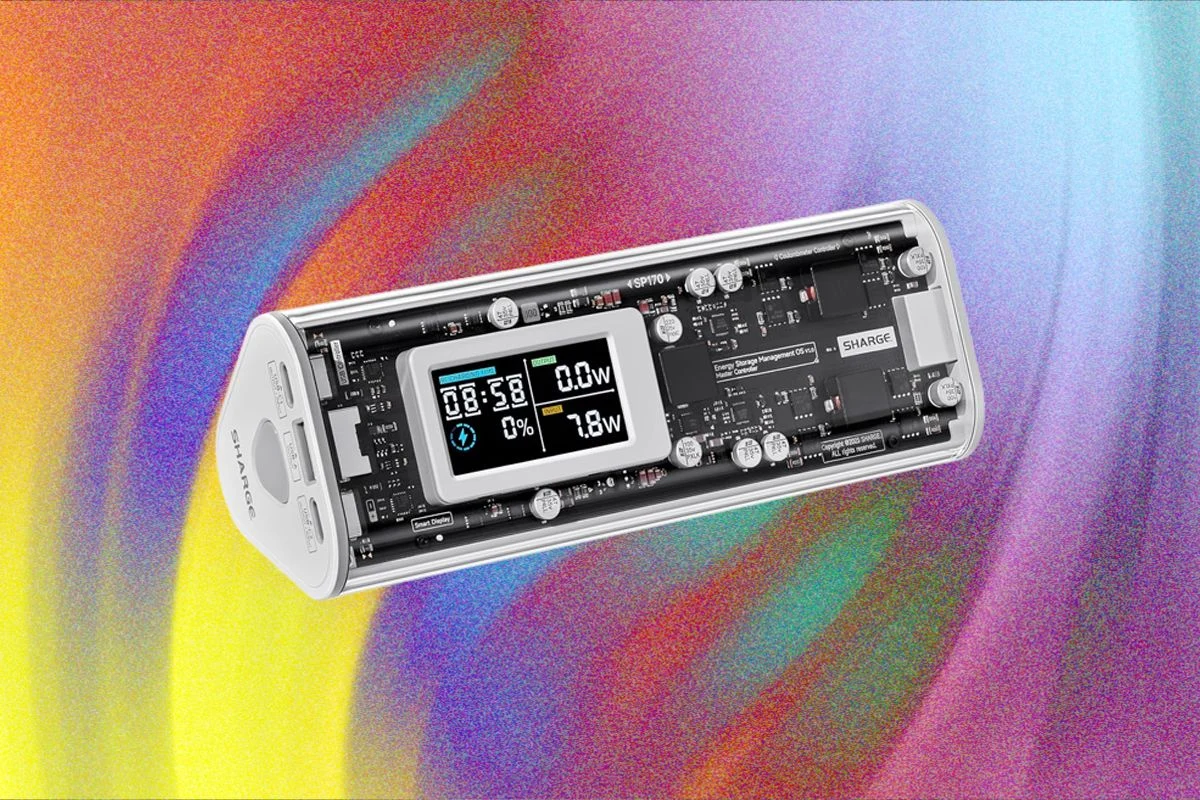
In an era defined by constant connectivity, the humble portable power bank has transitioned from a niche travel accessory to an essential component of our daily digital survival kit. Whether you are navigating a long-haul flight, camping in the backcountry, or simply dealing with a smartphone battery that struggles to make it through a workday, the right portable charger is the difference between seamless productivity and a dead device.
However, the market is currently saturated with thousands of options, ranging from "disposable-quality" bricks to high-end power stations that can jump-start a car. After two decades of testing thousands of batteries, I have distilled the current landscape of portable power to help you make an informed choice.
The Landscape of Portable Charging: Key Performance Metrics
When selecting a power bank, consumers are often lured by high numbers on packaging, but those figures can be misleading. A 20,000 mAh rating on a box does not mean you get 20,000 mAh of charge into your phone. Due to voltage conversion and heat dissipation—the unavoidable thermodynamics of energy transfer—most power banks effectively deliver between 60 and 80 percent of their stated capacity.
Furthermore, charging rates are not universal. Modern fast-charging standards like Power Delivery (PD) and Programmable Power Supply (PPS) are essential for modern flagships. Without a compatible power bank, you are relegated to slow, "trickle" charging speeds that fail to keep up with modern usage patterns.
Chronology of Innovation: From Bricks to "Smart" Power
The history of portable charging has moved in distinct waves:

- The Early Era (2005–2012): Characterized by heavy, low-capacity lithium-ion bricks with basic LED indicators and slow, 5W output.
- The Efficiency Era (2013–2018): The arrival of lithium-polymer technology allowed for thinner, lighter designs. We saw the birth of "quick charge" protocols that finally made portable charging viable for commuters.
- The Intelligent Era (2019–Present): Today, we are seeing the integration of GaN (Gallium Nitride) technology, which allows for significantly higher power density. Current top-tier models feature OLED displays, app-based monitoring, and the ability to handle multiple high-drain devices, such as laptops, simultaneously.
Supporting Data: Top-Tier Power Banks Evaluated
After extensive bench testing, here are the standout performers across various categories that deserve your consideration.
Small Power Banks (5,000 mAh)
- Baseus PicoGo Air (AM71): At just 0.27 inches thick, this is the slimmest model I have ever tested. It attaches magnetically to Qi2-enabled phones. While its wireless output is capped at 7.5W, utilizing the included braided USB-C cable allows for a significant boost to 22.5W.
- Clutch Pro: If you prioritize pocketability, the Clutch Pro is roughly the size of a credit card stack. It is an excellent "emergency" charger for those who don’t want to carry a bulky cable, thanks to its integrated, pop-out USB-C connector.
- Anker Nano Power Bank: This "dinky" charger remains a favorite for its simplicity. It plugs directly into the bottom of your phone, eliminating cable clutter. With 22.5W output and four clear LED power indicators, it is a reliable, no-nonsense daily driver.
Medium Power Banks (10,000–20,000 mAh)
- Cuktech 15 Air: A standout in the mid-range category. It features a color display that provides real-time stats and can deliver 65W of power across three ports. Its 90-minute recharge time at 100W is industry-leading, and its CCC certification makes it a reliable choice for international travel, specifically in China.
- Anker Nano Power Bank with Instacord: For those tired of losing cables, this model features a 2.3-foot retractable cord. It offers 45W of output, making it capable of charging most tablets and smaller laptops.
High-Capacity Power Banks (20,000 mAh and Up)
- Ecoflow Rapid Pro: This is a powerhouse. Capable of a 300W total output, it pushes the limits of what is permitted on commercial aircraft. With a 140W USB-C port, it can charge a high-performance laptop at full speed while simultaneously juicing up a phone.
- Aohi Starship Power Bank: Visually striking, this device is designed for heavy users. With 240W output split between two USB-C ports (140W and 100W), it is the ultimate tool for road warriors who need to charge two laptops simultaneously.
- Anker Prime Power Bank: A true "beast." With 26,250 mAh of capacity and 300W of total output, this device includes app-controlled power management and a sophisticated smart display.
Official Guidelines and Safety Implications
The Reality of Flying with Batteries
Travelers must adhere to strict rules set by aviation authorities. Generally, you are restricted to 100 watt-hours (Wh) for carry-on luggage. Anything exceeding 27,000 mAh requires airline approval. Crucially: Never place a power bank in checked luggage. Lithium-ion batteries present a fire risk if crushed or short-circuited in the cargo hold; they must remain with you in the cabin.
Why "Cheap" is Dangerous
In testing, I often encounter "bargain" chargers priced $20 below the market average. These are frequently dangerous. Manufacturers of these units often cut costs by:
- Omitting safety circuits: Preventing over-voltage and over-heat protection.
- Poor insulation: Increasing the risk of internal shorts.
- Substandard battery cells: Using recycled or low-grade cells that are prone to "thermal runaway."
My advice is simple: If a brand is not reputable, do not risk your device or your safety for a $15 discount.
The "Do Not Bother" List
Not every product makes the cut. Some devices are technically functional but fail on value or usability:

- UGreen MagFlow Pro ($100): While the "Matrix-style" screen is aesthetically pleasing, the price is prohibitive for a 10,000 mAh capacity. Furthermore, it generates significant heat during use, which is a major red flag for long-term battery health.
- OnePlus Slim Magnetic Power Bank ($70): While undeniably beautiful, the actual usable capacity after efficiency losses is quite low, making it a triumph of form over function.
- Iniu Portable Charger ($21): While cheap, it suffers from slow recharge times and inaccurate capacity reporting, which can leave a user stranded when they expect a full charge.
FAQ: The Science of Charging
Q: What is Pass-Through Charging?
A: Pass-through allows the power bank to charge itself while simultaneously outputting power to another device. While convenient, it generates significant heat. I generally recommend against this for long-term battery health, as it forces the battery to cycle rapidly.
Q: Why does my device charge slowly?
A: Charging speed is a negotiation. Your phone’s battery controller requests a specific wattage based on its current temperature and charge level. If your phone is at 95%, it will slow down to "trickle" to prevent stress on the cells. Additionally, if the battery gets too hot, the system will throttle the input to prevent a thermal event.
Q: How does WIRED select products?
A: Our selection process is strictly editorial. We track new releases and analyze pitches, but we never promise coverage in exchange for product. While we may use affiliate links, our ranking criteria are based solely on performance, reliability, and safety metrics gathered over weeks of real-world testing.
Conclusion
The market for portable power is vast, but by focusing on reputable brands and understanding your specific output needs, you can easily find a device that keeps you powered through any journey. Whether you require the extreme output of an Anker Prime or the compact convenience of a Baseus PicoGo, the technology exists to ensure you never face the "low battery" icon again.