In an era defined by climate consciousness and the quest for sustainable development, the tourism industry stands at a critical crossroads. As travelers increasingly seek experiences that prioritize environmental preservation and cultural integrity, understanding the mechanics of this shift has become a top priority for industry leaders. Recently, The International Ecotourism Society (TIES) conducted an expansive, global survey to gauge the current state, challenges, and future trajectory of ecotourism. The findings, derived from nearly 1,000 industry professionals, paint a picture of an industry in rapid, optimistic, and necessary growth.
Main Facts: A Global Consensus on Growth
The survey, which garnered 971 viable responses from 91 countries across every continent, represents a comprehensive snapshot of the modern ecotourism landscape. While the United States provided the largest single-country cohort of respondents, the geographic diversity of the data was striking. From the mountainous terrain of Bhutan and Nepal to the diverse landscapes of Iran, Sudan, and Cote d’Ivoire, the survey confirmed that the mandate for sustainable travel is truly global.
Perhaps the most significant takeaway from the study is the overwhelming consensus regarding the industry’s health. When asked to evaluate the growth trajectory of ecotourism, a staggering 99.5% of respondents indicated that the sector is expanding. Only four individuals out of the 971 surveyed felt that ecotourism was slowing down. This near-unanimous optimism aligns with broader market data—including recent findings from major travel platforms like Booking.com—suggesting that sustainable travel is no longer a niche market but a primary driver of industry evolution.
Chronology of the Survey
The initiative to poll the TIES community was born out of a need to align the organization’s strategic goals with the actual, on-the-ground experiences of its members.
- Phase 1: Outreach. In the summer of 2019, TIES distributed the survey via its digital newsletter, targeting members, professional consultants, tour operators, and academics.
- Phase 2: Data Collection. Over the following weeks, the organization synthesized responses from 91 nations. The breadth of participation allowed for a multifaceted look at industry segments.
- Phase 3: Analysis. During the synthesis phase, TIES identified gaps in representation—notably, a lower-than-expected response rate from the academic community—and began cross-referencing industry segments.
- Phase 4: Synthesis & Reporting. The final data set was analyzed to determine not just the health of the industry, but also the specific needs of the professionals working within it, leading to the decision to pivot TIES’s focus toward education and multilingual content.
Supporting Data: Mapping the Industry
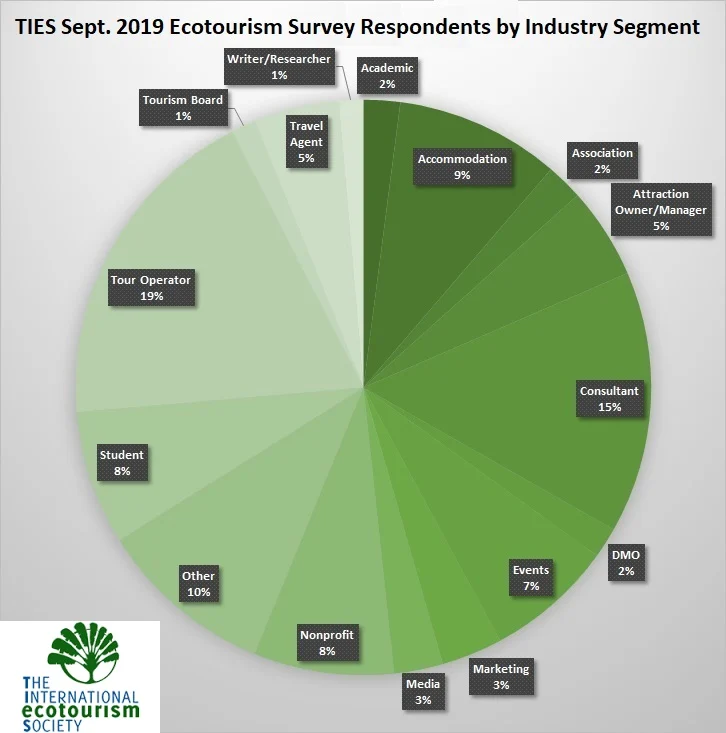
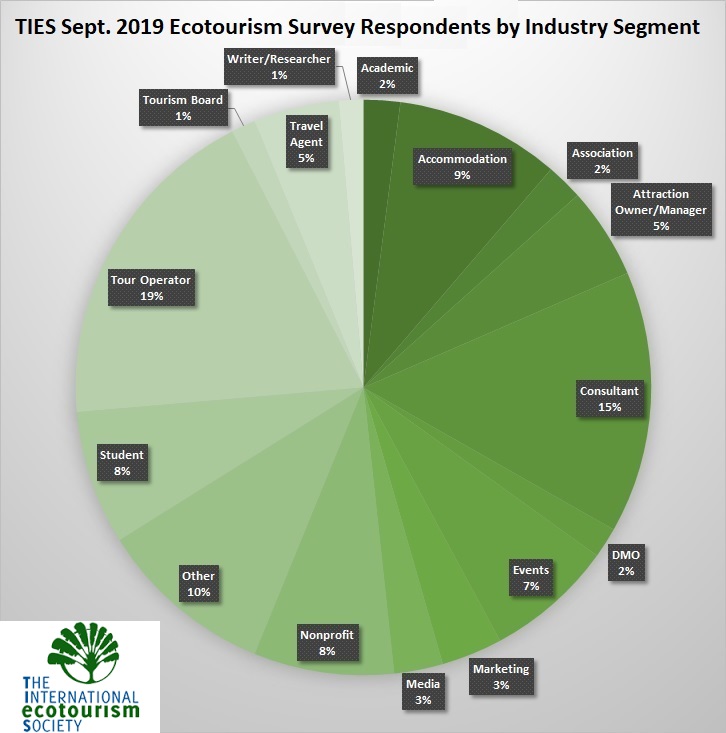
The survey allowed respondents to self-classify into various industry segments. While 90% of participants were able to fit neatly into the provided categories, a notable trend emerged: the demand for flexibility. Many respondents suggested that the industry is becoming increasingly hybridized, with professionals often wearing multiple hats—as consultants, operators, and educators simultaneously.
The resulting data set revealed a professional ecosystem dominated by tour operators and consultants. However, the unexpected underrepresentation of academics—who historically constitute a significant portion of TIES’s membership—provided a valuable insight into current engagement levels. This data serves as a roadmap for TIES to recalibrate its outreach efforts to better bridge the gap between academic theory and field application.
Furthermore, the language requirements highlighted by respondents were a key data point. The clear demand for Spanish-language content, followed by requests for French and Mandarin, indicates that the center of gravity for ecotourism is shifting toward regions where these languages are primary. TIES has noted this, identifying the development of multilingual resources as a high-priority institutional goal for the coming fiscal year.
Official Responses and Strategic Pivots
The feedback gathered has prompted a series of official strategic shifts at TIES. When asked where the organization should focus its resources, the respondents were remarkably clear.
The Shift Toward Education
A commanding 41% of respondents prioritized education as the primary area for TIES to focus its efforts. This mandate has already spurred the organization into action; TIES has begun discussions with key partners in the educational sector to develop programs that provide the professional training and knowledge-sharing platforms requested by the community.
Addressing Structural Challenges
The survey also acted as a sounding board for the systemic hurdles currently facing ecotourism. Respondents identified a litany of obstacles:
- The Greed Factor: Concerns over profit-driven "greenwashing" and overdevelopment.
- The Knowledge Gap: A lack of standardized awareness and education for both travelers and service providers.
- The Operational Hurdle: The persistent difficulty in securing financing, navigating complex permit landscapes, and managing the logistical nightmare of "overtourism."
- Consumer Access: A critical concern that travelers often lack the tools to verify and book truly sustainable experiences, leading to a disconnect between intent and action.
TIES has acknowledged these findings and has committed to publishing a detailed action plan. This plan will highlight the specific initiatives the organization is undertaking, both independently and in partnership with global stakeholders, to mitigate these challenges.
Resource Allocation
Interestingly, traditional institutional priorities like "UN partnerships" and "policy development" ranked lower in the eyes of the respondents compared to direct educational support and destination-focused content. Only 14% prioritized the development of "ecodestination" descriptions, while a mere 9% favored social media focus. This indicates that the membership is looking for tangible, practical tools rather than abstract policy advocacy.
Implications for the Future of Global Tourism
The implications of this survey are profound. The industry is signaling that the era of passive sustainability is over. We are entering a phase where the "ecotourism" label is under intense scrutiny. The demand for transparency—how a tour is booked, how it is managed, and how its impacts are measured—is the new baseline.
Bridging the Language Barrier
TIES’s commitment to rolling out Spanish-language support is more than a translation project; it is a strategic expansion into the burgeoning ecotourism markets of Latin America and the Iberian Peninsula. By breaking down linguistic barriers, TIES intends to foster a more inclusive and representative community. This is a vital step toward creating a truly global standard for sustainability, one that respects local context and linguistic nuances.
The Professionalization of Ecotourism
Perhaps the most optimistic implication is the resilience of the industry. Despite the threats posed by climate change—which respondents cited as a major concern—the mood remains one of profound optimism. The industry recognizes its challenges but views them as solvable problems. The move toward education suggests that the next phase of ecotourism will be defined by professionalization. No longer a loosely defined set of practices, ecotourism is evolving into a rigorous, data-driven field that requires specific expertise in conservation, logistics, and community engagement.
A New Mandate for TIES
The 2019 survey results have effectively rewritten the mission statement for TIES in the short term. The organization is shifting from a broad advocacy role to a more focused, practical provider of knowledge and support. As they begin to roll out new educational initiatives and broaden their linguistic footprint, the success of these programs will serve as a bellwether for the health of the broader industry.
In conclusion, the 971 voices that participated in this survey have provided a clear mandate: the world is ready for a more sustainable way to travel, but it requires the right tools to achieve it. By prioritizing education, embracing linguistic diversity, and tackling the operational difficulties of overtourism, the industry is positioning itself to be a leading force in the global effort to protect our planet while simultaneously providing the transformative experiences that only travel can offer.
The International Ecotourism Society’s findings serve as a testament to the fact that while the challenges are great, the collective resolve of the tourism community is greater. As we look toward the future, the integration of these findings into policy and practice will be the key to ensuring that ecotourism remains not just a growing sector, but a genuine solution to the environmental and cultural crises of our time.