By Samuli Haapasalo | July 14, 2026
In the quiet corners of the Estonian landscape, particularly along the rugged western coast, one can often find a silent observer standing guard against the backdrop of ancient history. The Great Mullein (Verbascum thapsus), or ukontulikukka in Finnish, is more than just a botanical curiosity. It is a living link to our ancestors, a medicinal powerhouse, and a survivor that has weathered centuries of human migration and ecological change.
Main Facts: A Botanical Enigma
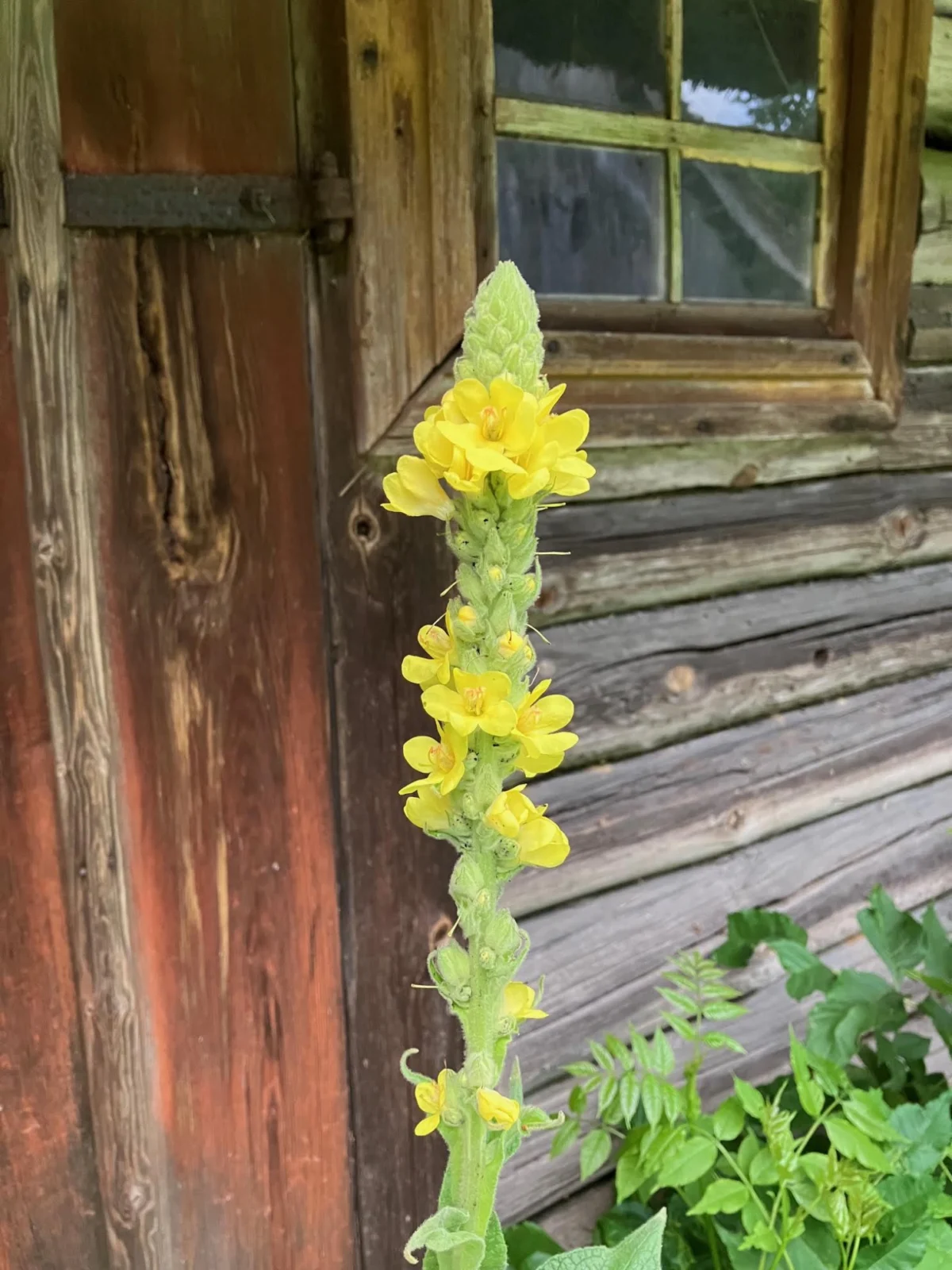
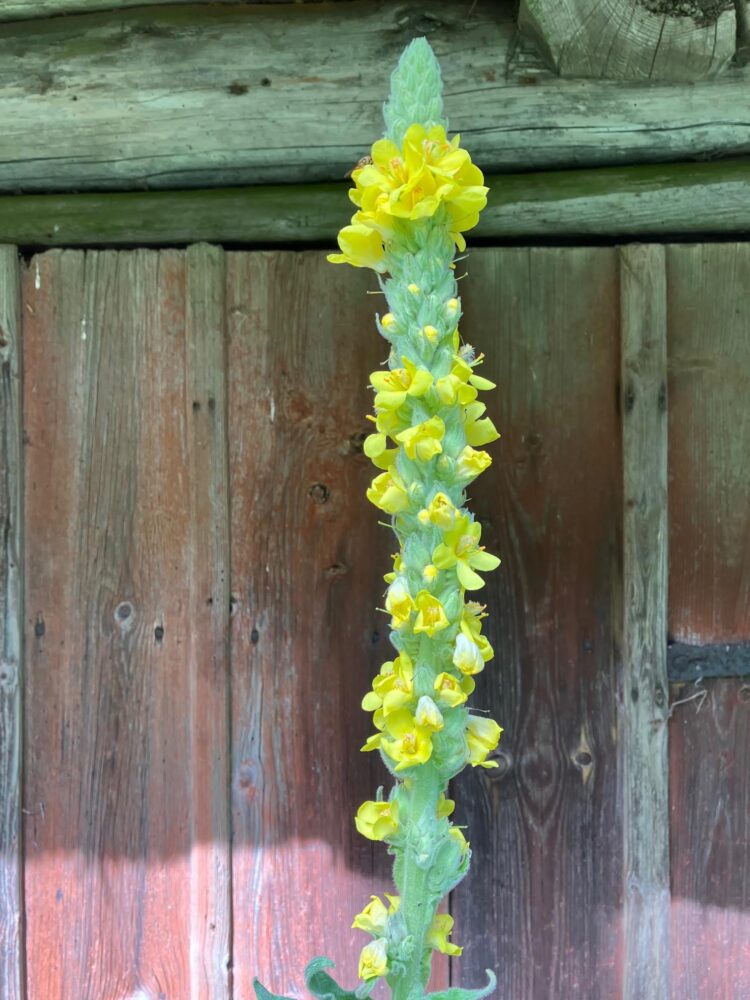
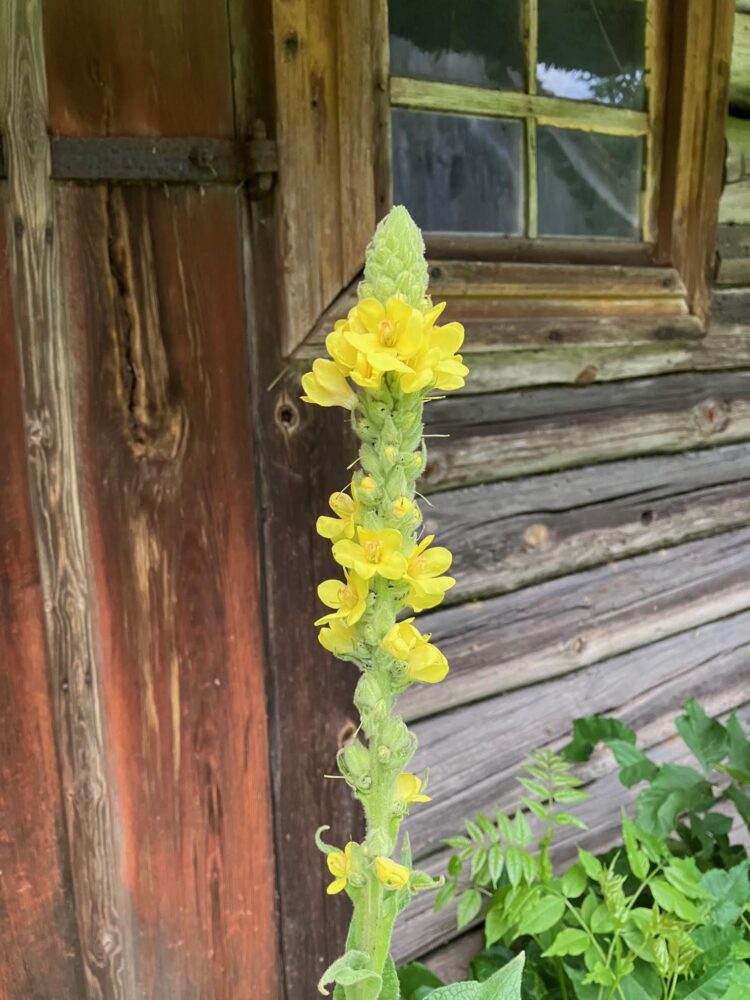
The Great Mullein is a biennial plant, a member of the figwort family (Scrophulariaceae), characterized by its tall, majestic flower spikes that can reach up to two meters in height. During its first year, the plant produces a dense, velvet-textured rosette of leaves. In its second year, it sends up a towering stem crowned with a brilliant display of golden-yellow flowers.
While a single bloom may only last for a day or two, the sheer length of the flower spike ensures that the plant remains in bloom for an extended period, facilitating a prolific seed production that allows the species to persist in even the most challenging environments. Whether nestled against the weathered timber of a centuries-old barn or growing wild in the remnants of iron-age fortifications, the Great Mullein is a testament to resilience. It is not an invasive species, but rather a "muinainen tulokas"—an ancient arrival—that has integrated itself so deeply into the Nordic landscape that it is often mistaken for a native.
Chronology: A Thousand-Year Journey
The history of the Great Mullein is inextricably linked to the history of human movement. During a recent expedition in Läänemaa, Estonia, I encountered a specimen thriving beside an old drying barn. Local accounts suggest that the seeds of this particular population may have been brought to the region by Viking explorers.
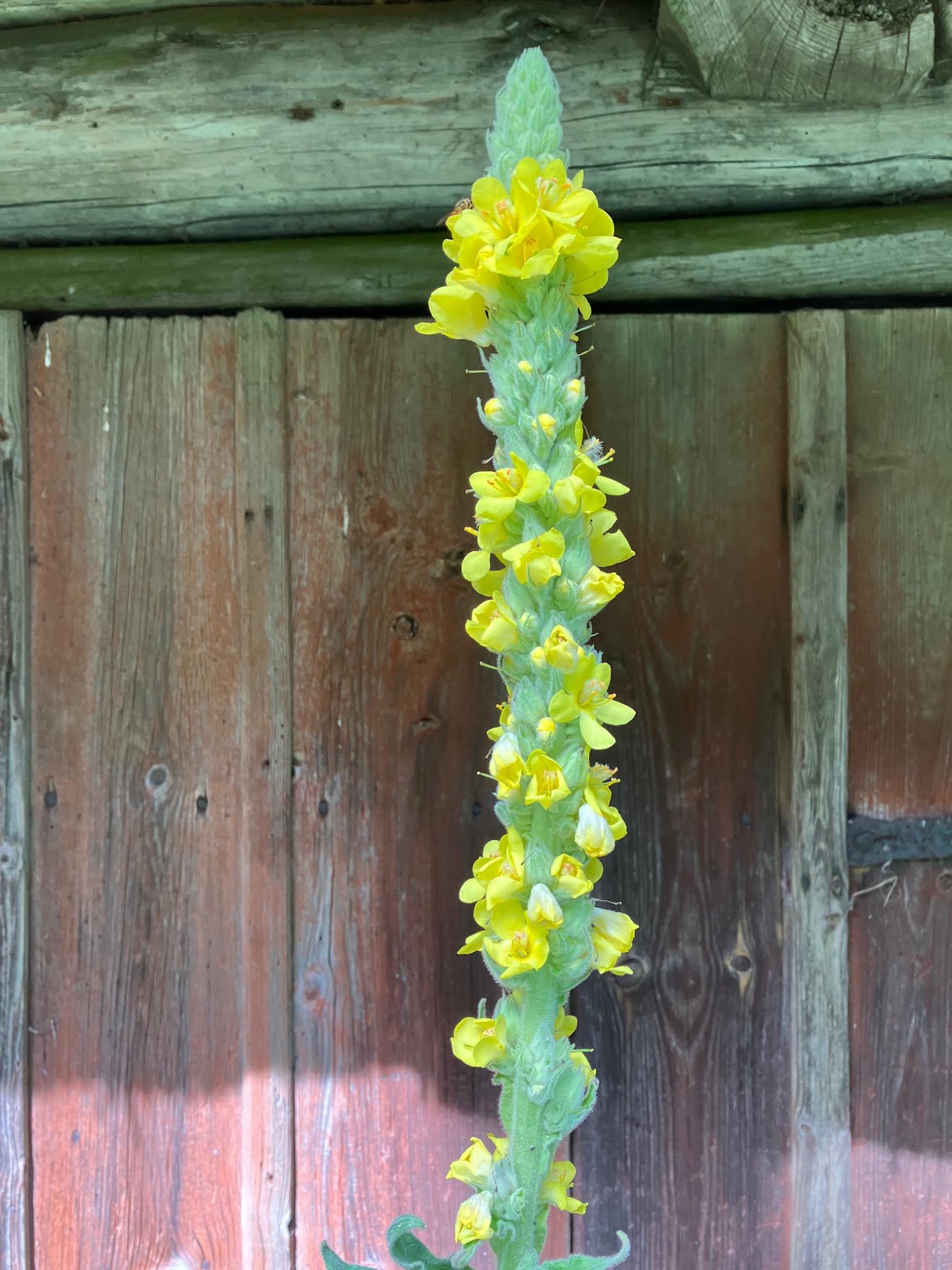
A millennium ago, the site of this barn was situated directly on the coastline. Due to the natural process of post-glacial land uplift, the shoreline has retreated four kilometers, leaving the barn—and its botanical companion—inland. Yet, the Mullein remains, continuing its cycle of growth as it has for generations.
This chronology of presence is observed across the Baltic and Fennoscandian regions. In Finland, the Great Mullein is frequently found near iron-age dwelling sites and the ruins of ancient hill forts. These sites were focal points of human activity, and the plant’s distribution often mirrors the paths of early trade and settlement. While it is difficult to determine exactly how the plant arrived at every specific site, the pattern of its occurrence suggests a deliberate, or at least highly opportunistic, human-assisted dispersal.
Supporting Data: From Medicinal Herb to Industrial Tool
The persistent association between the Great Mullein and human habitation is rooted in the plant’s diverse utility. Historically, it was an indispensable component of the household pharmacy.
Medicinal and Aesthetic Applications
The plant was highly valued for its soothing properties. Traditional medicine practitioners utilized the leaves and flowers to treat respiratory ailments, acting as a potent expectorant to clear congested airways. Beyond internal health, the plant was a staple for dermatological care, used as a poultice to heal inflamed, dry, or irritated skin.
Its utility extended into the realm of aesthetic care as well. Folklore suggests the plant was used to dye hair a brilliant golden-yellow, a color associated with the heroic figures of the Kalevala. The promotion of hair growth and the maintenance of a lustrous mane were ancient concerns that the Great Mullein addressed with ease.
The Power of Fire
Perhaps the most striking aspect of the Mullein’s history is its relationship with fire. The plant’s very name in Finnish—ukontulikukka—references "Ukko," the supreme god of thunder, and "tuli," meaning fire.
Ancient Roman records suggest that the dried stalks, when dipped in pitch, tallow, or tar, served as torches. They were also used to create candle wicks. This connection to fire explains both the plant’s name and its prevalence in locations where fire was essential for human survival and industry. Whether used for light in the darkness of a long winter or as a beacon on a hilltop, the Mullein was the fuel of the ancients.
A Surprising Use: Piscicide
The biological potency of the plant is further underscored by a more controversial historical application. The seeds of the Great Mullein contain compounds that, when crushed and introduced into water, can stun fish. This method of gathering food was known to various cultures, demonstrating an advanced understanding of the plant’s chemical properties long before the advent of modern botany.
Official Responses and Ecological Implications
While the Great Mullein is technically classified as an introduced species, it holds a protected status in the cultural memory of the landscape. Botanists and historians alike agree that the Mullein represents a "naturalized" species that has reached a stable equilibrium with the local ecosystem.
Ecologists note that because the plant is a biennial, it relies on disturbed soil to germinate. Its presence in ancient ruins and along human-made paths is not a coincidence; it is a direct result of the plant’s evolutionary strategy. As these sites are abandoned, the Mullein provides a crucial service, acting as a pioneer species that stabilizes soil and supports local pollinators during its long flowering period.
There is currently no push to eradicate the Great Mullein from these historic sites. Instead, there is a growing appreciation for its role as a "living artifact." Environmental agencies in Estonia and Finland have begun to recognize the value of preserving these botanical heritage sites, as they offer unique insights into the trade routes and domestic practices of the medieval and iron-age periods.
Implications: A Lesson in Human-Nature Synergy
The story of the Great Mullein is ultimately a lesson in the synergy between humanity and the natural world. It reminds us that our environment is a palimpsest—a landscape layered with the remnants of those who came before us.
When we encounter a Great Mullein standing tall in a field, we are not just looking at a weed. We are looking at a participant in a thousand-year-old dialogue. We see the legacy of the Vikings who carried its seeds in their vessels, the herbalists who turned its leaves into medicine, and the common folk who used its stalks to hold back the night with fire.
As we move forward into the future, the Great Mullein remains a symbol of endurance. Its ability to adapt to changing landscapes—from the retreating shorelines of Estonia to the repurposed ruins of Finland—serves as a poignant reminder that while human civilizations rise and fall, the plants that travel with us possess a tenacity that transcends our fleeting presence.
To walk past a Great Mullein today is to witness a survivor of time itself. It invites us to pause, look closer, and allow our imaginations to wander back to the days of old. In the golden glow of its flowers, we find the echoes of the past, still burning bright, waiting for those who are willing to stop and listen to the stories they have to tell.