Deciding whether to join the ranks of canoeists or kayakers is a rite of passage for every outdoor enthusiast. As participation in water-based recreation hits record highs, the choice between these two distinct vessels has become more relevant than ever. Whether you are seeking a serene morning on a glassy lake or an adrenaline-fueled afternoon on a rushing river, your choice of watercraft will define your experience.
With nearly 60% of Americans engaging in some form of outdoor activity as of 2024—totaling over 181 million participants—the waterways are more crowded than ever. According to recent data from the Outdoor Industry Association, paddlesports alone account for approximately 30 million of these enthusiasts. Understanding the nuances of your vessel is no longer just about convenience; it is about safety, efficiency, and maximizing your time on the water.
The Core Distinctions: Design and Functionality
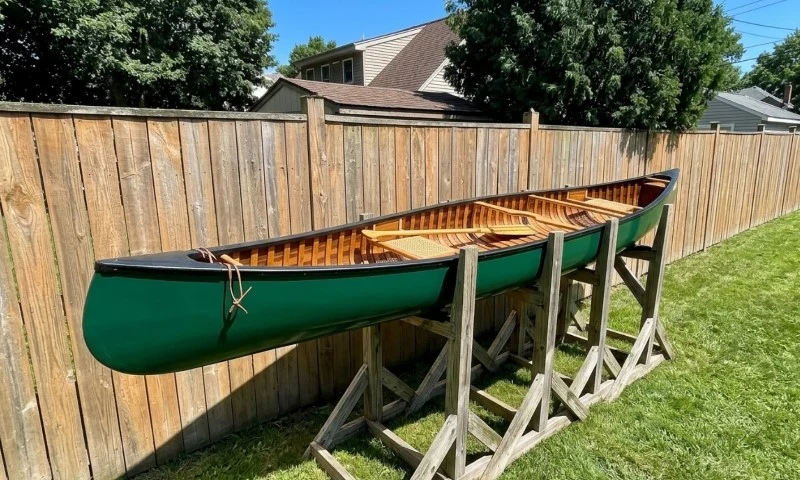
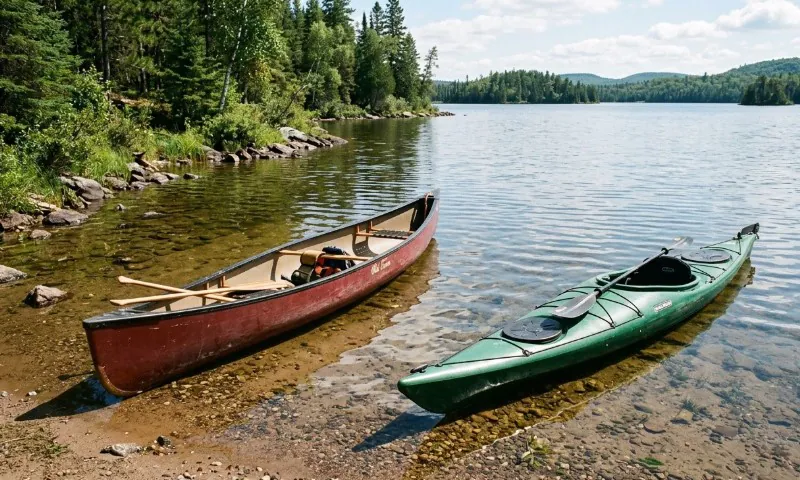
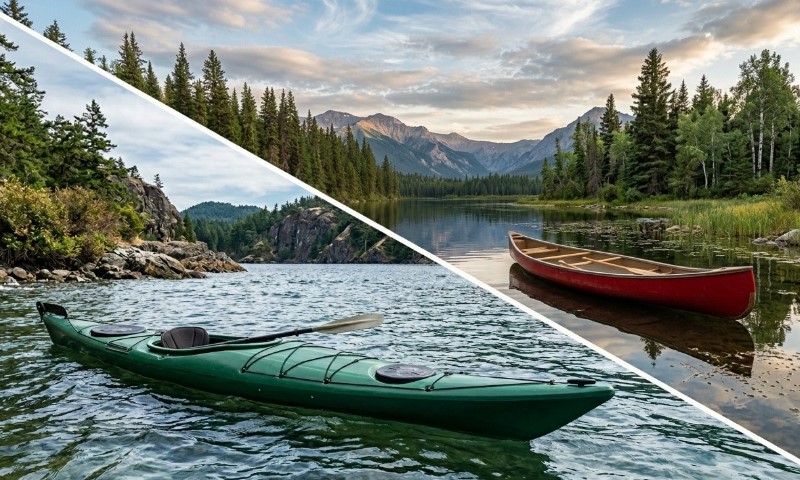
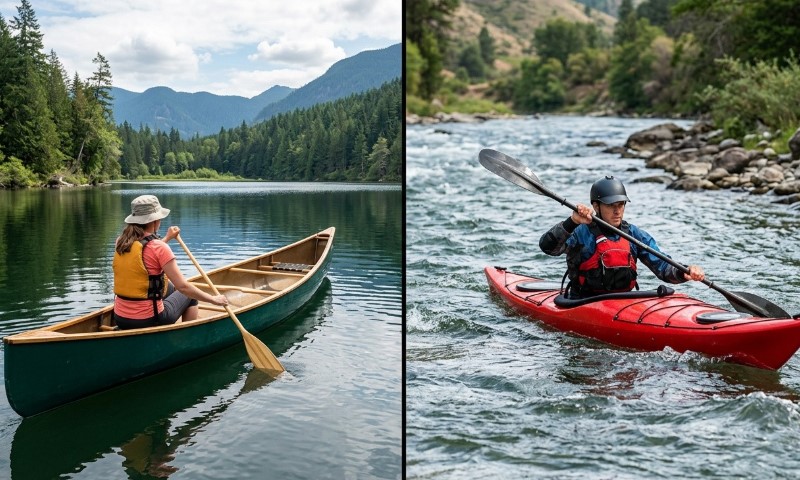
At their most fundamental level, the difference between a canoe and a kayak lies in their architecture and how the operator interacts with the water. A canoe is typically an open-deck vessel where the paddler sits on a raised bench or kneels, utilizing a single-bladed paddle. Think of it as a floating utility vehicle—spacious, robust, and designed to carry significant loads.
In contrast, a kayak is a sleeker, lower-profile craft. The paddler sits closer to the floor of the boat, often with legs extended, and uses a double-bladed paddle. This design allows for more efficient energy transfer and better handling in turbulent conditions. As the International Canoe Federation (ICF) notes, the competitive world reinforces these differences: kayak athletes sit and rotate, while canoeists often kneel to maintain a lower center of gravity and higher power output.
At a Glance: Comparison Matrix
| Factor | Canoe | Kayak | Real-World Impact |
|---|---|---|---|
| Paddle | Single-blade | Double-blade | Kayaks are often easier for beginners to track straight. |
| Seating | Bench/Kneeling | Low/Legs-forward | Kayaks provide a more "connected" feel to the water. |
| Deck | Open | Often closed/cockpit | Canoes are easier to load; kayaks shed waves better. |
| Wind Resistance | Higher (acts like a sail) | Lower (more hydrodynamic) | Kayaks excel on breezy, open lakes. |
| Learning Curve | Gentle but requires skill | Often intuitive for solo users | Beginners find recreational kayaks faster to master. |
The Chronology of Paddlesports Evolution
While the origins of these boats are ancient—the kayak stemming from the Inuit and Aleut traditions of the Arctic for hunting, and the canoe emerging from indigenous cultures worldwide for transport and trade—modern technology has radically shifted their use.
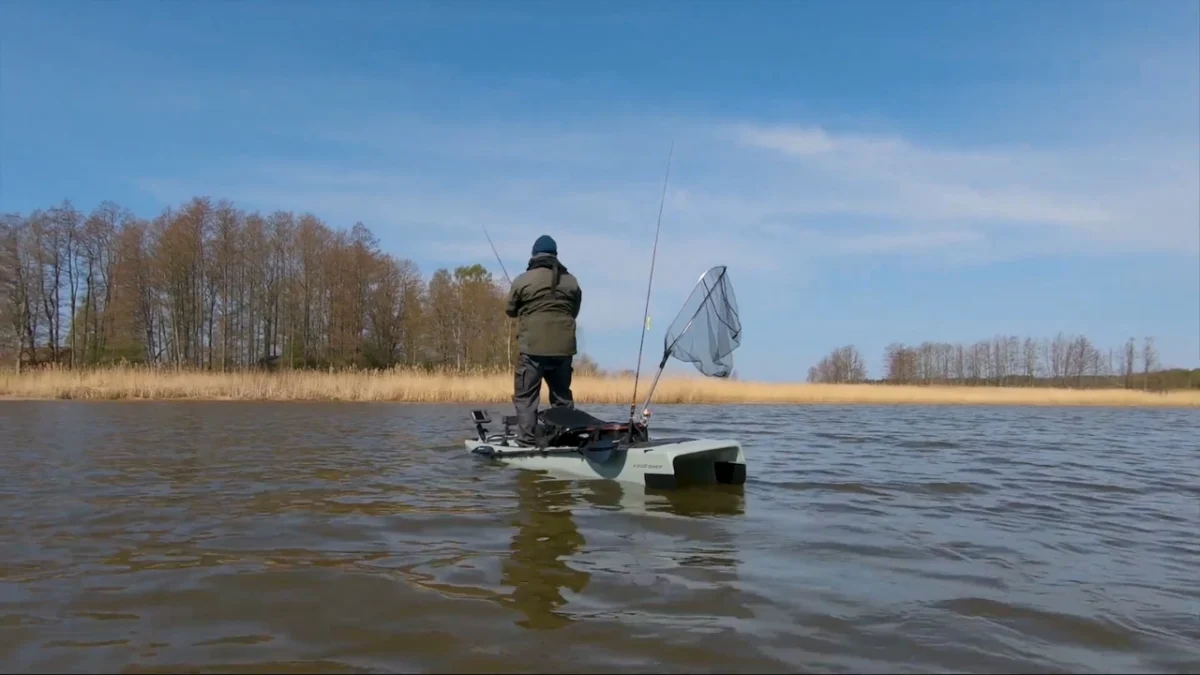
In the mid-20th century, the rise of synthetic materials like polyethylene and carbon fiber transformed these boats from specialized tools into accessible consumer goods. The 1970s and 80s saw the democratization of white-water sports, while the 2000s ushered in the "sit-on-top" kayak revolution, which made casual beach recreation accessible to non-swimmers and families. Today, we are in an era of hyper-specialization: you can purchase folding kayaks for apartment dwellers, pedal-drive fishing kayaks for precision angling, and ultra-lightweight kevlar canoes for backcountry portaging.
Supporting Data: Why Your Choice Matters
The decision-making process should be grounded in the intended use case. Data suggests that the majority of boating accidents involve a mismatch between the vessel’s capabilities and the environment.
- Wind and Waves: Because of their higher freeboard (the height of the boat side above the water), canoes are significantly more susceptible to wind. On a gusty day, a canoe can act as a sail, making it difficult for a novice to reach the shore.
- Safety Statistics: According to the U.S. Coast Guard’s 2024 Recreational Boating Statistics, a vast majority of fatalities in paddlesports involved victims who were not wearing a life jacket. Regardless of the boat chosen, the "life jacket under the seat" mentality is a leading contributor to preventable deaths.
- The Stability Factor: Stability is categorized into "initial" (how the boat feels at the dock) and "secondary" (how it behaves when leaning into a turn). Many kayaks feel "tippy" initially but are exceptionally stable when pushed into a lean, whereas canoes feel rock-solid on flat water but struggle with secondary stability in heavy chop.
Official Guidance and Industry Best Practices
The National Park Service (NPS) and the American Canoe Association (ACA) consistently emphasize the "dress for the water, not the air" rule. A common mistake among new paddlers is assuming that a warm air temperature makes for safe conditions, failing to account for the lethality of cold water immersion.
Industry experts stress that "the best boat is the one you actually use." Many enthusiasts purchase expensive, high-performance boats that are too heavy or cumbersome to transport, leading them to stay in the garage. For the average consumer, the "logistics of the launch" (storage, roof racks, and weight) are just as important as the boat’s performance on the water.
Implications for the Modern Paddler
As you evaluate your next purchase, consider these five critical questions:
- Who is coming with me? (If it’s a dog, child, or fishing gear, a canoe is almost always the superior choice).
- Where am I storing it? (If you live in an urban environment, consider an inflatable or folding kayak).
- What is the typical water type? (Coastal or large lakes demand a kayak; calm, winding rivers favor a canoe).
- Can I transport it alone? (A 16-foot canoe often requires two people to lift; a lightweight kayak can be managed solo).
- Have I rented this model first? (Never buy without a test drive; comfort is subjective).
The Case for the Canoe: The Floating Pickup Truck
Choose a canoe if you prioritize versatility and shared experiences. It is an unmatched vessel for family outings, multi-day camping trips, and fishing. The ability to move around in the boat, store bulky gear without complex packing, and maintain a higher vantage point for wildlife viewing makes it the king of the lake.
The Case for the Kayak: The Sports Car of the Water
Choose a kayak if your goal is personal fitness, long-distance touring, or navigating challenging water conditions. The efficiency of the double-bladed paddle allows you to cover more distance with less fatigue. Whether it is a sit-on-top for casual beach fun or a sea kayak for offshore exploration, these boats offer a level of control and speed that a canoe simply cannot match.
Safety: The Non-Negotiable Component
In 2026, the boating community continues to grapple with the reality of increasing traffic on local waterways. The most important implication for any new paddler is the legal and moral requirement for safety equipment.
- Life Jackets (PFDs): These are mandatory. Many states have specific laws regarding children under 13, but the universal rule is that if you are on the water, you should be wearing your jacket.
- Visibility: If paddling at night or in low-light conditions, you are legally required to have a white light available to warn other boaters of your presence.
- BUI Awareness: Boating Under the Influence (BUI) is a serious offense that applies to non-motorized vessels as well. The impairment caused by alcohol is magnified by the sun and physical exertion, making it particularly dangerous on the water.
Final Verdict: The Right Boat for Your Lifestyle
There is no "perfect" boat, only the perfect boat for your specific, current life situation. If you are an urban dweller with limited space, an inflatable kayak might be your best entry point. If you are a family living on a lakefront, a sturdy aluminum or royalex canoe will likely provide decades of service.
The most important takeaway is to avoid "aspirational buying." Do not purchase a high-end, whitewater-ready kayak if you only intend to paddle on a flat, calm pond once a year. Conversely, do not buy a heavy, cumbersome canoe if you are a solo adventurer who wants to quickly hit the water after work.
By prioritizing ease of transport, storage logistics, and the realities of your local waterways, you can move past the marketing hype and find the vessel that truly fits your needs. Remember: the boat that spends the most time on the water is always the best investment. Whether you choose the open-air freedom of a canoe or the sleek, efficient control of a kayak, the most critical step is simply getting out there and enjoying the journey. Happy paddling!