For the automotive enthusiast, the sight of an 80-Series Toyota Land Cruiser is usually accompanied by the familiar imagery of weathered paint, oversized all-terrain tires, and a roof rack groaning under the weight of recovery gear. It is a vehicle defined by its utility, its near-indestructible mechanical heart, and a legacy forged in the world’s most unforgiving environments. Yet, as Mecum prepares for its highly anticipated auction during the 2026 Monterey Car Week, the automotive world is turning its collective gaze toward a specimen that defies the very definition of the "Land Cruiser experience."
A 1997 Toyota Land Cruiser, resplendent in "Super White" factory paint and showing a staggering 4,700 miles on the odometer, is set to cross the auction block. This isn’t just a low-mileage SUV; it is a three-decade-old time capsule, a museum-grade artifact that has miraculously escaped the fate of nearly every other 80-Series ever built.
The Main Facts: A Statistical Anomaly
In the world of high-end automotive collecting, "survivor" is a term often used loosely. However, this particular 1997 FJZ80 is the literal definition of the word. Having spent the better part of 29 years tucked away from the rigors of the trail, the elements, and the daily commute, the vehicle presents in condition that can only be described as showroom-fresh.
Key highlights of the auction lot include:

- Mileage: Approximately 4,700 original miles.
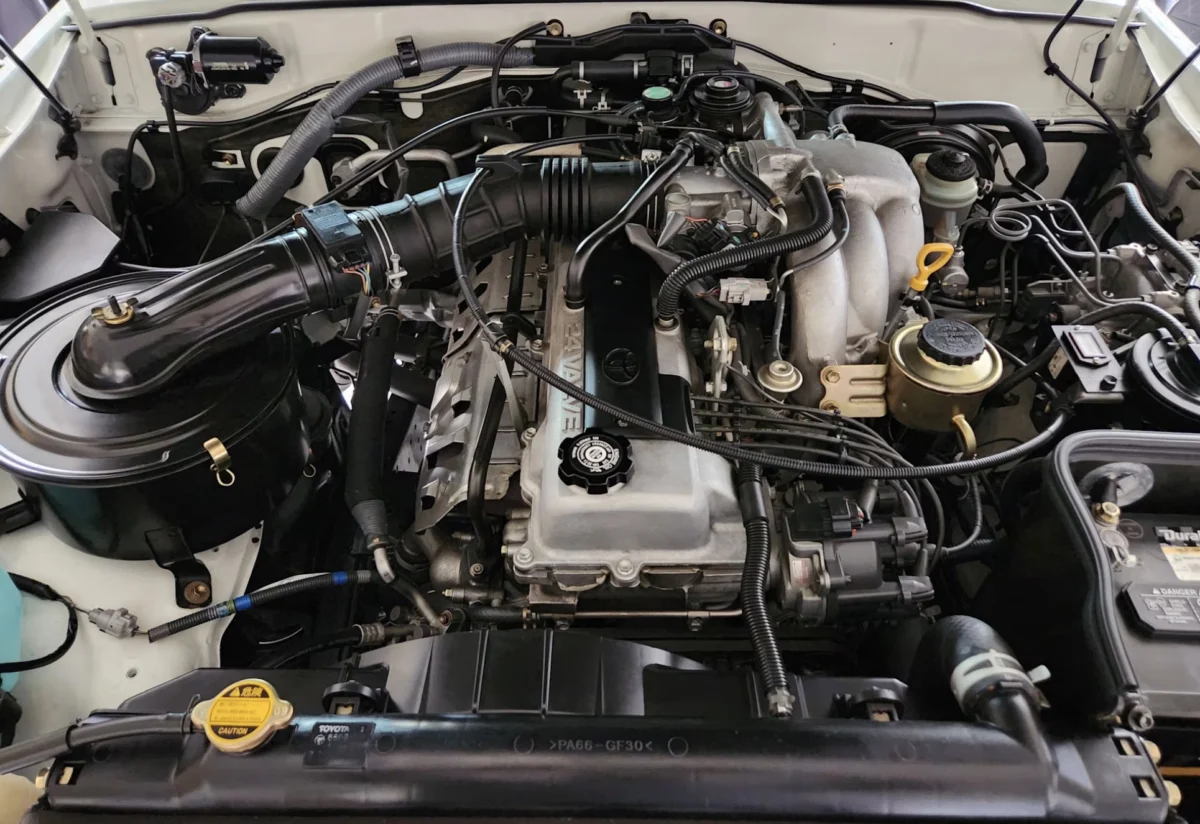
- Powertrain: The venerable 4.5L 1FZ-FE inline-six engine, mated to a four-speed automatic transmission.
- Aesthetic Profile: Super White exterior paint paired with an immaculate Oak Beige leather interior—a quintessential 1990s aesthetic.
- Provenance: The vehicle features the iconic gold badging package, a hallmark of high-trim Toyota luxury in the late 20th century.
- Condition: Completely unrestored. Every seal, bolt, and trim piece remains as it left the factory floor in Japan.
Industry experts anticipate that the final hammer price will be nothing short of astronomical. As the 80-Series market has matured from "reliable used rig" to "blue-chip collectible," this specific lot represents the ceiling of the market. It is not merely a vehicle; it is a historical document of Toyota’s peak engineering era.
A Chronology of the 80-Series Legend
To understand why this specific Land Cruiser is causing such a stir, one must look back at the trajectory of the 80-Series. Launched globally in 1990, the 80-Series represented a pivot for Toyota. It moved away from the utilitarian, tractor-like simplicity of the 60-Series and toward a more refined, comfortable, yet profoundly capable platform.
- 1990-1992 (FJ80): The introduction of the platform, characterized by the 3F-E 4.0L engine. While legendary for reliability, it was widely criticized for being underpowered for such a heavy chassis.
- 1993-1997 (FJZ80): The true "sweet spot" for enthusiasts. The introduction of the 4.5L 1FZ-FE engine brought 212 horsepower and 275 pound-feet of torque to the table. This generation solidified the Land Cruiser’s reputation as the ultimate overlanding vehicle.
- 1997: The final model year for the 80-Series in the United States. It marked the end of an era, as the subsequent 100-Series transitioned to independent front suspension. For many purists, 1997 is the "final true Land Cruiser" to feature a solid front axle, cementing its status as the most desirable iteration of the modern classic era.
While production continued in international markets like Venezuela until 2007, the 1997 U.S.-spec model remains the benchmark for collectors seeking the pinnacle of the solid-axle lineage.
Supporting Data: The Economics of Reliability
The Land Cruiser’s reputation is not built on marketing fluff; it is backed by empirical data regarding longevity and ownership trends. According to automotive market research, the Toyota Land Cruiser boasts the highest average duration of ownership of any vehicle on the road. Owners frequently hold onto their rigs for upwards of 11 to 12 years.

This creates a unique market dynamic: supply is essentially static, while demand continues to climb. Unlike a sports car, which might be garage-kept for weekend drives, the 80-Series was bought to be used. Most examples currently on the market have long since surpassed the 200,000-mile mark. The discovery of an example with under 5,000 miles is a statistical impossibility that disrupts standard valuation models.
When you compare this to the second-highest ownership retention vehicle—the Chevrolet Corvette—the difference is stark. While the Corvette is often treated as a secondary, hobbyist vehicle, the Land Cruiser is a primary-use vehicle that refuses to die. That a Land Cruiser has managed to avoid being "used" for 29 years is a curiosity that auction houses love to capitalize on.
Official Perspectives and Market Implications
The auction at Monterey serves as a barometer for the broader "Radwood-era" car market. Collectors have shifted their focus from the exotic European supercars of the 1980s and 90s to the ultra-reliable, high-build-quality Japanese off-roaders.
"We are seeing a maturation of the collector base," notes one industry analyst. "The generation that grew up watching these trucks dominate rallies and off-road excursions is now in their peak earning years. They don’t just want the car; they want the specific configuration that defined their childhoods. The gold badging, the beige leather, the boxy silhouette—it’s all highly emotive."

However, there is a palpable tension surrounding this specific auction lot. Within the enthusiast community, there is a recurring debate: should a vehicle like this be preserved in a vacuum, or should it be driven?
By purchasing this Land Cruiser, the winner becomes its steward. If they choose to drive it, the value drops significantly as the "time capsule" status is breached. If they keep it in a collection, the vehicle effectively "dies" in terms of its intended function. It becomes a static sculpture of steel and leather, denied the mud and mountain passes it was designed to conquer.
The Future of the Land Cruiser Legacy
As the gavel prepares to fall in Monterey, this 1997 Land Cruiser stands as a testament to Toyota’s "Toyota City" manufacturing philosophy. The meticulous attention to detail, the over-engineered components, and the choice of materials are all being scrutinized by bidders who understand that they are looking at an artifact that can never be recreated.
Whether the final price settles in the low-six figures or pushes even higher, the sale of this vehicle will be remembered as a milestone. It signals that the "modern classic" market has fully arrived.

For the lucky bidder, they will own a piece of automotive history. They will have the keys to a machine that, in 1997, represented the absolute peak of adventure-ready engineering. Whether they decide to put it on display in a climate-controlled garage or take it out for a drive that will finally push the odometer past 5,000 miles, the 80-Series will remain what it has always been: the undisputed king of the road, and the trail beyond.
The 2026 Mecum Monterey auction is not just a sale; it is the final act for one of the most storied vehicles to ever emerge from Japan. And for the rest of us? We can only watch, wait, and wonder what it might feel like to turn the key on a brand-new 29-year-old legend.