With only 58 days remaining until the 2026 Mr. Olympia, the bodybuilding community is currently engulfed in the annual frenzy of speculation. As a long-time observer and analyst of the sport, I have been inundated with the same recurring question: "Who is going to win?"
It is a question I find as palatable as Brussels sprouts. Predicting a contest two months out, based on scattered social media snippets and incomplete training footage, is a fool’s errand. At this stage, such predictions are merely popularity contests. While I hold a deep personal affinity for reigning standout Derek Lunsford, my loyalty is secondary to the reality of the stage. A champion must be the best man on that specific night, not the best man in the polls or the hype machine.
However, if one shifts the inquiry from who will win to what will happen, the conversation changes. By analyzing the current landscape, the shifting judging criteria, and the structural evolution of the top contenders, we can identify a significant paradigm shift. The 2026 Olympia will not just crown a winner; it will likely finalize the transition from the dense, blocky "wedge" physiques that have dominated recent years back to the aesthetic, sweeping "X-frames" that define the sport’s golden history.
The Evolution of Form: From Wedge Cars to Wedge Physiques
To understand the current state of professional bodybuilding, one must look toward the automotive history of the 1970s. British Leyland introduced the Triumph TR7, a car defined by a sharply angled, wedge-shaped silhouette. It was a departure from the curves of the past—a machine that looked like a futuristic concept sketch. The slogan, "The Shape of Things to Come," became prophetic as the industry entered the "wedge era." Manufacturers like Lamborghini, Lotus, and Lancia followed suit, prioritizing geometric aggression over fluid lines.
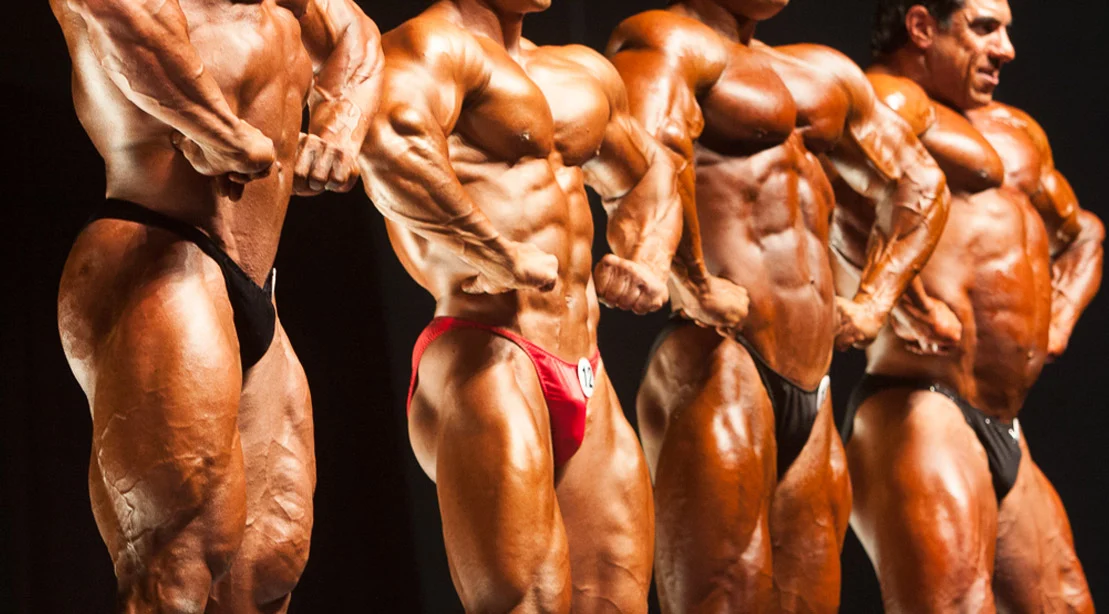
Bodybuilding has undergone a near-identical transformation. For decades, the "X-frame" was the gold standard: wide clavicles, a narrow waist, sweeping quads, and massive back width. It was the visual blueprint of the superhero. Yet, over the last few years, the judging criteria shifted to reward the "wedge"—a physique defined by short, compact, dense, and blocky musculature.
When viewed head-on, these modern wedges are brutally muscular and overwhelmingly thick from top to bottom. It is a shift from elegance to impact; the difference between admiring a classical sculpture and being struck by a block of solid marble.
Chronology of a Structural Rivalry
The dominance of the wedge reached its zenith in the recent battles between Hadi Choopan and Derek Lunsford. Both men are shorter, hyper-dense, and conditioned to an almost superhuman degree. The judges repeatedly found themselves comparing two nearly identical, compact structures. This "apples-to-apples" comparison made judging efficient, yet it narrowed the scope of what the sport considered "the best."
However, the 2026 Olympia presents a different narrative. With former champions and current contenders—specifically Samson Dauda and Andrew Jacked—pushing their development to new heights, the landscape is shifting. Andrew Jacked, coming off a resounding victory at the Arnold Classic, has demonstrated that he possesses more than just size; he possesses the classic lines that the wedge era had momentarily sidelined.
The emergence of these two giants creates a "reset" button for the judges. For the second consecutive year, the lineup will feature a contrast that forces the IFBB to decide: Do they continue to reward the dense, compact wedge, or do they pivot back to the large-scale, sweeping X-frame?
Supporting Data: The Case for the X-Frame
The aesthetic appeal of the X-frame is not merely a matter of nostalgia; it is a matter of visual dominance. The iconic silhouette of a bodybuilding champion has never been a five-foot-six human fire hydrant. It has always been the larger-than-life, wide-shouldered, tapering superhero.
Comparative Analysis:
- The Wedge (Hadi Choopan/Derek Lunsford): High density, immense thickness, shorter frame, lower center of gravity.
- The X-Frame (Samson Dauda/Andrew Jacked): Superior clavicle-to-waist ratio, sweeping quad lines, visual flow, and enhanced stage presence.
When Samson Dauda and Andrew Jacked stand side-by-side, they provide an aesthetic standard that is difficult to ignore. They satisfy the classic criteria of the sport while bringing modern, freakish mass. When the judges are no longer forced to split hairs between two short, hyper-conditioned athletes, the structural superiority of the X-frame becomes the inevitable focal point.
The Wild Card: Nick Walker’s Chaotic Variable
No discussion of the 2026 Olympia is complete without addressing Nick "The Mutant" Walker. Walker occupies a unique space in this narrative. He is neither a traditional wedge nor a classic X-frame; he is a testament to the power of conditioning.
Walker serves as the fulcrum of the entire contest. He lacks the refined aesthetics of Andrew Jacked or the structural flow of Samson Dauda, but his ability to present an "anatomy chart wrapped in skin" makes him dangerous. If the taller competitors suffer from a minor miscalculation in their peak, or if the reigning wedge-champions fail to maintain their hallmark conditioning, Walker is positioned to capitalize. He represents the "chaos factor." In a sport where conditioning rules everything, Walker is the man who makes the judges reconsider their criteria if the leaders falter even by a fraction.
Implications: The Future of the Sport
The implications of this year’s Olympia are profound. If the judges opt to crown a winner who embodies the classic X-frame, it will signal a systemic shift in the criteria for the next decade. It will validate the idea that while mass is necessary, it must be paired with the proportion and grace that historically made bodybuilding a visual spectacle.
In my professional estimation, if Andrew Jacked hits his peak—a true 100 percent conditioning—he is currently the man to beat. He possesses a combination of size and structure that, when combined with elite conditioning, makes him virtually untouchable. He represents the return to the "X-Men" era, where the physique fits the image of the larger-than-life icon.
The wedge era served its purpose; it pushed the limits of density and muscle maturity to their absolute extreme. But the sport is cyclical. Bodybuilding has always thrived when the physique is not just impressive in its components, but harmonious in its totality. As we approach the 2026 Olympia, the stage is set for a return to the classic ideal.
The questions from the fans will continue to flood my inbox for the next 58 days. But as the countdown narrows, the answer is becoming increasingly clear: the era of the wedge is fading, and the era of the X-frame is poised to make a triumphant, permanent return. The judges have a choice to make, and if they value the history of the sport as much as its evolution, the decision will be clear. The "Shape of Things to Come" is actually a return to what made the sport iconic in the first place.