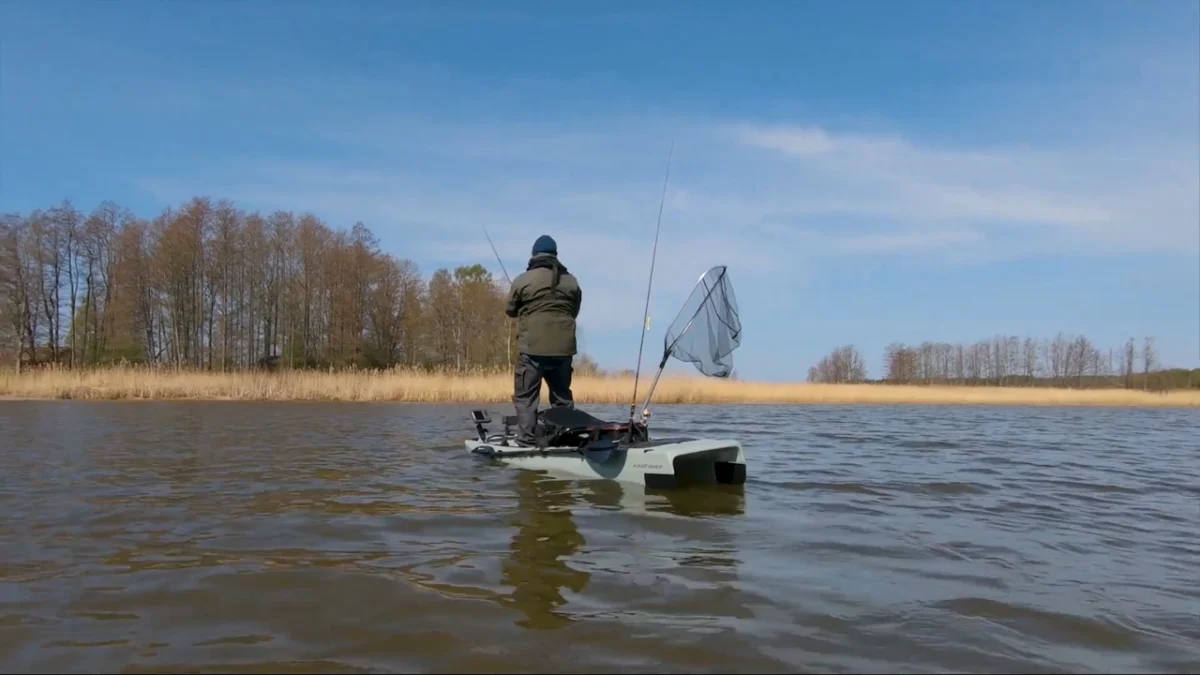
In the modern angling landscape, the addition of a motor to a fishing kayak is no longer a niche luxury; it is a strategic evolution. While the romance of paddling remains, the practical reality of professional-grade fishing often demands more. A motor is not merely about achieving higher speeds to reach a distant honey hole; it is fundamentally about the mastery of the environment. When wind threatens to push a craft off a productive bank, or when a stubborn current complicates a precision cast, a motor transforms the kayak from a passive vessel into a surgical tool.
However, the transition to a motorized setup is fraught with logistical pitfalls. Not every "motor-ready" hull is engineered for the additional torque, weight, and electrical load of a propulsion system. This guide evaluates the current market, the engineering considerations, and the critical factors that separate a high-performance fishing platform from a frustrating, unstable project.

Main Facts: Defining the Motorized Advantage
The primary utility of a motor is energy conservation. By offloading the physical strain of propulsion to an electric motor, an angler preserves their stamina for the most crucial task: presenting lures and fighting fish. This efficiency allows for longer days on the water, the ability to cover expansive bodies of water, and the agility to reposition instantly.
Key considerations include:

- The Weight Penalty: Adding a motor, a battery (often heavy lead-acid or bulky lithium), and the necessary mount increases the center of gravity.
- Deck Management: A motorized kayak must handle not just the motor, but the ancillary hardware—fish finders, rod holders, tackle crates, and anchors.
- Hull Integrity: A standard recreational kayak may buckle under the vibration and force of a trolling motor. Dedicated angling kayaks feature reinforced sterns or specific "pod" systems designed for propulsion.
Chronology: The Evolution of the Angling Platform
The history of the fishing kayak has moved in three distinct phases:
- The Primitive Era: Simple, rotomolded plastic shells designed solely for transport. These boats were light but offered zero stability for standing or mounting electronics.
- The Pedal Era: The introduction of pedal-drive systems (like the Hobie MirageDrive) revolutionized the market, allowing for hands-free fishing. This era established the "fishing platform" as a category distinct from recreational touring boats.
- The Motorized Integration: We are currently in the age of seamless integration. Modern boats, such as those discussed below, are designed from the keel up to accommodate both pedal drives and electric motors, often featuring dedicated wiring channels and transducer scuppers.
Top Fishing Trolling Motor Kayaks
1. Point 65 Sweden Kingfisher: The Modular Marvel
The Kingfisher is an outlier in the industry due to its modular "take-apart" design. For anglers lacking the luxury of a garage or a truck bed, this vessel is a game-changer. It separates into manageable sections, making it the premier choice for urban anglers or those with limited storage.

- Engineering Focus: Its trimaran-style hull provides exceptional secondary stability, crucial when leaning to land a trophy fish.
- Capacity Warning: With a solo capacity of 287 pounds, users must be diligent. Once a motor, battery, and gear are added, larger anglers may find themselves reaching the limits of the boat’s buoyancy.
2. Reel Yaks Fishing Kayak: The Compact Specialist
Reel Yaks caters to the angler who prioritizes agility over absolute volume. Their designs often favor modularity, making them highly portable.
- Hull Design: The W-shaped hull is the star feature here, providing a stable platform for standing, though it trades away some speed and glide.
- Ergonomics: The inclusion of a frame-style seat is non-negotiable for serious anglers. By keeping the user elevated and dry, it mitigates the fatigue associated with long hours on the water.
3. Wilderness Systems ATAK 120: The Heavy-Duty Powerhouse
The "Advanced Tactical Angling Kayak" (ATAK) is designed for the angler who refuses to compromise. While it demands more effort to transport—weighing in at 86 pounds—it rewards the user with an expansive, open deck.

- Rigging Potential: The Flex Pod system is arguably the industry gold standard for housing electronics and motor-drives. It keeps the deck clean, preventing line snags and cable clutter.
- Load Capacity: At a 400-pound limit, the ATAK 120 comfortably supports heavy lithium batteries and comprehensive sonar setups, making it the most "future-proof" choice for those looking to expand their gear.
Supporting Data: Technical Considerations
When integrating a motor, the math must be precise. Consider the following breakdown of requirements:
| Feature | Requirement for Success |
|---|---|
| Battery Type | Lithium Iron Phosphate (LiFePO4) recommended for weight-to-power ratio. |
| Wiring | Marine-grade, tinned copper wire to prevent corrosion. |
| Steering | A robust rudder system is essential; a motor without precise steering is a liability. |
| Safety | A kill-switch is mandatory for any motorized vessel to prevent runaway scenarios. |
Official Perspectives: Expert Advice on Setup
Industry experts consistently warn against the "bolt-on" mentality. A motor is only as effective as its integration into the kayak’s existing design.
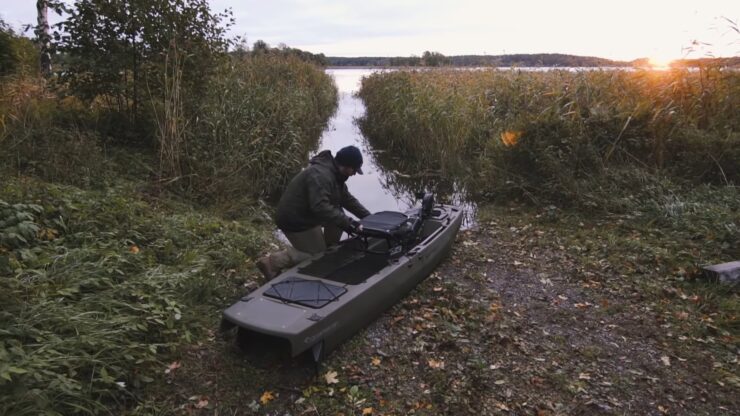
- Battery Placement: Professionals stress that the battery should be the lowest point of the setup. Placing a heavy battery high in a seat or crate raises the center of gravity, significantly increasing the risk of a capsize.
- Hull Rigidity: Manufacturers warn that mounting a motor to a plastic hull that isn’t reinforced can lead to "flex," where the motor pulls the plastic, causing leaks or structural failure over time.
- Legal Compliance: In many jurisdictions, adding a motor—even a 12-volt trolling motor—reclassifies the kayak as a "motorized vessel." This may mandate registration, the display of hull identification numbers, and the carriage of specific safety equipment like a whistle or visual distress signal.
Implications: The Future of Motorized Angling
The implications of this shift are profound. As technology improves, we are seeing the rise of GPS-enabled trolling motors (like the Minn Kota Spot-Lock technology) entering the kayak space. This allows a kayak to hold its exact position against wind and current automatically.
The shift toward motorization implies:

- Increased Geographic Reach: Anglers are no longer confined to small, sheltered coves. They can safely traverse larger bodies of water.
- Increased Financial Investment: A fully rigged motorized setup can easily cost as much as a small aluminum jon boat. Buyers must decide if the portability of a kayak outweighs the storage benefits of a traditional boat.
- Environmental Stewardship: Because electric motors are silent and emission-free, they are increasingly allowed in "electric-only" lakes, opening up waters that are often untouched by gas-powered boats.
Final Assessment: Choosing Your Path
The decision to motorize a kayak should not be taken lightly. It is a commitment to a more complex, heavier, and potentially more expensive system.
- Choose the Point 65 Kingfisher if you are an apartment dweller or have restricted storage and transport options.
- Choose the Reel Yaks if you fish in smaller, calm environments and value a "grab-and-go" convenience factor.
- Choose the Wilderness Systems ATAK 120 if you are a dedicated, high-frequency angler who requires a professional-grade platform that can accommodate significant modifications and advanced electronics.
Ultimately, the best motorized kayak is the one that disappears beneath you. It should be a seamless extension of your fishing style, not a source of mechanical anxiety. Before making your purchase, verify the manufacturer’s warranty coverage regarding motorized modifications, test the weight distribution on dry land, and always, always perform your first water trial in shallow, controlled conditions. The goal of technology in fishing is to get you closer to the fish—never let the equipment become the reason you stay on the shore.