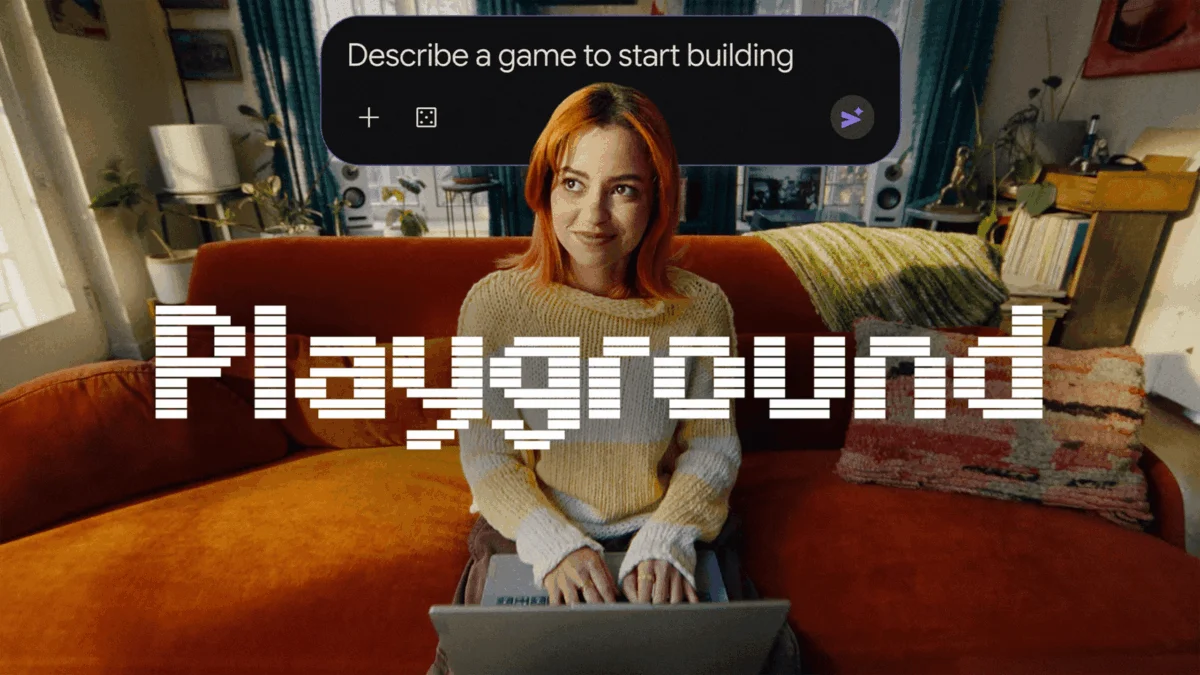
The landscape of software development is undergoing a seismic shift. For decades, the barrier to entry for creating a functional video game was formidable, requiring years of mastery in C++, C#, or specialized engines like Unity and Unreal. However, a new experimental platform from Google Labs, simply titled Playground, is attempting to dismantle those barriers by turning the development process into a conversational exchange. By leveraging large language models (LLMs) to interpret intent, Google is enabling users to "vibe code"—a process where natural language prompts are translated into executable, in-browser game environments.
The Mechanics of Creation: How Playground Functions
At its core, Playground is a generative interface that acts as both designer and lead programmer. Unlike traditional game engines that require visual node-based scripting or complex line-by-line coding, Playground utilizes a chat-like interface. A user inputs a concept—for example, "a top-down shooter set in a cyberpunk city"—and the AI generates a functional, playable prototype.
The process is inherently iterative. Once the base game is established, the user can provide follow-up instructions to refine specific elements. If a character is too slow, the user can simply request, "Make the player movement 20% faster." If a visual asset feels out of place, one can upload a reference image or provide a detailed text description to guide the AI’s generative engine. This conversational loop allows non-technical users to build, test, and tweak games in a matter of hours, rather than months.
A Chronology of Experimentation: Building Three Prototypes
To test the capabilities and limitations of the platform, recent field tests have focused on three distinct projects, each highlighting a different facet of AI-assisted design.

1. The "Pork Drop" Iteration
The first experiment involved a simple prompt: "Tetris but with cute pigs instead of blocks." Within moments, the platform generated a functional grid-based puzzler featuring porcine aesthetics. However, the initial result was rudimentary. By refining the prompt to emphasize that the blocks themselves should be "contorted into the shape of Tetris blocks," the AI successfully created a more cohesive, albeit slightly surreal, gameplay experience. This underscored a vital lesson in AI development: the quality of the output is inextricably linked to the specificity of the user’s language.
2. "Dinner Darling": The Social Simulator
A second project, titled Dinner Darling, explored the platform’s ability to handle state-based logic. The prompt, "Gay dinner party," resulted in a 2D simulation game where the user plays as a stressed host managing the needs of fussy, Bitmoji-esque guests. The game successfully integrated timers, resource management (serving espresso martinis and bruschettas), and conditional failure states. While the game lacked the depth of a commercially polished title, it demonstrated the AI’s capacity to handle game loops and UI interactions with minimal human oversight.
3. "Neon Don": The Cyberpunk Shooter
The most complex project, Neon Don, served as a stress test for the platform’s combat mechanics. Initially conceived as a rhythm game, the project evolved into a Hotline Miami-style top-down shooter. Through iterative prompting, the user added features such as level scaling, boss encounters, and a snarky, personality-driven text system. The protagonist, a "very divorced" ex-cop, provides commentary during gameplay, lamenting his legal troubles and ex-wife—a testament to how AI can imbue procedural games with a sense of narrative character.
Supporting Data and Platform Limitations
While the ease of use is revolutionary, Playground is currently bound by significant constraints. Google employs a credit-based system to manage server load, throttling the number of iterations a user can perform within a given timeframe. This "usage allowance" forces developers to be deliberate with their prompts, as mistakes or unwanted changes cannot always be immediately reverted without exhausting one’s quota.

Furthermore, there is a pervasive "sameness" that haunts the output. Because the platform relies on pre-trained models and a finite set of assets, many games share identical menu structures, audio palettes, and combat behaviors. This creates a phenomenon often derided by critics as "AI slop"—a sense that while the volume of content is high, the artistic soul and mechanical variation are dangerously thin.
The Industry Context: Google vs. The Field
Google’s launch of Playground follows a trend of "democratizing" game development seen across the tech sector. Most notably, Meta announced Horizon Create in September, a service with similar ambitions for the metaverse space. These companies are effectively racing to see who can lower the floor for entry the most effectively.
Industry experts observe that this move is part of a broader strategy by Google to keep users within its ecosystem. By hosting these experiments in Google Labs, the company gathers invaluable data on how non-programmers think about logic, asset generation, and game flow. This data will likely inform future versions of more robust, enterprise-level development tools.
Implications: The Future of "Vibe Coding"
The implications of such technology are profound. On one hand, Playground represents a democratization of creativity. It empowers people who lack formal training to see their ideas manifested on screen. It turns game design into a form of digital sculpting, where the primary tool is one’s vocabulary rather than a keyboard.

However, the technology raises questions about the long-term viability of AI-generated content. As these platforms proliferate, the internet may become saturated with "procedural noise"—thousands of games that are technically functional but artistically indistinguishable from one another.
For the professional game developer, these tools act more as a prototype engine than a replacement. A seasoned developer knows how to prompt the AI to avoid the pitfalls of "Doge flips" (misinterpreted commands) or to balance difficulty curves that the AI currently struggles to manage on its own. As of now, the human element remains the final arbiter of quality.
Conclusion: A Toy or a Tool?
Google’s Playground is a fascinating glimpse into a future where software is fluid and malleable. It is an impressive sandbox for hobbyists and a clear indicator of where the tech industry is heading. Yet, as it stands, it remains a "toy." It is immensely fun to watch an AI build a game based on a whim, but for those seeking to create something truly resonant, the limitations of the current architecture—the lack of unique visual identity and the dependency on server-side credits—keep it firmly in the experimental stage.
For now, the "Neon Dons" of the world will continue to rant about their ex-wives’ lawyers, and users will continue to "vibe code" their way through short-lived entertainment. Whether this technology will eventually evolve into a professional-grade suite remains to be seen. Until then, the output is as compelling as it is hollow, a perfect reflection of the current state of generative AI.