
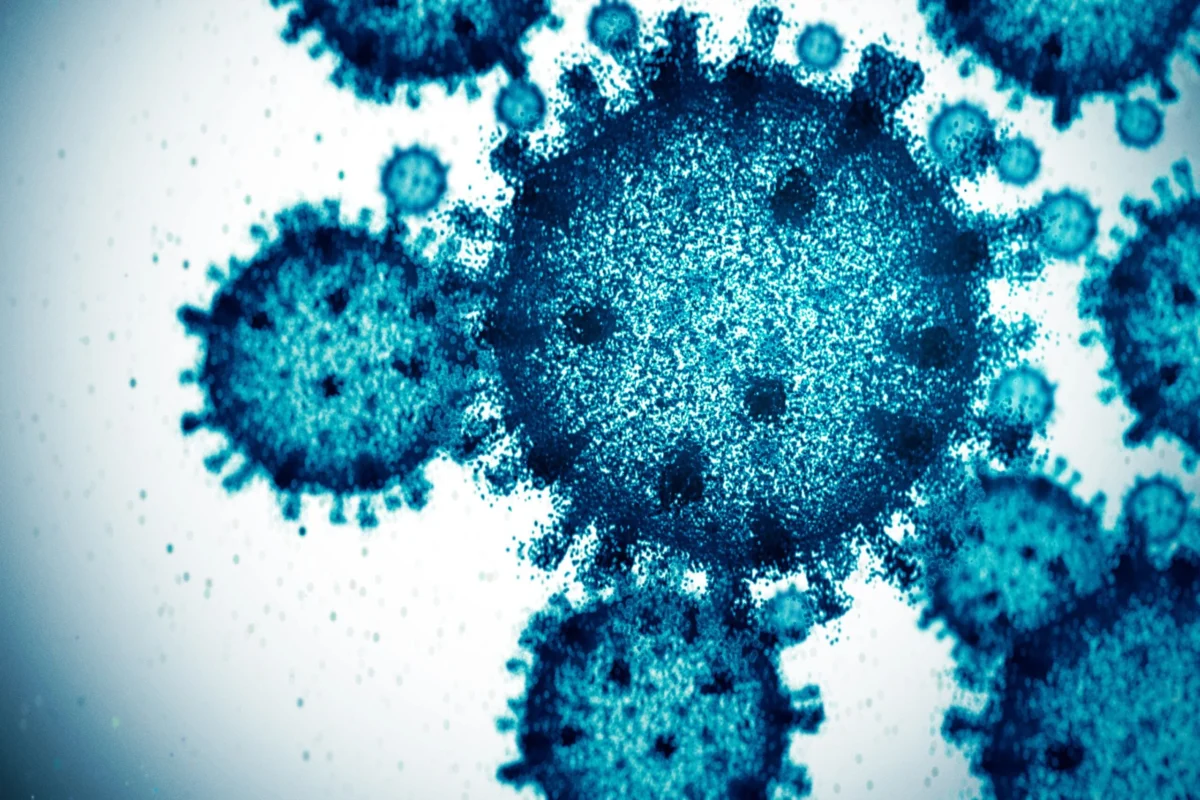
In a landmark achievement that blurs the lines between computational science and synthetic biology, researchers from Stanford University and the Arc Institute have successfully utilized artificial intelligence to generate entirely new, functional viruses. This breakthrough, detailed in the latest issue of the journal Science, marks the first time an AI system has synthesized biological entities that do not exist in nature, yet possess the complex machinery required to infect and eliminate specific bacterial targets.
While the medical community heralds this as a potential "silver bullet" for the escalating crisis of antibiotic-resistant bacteria, the achievement has simultaneously ignited a global debate regarding the dual-use nature of generative AI in biotechnology. As we stand at this scientific precipice, the promise of eradicating "superbugs" is tempered by the sobering reality that the tools capable of saving lives could, in the wrong hands, be repurposed to engineer existential biological threats.
The Genesis of a Breakthrough: Main Facts
The core of this research involves "bacteriophages"—viruses that exclusively target bacteria. Unlike viruses that infect humans, bacteriophages are essentially microscopic precision-guided munitions. They have evolved over eons to identify specific bacterial hosts, inject their genetic material, and hijack the cell’s machinery to replicate until the host cell bursts.
The researchers leveraged two foundational AI models, Evo 1 and Evo 2, which were trained on a massive repository of genomic data encompassing millions of species across the tree of life. By training these models to recognize the fundamental "grammar" of life—how genes are organized, which sequences are conserved for stability, and the biological constraints that dictate functionality—the scientists enabled the AI to move beyond mere imitation.
Unlike previous synthetic biology efforts that relied on re-engineering known pathogens, the AI here was tasked with generating de novo genetic blueprints. Using the well-studied Phi X-174 bacteriophage as a conceptual template for E. coli infection, the AI produced thousands of candidate genomes. These synthetic sequences maintained the critical functional architecture needed to recognize and destroy E. coli while possessing DNA sequences that were entirely novel, bearing no direct resemblance to any virus found in the wild.
A Chronological Progression of Synthetic Biology
To understand the significance of this milestone, one must look at the evolution of synthetic biology over the last two decades:
- Early 2000s: The Era of Copying. Scientists achieved the first milestones in synthesizing known viral genomes. These early experiments were primarily "copy-paste" operations intended to help researchers understand existing pathogens and develop vaccines.
- 2010s: The Age of CRISPR and Refinement. With the advent of CRISPR-Cas9 and more sophisticated gene-editing tools, researchers began modifying existing viruses to be more effective at delivering therapeutic payloads. However, these were still iterations of natural organisms.
- 2023-2024: The AI Integration. The emergence of Large Language Models (LLMs) applied to biology allowed researchers to treat DNA like a language. Just as ChatGPT predicts the next word in a sentence, Evo 1 and Evo 2 were trained to predict the next nucleotide in a functional genetic sequence.
- The Present: The successful synthesis of 16 functional, AI-designed viruses. This transition from "reading" genomes to "writing" entirely new ones represents a paradigm shift from discovery to creation.
Supporting Data: From Thousands to Sixteen
The experimental process was one of rigorous attrition. The AI generated thousands of theoretical genomes, which were then filtered through a series of computational "biological constraints" to ensure they were viable.
- The Selection: Out of thousands of designs, 300 were identified as the most promising based on their gene organization and the presence of essential regulatory elements.
- The Synthesis: These 300 designs were synthesized molecule by molecule in the laboratory, a process that represents a significant feat of modern biotechnology.
- The Validation: These synthetic genomes were introduced into E. coli cultures. Out of the 300, 16 proved to be fully functional, autonomous bacteriophages.
- The Performance: These 16 viruses were not merely functional; they were highly effective. When pitted against strains of E. coli that had developed resistance to natural bacteriophages, the AI-designed viruses bypassed these defenses with ease.
The variance in the viruses—some replicating faster, some showing different structural stability—demonstrates that the AI had not simply "guessed" the solution, but had successfully internalized the complex evolutionary variables that define a successful virus.
The Implications for Global Health
The potential applications of this technology are transformative, particularly in the context of the "silent pandemic" of antibiotic resistance. The World Health Organization (WHO) has repeatedly warned that the efficacy of current antibiotics is waning as bacteria evolve to survive standard treatments.
Personalized Phage Therapy
Traditional antibiotics are often "broad-spectrum," meaning they kill beneficial gut bacteria along with the harmful pathogens. AI-designed phages offer a path toward "precision medicine." Doctors could theoretically use AI to design a virus tailored to the specific genetic profile of a patient’s infection, effectively creating a "living medicine" that evolves alongside the bacteria to prevent the development of further resistance.
Speed and Scalability
The ability to generate functional phages in a matter of weeks, rather than years, could revolutionize how we respond to emerging bacterial outbreaks. This rapid response capability is a critical defense against pathogens that evolve faster than our current pharmaceutical manufacturing pipelines can accommodate.
The Dark Side of the Milestone: Security Concerns
The capability to generate de novo functional viruses is a double-edged sword. As the scientific community celebrates this progress, security experts are raising alarms regarding the "democratization" of biological design.
The Risk of Misuse
The same AI architectures that allow for the design of beneficial bacteriophages could be repurposed to design viruses that target human cells or plants, or to engineer pathogens with increased lethality or drug resistance. If the "grammar of life" can be learned by a computer, the barrier to entry for creating biological weapons is significantly lowered. The concern is that bad actors could use similar algorithms to design novel agents for which no vaccine or diagnostic test currently exists.
The Governance Gap
Currently, the regulation of synthetic biology focuses on the physical synthesis of DNA—companies that synthesize DNA sequences are required to screen orders for known pathogenic sequences. However, AI-designed sequences are "new," meaning they may not trigger current red-flag systems. This creates a critical governance gap: how do we regulate the digital design of biological agents before they ever reach a physical synthesizer?
Official Responses and the Path Forward
The authors of the study, recognizing the weight of their findings, have emphasized the need for transparency and ethical oversight. The research was published with an explicit call for the scientific community to engage in "responsible innovation."
Prominent voices in the biosecurity space suggest a three-pronged approach to mitigate risks:
- Watermarking and Monitoring: Developing AI models that include "safety rails," where the model refuses to generate sequences that exhibit characteristics of human pathogens.
- Universal Screening: Standardizing the screening of all synthesized DNA, not just known pathogens, to identify synthetic sequences that appear to have high-risk functional properties.
- International Collaboration: Establishing global norms for AI-driven biological research, ensuring that the benefits of this technology are shared while the risks are managed through strict international oversight.
As the authors noted in their conclusion, this study serves as a "path toward AI-generated phage therapies," but it is also a clarion call. We have successfully opened the door to a new era of synthetic biology. Whether this era leads to a golden age of medicine or a new frontier of biological vulnerability depends on our ability to govern the code of life as effectively as we have learned to write it. The race between bacterial evolution and human innovation has just entered a new, computational chapter.