In the heart of California’s Central Valley, the San Joaquin River presents a paradox. To the casual observer, it is a ribbon of water winding through a tapestry of farmland and riparian corridors. Yet, to the biologists and ecologists studying its depths, the river is functionally starved. For the better part of a century, the San Joaquin has been severed from the seasonal flooding that historically served as the lifeblood for its native fish populations.
As California grapples with the escalating impacts of climate change and the precarious status of its native salmonids, the consensus among scientists has sharpened: the future of Central Valley salmon and steelhead—the iconic ocean-going rainbow trout—depends not just on water quantity, but on reconnecting the river to the sprawling floodplains that once flanked its banks.
The Engineered Death of a Watershed: A Chronology of Diversion
The plight of the San Joaquin is not a sudden accident of nature, but a direct consequence of mid-20th-century engineering.
1942: The Friant Dam Era
The narrative of the San Joaquin’s decline is inextricably linked to the construction of the Friant Dam near Fresno. Completed in 1942, the dam was a marvel of its time, designed to provide flood control and, crucially, to store water for the thirsty agricultural expanses of the Central Valley. However, its primary success—storing water—became the river’s greatest failure. Large sections of the upper San Joaquin were effectively turned into dry, gravelly corridors as water was diverted into massive canal systems to feed the valley’s booming agribusiness sector.
The Mid-Century Decline
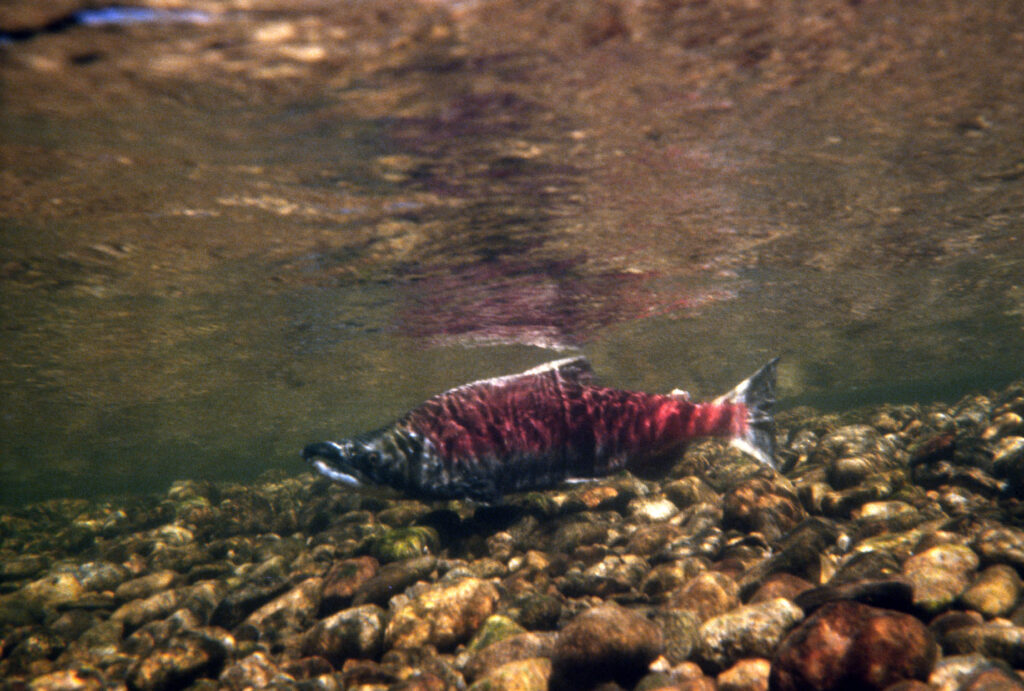
Throughout the 1950s and 60s, the downstream effects became apparent. The San Joaquin feeds into the Sacramento-San Joaquin Delta, a critical migration corridor. With the riverbed dry for long stretches and the loss of the marshy, nutrient-rich inlets that fish rely on for spawning, the spring-run Chinook salmon and steelhead populations saw a catastrophic decline. By the late 20th century, these species had largely vanished from the mainstem of the river.
The Era of Levees
While the Friant Dam is the most visible culprit, it is part of a systemic "pinning" of the valley’s rivers. Across the Central Valley, engineers utilized levees and straightened, armored channels to "tame" the water. By pinning rivers into fixed tracks, humans successfully prevented flooding in agricultural fields, but in doing so, they destroyed the seasonal pulse of the river. The floodplains—the nurseries of the river—were effectively walled off, cutting the fish off from the productive food webs they required to survive.
The Science of Survival: Why Floodplains Matter
To understand why the San Joaquin is "starving," one must look at the biology of a juvenile salmon.
The "Cafeteria" of the Valley Floor
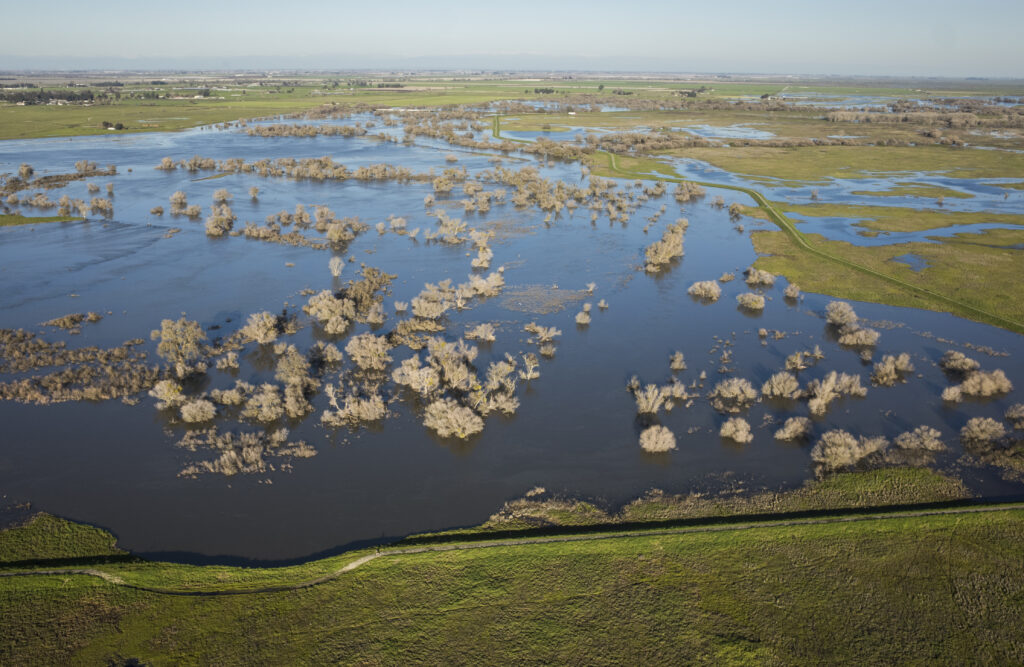
In a natural, unconstrained river system, spring snowmelt triggers high water, which spills over the banks and onto the valley floor. These shallow, sun-drenched waters warm up significantly faster than the deep, shaded main channel. This warmth acts as a biological catalyst, triggering a "bloom" of life: aquatic bugs, microbes, zooplankton, and algae.
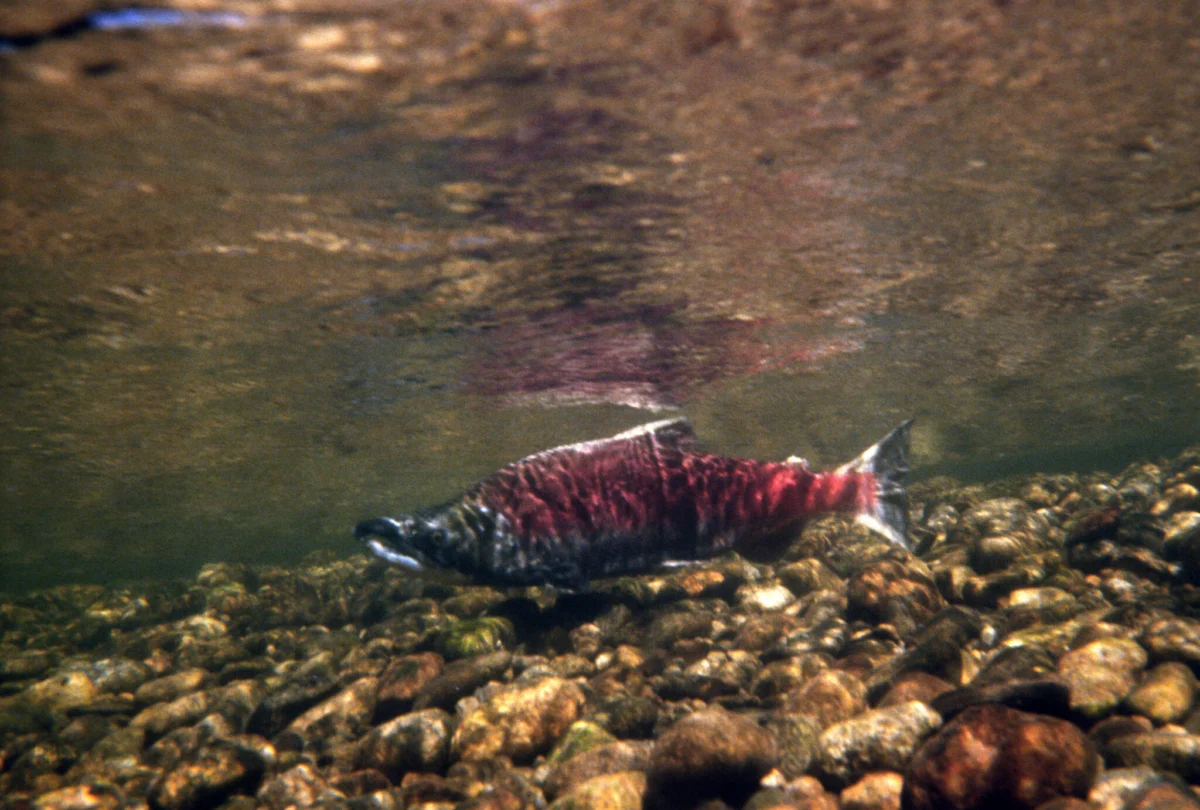
For a juvenile Chinook salmon, a floodplain is more than just a place to swim; it is a high-calorie cafeteria. Research consistently shows that juvenile salmon who gain access to these floodplains grow significantly faster than those forced to remain in the main river channel. In the hyper-competitive world of salmon development, size is the primary determinant of survival. A larger, healthier juvenile is exponentially more likely to survive the perilous journey to the Pacific Ocean and eventually return to spawn.
Data-Driven Restoration
Recent studies conducted on managed floodplains—including agricultural fields that are intentionally flooded during the spring—have yielded staggering results. These managed areas have produced some of the highest juvenile growth rates ever recorded in the Central Valley. Scientists are now moving beyond the hypothesis stage; they are actively measuring how floodplain productivity directly predicts the biomass of juvenile Chinook. By quantifying these metrics, researchers are developing "adaptive management" strategies that allow water managers to mimic natural flooding patterns, even within the confines of a heavily modified river.
Official Perspectives and the Path to Recovery
The recognition that the San Joaquin must be reconnected to its landscape has moved from academic theory to the forefront of state and federal policy.
A Multidisciplinary Approach
Government agencies, including the Department of Water Resources and the National Marine Fisheries Service, are increasingly framing "floodplain reconnection" as a core pillar of salmon recovery. This shift represents a transition from viewing the river as a simple conduit for water delivery to viewing it as a living, breathing ecosystem.
At the San Joaquin River National Wildlife Refuge, pilot programs are currently testing the mechanics of this philosophy. By managing the timing and duration of water releases onto restored floodplains, managers are creating "pulse" events that simulate natural seasonal inundation. These projects are not only helping salmon; they are providing critical habitat for other floodplain-dependent species, such as the Sacramento splittail, a native feeder fish that has also suffered from the loss of seasonal marshes.
The Role of Non-Profit Advocacy
Organizations like American Rivers are acting as the bridge between scientific research and tangible action. By partnering with local farmers, community stakeholders, and water districts, these groups are advancing projects that prove "working rivers" can satisfy multiple masters.
"The goal is not to turn the clock back to 1850," notes one project coordinator. "The goal is to integrate functional ecology into our modern water infrastructure." This means designing flood-bypass systems that lower flood risks for downstream communities while simultaneously creating the shallow-water habitat necessary for fish.
Implications: A Future for the San Joaquin
The restoration of the San Joaquin is not merely an environmental crusade; it is a test of California’s ability to manage its most precious resource in an era of scarcity.
1. Water Quality and Flood Safety
Reconnecting floodplains does more than help fish. When rivers are allowed to spread out, they lose velocity, reducing the force of floodwaters that threaten infrastructure. Furthermore, as water moves through wetlands and floodplains, the natural vegetation acts as a biological filter, improving overall water quality by trapping sediment and processing agricultural runoff.
2. The Angler’s Interest
For the recreational and commercial fishing industries, the stakes are existential. The decline of the salmon has led to the closure of fishing seasons and a loss of cultural heritage. If restoration efforts can bring back the populations of Chinook and steelhead, the economic and social benefits for the communities surrounding the San Joaquin will be substantial.
3. Long-Term Climate Resilience
As the Sierra Nevada snowpack becomes less reliable, the ability to manage water in the valley becomes more complex. By restoring the floodplain’s natural ability to store and filter water, the region gains a level of resilience against both drought and extreme flooding. It is a strategy of "working with the river" rather than fighting against it.
Conclusion: The Path Forward
The San Joaquin River stands at a critical juncture. The decisions made in the coming years will determine whether this waterway continues to be a ghost of its former self, or if it can be restored to a functioning, vibrant ecosystem.
The science is clear: the floodplain is the secret to salmon survival. The challenge remains one of logistics, policy, and public will. By moving away from the rigid, concrete-bound philosophy of the early 20th century and toward a model of reconnection and restoration, California has the opportunity to bring the San Joaquin back to life. It is a long-term investment, but for the salmon, the people, and the future of the valley, it is an essential one. The river is waiting to be reconnected; the land is waiting to be flooded; and the fish are waiting for a chance to grow.