In the heart of Munich, the historic epicenter of the European automotive establishment, Chinese electric vehicle manufacturer XPeng made a bold, arguably provocative, statement. Upon entering the brand’s recent showcase event, visitors were greeted by a massive, life-sized wooden Trojan horse. It was an unmistakable nod to the narrative currently sweeping the industry: a challenger from the East has arrived, and it is intent on infiltrating the stronghold of German engineering.
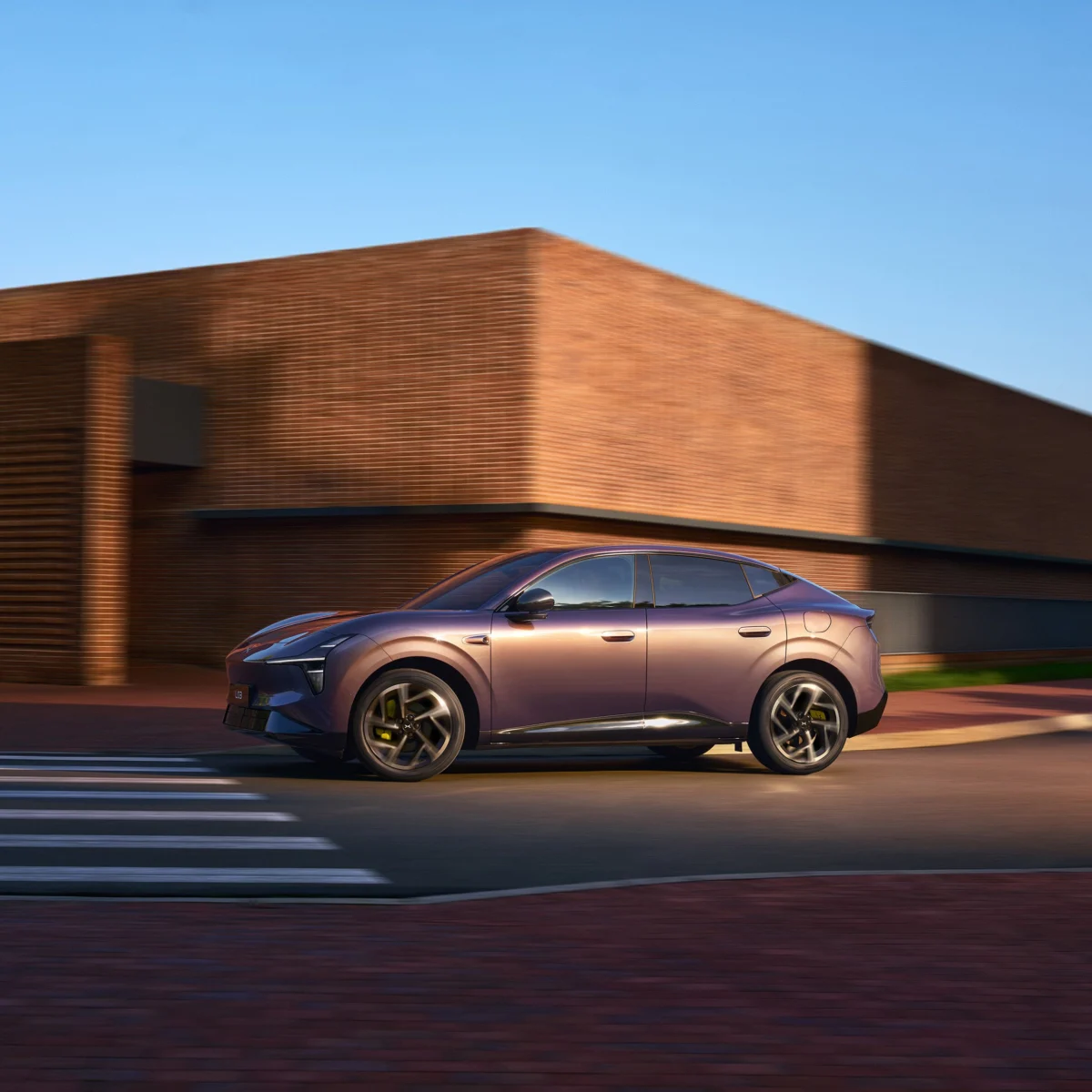
With the unveiling of the L03—a vehicle positioned as a "budget" offering with a premium soul—XPeng is signaling its intention to move beyond its domestic roots. Launching simultaneously in 60 countries across Europe, Latin America, the Middle East, and the Asia-Pacific, the L03 is not just another EV; it is a strategic maneuver designed to disrupt the mass market.
A Brief Chronology: From Startup to Global Contender
It is difficult to reconcile the scale of XPeng’s current global ambitions with the company’s relative youth. Founded just shy of 12 years ago, the company has experienced a trajectory of hyper-growth that would make even the most established legacy automakers blush.
- 2014: XPeng is founded in Guangzhou, China, with a focus on AI-integrated electric mobility.
- 2020: The company hits its first major milestone in international expansion, shipping its first batch of EVs to Norway. This served as the testing ground for the brand’s European viability.
- 2024–2025: XPeng refines its production cycles and software architecture, focusing on AI-driven driving assistants and the "Mona" project—a sub-brand designed to capture the high-volume, cost-conscious segment.
- 2026: The official unveiling of the L03. While marketed as the "Mona L03" in China, the global iteration drops the sub-brand moniker, signaling a push for a unified, upscale identity.
While XPeng does not currently sit in the top 10 list of EV manufacturers in China by pure volume, its brand equity and technical reputation have grown significantly faster than its sales charts might suggest. The L03 is the vehicle intended to bridge that gap.

The L03: "Beyond Class" Specs and Market Positioning
The L03 is priced at a competitive €35,600 (approximately $40,000). By positioning it below its existing G6 model—which serves as a direct rival to the Tesla Model Y—XPeng is clearly aiming for the volume segment, challenging the likes of the Volkswagen ID.4.
Despite the "budget" tag, the specification sheet reads like a luxury vehicle manifesto. XPeng is marketing the car with the phrase "beyond class," an attempt to redefine what consumers should expect at this price point:
- Performance: The L03 is a five-seat vehicle with a length of 4,650 mm. The top-tier AWD model hits 0 to 60 mph in a blistering 4.5 seconds, while the standard range model offers a respectable 7.5 seconds.
- Efficiency: Featuring a class-leading 0.228 drag coefficient, the vehicle is optimized for range, boasting a claimed WLTP range of 320 miles.
- Charging: The L03 supports rapid charging, moving from 10 to 80 percent in just 20 minutes.
- Interior & Tech: The cabin features a 15.6-inch 2.5K central screen, a 27-inch Head-Up Display (HUD), 256-color ambient lighting, and heated/cooled massage seats. It also includes AI-powered voice control and Google Maps integration as standard equipment.
The Autonomy Debate: To Lidar or Not to Lidar?
One of the most contentious aspects of the L03’s development is the decision to eschew lidar technology in favor of a camera-centric system, echoing the controversial strategy adopted by Tesla.
Xianming Liu, XPeng’s senior director of engineering, defends the choice with vigor. He argues that the company’s proprietary Turing 7-nanometer AI chips, combined with increasingly refined software models, offer a superior pathway to autonomy than reliance on lidar. The L03 Ultra, the range-topping trim, will feature L2++ autonomous capabilities, promising hands-off, point-to-point navigation via future over-the-air (OTA) updates.

However, there are technical ceilings to this approach. Liu admitted that while the L03 Ultra possesses the "brains" for higher-level autonomy, it lacks the specific hardware redundancies required for Level 4 operations. Consequently, the L03 will effectively hit a "glass ceiling" at L2++ capabilities. Whether this decision will be viewed as a visionary move or a costly gamble depends on whether the industry’s consensus on sensor fusion shifts in the coming years.
Design Convergence and the "Ferrari Effect"
Perhaps the most striking feature of the L03 is its aesthetic. Observers have noted a distinct similarity to the Ferrari Luce, as well as the Denza Z9 GT. This is not entirely coincidental.
XPeng’s head of design is JuanMa López, the former Ferrari exterior design lead (2010–2018), who was instrumental in the design of the LaFerrari and the SF90 Stradale. While López did not work on the Luce—which was designed by Jony Ive’s agency, LoveFrom—his influence on the L03 is clear.
When asked about the convergence of luxury aesthetics with budget pricing, Rafik Ferrag, head of creative design at XPeng, offered a philosophical perspective on the state of the industry:

"In the past, it was impossible for an entry-level car to afford the technology or even the decorative elements that a luxury car has. Today, that’s no longer true. Our goal as designers is to reach the top level. If we can look as good as a Ferrari or a Bentley in an entry-level car, we’ll do it. And that’s what we are trying to do here: to reach this preciseness, this material fit and finish, color precision, and technology."
Implications: A Shifting Automotive Landscape
The implications of the L03’s launch are significant for both Western legacy automakers and the broader EV market.
- The Erosion of Segment Distinctions: Ferrag’s observation holds a mirror to the industry: the traditional hierarchy of design and luxury is collapsing. When an entry-level EV can offer 2.5K screens, massage seats, and the silhouette of a high-end sports car, the value proposition of established premium marques is severely challenged.
- The Luxury Sales Crisis: With luxury EVs currently struggling to find buyers, the "trickle-down" effect of high-end features into budget cars may exacerbate the difficulties for legacy brands. If consumers can get a "beyond class" experience for half the price of a traditional luxury vehicle, the barrier to entry for Chinese brands becomes a bridge to total market dominance.
- The AI-First Model: XPeng is treating the car as a hardware platform for software services. By focusing on AI chips and OTA updates, they are shifting the competition from mechanical longevity to software agility.
Conclusion: A Sign of Things to Come
The Trojan horse in Munich was more than a PR stunt; it was a manifestation of a new reality. XPeng is not simply attempting to sell cars; it is attempting to export a new standard of value.
The L03 represents a turning point where the "budget" label no longer implies a compromise in design or technology. As the company prepares to roll out this vehicle to 60 nations, the global auto industry must contend with a competitor that is not only catching up but is actively rewriting the rules of the game. Whether the L03 will succeed in winning over the skeptical European driver remains to be seen, but one thing is certain: the era of the "affordable" car being "cheap" is effectively over.