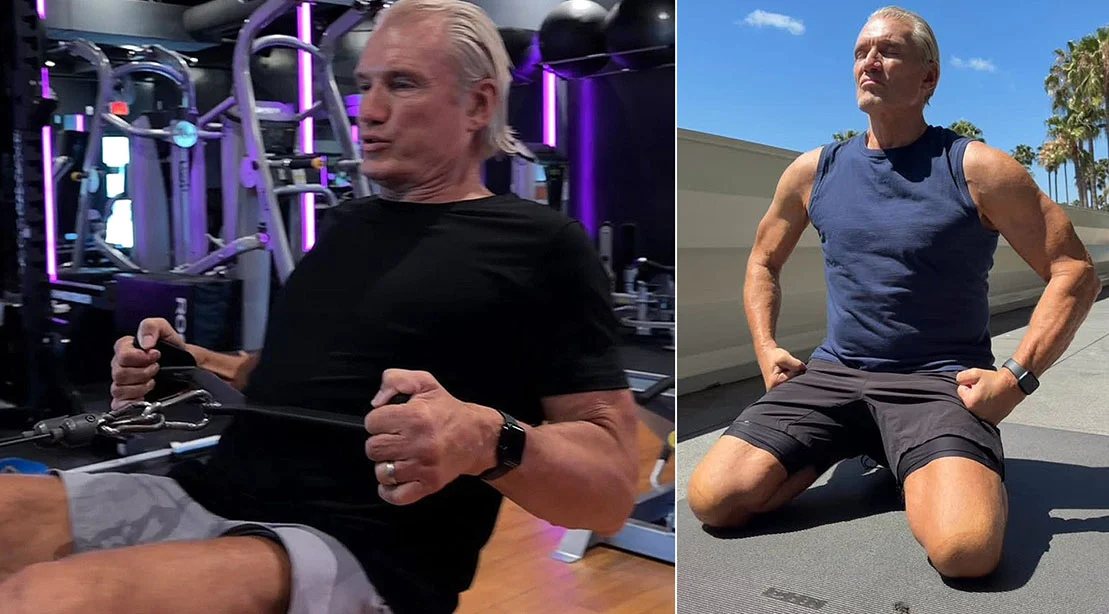
For decades, the name Dolph Lundgren has been synonymous with cinematic invincibility. From his chilling, monolithic performance as Ivan Drago in 1985’s Rocky IV to his roles as the lethal Gunner Jensen in The Expendables and the titular hero in He-Man, Lundgren has long embodied the pinnacle of physical prowess. Yet, the most profound fight of his life did not take place on a film set or in a boxing ring. It was a decade-long, grueling battle against cancer—a struggle he has emerged from with a renewed commitment to health, longevity, and the iron-clad discipline of the weight room.
At 68, Lundgren is not merely surviving; he is thriving. As he pivots toward a new chapter of his career, marked by his memoir Fights Worth Fighting: Finding Strength in Struggle and an upcoming documentary titled Dolph: Unbreakable, the star is sharing the blueprint that keeps him "fighting fit."
The Chronology of a Fighter: From Karate Champion to Cancer Survivor
Dolph Lundgren’s journey is defined by a relentless pursuit of excellence. Born Hans Lundgren in Stockholm, Sweden, he was never just a bodybuilder or an actor. Before Hollywood beckoned, he was a formidable athlete, earning his status as a two-time European Karate champion. This background in high-intensity martial arts provided the bedrock for his disciplined approach to fitness—a philosophy that would later become his lifeline.
A Decade of Silence and Struggle
For ten years, Lundgren navigated a private, harrowing battle with cancer. While the world saw an action star continuing to headline blockbusters, behind the scenes, Lundgren was undergoing invasive treatments, multiple surgeries, and the psychological toll of a terminal diagnosis.
The turning point came when Lundgren decided that the conventional medical trajectory he was being offered was insufficient. He sought a second opinion—a decision he credits with saving his life. That breakthrough led to a recalibration of his treatment, allowing him to finally beat the disease.
The Path to Advocacy
Since his recovery, Lundgren has transitioned from a private warrior to a public advocate for resilience. His memoir, Fights Worth Fighting, serves as a roadmap for anyone facing insurmountable odds. It is not merely a celebrity autobiography; it is a meditation on how to navigate the "struggle" that life inevitably presents. This theme of endurance is further explored in his upcoming documentary, Dolph: Unbreakable, set to stream on October 6, 2026, which promises an intimate look at the man behind the muscles.
The Science of Longevity: Why Muscle Mass Matters
In recent interviews, including a detailed feature in M&F, Lundgren has been vocal about the necessity of resistance training, particularly as one enters their late sixties. For Lundgren, the gym is no longer about vanity; it is about biological maintenance.
Maintaining the Metabolic Engine
"It’s very important, I think, as you get older, to keep your muscle mass and keep your testosterone levels up," Lundgren explains. As men age, sarcopenia—the age-related loss of muscle mass—becomes a significant threat to health, mobility, and metabolic function. By engaging in a consistent, three-day training split, Lundgren is actively counteracting the physiological degradation that typically accompanies the aging process.
The Cardio-Weight Hybrid
Lundgren’s routine is a hybrid model that reflects his martial arts roots. He rarely walks into the weight room cold. Instead, he begins his sessions with karate-based cardio. This serves a dual purpose: it acts as a dynamic warm-up that increases core body temperature and joint mobility, and it maintains the technical agility he honed as a younger athlete.
The "Unbreakable" Routine: A Breakdown of the Chest and Back Session
For his 4 million Instagram followers, Lundgren recently pulled back the curtain on his specific chest and back regimen. The session is characterized by a focus on "time under tension"—a technique where the eccentric (lowering) phase of a lift is slowed down to maximize muscle fiber recruitment.
1. Cable Seated Row (Target: Posterior Chain)
Lundgren emphasizes the wide grip on the cable seated row. By pulling the handle toward the torso with deliberate control, he engages the posterior deltoids, the trapezius muscles (middle and lower), and the latissimus dorsi. This is critical for postural health, as it counteracts the "slouch" that often develops with age.
2. Cable Seated Wide-Grip Pulldowns
Moving to vertical pulling, Lundgren utilizes the wide-grip pulldown. This exercise is a staple for building back width and back strength, ensuring that the spine remains supported by the surrounding musculature.
3. Inclined Dumbbell Rows
By using an incline bench to stabilize his chest, Lundgren isolates the upper and mid-back. Rowing the dumbbell upward and releasing it slowly forces the biceps and traps to handle the load, preventing the momentum-based "swinging" that often leads to injury in less experienced lifters.
4. Smith Machine Incline Bench Press
The inclusion of the Smith machine is a strategic choice for longevity. By fixing the bar path, the Smith machine reduces the requirement for stabilizing muscles that might be compromised by injury, allowing for high-intensity targeting of the upper pectorals and anterior deltoids without the risk of a heavy free-weight barbell dropping.
5. Machine Pec Fly
The session concludes with the pec fly, designed to target the entire chest wall and the serratus anterior—the "boxer’s muscle" located under the armpits.
Implications for the Aging Athlete: The 30-Minute Rule
One of the most important takeaways from Lundgren’s modern philosophy is his "30-minute rule."
"I realized, as you get older, it’s so much better if you know you’re only in it for 30 minutes," Lundgren notes. "It’s so much easier."
This insight is vital for the general population. Many people avoid the gym because they view exercise as a monumental, hour-long commitment. Lundgren argues that intensity and consistency are more important than duration. By keeping sessions short, he avoids the cortisol spikes associated with prolonged, grueling workouts, allowing for faster recovery—a crucial consideration for an aging body.
Official Perspective and Future Outlook
Lundgren’s message remains consistent: "Keep fighting and believe in yourself as much as you can." This mantra isn’t just for cancer patients; it’s for anyone who feels that their prime years have passed.
The medical community increasingly supports the idea that resistance training is a "fountain of youth." Studies suggest that maintaining muscle mass through late life correlates directly with better cognitive function, lower risks of cardiovascular disease, and improved insulin sensitivity. By aligning his personal habits with these scientific realities, Lundgren is positioning himself to remain a relevant and capable figure in film and life for many years to come.
As fans look forward to the release of Dolph: Unbreakable in 2026, the primary lesson is clear: The "Drago" persona was a performance, but the strength required to overcome cancer was entirely real. Whether you are lifting to build muscle or fighting a personal battle, the principles remain identical: slow down, control the tension, refuse to quit, and always seek a second opinion when the odds seem stacked against you.
Summary of Recommendations for Lifters:
- Sets/Reps: Aim for 2–3 sets per exercise with a range of 8–12 reps.
- Tempo: Prioritize slow, controlled movements over heavy, explosive reps.
- Consistency: Prioritize short, efficient 30-minute sessions over infrequent, long workouts.
- Mindset: View the workout as a long-term investment in biological health rather than a temporary aesthetic goal.
For those interested in exploring Lundgren’s journey further, his book Fights Worth Fighting is currently available, providing deeper insight into the mindset that allowed him to transition from a Hollywood villain to an inspiration for millions.