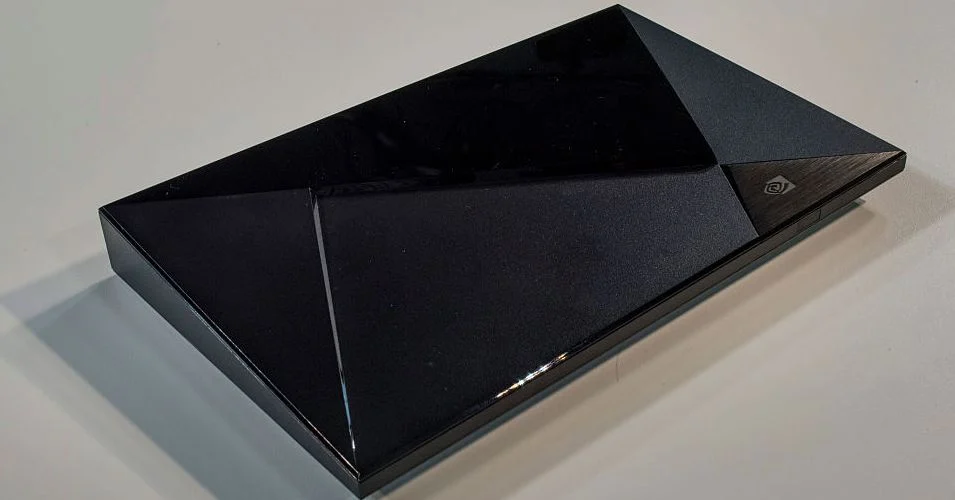
In the landscape of 2026 consumer electronics, a singular, ironclad rule has emerged: if a device requires memory or storage, its price is likely trending upward. This reality, driven by the insatiable demand for generative AI, has officially claimed one of the most beloved stalwarts of the home theater world. Nvidia has confirmed that its Shield TV Pro, a streaming device that first debuted in 2019, has seen its retail price jump by $100 effective immediately, bringing the cost to a staggering $299.99.
This increase is not merely a localized corporate decision; it is a symptom of a broader, systemic shift in the global technology supply chain. As Nvidia—the primary architect of the current AI boom—continues to dominate the silicon market, the downstream effects are rippling into consumer hardware, forcing even legacy "passion projects" to conform to the harsh economic realities of an AI-dominated semiconductor market.
The Anatomy of an Unexpected Price Hike
The Nvidia Shield TV Pro has long been considered the "gold standard" for Android-based streaming. When it launched in 2019, it was celebrated for its Tegra X1+ processor, hardware decoding capabilities, and its signature AI-powered upscaling. At a launch price of $199.99, it sat at the premium end of the market but provided enough value to justify the cost for enthusiasts and Plex media server users.
However, seven years later, the hardware remains largely unchanged. The decision to raise the price by 50%—a move almost unheard of for a product in the latter half of its life cycle—has sent shockwaves through the enthusiast community. Nvidia’s official justification is blunt: the industry-wide scarcity and surging costs of memory and storage components, largely driven by the massive allocation of resources toward AI data centers, have made the existing price point unsustainable.
"Starting October 2, SHIELD Pro will be priced at $299," a spokesperson for Nvidia confirmed to Ars Technica. "The cost of components, including memory, has increased substantially across the industry."
A Chronology of the Shield’s Endurance
To understand the weight of this decision, one must look at the Shield TV’s unique position in the market.
- 2019: The Shield TV Pro and its non-Pro counterpart are released. The devices are immediately praised for their longevity and support.
- 2021–2023: As other streaming sticks and boxes become disposable commodities, the Shield TV Pro maintains its value. It becomes the preferred device for high-end home cinema enthusiasts who require support for complex codecs and local media playback.
- 2025: Nvidia continues to manufacture the device, treating it as a "passion project." Andrew Bell, a lead at Nvidia, emphasizes that the company sells every unit it produces, avoiding the "stockpile" issues that plague other manufacturers.
- Early 2026: Supply chain constraints begin to tighten. Reports emerge that the Shield TV Pro is frequently out of stock at major retailers.
- October 2026: The price hike is officially implemented, signaling that the "passion project" must now survive under the same brutal supply chain conditions as Nvidia’s enterprise-grade AI accelerators.
The "AI Tax" and Global Semiconductor Economics
Nvidia sits in a paradoxical position. As the world’s most valuable firm and the primary supplier of the H100 and Blackwell-series GPUs that power the global AI revolution, Nvidia is both the architect of the supply chain crisis and its most prominent beneficiary. The company is, in effect, consuming the very components—High Bandwidth Memory (HBM) and advanced NAND flash—that other consumer electronics manufacturers rely on.
This phenomenon has created a "trickle-down" effect of inflation. When a company like Nvidia, or its competitors in the console space, needs to secure manufacturing capacity, they prioritize the high-margin, high-demand AI sector. For secondary products like the Shield TV, the cost of procurement for memory modules has risen to a level where the original $199.99 price tag likely resulted in a loss per unit.
The Console Industry Precedent
The Shield TV Pro is far from the only device suffering under this new economic paradigm. The gaming industry has seen a massive trend toward price recalibration:
- Microsoft: Raised Xbox console prices twice in 2025 to account for manufacturing overhead.
- Sony: The PlayStation 5 Pro, which launched in 2024 at $699.99, now sits at a retail price of $899.99 in many markets.
- Nintendo: The highly anticipated successor to the Switch has seen its projected retail price creep upward throughout the year, with analysts citing the rising cost of flash storage as a primary driver.
Implications for the Consumer
For the average consumer, the $299.99 price tag fundamentally changes the value proposition of the Shield TV Pro. When it was $199, it was a "buy-it-for-life" purchase for anyone serious about streaming. At $300, it enters a dangerous territory where it must compete with dedicated home theater PCs, high-end dedicated media players, and even entry-level consoles.
Who is this for?
Nvidia’s pricing strategy suggests they are no longer targeting the casual Netflix viewer. The market for the Shield TV has shifted toward a professional-sumer niche:
- Plex Server Users: Those who rely on the Shield’s unique ability to act as a local media server for high-bitrate 4K content.
- Codec Enthusiasts: Users who require support for niche formats and advanced audio passthrough that cheaper streamers simply do not offer.
- Gamers: Those who utilize the device as a conduit for cloud gaming or local streaming from a high-end PC.
For everyone else, the market has moved on. Competitors like Amazon, Roku, and even Google have optimized their hardware to be "disposable" enough that they are less sensitive to the fluctuations in high-end memory pricing. By keeping the Shield TV Pro in production, Nvidia has essentially opted to keep a premium, low-volume product alive, but they are passing the full cost of that longevity onto the consumer.
The Future of "Legacy" Hardware
The most unsettling takeaway from the Shield’s price increase is the suggestion that we have reached the end of the "deflationary era" for consumer electronics. For two decades, Moore’s Law and global manufacturing efficiencies ensured that electronics became better and cheaper over time. Today, that cycle is broken.
When hardware is required to perform complex, AI-adjacent tasks, or even when it simply relies on the same supply chains as AI hardware, it is subject to a new, higher baseline of cost. The Nvidia Shield TV Pro serves as a canary in the coal mine. It is a reminder that in an economy increasingly defined by the scarcity of silicon and the soaring demand for computational power, the "passion projects" of the past will either be discontinued or priced out of reach.
As for the Shield itself, it remains out of stock on Nvidia’s primary store, suggesting that even at the new, higher price, demand continues to outpace the company’s ability to secure the necessary components. For those who still need the device, it is currently available through third-party retailers like Best Buy—though one has to wonder if this is the final chapter for one of the most resilient devices in modern tech history.
The Shield was designed to be the "most updated Android device ever," a promise Nvidia has largely kept through years of firmware support. Yet, it seems that even the best-supported device in the world cannot escape the gravity of the AI industry. As we look toward the remainder of 2026 and into 2027, the question is not just whether we can afford our electronics, but whether the industry will continue to produce niche, high-quality hardware at all in a world where every chip is destined for an AI data center.