By Emily Payne | Inside Climate News
In the high-altitude desert of Colorado’s San Luis Valley, a quiet, invisible crisis is unfolding at the kitchen taps of thousands of rural residents. For decades, families have relied on private wells drawing from one of North America’s most expansive aquifer systems. But today, that water—the lifeblood of a community deeply rooted in agriculture and history—is changing. Residents report water that smells strange, tastes metallic, and displays uncharacteristic colors.
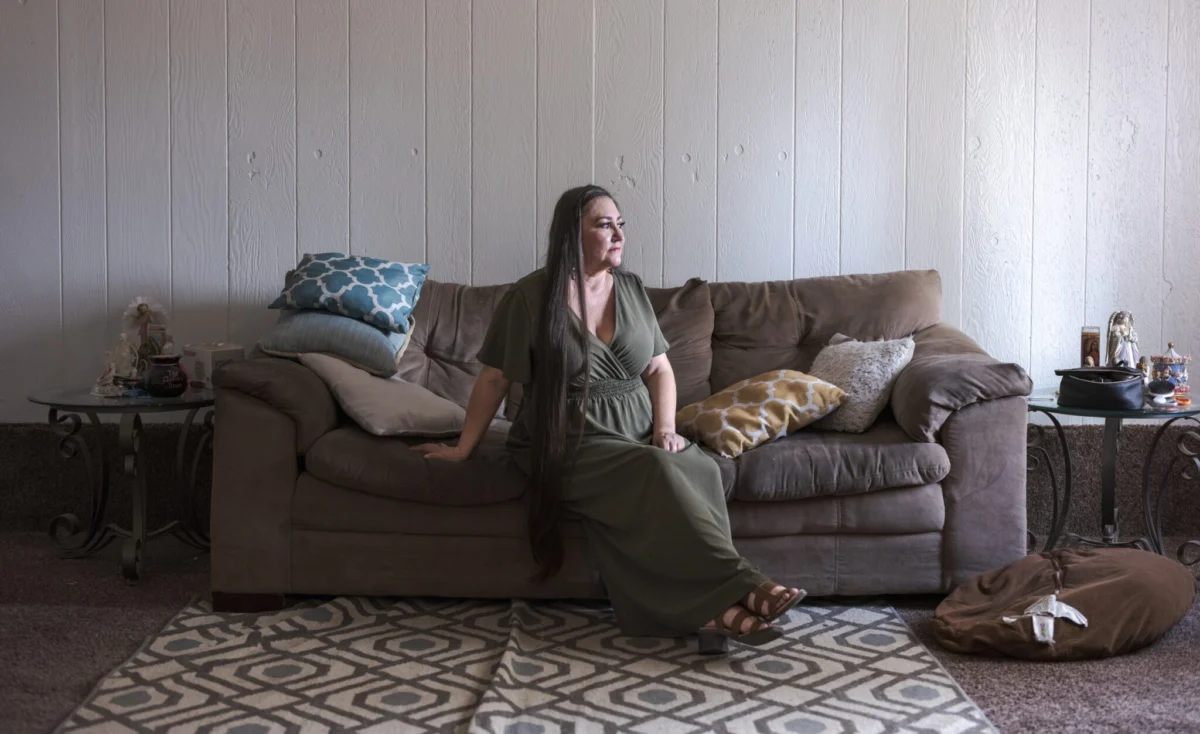
Julie Zahringer, the director of the Sangre de Cristo (SDC) Laboratory in Alamosa, has spent over 30 years testing water in the region. She describes a recurring scene: a customer walks in with a sample from a well their family has used for generations, only to be met with the news that the chemistry of their water has shifted.

"All of a sudden it looks different, tastes different, there’s odor, there’s color," Zahringer said. "Every year it just seems like this is the climax of it, and the next year, it gets worse. This year, we’re looking at probably the worst as far as water quality."
This phenomenon is not merely a nuisance; it is a profound public health threat. As the San Luis Valley’s massive aquifer reaches record-low levels due to decades of over-allocation and the compounding pressure of a relentless, years-long megadrought, the remaining water is becoming increasingly contaminated with naturally occurring, carcinogenic heavy metals.
The Anatomy of an Overdrawn Aquifer
The San Luis Valley, an 8,000-square-mile basin, is a critical agricultural hub, famous for its potato crops and livestock. Its economy is entirely dependent on the Rio Grande and a vast, underlying aquifer system. However, the math of the valley’s water usage has been broken for nearly half a century.

Between 1976—when systematic tracking began—and 2013, the aquifer lost an estimated 1.2 million acre-feet of water. To put that figure in perspective, it is equivalent to more than five times the annual water consumption of the entire city of Denver. This depletion is driven by the intensive demands of large-scale industrial agriculture, which requires vast amounts of groundwater for irrigation.
The situation has reached a breaking point in 2026. Colorado’s snowpack, which serves as the natural reservoir and primary recharge mechanism for the state’s aquifers, is currently at the lowest level recorded since data collection began in 1941. Without that winter replenishment, the water table continues to drop, triggering a chemical reaction beneath the surface.
Chronology of a Slow-Motion Disaster
- 1976: Official monitoring of the San Luis Valley aquifer begins, revealing early signs of depletion.
- 1976–2013: The aquifer loses 1.2 million acre-feet of water—a volume that sets the stage for future water quality degradation.
- 2021–2025: Anecdotal reports of discolored and foul-smelling well water begin to increase in frequency, prompting local concern.
- 2026 (Early): Colorado records the lowest snowpack in history, exacerbating the "megadrought" and causing water tables to plummet to historic lows.
- 2026 (May): New studies reveal that up to 25% of private wells in the valley now contain levels of arsenic and uranium exceeding EPA standards.
- 2026 (Present): Community activists and researchers increase pressure on state lawmakers to provide funding for water testing and filtration, though concrete legislative relief remains elusive.
The Chemistry of Concentration: Why the Water is Turning Toxic
The contamination in the San Luis Valley is not the result of a single industrial spill, but rather a geochemical shift caused by the physical disappearance of water. Naturally occurring heavy metals—including arsenic, tungsten, uranium, manganese, and selenium—are embedded within the valley’s geologic makeup.

"We’re not seeing a dilution of any of the contaminants, so anything that’s in the geologic makeup is just really concentrating," explains Zahringer.
Beyond the simple lack of dilution, the changing physical state of the aquifer is actively releasing these toxins. Kathy James, Ph.D., an associate professor at the Colorado School of Public Health, explains that as the water level drops, the aquifer enters more anaerobic (oxygen-deprived) conditions. This geochemical shift causes metals that were once safely bound in the soil or rock to dissolve into the shrinking supply of groundwater.
Recent data is sobering. A study led by Dr. James found that up to one in four private wells in the region contains elevated levels of heavy metals. Zahringer’s lab results mirror these findings, noting that roughly 25% of the samples she tests now exceed the EPA’s maximum contaminant level for arsenic.

Public Health Implications
The health risks associated with chronic exposure to these contaminants are severe. Arsenic, a known carcinogen, is linked to cardiovascular disease, diabetes, and impaired cognitive development in children. Long-term exposure to even low levels has been associated with an increased risk of coronary heart disease.
Furthermore, the problem extends beyond the tap. Uranium and arsenic, when used in irrigation, can accumulate in crops, creating a secondary pathway for human exposure through the food supply.
For many in the valley, these risks are not abstract. Residents have begun consulting physicians to identify the causes of unexplained health issues. Those who have the financial means have installed high-end filtration systems, but for many others, the risk is a daily reality.

"I’m in a unique situation where I’m educated and vigilant, and I have the resources to test and make sure it’s OK," Zahringer says. "A lot of my neighbors, I know they’re just drinking it right out of the ground."
The Regulatory Gap: The "Private Well" Problem
In the United States, roughly 50% of the population relies on groundwater for drinking, but there is a stark divide in how that water is managed. Public water systems are strictly regulated under the federal Safe Drinking Water Act. Conversely, private wells—which serve about 15% of all Americans and nearly one-third of the residents of the San Luis Valley—are entirely unregulated.
This leaves an estimated 51 million Americans responsible for monitoring the safety of their own drinking water. In the San Luis Valley, where poverty rates hover around 21.4%, the cost of testing is a significant barrier. A single comprehensive test can be expensive, and the price of reliable filtration—such as reverse osmosis systems—is prohibitive.

Even when families can afford to install a system, the maintenance costs are punishing. Because the valley’s water is exceptionally "hard," filters clog and fail twice as fast as they would in other parts of the country.
"I come from a rural and impoverished community, and my community members can’t always be changing out these filters for this reverse osmosis filtration system," says Anna Vargas, a sixth-generation resident and project manager with the SLV Ecosystem Council.
A Question of Environmental Justice
For activists like Shirley Romero Otero, the water crisis is a clear-cut issue of environmental justice. The San Luis Valley is home to one of Colorado’s largest Hispanic populations, a demographic that has historically been marginalized in state-level water policy discussions.

"Those folks in Denver that make those decisions for testing and resources need to pay attention," Otero says. "We are part of Colorado. We should have equality when it comes to testing and finding out what the hell is really going on."
Otero emphasizes that this is not a partisan issue; it is a fundamental human right. "Regardless of socioeconomic status, political affiliation or racial geographic areas, water is the most precious resource that we have. It is the lifeblood of every community. You don’t have water, you die. It’s that simple."
Future Outlook and Potential Solutions
While the situation is grim, there are glimmers of hope. Researchers at Arizona State University are currently developing a new, more efficient filtration technology designed to remove heavy metals from hard water without the high water-waste ratios typical of reverse osmosis. The project, led by Alireza Farsad, aims to bring a more accessible, durable solution to market by next year.

However, technology alone cannot solve a systemic resource management crisis. Unless the state of Colorado addresses the fundamental issue of aquifer over-allocation, the contamination will likely continue to spread as water tables decline further.
For now, the people of the San Luis Valley are left in a state of uncertainty. Many have stopped drinking their tap water entirely, turning to store-bought bottled water—a costly and unsustainable stopgap. As the climate continues to shift and the "megadrought" persists, the residents of the valley remain trapped between a dying agricultural legacy and the need for basic, clean drinking water.
The question remains whether the state will step in to provide the necessary resources to protect these communities, or if the residents will be forced to continue navigating a dangerous, invisible, and increasingly toxic reality on their own.