For the professional photographer, the tethered studio environment is the backbone of efficiency. Whether you are a fashion photographer shooting a high-end editorial, a commercial product photographer managing complex lighting setups, or a digital technician tasked with maintaining a seamless flow of data to a creative director’s monitor, the connection between camera and computer is the lifeline of the shoot. Yet, for years, this connection has been the "Achilles’ heel" of the industry.
When a tethering session drops, the momentum stops. The model loses focus, the creative vision is interrupted, and the professional reputation of the photographer is tested. Today, that technical fragility is being addressed by a specialized solution: the TetherPro Optima 10G series from Tether Tools. Recently recognized as a "2025 Hot One" by the Professional Photographers of America (PPA), this cable series represents a fundamental shift in how we approach hardware reliability.
Main Facts: Engineering Reliability in an Unstable World
The core philosophy behind the TetherPro Optima 10G is simple: specialization over generalization. Modern USB-C cables, while ubiquitous, were designed for the mass market—a "jack of all trades" intended to charge laptops, sync phones, and transfer occasional data.
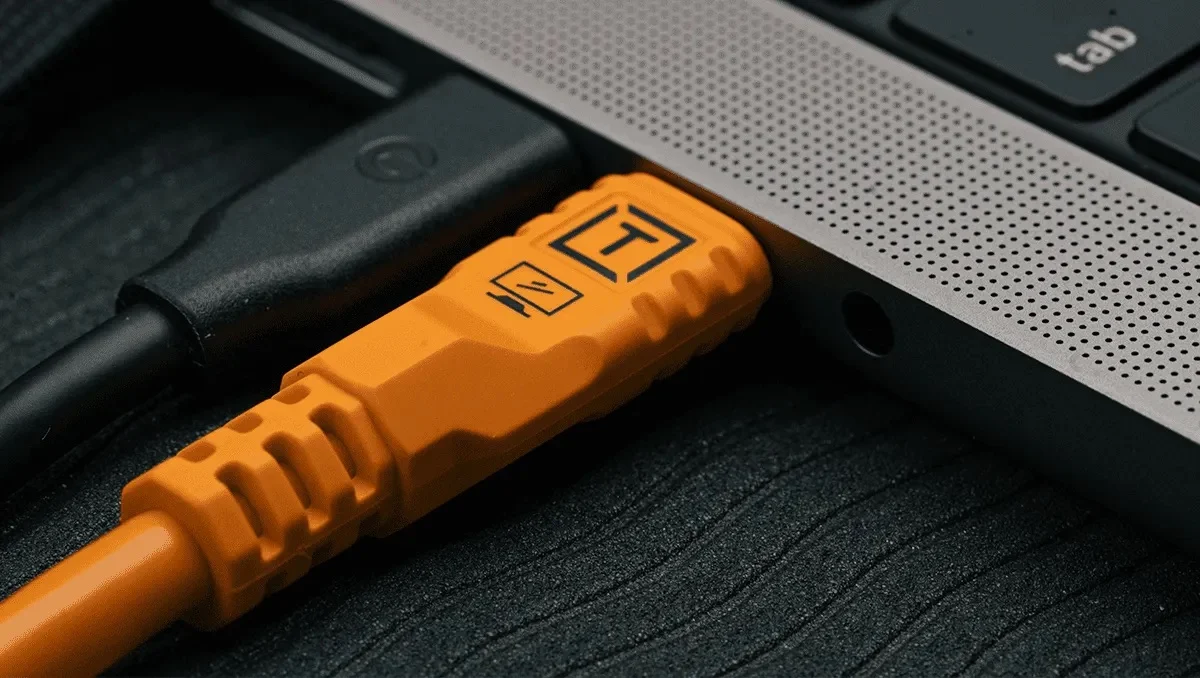
The Optima 10G, by contrast, is a surgical tool. It is engineered to perform one task perfectly: high-speed data transmission between a camera and a workstation. By stripping away the complexities of modern Power Delivery (PD) protocols, Tether Tools has created a cable that eliminates the most common point of failure in a studio: the negotiation of power and data that leads to "dropped" connections.
Key technical specifications include:
- 10Gbps Bandwidth: Fully compliant with USB 3.2 Gen 2 standards.
- Power Delivery Exclusion: Specifically designed to ignore the high-wattage PD protocols that cause handshake errors in imaging software.
- Integrated Signal Conditioning: Dual reinforced TetherBoost Pro IC chipsets that actively regenerate the signal.
- Extensive Reach: Scalable architecture allowing for tethering distances of up to 63 feet without latency.
Chronology: The Evolution of Tethering Pain Points
The history of tethered photography has been defined by the struggle to balance speed with distance. In the early days of FireWire, we were limited by short cable runs and specialized ports. When the industry transitioned to USB 3.0 and eventually USB-C, the promise was universal compatibility and blazing speed.

The Early Era (Pre-2015): Tethering was a specialized niche. Cables were often bulky, expensive, and fragile. Signal loss beyond 15 feet was a common concern, often requiring passive hubs that frequently failed.
The USB-C Transition (2016–2022): USB-C arrived with the promise of "one cable for everything." However, as cameras began to utilize the higher power output of USB-C (Power Delivery), the data stream became prone to interruption. Computers would attempt to charge the camera, causing the camera’s internal controller to reset the connection, which resulted in the dreaded "Camera Disconnected" error in Capture One or Lightroom.
The Modern Era (2025 and Beyond): With the introduction of the TetherPro Optima 10G, the industry has reached a maturity point. Rather than fighting the limitations of generic USB-C cables, manufacturers have moved toward "tether-specific" hardware that acknowledges the unique power-management needs of high-resolution digital cameras. The PPA’s inclusion of the Optima 10G in its 2025 "Hot Ones" list confirms that the industry is prioritizing hardware stability over mere convenience.
Supporting Data: Why "Power Delivery" is the Enemy
To understand why the Optima 10G is a game-changer, one must look at the physics of Power Delivery (PD). PD is a protocol that allows a device (like a laptop) to determine how much power a connected peripheral (like a camera) needs.
The problem is that the camera’s USB-C port is not a laptop port. When a camera is plugged into a high-powered USB-C cable, the two devices engage in a "handshake" to negotiate power. If the camera detects a power surge or an incorrect voltage, it may temporarily drop the data connection to protect its internal circuitry.
In a high-pressure studio environment, this "handshake" can occur mid-shoot. The Optima 10G eliminates this by design. It delivers only the low-level power required for camera operation (1.5A), effectively "silencing" the power negotiation and ensuring the data lanes remain wide open. The resulting connection is not just faster; it is functionally invisible to the software, which means no more mid-shoot reboots.

Furthermore, the data transfer speed of 10Gbps ensures that massive RAW files—such as those from 100MP medium-format sensors—reach the computer in a fraction of a second. This allows for near-instantaneous client feedback, which is essential for collaborative creative workflows.
Official Responses and Industry Reception
The reception from the professional community has been one of relief. Digital techs, who are arguably the most sensitive to tethering issues, have noted that the Optima 10G behaves with the predictability of older, dedicated proprietary cables.
In a statement regarding the product’s design, engineers at Tether Tools highlighted that the "plug-and-play" nature of the cable was the most requested feature from the community. "Photographers don’t want to be IT specialists," one representative noted. "They want to plug a cable in and know that when they press the shutter, the image will appear on the monitor. The Optima 10G is about removing the technical barrier so the photographer can focus on the art."
The PPA’s endorsement further solidifies this product as a standard-setter. By naming it a "Hot One," the association is effectively signaling to its members that this is no longer a luxury, but a core component of a professional’s toolkit.
Implications: The Future of the Studio Workflow
The shift toward specialized tethering hardware has broader implications for the future of commercial photography.
1. The Death of the "Workaround"
For years, photographers have used complex chains of hubs, repeaters, and power-managed ports to keep their cameras connected. The Optima 10G simplifies this ecosystem. By reducing the number of failure points, the photographer reduces the risk of equipment malfunction.

2. Scalability for Large Sets
With the ability to reach up to 63 feet using the TetherBoost Pro Core Controller, the Optima 10G allows for massive studio configurations. This is critical for automotive photography, large-scale fashion sets, or production environments where the photographer must move freely away from the digital workstation.
3. Increased Creative Velocity
Speed is a creative asset. When a creative director can see the image on a large 4K monitor milliseconds after the shutter fires, the dialogue between the photographer and the team changes. Adjustments to lighting, posing, and styling can be made in real-time. This increases the quality of the final output and reduces the time spent in post-production.
4. Professional Reliability as a Service
When a photographer can guarantee a stable tethered workflow, they are offering a service level that amateur or semi-professional setups cannot match. It establishes a sense of professionalism that clients notice. A failed tethering session is an inconvenience; a reliable one is a cornerstone of a high-end production experience.
Conclusion
The TetherPro Optima 10G is more than just a cable; it is a manifestation of the evolution of professional photography. It acknowledges the challenges of modern USB-C architecture and provides a robust, engineered solution that prioritizes the needs of the photographer over the convenience of a general-purpose standard.
For any professional looking to streamline their workflow, reduce technical downtime, and ensure that their high-resolution data reaches its destination with perfect integrity, the Optima 10G represents the current gold standard. In the digital age, your images are your product—and in a high-stakes studio environment, that product is only as reliable as the path it takes from the camera to the screen. By upgrading to the Optima 10G, you aren’t just buying a cable; you are investing in the stability of your entire creative process.