You have likely seen the images: the geysers of Yellowstone, the jagged peaks of the Grand Tetons, and the bustling boardwalks of Jackson Hole. These icons have solidified Wyoming’s reputation as a premier destination for outdoor enthusiasts. However, for those willing to venture beyond the well-trodden paths of the state’s northwestern corner, there lies a vast, silent, and breathtaking landscape that remains one of the United States’ best-kept secrets.
Wyoming is the least-visited state in the contiguous U.S., a statistic that belies the sheer scale of its natural splendor. While the masses congregate in the national parks, the rest of the state remains a wide-open sanctuary of glacial cirques, Caribbean-blue alpine lakes, thunderous waterfalls, and wind-twisted ancient forests. For the traveler seeking true solitude, the following ten trails across the Wind River Range, the Bighorn Mountains, and the Snowy Range offer a masterclass in American wilderness.
Main Facts: The Architecture of Wyoming’s Backcountry
The appeal of Wyoming’s "hidden" trails lies in their accessibility coupled with their isolation. Unlike the heavily managed infrastructure of major national parks, these regions offer a raw, unfiltered connection to the high-alpine environment.
The Wind River Range: Granite Cathedrals
The "Winds" are defined by massive granite formations and a high concentration of glaciers. It is a range of extremes, where the elevation gain is rewarded by vistas that feel untouched by the modern era.

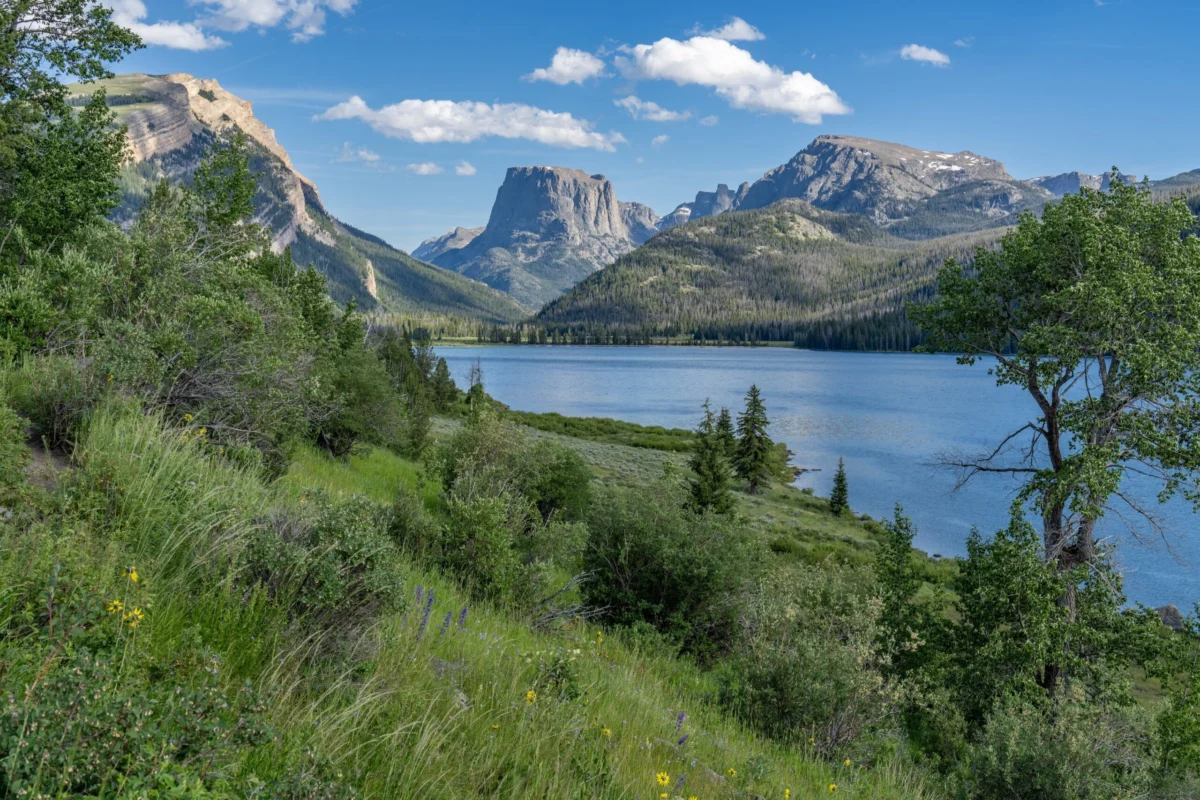
- Green River Lakes Loop (6.3 miles): This trail offers a low-effort, high-reward experience. The mirror-like surface of Lower Green River Lake, reflecting the sheer face of Square Top Mountain, creates a visual phenomenon that challenges one’s depth perception. It is ideal for families and photographers who wish to avoid grueling ascents while enjoying world-class scenery.
- Sacred Rim Trail (3.4 miles): This is a quintessential "edge of the world" hike. With minimal elevation gain, it leads hikers to a precipice overlooking a cluster of alpine lakes. It offers the drama of a remote summit without the logistical strain.
- Photographers Point via Pole Creek Trail (9.5 miles): Aptly named, this trail traverses meadows of vibrant lupine and paintbrush before ascending to a panoramic viewpoint. It is one of the most aesthetic spots in the range, yet it remains remarkably quiet on weekdays.
- Lake Louise Trail (4.8 miles): Located in the Fitzpatrick Wilderness, this route features a turquoise, glacial-fed lake and a powerful, mineral-scented waterfall that provides a sensory-rich experience for hikers of all levels.
The Bighorn Mountains: The Underrated Crown Jewel
The Bighorns are often overlooked in favor of their more famous western cousins, yet they offer some of the most rugged terrain in the state.
- Mirror Lake and Lost Twin Trail (11.1 miles): This is the ultimate test for the ambitious hiker. Featuring technical rock scrambling and two pristine alpine lakes, it provides a sense of discovery rarely found in more commercialized ranges.
- Mistymoon Trail (13.6 miles): Sitting at the base of the 13,171-foot Cloud Peak, this trail is a pilgrimage for those who want to wake up in the shadow of the state’s high points. The clarity of the water at Mistymoon is unrivaled.
- Shell Falls Interpretive Trail (0.4 miles): Proving that grandeur does not always require mileage, this fully accessible trail allows visitors to feel the raw power of a 120-foot drop into a granite canyon.
The Medicine Bow / Snowy Range: Alpine Concentrates
Located within a short drive of Laramie, these mountains provide an efficient dose of high-altitude adventure.
- Libby Creek Trail (4.2 miles): A tranquil loop through lodgepole pines and wildflower meadows, this trail is perfect for those seeking the soothing sound of running water and the occasional glimpse of local moose.
- Medicine Bow Peak and Lakes Trail Loop (7 miles): Reaching the 12,013-foot summit of the highest point in southern Wyoming, this loop offers 360-degree views that extend as far as the eye can see across the high plains.
- Lewis Lake, South Gap Lake, and Snowy Mountains Trail (2.9 miles): A masterclass in efficiency, this short trek packs in silver-toned lakes and high-tundra scenery, providing a quick escape for those on a tight schedule.
Chronology: A Season of Exploration
Understanding the timing of these trails is essential for safety and enjoyment.
- Late June to Early July: The lower elevations, such as the Green River Lakes, begin to thaw, offering lush green meadows and the peak of wildflower blooms.
- Mid-July to August: This is the "Goldilocks" period for the higher elevations, including the Medicine Bow Peak and the Wind River high country, where the snowpack has retreated enough to allow for safe, high-altitude hiking.
- September: The crowds dissipate further, and the aspen trees in the Bighorns turn a vibrant gold. This is the optimal time for the experienced hiker seeking total silence, though nights become significantly colder.
Supporting Data: The Statistics of Solitude
The Wyoming Office of Tourism notes that while visitation numbers in the state are rising, the density of visitors remains among the lowest in the nation. For perspective, Yellowstone National Park frequently hosts over 4 million visitors annually. Conversely, areas like the Bighorn National Forest report significantly lower foot traffic on their interior trails, often seeing fewer than a few dozen hikers on mid-week days, even in the height of the summer season.

This data highlights a significant opportunity for sustainable tourism: by shifting the focus toward the "hidden" trails, the state can alleviate the environmental pressures on the most popular icons while offering visitors a more authentic, quiet experience.
Official Responses: Fostering Responsible Stewardship
The Wyoming Office of Tourism emphasizes that these trails are not just destinations, but ecosystems that require the utmost respect. "Wyoming doesn’t ask for your attention; it doesn’t need to," a spokesperson noted. The office encourages the "Leave No Trace" principle, urging hikers to be prepared for rapid weather changes, potential wildlife encounters, and the lack of cellular service in the deep backcountry.
By promoting these lesser-known gems, the state aims to encourage a more distributed model of tourism, which benefits local economies in smaller towns like Pinedale, Sheridan, and Laramie, rather than concentrating all resources solely in the gateway towns of the national parks.
Implications: The Future of High-Country Hiking
The shift toward these "hidden" trails has profound implications for the future of outdoor recreation. As global travel trends favor "slow tourism"—the practice of immersing oneself deeply in a singular environment rather than checking off a list of highlights—Wyoming’s vast, uncrowded ranges are positioned to become the gold standard.

Economic Impact
By diversifying the trail map, rural Wyoming communities are seeing a rise in sustainable small-business growth. Gear shops, local guides, and small-town eateries are gaining traction as hikers venture into the Bighorns and the Winds. This dispersion of tourism spending helps sustain the infrastructure of these smaller communities throughout the year.
Environmental Conservation
While increased traffic can lead to trail erosion, the wide distribution of hikers across three distinct mountain ranges prevents the localized degradation often seen in high-traffic national park corridors. It is an exercise in managed exploration, where the hiker is encouraged to be a participant in the landscape rather than a spectator.
A Call to the Conscious Traveler
The trails of Wyoming are a reward for the patient. They are for the person who drives the extra hour past the crowded turnoff, who chooses a Tuesday over a Saturday, and who is willing to trade a gift shop for a vista of silent, snow-dusted peaks. In an increasingly connected and noisy world, Wyoming offers something rarer than gold: the chance to stand in the middle of a landscape that is, for a few hours, yours alone.
Whether you are navigating the granite monoliths of the Wind River Range or listening to the roar of Shell Falls, the message remains the same: the best experiences are found in the places that haven’t been filtered through a thousand Instagram feeds. Go, find your peace and quiet, and let the Wyoming wilderness remind you of what it feels like to be truly untethered.

This article is presented as a guide to the untamed wilderness of Wyoming, sponsored by the Wyoming Office of Tourism.