Mount Kilimanjaro, the "Roof of Africa," remains one of the most coveted destinations for trekkers and adventurers worldwide. Standing at 5,895 meters, this dormant volcano offers a unique intersection of ecological diversity and physical challenge. Among the myriad ways to approach the summit, the Lemosho route has emerged as the gold standard for those seeking a balance between high success rates, pristine wilderness, and a profound commitment to sustainable tourism.
Main Facts: Why Lemosho Defines the Kilimanjaro Experience
The Lemosho route is widely regarded as one of the most scenic and rewarding paths to the summit. Unlike more congested trails, Lemosho offers a lower traffic density, allowing hikers to immerse themselves in the quiet majesty of the Tanzanian landscape. Its geographic trajectory—starting from the western slopes—provides a more gradual ascent, which is fundamentally critical for proper altitude acclimatization.
For prospective climbers, the choice between the 7-day and 8-day itineraries is a pivotal decision. While the 7-day trek is efficient, the 8-day expedition is increasingly recommended by industry experts. By incorporating an additional night at the Karanga Camp, the 8-day itinerary significantly bolsters the body’s ability to adjust to lower oxygen levels, thereby substantially increasing the statistical probability of reaching Uhuru Peak.
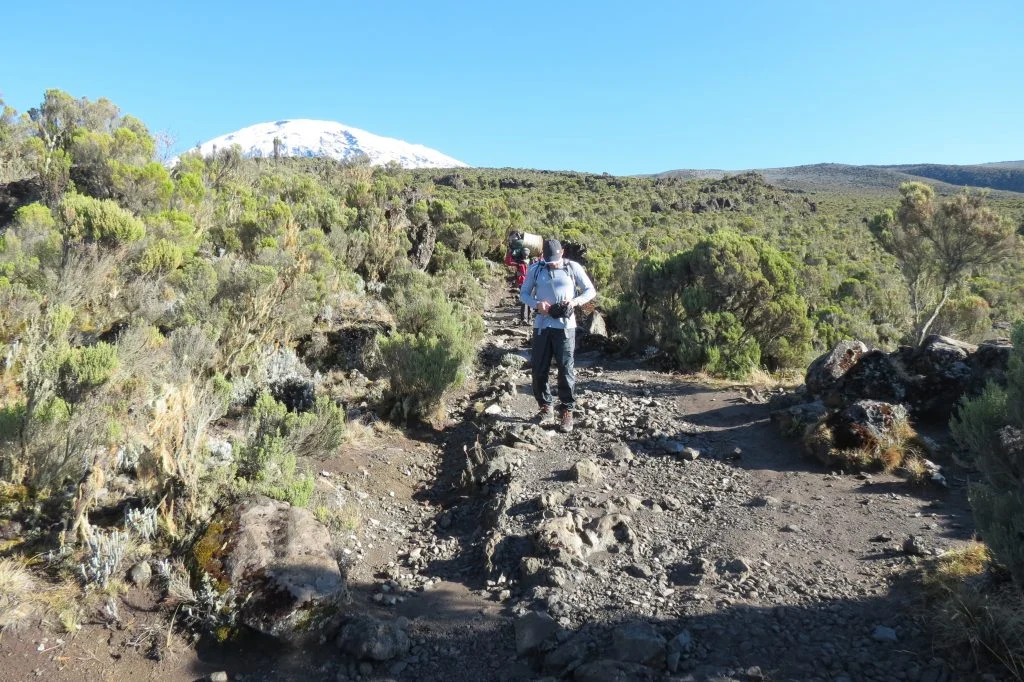
Beyond the physical exertion, Lemosho is the premier choice for ecotourism. It traverses diverse ecosystems, from lush, untouched rainforests to the surreal, high-altitude moorlands. For those who view their trek as a photographic safari, the route offers unmatched vantage points of the Shira Plateau and the dramatic icefalls of the southern glaciers.
The Chronology of the Lemosho Expedition
To understand the rhythm of the mountain, one must look at the meticulously planned daily itinerary that defines the Lemosho journey.
Days 1–3: Into the Wilderness
The journey commences with a drive from Moshi or Arusha to the Londorosi Park Gate. After the necessary registration formalities, the ascent begins in earnest. Hikers traverse forest trails that eventually lead to the Mti Mkubwa (Big Tree) campsite.
On Day 2, the landscape shifts as the trail climbs into the giant heather moorland zone. Crossing several streams, trekkers gain the Shira Ridge before descending to the Shira 1 camp. Day 3 is specifically dedicated to acclimatization; a gentle walk across the Shira Plateau offers a chance to explore the meadows and prepare the body for the steeper challenges ahead.
Days 4–5: The Approach to the Roof of Africa
Day 4 involves a trek toward the Lava Tower, followed by a descent into the Barranco Valley. If a climber has opted for the 8-day package, this is where the itinerary provides a vital edge: an extra night at the Karanga Camp. This serves as a physiological reset, allowing for deeper acclimatization before the final push. Day 5 concludes with an ascent to the Barafu Hut, a base camp that sits at 4,600 meters. Here, the environment becomes austere and rocky, serving as the final staging ground for the summit attempt.
Days 6–7: The Summit and the Descent
Day 6 begins in the pre-dawn darkness. The ascent to the Kibo Crater rim is a test of endurance, often requiring the use of trekking poles or ice axes for stability on snow-covered sections. Upon reaching Uhuru Peak, trekkers are greeted by panoramic views of Mount Meru and the jagged Mawenzi Peak. The return descent is swift, passing through the giant heather zone to the Mweka Hut. The final day involves a descent through the dense, vibrant forest back to the park gate, marking the completion of an epic journey.
Supporting Data: Safety and Infrastructure
Success on Kilimanjaro is not merely a matter of willpower; it is a matter of support and safety infrastructure. Professional operators, such as Kilimanjaro Tanzanite Safaris DMC, emphasize the necessity of high-standard logistical support.
Essential Safety Equipment
When selecting an operator, trekkers must ensure the inclusion of:
- Emergency Oxygen Bottles: Essential for managing altitude-related symptoms.
- Pulse Oximeters: Used for daily monitoring of blood oxygen saturation levels.
- Medical Insurance: Inclusion of AMREF Flying Doctor Air Rescue services is mandatory for high-altitude safety.
Financial Considerations and Inclusions
While prices for trekking packages vary based on group size and purpose (e.g., student groups vs. luxury photographers), a standard package typically covers all park fees, professional guide salaries, porter support, nutritious mountain meals, and clean water. Prospective trekkers should note that international flights, entry visas, and personal gear rentals are generally excluded. Using local, reputable operators ensures that the capital invested in the trip supports the local economy while adhering to sustainable tourism practices.
Official Perspectives on Sustainable Trekking
The global surge in mountain tourism has necessitated a move toward "conscious climbing." Ecotourism is no longer a niche preference; it is an operational requirement for the long-term preservation of Kilimanjaro’s fragile ecosystems.
According to industry leaders at Kilimanjaro Tanzanite Safaris, the Lemosho route—along with the Northern Circuit and the Rongai route—represents the best of what Tanzania has to offer. By choosing routes that utilize established campsites and adhere to "Leave No Trace" principles, trekkers contribute to the protection of the mountain’s endemic flora and fauna.
Educational programs and student expeditions are particularly encouraged, as they foster a new generation of conservation-minded travelers. These groups are often eligible for discounted rates, reflecting the industry’s commitment to accessibility and knowledge sharing.
Implications for Future Adventurers
The decision to climb Kilimanjaro is a commitment to both personal growth and global responsibility. The implications of choosing the Lemosho route go beyond just securing a high-quality trekking experience:
- Economic Impact: By booking through recognized, locally-based Destination Management Companies (DMCs), travelers ensure that their funds directly support the wages of porters and guides, as well as local community projects.
- Environmental Stewardship: Lemosho’s design minimizes impact on high-traffic corridors. The emphasis on slow, deliberate acclimatization reduces the frequency of emergency evacuations, thereby lessening the ecological footprint of rescue operations.
- The "Slow Travel" Philosophy: The 8-day Lemosho itinerary encourages a slower pace, which is the cornerstone of sustainable travel. It allows for reflection, better photography, and a deeper connection to the Tanzanian landscape.
A Note on Preparation
Before embarking, travelers are urged to select their accommodation in Moshi carefully. Many prefer to stay in eco-resorts that align with the values of their trek. When preparing for the climb, prioritize gear quality, as the variance between the forest floor and the summit is extreme.
For those looking to integrate their Kilimanjaro climb into a broader Tanzanian experience, the region offers endless possibilities—from the sweeping plains of the Serengeti to the crystal-clear waters of Zanzibar. Whether it is a photographic safari, a cultural immersion, or a high-altitude mountaineering challenge, the key lies in partnering with organizations that prioritize safety, sustainability, and authenticity.
For those ready to plan their ascent, the path is clear: choose the Lemosho route for the best blend of adventure and conservation, and ensure your journey is supported by experts who know the mountain as well as they know their home.
For detailed planning, booking, or inquiries regarding customized itineraries, including photographic safaris and ecotourism expeditions, interested parties are encouraged to reach out to local experts at Kilimanjaro Tanzanite Safaris DMC. Their reputation for excellence and commitment to the "Leave No Trace" ethos continues to make them a preferred partner for adventurers worldwide.