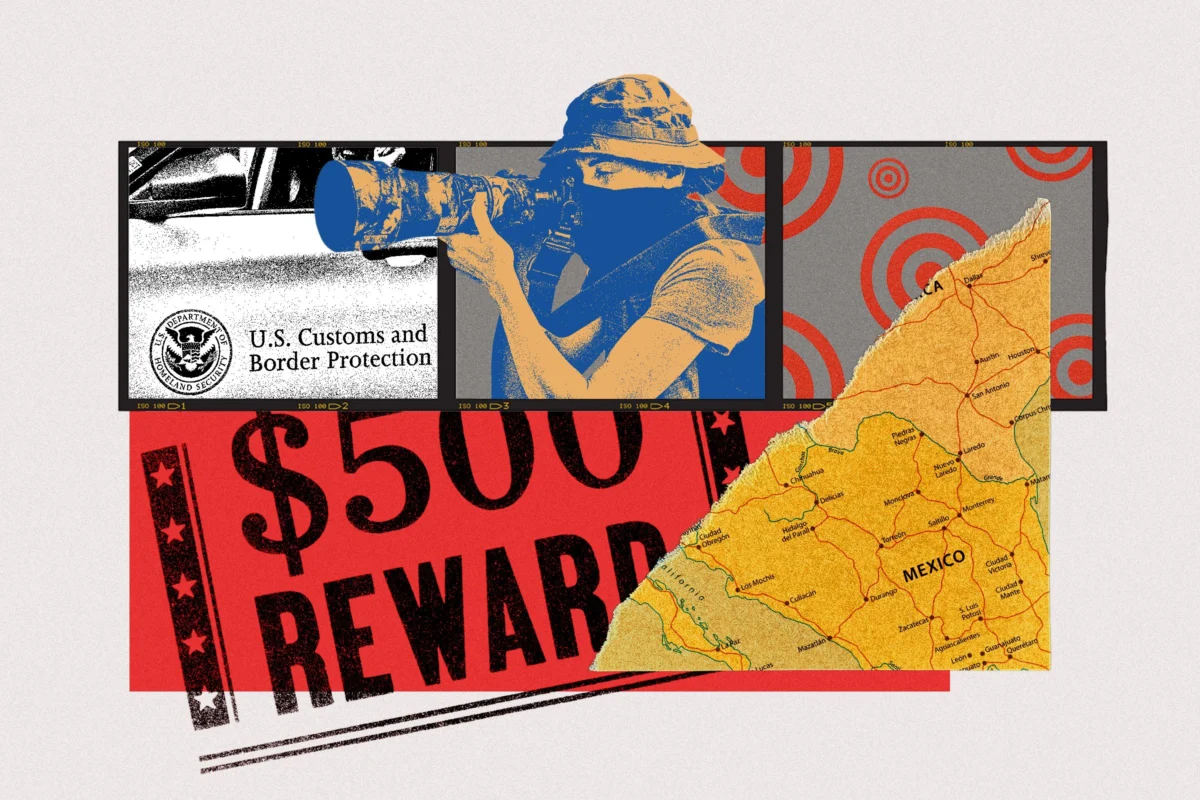
In an unprecedented expansion of federal immigration enforcement, U.S. Customs and Border Protection (CBP) is moving to hire private investigators to track down deported immigrants and others who have left the United States. The objective of this initiative, titled the “Tracing and Payment Recovery Services” program, is to locate individuals in countries such as Mexico, Honduras, and Guatemala—and potentially others—to force the collection of outstanding federal fines and penalties.
The program, which allocates up to $9 million over the next two years, marks a dramatic shift in how the U.S. government handles civil monetary penalties issued to foreign nationals. Critics and legal scholars argue that the move is not only logistically questionable but represents a "significant escalation" in the government’s efforts to exert financial pressure on vulnerable populations who have already been removed from the country.
The Scope of the "Tracing and Payment Recovery" Program
According to procurement documents reviewed by WIRED, the CBP is seeking contractors capable of performing "commercial data verification and physical observation services." The goal is to establish the current residential status of individuals who have been deported or who have voluntarily departed the U.S. but remain subject to civil fines.
Contractors are tasked with providing verifiable evidence of a subject’s location, which the government defines as including photographs of the individual’s residence, utility bills, employment records, or court documentation. In the event that the target of the investigation has died, contractors are instructed to secure a death certificate. Once a person is located, the contractors are required to serve them with a physical, government-approved flyer—printed in both English and Spanish—that explicitly lists the fines and fees the CBP alleges are owed.
The financial stakes are staggering. As of July, the Department of Homeland Security (DHS) has issued over $84 billion in fines to immigrants accused of failing to depart the United States. These penalties, which can reach as high as $1.8 million per individual, rely on an obscure provision of a 1996 immigration law that had remained largely dormant until the first term of the Trump administration. The fines accrue at a rate of $998 per day for up to five years.
A Chronology of Escalating Enforcement
The current strategy is the culmination of a multi-year pivot toward using private sector firms to perform what many civil liberties groups describe as "bounty hunting" for the state.
- 1996–2016: The legal provision allowing for heavy daily fines for "failure to depart" sits largely unused in the federal code.
- 2017–2020: The Trump administration begins reviving these dormant penalties as a tool for immigration enforcement.
- December 2024: Immigration and Customs Enforcement (ICE) awards $1.2 billion in contracts to 13 private companies for domestic "skip-tracing" services, allowing these firms to hunt for undocumented immigrants within U.S. borders.
- July 2026: DHS announces that it has issued over $84 billion in civil fines. Senators Dick Durbin and Alex Padilla send an urgent inquiry to the Department of Justice and DHS regarding the legality and ethics of these fines, particularly as they apply to survivors of domestic violence and legal residents. The departments fail to respond by the July 31 deadline.
- August 2026: The CBP officially releases the request for proposals (RFP) for the Tracing and Payment Recovery Services program, setting a tight deadline for contractors to bid by August 7.
Supporting Data and Financial Mechanisms
The mechanics of the program are structured to incentivize speed and efficiency for the contractors, rather than actual revenue recovery. Contractors are paid a base fee for confirming the location of a subject, with "tiered bonuses" awarded for faster reporting—specifically if the information is returned within 7, 14, or 28 days of receiving the assignment. Notably, the contractor’s compensation is not contingent upon the successful collection of the debt; the government is essentially paying private firms to hunt for individuals regardless of whether the target has the financial means to pay.
The financial burden on the immigrants is further compounded by third-party administrative fees. Hasan Shafiqullah, an immigration supervising attorney with the Legal Aid Society, has documented instances where collection agencies have tacked on as much as $500,000 in additional administrative fees on top of the already astronomical government-assessed penalties.
Furthermore, the payment structure itself presents a significant hurdle. The government requires payments to be made via Pay.gov, a platform that necessitates a U.S. bank account—a requirement that creates an insurmountable barrier for individuals who have been deported to Central American nations. This has led to concerns that the government is indirectly pressuring family members still residing in the United States to settle these debts to protect their relatives or to avoid further entanglement with federal authorities.
Official Responses and Bureaucratic Silence
Despite the significant reach of this program, federal agencies have remained largely opaque. The CBP deferred all inquiries regarding the program to its parent agency, the Department of Homeland Security, which provided no official comment prior to publication.
International relations appear to have been bypassed in the planning of this initiative. When asked whether the United States had consulted with the governments of Mexico, Guatemala, or Honduras regarding the presence of private American contractors operating on their soil to conduct "physical observations," officials from those nations’ foreign ministries did not respond. Legal experts note that such operations could potentially violate local sovereignty or privacy laws in the targeted countries, though the CBP documents do not address these risks.
The lack of oversight is further highlighted by the government’s failure to answer congressional inquiries. In their July letter, Senators Durbin and Padilla demanded clarity on whether these fines were being levied against individuals with pending legal status or survivors of human trafficking. The total lack of response from the administration suggests a policy of deliberate obfuscation regarding the reach of the "failure-to-depart" mandate.
Implications: Due Process and Human Rights
Legal experts and human rights advocates are sounding the alarm, characterizing the program as a violation of due process and a tool of psychological intimidation.
"Going after folks who are abroad is going to undermine their purported promise to forgive these fines once someone has left the country," says Charles Moore, a senior attorney at Public Justice. "But that doesn’t surprise me."
The contradiction is stark: while the DHS has promoted the "CBP Home" app as a pathway for immigrants to self-deport and potentially have their fines forgiven, the government is simultaneously investing millions in chasing those same individuals across international borders. Even for those who use the app, a separate $5,130 fee mandated by Congress for individuals ordered removed in absentia remains, which the statute explicitly bars from being waived. This leaves many returnees with a "clean slate" that is, in fact, still heavily burdened by debt.
Alina Das, a law professor and director of NYU’s Immigrant Rights Clinic, views this as a "significant escalation in tactics." Her research has shown that the mere threat of these fines has led to the garnishment of wages, the seizing of tax returns, and the destruction of credit scores for immigrants, many of whom are part of mixed-status families living in the United States.
Ultimately, the program raises a fundamental question about the intent of the federal government. If the primary goal of deportation is the removal of individuals from the United States, the investment of taxpayer dollars to pursue those same individuals in foreign nations suggests that the objective has shifted from border security to a permanent, transnational system of financial punishment.
As Shafiqullah aptly summarized: "It makes no sense to go after people here if they don’t have the money. Presumably, they don’t have the money there, and they’re not subject to collections. What’s the point of this?" For the thousands of families caught in the crosshairs, the point appears to be a continued campaign of deterrence and fiscal retribution that follows them long after they have left American soil.