In a significant milestone for the American renewable energy sector, SEG Solar has officially inaugurated its second, and largest, photovoltaic (PV) module manufacturing facility in the Greater Houston area. Known as "Tomball #1," the sprawling 500,000-square-foot plant represents a $200 million capital investment, underscoring a broader industrial trend toward domesticating the solar supply chain. With this launch, the Texas-based company has pushed its total annual US production capacity to a formidable 6GW, positioning itself as a pivotal player in the transition toward clean, reliable, and localized power.
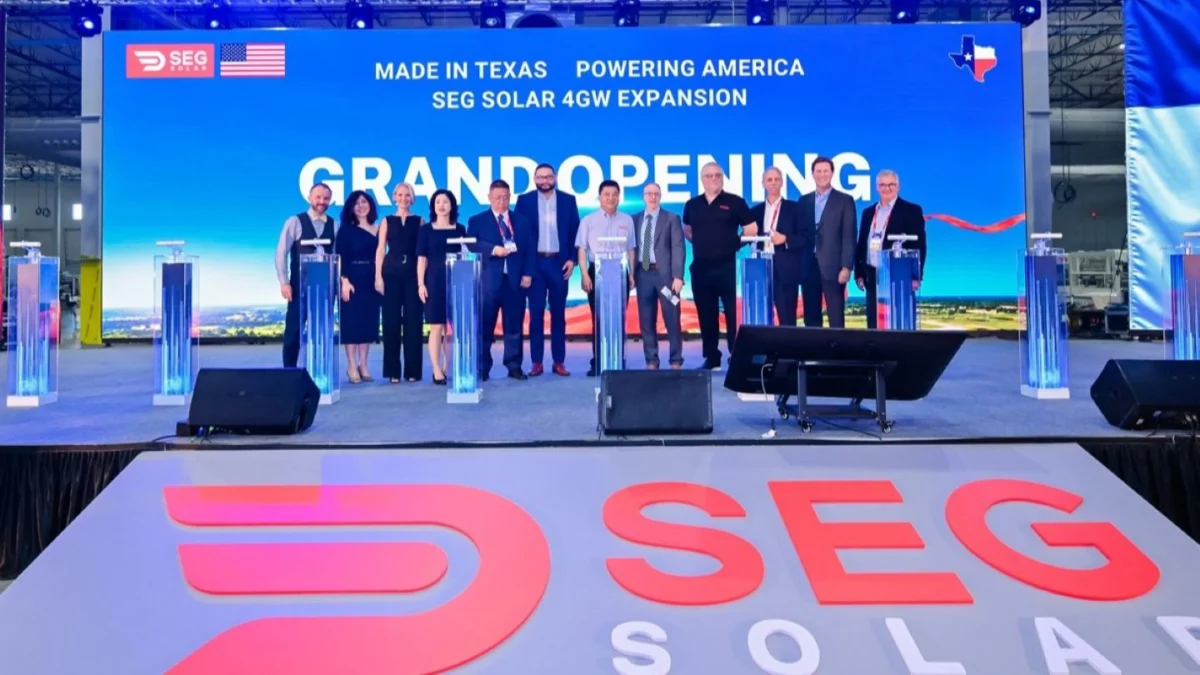
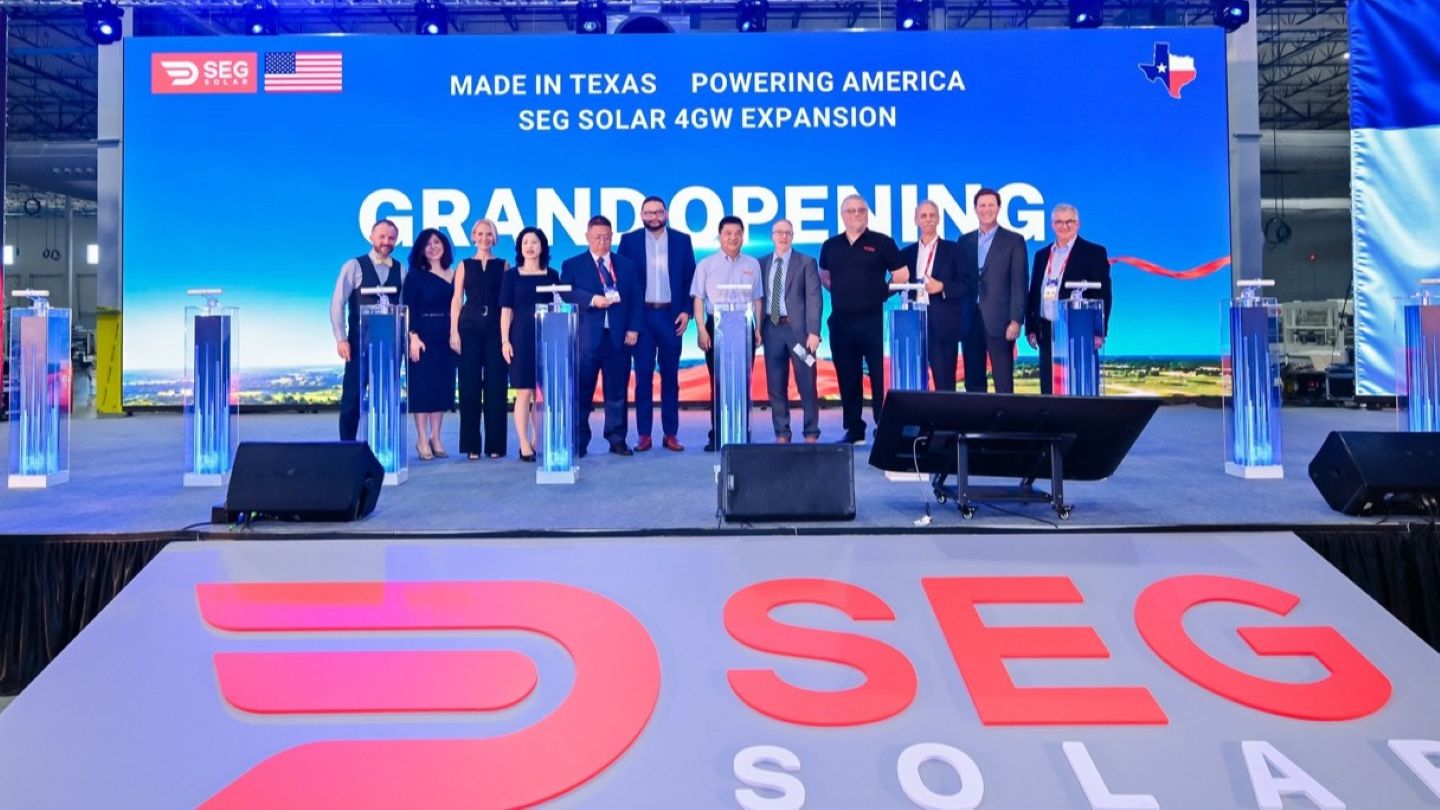
The grand opening ceremony, held in the heart of Texas, served as a gathering point for approximately 800 stakeholders, ranging from local government officials and industry partners to members of the media and the dedicated workforce that will drive the plant’s operations.
Main Facts: The Anatomy of Tomball #1
The Tomball #1 facility is not merely a warehouse; it is a high-tech manufacturing powerhouse designed to address the increasing technical demands of the global energy market. Occupying over half a million square feet, the plant serves as the centerpiece of SEG Solar’s US manufacturing strategy.
At the heart of its operations are four advanced production lines, each dedicated to the output of SEG Solar’s proprietary SIERRA N series heterojunction (HJT) modules. These modules are engineered to support both 210mm and 210R wafer formats, offering the flexibility required to meet the diverse needs of utility-scale, commercial, and residential projects.
The facility’s technical capabilities are particularly noteworthy. By incorporating specialized manufacturing processes—most notably low-temperature soldering and precision butyl sealant application—the Tomball plant is designed to enhance the long-term reliability and durability of its solar products. These innovations ensure that the modules not only boast high energy conversion efficiency but are also capable of withstanding the rigors of various climates, thereby maximizing the lifetime value for energy developers and homeowners alike.
Chronology: A Rapid Ascent in the Solar Landscape
The trajectory of SEG Solar since its inception in 2021 has been characterized by aggressive growth and strategic positioning.
- 2021: SEG Solar is founded in Houston, Texas, with a clear mandate to provide high-quality solar modules across the utility, commercial, and residential sectors.
- 2023–2024: The company accelerates its global footprint, reaching a cumulative shipping milestone of 7.5GW of solar modules worldwide by the end of 2025.
- August 2026: The official inauguration of the Tomball #1 facility takes place in Greater Houston, marking the company’s expansion into its second domestic site.
- Q3 2026: Commercial operations at the Tomball #1 plant are scheduled to commence, signaling the start of full-scale production.
- Future Outlook: SEG Solar has already begun advancing plans for a third US-based HJT module manufacturing facility and is currently exploring the development of a domestic solar cell manufacturing plant.
This rapid development cycle reflects a company moving in lockstep with the accelerating global demand for renewable energy infrastructure.
Supporting Data: The Scale of Ambition
To understand the magnitude of SEG Solar’s latest investment, one must look at the quantitative data surrounding the firm’s growth. Prior to the opening of Tomball #1, the company had already achieved a total production capacity of 6.5GW. With the addition of the new 4GW-capacity plant, the company has effectively fortified its market position.
Technical Specifications and Economic Impact
- Total Investment: $200 million.
- Facility Size: Over 500,000 square feet.
- Annual Capacity at Tomball #1: 4GW.
- Total US Production Capacity: 6GW.
- Module Focus: HJT (Heterojunction Technology) modules, noted for superior efficiency compared to traditional PERC modules.
- Employment and Community: The event attracted 800 attendees, reflecting significant local interest and job creation potential in the Greater Houston economic corridor.
The choice of Houston—a region historically defined by the fossil fuel industry—is symbolic. It represents the "Energy Capital of the World" diversifying its portfolio, proving that Texas remains the primary engine for American energy, regardless of the source.
Official Responses: The Strategic Vision
During the inauguration, the leadership of SEG Solar articulated a vision that extends far beyond individual module production. Jun Zhuge, founder and COO of SEG Solar, emphasized that the company’s expansion is a direct response to the massive structural shifts occurring in the global economy.
"Seeing another SEG manufacturing facility stand on American soil is a proud moment for all of us," Zhuge stated. "The rapid growth of artificial intelligence and data centers is driving unprecedented demand for reliable electricity and accelerating the need for new energy infrastructure."
Zhuge’s comments highlight a critical intersection between the tech boom and the energy sector. As massive hyperscale data centers require 24/7 power, the reliability of solar—when paired with storage and efficient HJT technology—becomes a national security issue.
"Tomball #1 is an important step in expanding our manufacturing capacity to meet that demand," he added. "Looking ahead, we are advancing our third US HJT module manufacturing facility and planning a US cell manufacturing facility to build a more integrated domestic supply chain. This will strengthen long-term delivery capabilities for our customers and establish SEG as the largest crystalline solar module manufacturer in the US."
Implications: The Road to an Integrated Supply Chain
The opening of Tomball #1 carries profound implications for the domestic solar market.
1. Supply Chain Resilience
By focusing on the "Made in the USA" label, SEG Solar is helping to insulate its clients from the volatility of international shipping and trade policy shifts. An integrated supply chain—moving from wafer processing to cell manufacturing and finally module assembly—is the "Holy Grail" for solar manufacturers aiming to capture federal tax incentives and provide price stability for long-term power purchase agreements (PPAs).
2. The Rise of HJT Technology
The industry-wide move toward Heterojunction (HJT) technology is a direct response to the demand for higher efficiency per square foot. As land use becomes a point of contention for large-scale solar farms, the ability to generate more power from a smaller physical footprint is a significant competitive advantage. SEG’s focus on the 210mm and 210R formats ensures that their products remain compatible with the latest tracking systems and mounting hardware used in modern utility-scale solar arrays.
3. Economic Revitalization
Beyond the metrics of power output, the investment in Tomball provides a tangible boost to the local economy. Beyond the direct jobs created within the 500,000-square-foot facility, the plant will necessitate a secondary ecosystem of logistics, maintenance, and raw material supply, further anchoring the solar industry within the Texas economy.
4. Meeting the AI and Data Center Challenge
Perhaps most importantly, SEG Solar is aligning itself with the infrastructure requirements of the AI revolution. With energy-hungry server farms becoming the new "industrial giants," the demand for sustainable, rapidly deployable, and highly reliable solar energy has never been higher. By scaling up to 6GW, SEG Solar is positioning itself as a primary supplier for the infrastructure projects that will power the next decade of digital transformation.
Conclusion: A New Standard for Domestic Solar
As the energy transition continues to accelerate, the success of manufacturers like SEG Solar will be defined by their ability to scale efficiently while maintaining technical excellence. The Tomball #1 facility is a statement of intent. It proves that domestic manufacturing can compete on both scale and technological sophistication.
With plans for a third plant and a move into cell manufacturing already in motion, SEG Solar is clearly signaling that it is not merely participating in the American solar market—it is striving to lead it. For stakeholders, investors, and the climate-conscious public, the inauguration of Tomball #1 represents more than just a new factory; it represents a foundational shift in how the United States will power its future.
As the facility prepares to move into full commercial operations in the third quarter of this year, the industry will be watching closely. If the success of the inauguration is any indication, the future of solar manufacturing in Texas is not only bright—it is essential.