In an era dominated by high-resolution glass screens, rapid-fire notifications, and the relentless hum of artificial intelligence, a surprising trend has emerged: the return to the tactile, intentional act of handwriting. However, this is not a retreat into the past. Modern professionals are bridging the gap between analog intuition and digital efficiency through smart pens and E Ink notebooks—devices that offer the focus of paper with the cloud-synced power of a digital workstation.
Whether you are a student, an architect, or an executive, the challenge remains the same: how to preserve the creative spark of a pen-to-paper experience while ensuring your notes are searchable, shareable, and secure.
The Core Philosophy: Why We Are Returning to Paper
For many, the transition from paper to tablet has been fraught with compromise. While a standard iPad with an Apple Pencil offers unparalleled app support, the blue light, the slippery texture of glass, and the constant threat of incoming emails can fracture focus. Digital notebooks and smart pens represent a specialized solution to this problem.
The Main Players
The current market is divided into two distinct categories: Smart Pens, which track your movement on physical paper, and E-Paper Tablets, which utilize electronic ink to simulate the feel of a notebook while storing everything internally.
- The Neo Smartpen M1+: Currently standing as the thinnest and lightest option in the category, the M1+ is the closest digital facsimile to a standard ballpoint pen. By writing on specially patterned paper, the pen captures every stroke and syncs it via Bluetooth to the Neo Studio app.
- The Moleskine Smart Writing Set: For those who appreciate the aesthetic pedigree of the classic Moleskine journal, this set provides a seamless bridge. It is widely considered the best "entry point" for those who want to maintain the tactile experience of a high-quality physical notebook.
A Brief Chronology: From Analog to Digital Ink
The quest to digitize handwriting is not new, but it has reached a tipping point in the last five years.
- 2015–2017: The early days of the "reusable notebook." Companies like Rocketbook began gaining traction by offering notebooks that could be scanned and wiped clean, providing a low-cost, sustainable entry point into digital organization.
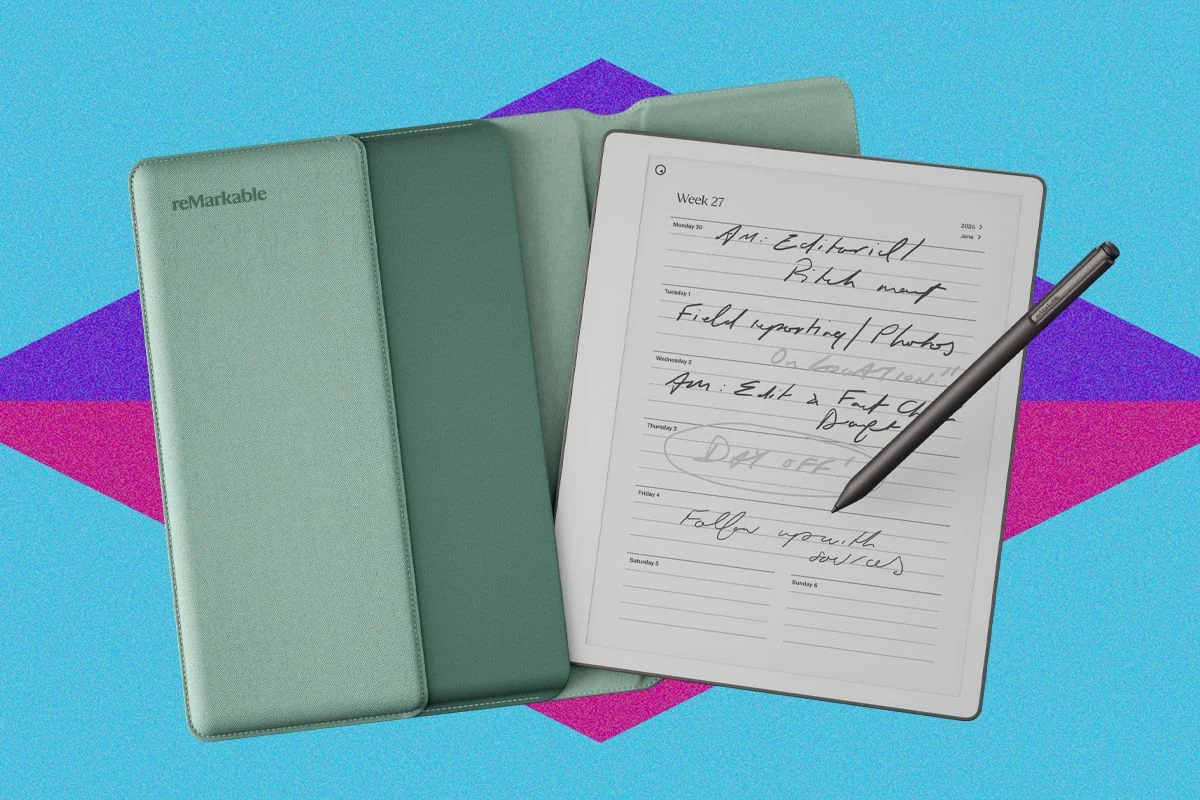
- 2018–2020: The rise of dedicated E-Ink hardware. This period saw the emergence of devices like the ReMarkable 2, which prioritized a "distraction-free" environment. These devices stripped away browsers and social media, focusing entirely on the latency-free sensation of writing on a display that looks indistinguishable from paper.
- 2021–2023: The "Smart Integration" era. We saw the entry of legacy stationery brands like Montblanc and the evolution of Moleskine’s software, aiming to make notes searchable via OCR (Optical Character Recognition) and capable of syncing with Google Calendar and Outlook.
- 2024–2025: The current landscape. We are now seeing the integration of AI-assisted summarization, color E-Ink displays (such as the Kindle Scribe Colorsoft), and advanced hardware designed to compete directly with general-purpose tablets.
Supporting Data: The Cost of Digitization
One of the most frequent questions regarding these devices is: Are they worth the investment?
| Device | Type | Price (Approx.) | Key Advantage |
|---|---|---|---|
| Neo Smartpen M1+ | Smart Pen | $129 | Portable, feels like a real pen |
| Moleskine Smart Set | Smart Notebook | $262 | Classic aesthetic |
| Rocketbook Fusion | Reusable | $30 | Best value/Eco-friendly |
| Supernote Nomad | E-Paper | $394 | Compact, travel-ready |
| Kindle Scribe | E-Paper | $430–$630 | Best battery life |
The price variance is driven largely by the screen technology (monochrome vs. color E-Ink), processing power, and software ecosystem. While a $30 Rocketbook offers utility, a $600 Kindle Scribe provides a robust, long-term archival system for your professional life.
Official Perspectives and Industry Realities
The industry is currently facing a dual challenge: rising costs due to global trade tariffs and the creeping encroachment of "feature creep."

The Tariff Factor
Recent reports from supply chain analysts indicate that electronics manufacturing is becoming more expensive, a trend reflected in the price hikes seen across the E-Ink category. The ReMarkable 2, once a mid-priced favorite, has seen price adjustments, and newer entries like the Supernote Nomad have risen in price by approximately $30 to $50 due to these macroeconomic pressures.
The "Feature Creep" Debate
There is a growing divide in the industry regarding the purpose of these devices.
- The Minimalist School: Companies like ReMarkable argue that these devices should only be for writing. They believe adding web browsers, music players, and calendars ruins the "flow state" that makes paper so valuable.
- The Power-User School: Brands like Boox, which manufacture the Note Air series, argue that these devices should function as "E-Ink Tablets." By running on Android and providing access to the Google Play Store, they aim to replace the tablet for users who want to read, write, and manage tasks in one device.
Implications: How to Choose Your Path
Deciding between a smart pen and a digital notebook comes down to your personal workflow.
When to Choose a Smart Pen (e.g., Neo Smartpen, Moleskine)
Choose this path if you have a deep emotional attachment to physical paper. If you love the weight of a fountain pen or the specific texture of a moleskine page, these devices do not ask you to sacrifice that sensation. You are merely adding a digital layer to your existing habits.
- Best for: Journalists, students, and artists who want to keep an analog archive.
When to Choose an E-Paper Tablet (e.g., Kindle Scribe, Supernote, Boox)
Choose this path if you are drowning in loose-leaf paper and struggle with organization. These devices allow you to categorize notebooks, search for keywords within your handwriting, and carry thousands of documents in a package that weighs less than a single hardcover book.
- Best for: Project managers, consultants, and anyone who needs to manage complex workflows without the eye-strain of an LCD screen.
Conclusion: The Future of Note-Taking
As we move further into the decade, the line between "analog" and "digital" will continue to blur. We are seeing the rise of AI that can not only transcribe your handwriting but also summarize your meetings and suggest action items based on your notes.
The most important takeaway for any buyer is that these tools are not about saving time—they are about improving the quality of your thinking. By removing the distractions of the modern web and focusing on the slow, deliberate process of writing, you are engaging in a practice that has defined human intellectual history for millennia. Whether you choose the minimalist approach of a ReMarkable or the high-tech versatility of a Boox, the goal remains the same: a clearer, more organized, and more focused mind.
For those seeking to maximize their productivity, it is worth noting that while these devices are powerful, they are not replacements for a computer. The most effective professionals use them as a "brain dump"—a place to process information before it is digitized, categorized, and acted upon in the wider digital workspace.