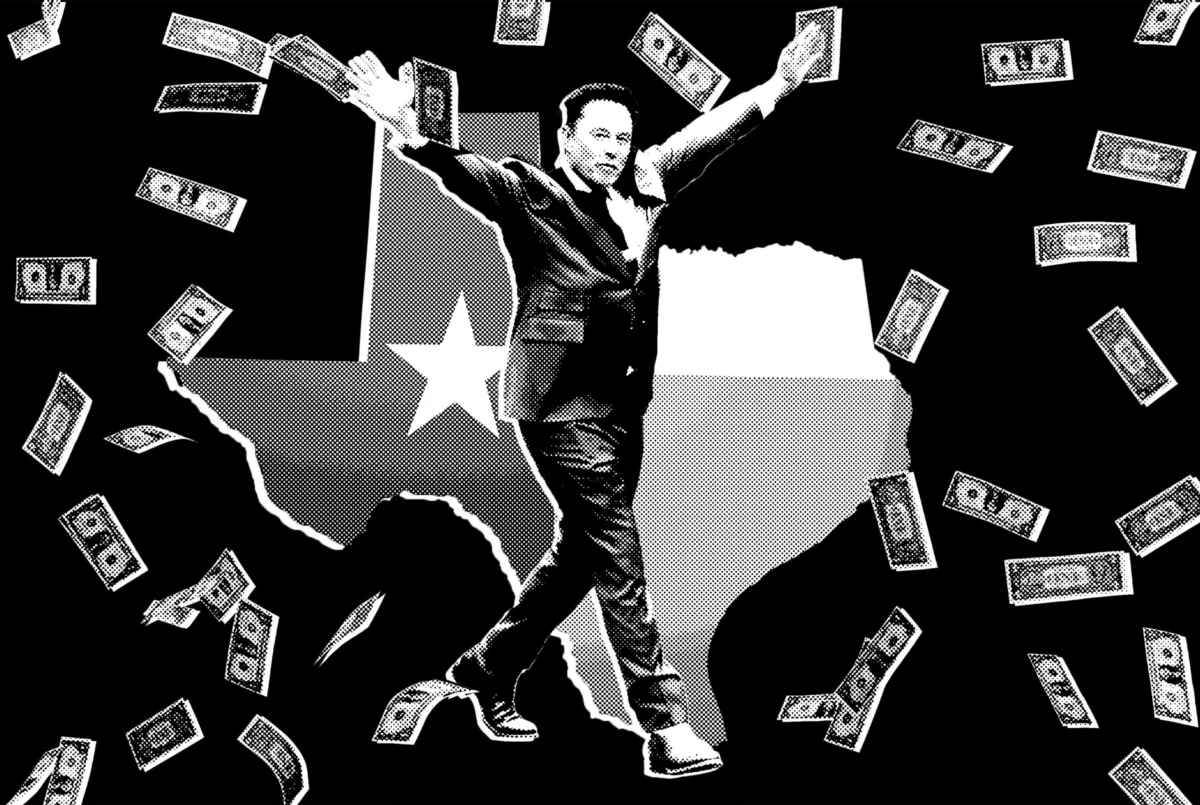
As the 2026 midterm election cycle gathers momentum, the political landscape is bracing for a potential tectonic shift fueled by the personal fortune of the world’s wealthiest individual. Elon Musk, the CEO of Tesla and SpaceX, is reportedly preparing a substantial financial intervention to bolster Republican candidates, with insiders suggesting a planned expenditure ranging between $100 million and $200 million.
According to Trump-aligned officials briefed on the matter, the primary focus of this massive capital injection will be the mobilization of "low-propensity" voters—a strategy Musk previously championed during the 2024 presidential cycle. This financial influx comes at a critical juncture, as Republicans seek to solidify their legislative majorities and secure control of the U.S. Senate in key battleground states like Texas.
The Strategic Importance of Texas
At the center of this electoral drama is the high-stakes race in Texas. Republican nominee Ken Paxton, who ascended to the party’s ticket following a contentious primary, finds himself in an precarious financial position. FEC filings reveal a staggering fundraising disparity: while Democratic challenger James Talarico has amassed approximately $69 million in campaign contributions, Paxton’s total hovers near a modest $9 million.
For the GOP, the fate of the Texas seat is not merely a regional concern; it is a linchpin in the national effort to maintain or expand control of the Senate. Musk’s projected investment is viewed by party strategists as a "boon" for the Paxton campaign, potentially serving as an essential counterbalance to the Democratic financial advantage.
A Chronology of the 2026 Funding Landscape
The trajectory of Musk’s involvement in the 2026 midterms has evolved rapidly over the past few months:
- Early 2026: Speculation began to mount regarding Musk’s continued involvement in Republican politics following the 2024 general election. Despite mixed reviews of his previous field operations, his commitment to the "MAGA" agenda appeared undiminished.
- Mid-2026: As the fundraising gap between Democratic candidates and their GOP counterparts widened, reports surfaced that Musk had authorized his political action committee, America PAC, to allocate at least $100 million for the cycle.
- Late Summer 2026: As the general election approaches, officials have begun to signal that the final figure could reach as high as $200 million, depending on the performance of key Senate and House races.
- Current Status: While national GOP entities—including the Senate Leadership Fund—have remained cautious or silent regarding direct support for specific, scandal-plagued candidates, Musk’s independent resources provide a bypass to traditional party gatekeepers.
Supporting Data: The Great Fundraising Divide
The financial disparity in the 2026 cycle is a story of two different funding models. While Democrats have generally outperformed Republicans in direct candidate fundraising, the institutional support for the GOP remains formidable.
The Republican War Chest
The Republican National Committee (RNC) currently maintains a robust $128 million war chest. Furthermore, the two primary GOP super PACs dedicated to House and Senate races hold a combined $380 million. Notably, MAGA Inc.—a group closely tied to the former president—is currently sitting on approximately $400 million in liquid assets, creating a financial moat that the Democratic Party currently lacks an equivalent for.
The Democratic Deficit
Conversely, the Democratic National Committee (DNC) has faced recent budgetary hurdles, reportedly operating under $2 million in debt. With Democratic super PACs holding roughly $116 million—significantly less than their GOP counterparts—the party is increasingly reliant on grassroots fundraising and high-dollar donor efforts to maintain parity in the airwaves.
The Question of Effectiveness: Musk’s Track Record
While the sheer volume of capital Musk intends to deploy is undisputed, the efficacy of his previous voter turnout operations remains a subject of intense debate among Republican consultants.
During the 2024 election, the Trump campaign famously outsourced a significant portion of its field operations to America PAC. The organization paid third-party canvassing firms upwards of $46 million to target "low-propensity" voters in battleground states. While Donald Trump successfully secured victory in all six targeted battleground states, many within the inner circle of the Trump campaign remain skeptical of the correlation between the PAC’s work and the final results.
The "Ghost Canvassing" Problem
Critics within the Republican ranks have pointed to the inherent flaws in using paid, third-party canvassers. Unlike in-house operations, which often utilize volunteers or staff with a personal stake in the campaign’s success, paid canvassers have faced recurring allegations of "ghost canvassing"—the practice of logging fake door-knocks or falsifying data to claim payment without performing the actual labor.
Operational Controversies
The 2024 operation was also marred by reports of internal strife. Workers associated with America PAC filed complaints alleging they were misled regarding compensation and faced punitive threats—such as being forced to pay for their own lodging—unless they met aggressive, sometimes impossible, daily quotas. These reports raised questions about the scalability and ethical oversight of Musk’s political machines.
Official Responses and Political Implications
When approached for comment, spokespeople for America PAC declined to provide specific details regarding their 2026 budget or operational strategies. The silence from the PAC is reflective of a broader "wait-and-see" approach among major Republican donors.
The Silence of the Party Establishment
The lack of commitment from the Senate Leadership Fund, which is currently run by allies of Senate Majority Leader John Thune, underscores the friction within the party. Thune, who historically supported Senator John Cornyn during the bruising 2024 primary, appears hesitant to throw institutional weight behind candidates who have been plagued by resurfaced scandals.
The Implications for 2026
The implications of Musk’s intervention are three-fold:
- Independent Power Centers: Musk’s willingness to operate outside the traditional RNC framework suggests that the billionaire class is becoming increasingly comfortable acting as an autonomous political force, effectively acting as a "shadow party" that can fund candidates the establishment might otherwise abandon.
- The Professionalization of Ground Game: By injecting massive capital into canvassing, Musk is attempting to force a change in how political ground games are managed. Whether he can move past the scandals of 2024 to create a high-functioning, tech-enabled turnout engine will likely determine the success of this $200 million bet.
- The Normalization of "Low-Propensity" Targeting: The 2026 midterms will serve as the definitive test for the "Musk Strategy." If his spending manages to turn out voters who would otherwise stay home, it could cement a new paradigm in American campaigning, prioritizing high-velocity data and massive financial scale over traditional community organizing.
As Election Day approaches, the question remains whether money can fix what institutional friction and candidate controversy have broken. For Ken Paxton and other Republican candidates in tight races, Elon Musk is not just a donor; he is a lifeline. Whether that lifeline will hold—or whether it will prove as volatile as the previous cycle—remains one of the most compelling narratives of the 2026 midterm election.